Table of Contents
Introductuion
The rapid growth of streaming platforms has created unprecedented opportunities for filmmakers and independent creators. Every year, thousands of web series are submitted to major OTT platforms such as Netflix, Amazon Prime Video, JioHotstar, Sony LIV, ZEE5, Apple TV+, and many regional streaming services. Yet, only a small percentage of these projects move forward to licensing, acquisition, or original production.
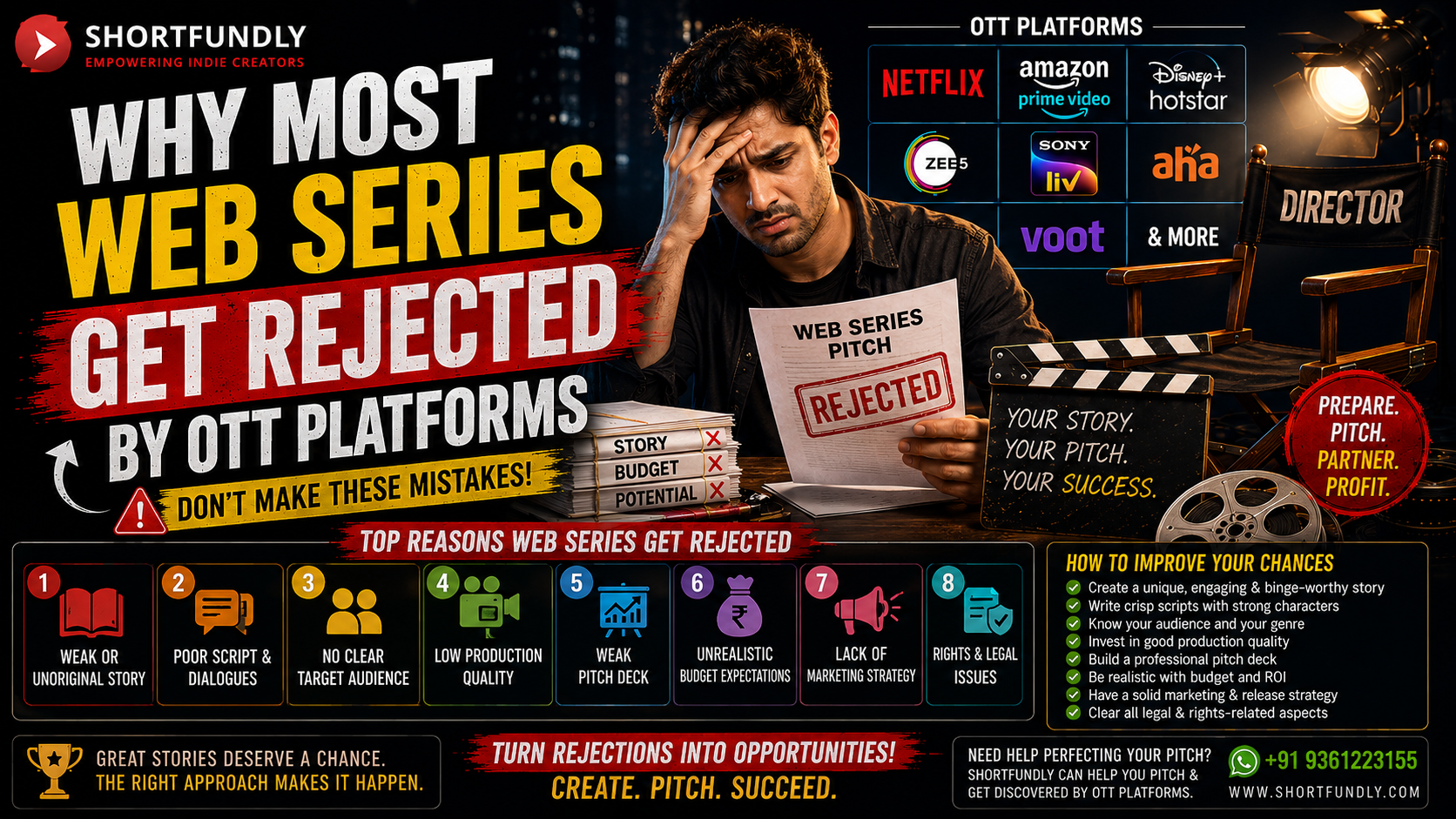
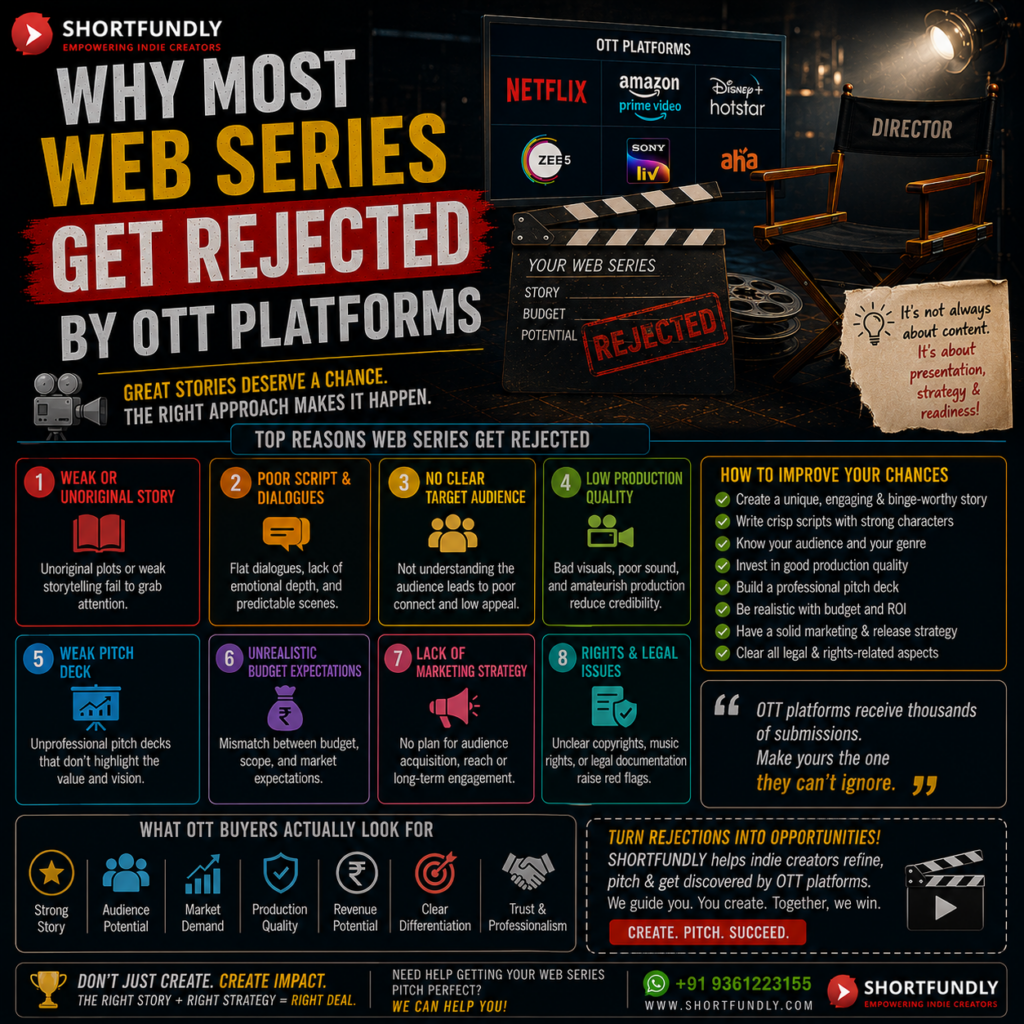
Understanding why most web series get rejected by OTT platforms is essential for creators who want to improve their chances of success. Rejection is rarely caused by a single factor. Instead, it usually results from a combination of creative, technical, legal, commercial, and marketing issues.
This guide explores the most common reasons OTT platforms decline web series submissions and explains how creators can develop stronger projects that align with industry expectations.
The OTT Market Is More Competitive Than Ever
The global OTT industry has expanded dramatically over the past decade. Streaming services continuously search for compelling stories, but they also receive thousands of submissions each year.
Competition comes from:
- Independent filmmakers
- Established production houses
- International studios
- Digital content creators
- Regional production companies
Because acquisition teams have limited budgets and programming slots, they carefully select projects that offer the highest commercial potential.
Weak Storytelling Fails to Capture Buyer Interest
A professional production cannot compensate for an average story.
OTT executives prioritize:
- Original concepts
- Emotional engagement
- Strong character development
- Memorable dialogue
- Effective pacing
- Satisfying season arcs
Many submissions rely on familiar plots without offering a fresh perspective. Buyers seek stories that immediately capture audience attention and maintain interest throughout the series.
The First Episode Doesn’t Create a Strong Hook
The opening episode determines whether viewers continue watching.
Many web series are rejected because the pilot:
- Starts too slowly
- Introduces unnecessary scenes
- Lacks dramatic tension
- Delays the central conflict
- Confuses viewers
A successful pilot establishes the main characters, introduces the conflict, and encourages viewers to watch the next episode.
Poor Production Quality Hurts Credibility
Even exceptional scripts can be overlooked if technical quality is poor.
Common production issues include:
- Inconsistent lighting
- Weak sound recording
- Unstable camera work
- Low-quality color grading
- Amateur editing
- Distracting visual effects
OTT platforms maintain strict quality standards because viewers expect premium entertainment.
Target Audience Is Not Clearly Defined
One of the biggest mistakes creators make is claiming their web series is “for everyone.”
Successful projects identify:
- Age group
- Geographic region
- Preferred language
- Viewer interests
- Genre expectations
Clearly defining the audience demonstrates that the creators understand the market.
The Concept Lacks Originality
OTT buyers review countless crime dramas, romantic comedies, thrillers, and family dramas.
If the concept resembles existing shows without offering a unique angle, it becomes difficult to justify acquisition.
Originality can come from:
- Unique settings
- Fresh characters
- Cultural authenticity
- Unexpected storytelling structures
- Innovative themes
Distinctive ideas stand out immediately.
Characters Lack Depth and Development
Strong characters create loyal audiences.
Many rejected projects feature:
- Flat personalities
- Predictable motivations
- Weak emotional journeys
- Limited character growth
OTT platforms invest in stories that encourage long-term audience engagement across multiple seasons.
No Commercial Viability
Streaming services invest significant resources into every acquisition.
Executives evaluate whether a series can:
- Attract subscribers
- Retain viewers
- Increase watch time
- Generate publicity
- Appeal across multiple markets
Creative excellence alone is rarely enough without commercial potential.
Incomplete Legal Documentation
Rights management is essential.
Missing documents often include:
- Copyright registration
- Script ownership
- Music licenses
- Talent agreements
- Location permissions
- Trademark clearances
Incomplete paperwork creates legal risks that buyers prefer to avoid.
The Pitch Package Is Unprofessional
A polished presentation significantly improves credibility.
An effective submission includes:
- Professional pitch deck
- Series bible
- Synopsis
- Character profiles
- Episode guide
- Budget overview
- Marketing strategy
- Trailer or teaser
Incomplete submissions often fail before the creative review begins.
Budget Does Not Match the Project
Buyers evaluate financial planning carefully.
Common mistakes include:
- Unrealistically low budgets
- Inflated production costs
- Missing contingency planning
- No post-production estimates
Transparent budgeting demonstrates professional project management.
Genre Saturation Reduces Interest
Some genres become highly competitive.
For example:
- Crime thrillers
- Zombie dramas
- Romantic comedies
- Police procedurals
Although these genres remain popular, buyers increasingly seek distinctive stories rather than familiar formulas.
No Marketing Vision
OTT platforms value projects that already understand audience engagement.
Creators should demonstrate:
- Social media strategy
- Festival participation
- Press opportunities
- Influencer collaborations
- Community building
A strong marketing plan reduces acquisition risk.
Regional Stories Without Universal Appeal
Regional storytelling is increasingly valuable.
However, successful regional projects often include universal emotional themes such as:
- Family
- Survival
- Justice
- Friendship
- Identity
- Love
Balancing local authenticity with global accessibility increases licensing opportunities.
Inconsistent Episode Structure
Every episode should contribute to the overall narrative.
Problems include:
- Uneven pacing
- Repetitive scenes
- Unnecessary subplots
- Weak cliffhangers
Structured storytelling encourages binge-watching.
Ignoring Platform Requirements
Each OTT platform has different programming goals.
Factors include:
- Preferred genres
- Episode duration
- Language focus
- Audience demographics
- Regional priorities
Submitting identical pitches to every platform rarely succeeds.
No Clear Revenue Potential
OTT buyers evaluate long-term profitability.
Projects with stronger value often include:
- Franchise opportunities
- Merchandise potential
- International licensing
- Multiple seasons
- Spin-off possibilities
Demonstrating revenue opportunities strengthens the business case.
How Creators Can Improve Their Chances
Successful creators consistently:
- Develop original concepts
- Invest in professional production
- Build detailed pitch materials
- Understand audience preferences
- Register intellectual property
- Create realistic budgets
- Research platform requirements
- Prepare compelling trailers
- Refine scripts through multiple revisions
- Present themselves professionally
Every improvement increases the likelihood of attracting buyer interest.
Also read: https://blog.shortfundly.com/ott/self-distribute-web-series-ott/
Final Thoughts
While rejection is common in the streaming industry, it should never discourage creators from refining their projects. Most web series are rejected because they fail to meet the creative, technical, legal, or commercial expectations of today’s OTT marketplace—not because great opportunities do not exist. By focusing on stronger storytelling, higher production quality, clear audience positioning, professional documentation, and a compelling pitch package, creators can significantly improve their chances of securing meetings, acquisitions, and distribution partnerships. The most successful web series combine artistic vision with business strategy, creating content that resonates with viewers while delivering measurable value to streaming platforms.