Table of Contents
Introduction
Finishing an independent film is a major achievement. You’ve developed the story, brought together a team, managed production, and completed the final edit. But what happens next? How can you help your film reach viewers beyond film festivals, local screenings, and limited online releases?
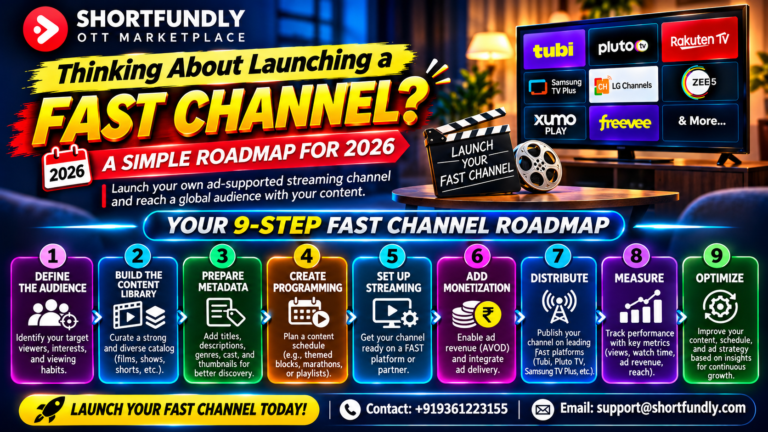
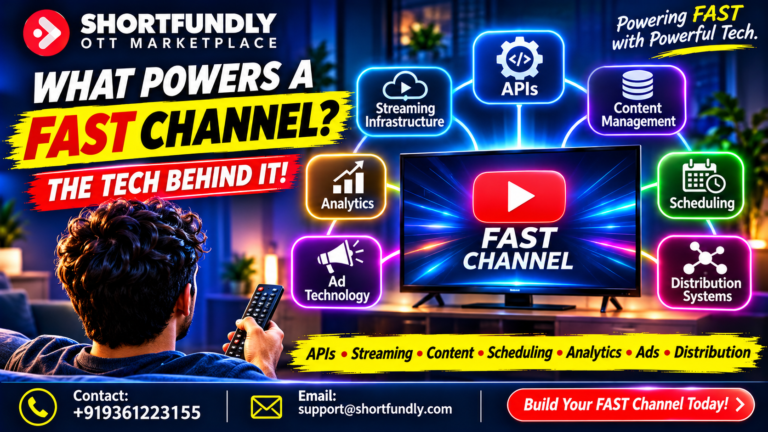
One option worth exploring is Free Ad-Supported Streaming TV, also known as FAST. These services offer viewers free access to scheduled streaming channels supported by advertising. Instead of paying a monthly subscription, viewers can choose a channel and watch its programs with commercial breaks.
For independent filmmakers, this creates another possible route to reach audiences. A film that has completed its festival run or earlier distribution window may still have value for viewers who enjoy independent cinema, regional stories, documentaries, thrillers, or other focused genres.
If you want to get indie movie on FAST channel, you need more than a finished video file. You’ll need to understand distribution rights, prepare your film for delivery, identify suitable platforms or distribution partners, provide accurate metadata, and create a clear plan for promotion and revenue.
The process may seem complicated at first. However, breaking it into manageable steps makes it easier to understand. This guide explains nine practical steps, from preparing your film to reviewing distribution agreements and tracking performance. It also explains how Shortfundly Distribution may fit into your wider distribution research.

1. Understand How FAST Channels Work
Before approaching a platform or distributor, understand what a FAST channel is and how it differs from other streaming services.
FAST means Free Ad-Supported Streaming Television. It combines a scheduled television-style experience with internet-based streaming. Viewers generally don’t need a paid subscription to watch. Instead, advertising helps support the service.
A FAST platform may offer channels focused on movies, documentaries, lifestyle programs, news, sports, regional entertainment, or other themes. Viewers can browse the available channels and watch scheduled programming.
FAST vs. OTT Subscription Platforms
OTT is a broad term for video and other media delivered over the internet. Subscription video-on-demand services are one type of OTT service. FAST is another streaming model, with a different viewing and revenue structure.
| Feature | FAST Channel | Subscription Streaming |
|---|---|---|
| Viewer access | Generally free | Usually requires payment |
| Main revenue model | Advertising | Subscription fees, sometimes advertising |
| Viewing style | Often scheduled channels | Often on-demand |
| Discovery | Channel browsing and schedules | Search and recommendations |
| Best suited for | Viewers who enjoy free, scheduled programming | Viewers who want paid access to a library or exclusive titles |
The two models aren’t necessarily competitors for every film. Depending on your contracts and release strategy, a movie may be suitable for different distribution windows across more than one type of service.
Why FAST Can Be Useful for Independent Films
Independent films often have limited marketing budgets. They may also face challenges when trying to secure attention on large streaming services.
A FAST channel can provide another way to reach viewers, especially when the movie fits a channel’s programming identity.
For example:
- A regional-language drama may suit a channel focused on cinema from that region.
- A documentary may fit a factual entertainment channel.
- A horror film may appeal to viewers browsing a genre-specific movie channel.
- A collection of short films may be suitable for a channel that programs short-form storytelling.
This doesn’t mean every FAST platform accepts every independent film. Each service has its own content standards, rights requirements, technical rules, and commercial arrangements.
Understand the Possible Revenue Model
FAST services commonly generate revenue through advertising. The platform or channel operator may sell ad inventory and share revenue with other partners according to an agreement.
The exact arrangement can vary. Some content owners may receive a revenue share, while other agreements may involve licensing fees or different commercial terms.
Before submitting your film, understand who controls advertising, how earnings are calculated, and what reporting you’ll receive.
2. Check Whether Your Indie Movie Is Ready
A finished movie isn’t automatically ready for distribution. Before approaching a FAST platform, review the film’s quality, audience, genre, runtime, and overall presentation.
This step helps you identify the most suitable channel opportunities and avoid spending time on submissions that don’t match a platform’s requirements.
Identify Your Film’s Genre and Audience
Start by describing your movie clearly. Is it a drama, comedy, thriller, romance, horror film, documentary, or experimental project?
Then identify the viewers most likely to enjoy it.
Consider:
- The film’s primary genre
- Its language and subtitle availability
- The themes and subjects it explores
- Its likely age group and audience suitability
- The country or region connected to its story
- Similar films that may attract the same viewers
Don’t try to describe your film as suitable for everyone. A clear audience profile makes it easier to identify relevant channels.
Review the Film’s Technical and Creative Quality
Watch the final version from beginning to end. Check the picture, sound, credits, subtitles, and opening and closing sequences.
Pay attention to:
- Audio levels and dialogue clarity
- Picture quality and visual consistency
- Missing frames or editing errors
- Subtitle accuracy and timing
- Spelling in opening and closing credits
- Copyright notices and required acknowledgements
- Any content that may need an age rating or advisory
If possible, ask someone who wasn’t involved in the edit to review the film. A fresh viewer may notice issues the production team has overlooked.
Review Its Distribution History
Prepare a simple record of where the film has already been shown or distributed.
Include:
- Film festival screenings
- Theatrical or community screenings
- Previous streaming releases
- Television broadcasts
- Online rentals or purchases
- Existing licensing agreements
- Any exclusive distribution commitments
This information matters because previous agreements may restrict where and when you can distribute the film again.
Build a Clear Film Profile
Create a short description that explains what makes the movie interesting. Avoid excessive promotional language. Focus on the story, genre, central characters, and audience appeal.
For example:
A character-driven independent drama about a young musician who returns to her hometown and discovers that rebuilding her family relationships may be harder than following her dreams.
A strong film profile helps a distributor or channel reviewer understand the project quickly.
3. Secure Your Film Distribution Rights
Rights clearance is one of the most important parts of independent film distribution. You may own the finished movie, but that doesn’t always mean you control every right needed to distribute it through a FAST service.
A film can contain music, performances, artwork, photographs, archival footage, scripts, or other material covered by separate agreements.
Confirm That You Control the Required Rights
Review your production contracts and rights documents. Confirm that you have permission for the type of distribution you’re planning.
Important questions include:
- Do you control the film’s distribution rights?
- Does your agreement permit advertising-supported streaming?
- Which countries or territories are covered?
- Are there language restrictions?
- Is the permission exclusive or non-exclusive?
- How long does the agreement last?
- Can the film be promoted through trailers and clips?
- Are there restrictions on edits or content changes?
If a distributor or sales agent already controls certain rights, review that agreement before approaching another company.
Check Music and Third-Party Material
Music is a common rights issue. A track licensed for a film festival or private screening may not be cleared for worldwide streaming.
Review permissions for:
- Original music
- Commercial songs
- Stock music
- Archival footage
- Photographs
- Artwork
- Performances
- Logos and trademarks
- Third-party video clips
You may need additional permissions for advertising-supported streaming, promotional use, or distribution in certain territories.
Prepare a Rights Documentation Folder
Keep your documents organized. A useful folder may include:
| Document | Purpose |
|---|---|
| Chain-of-title records | Helps establish ownership and rights history |
| Music licenses | Documents permission to use music |
| Talent releases | Records performer permissions |
| Location releases | Records location permissions where required |
| Script or underlying rights agreements | Documents story and screenplay permissions |
| Distribution agreements | Shows existing rights commitments |
| Artwork and footage permissions | Documents third-party material permissions |
Requirements vary by country and project. For complex rights questions, consult an entertainment lawyer or qualified rights professional.
The World Intellectual Property Organization’s copyright resources provide useful background on copyright and creative works.
4. Prepare Your Movie for Technical Delivery
A FAST platform or distribution partner may require specific video and audio formats. A file that plays correctly on your laptop may still fail a professional delivery check.
Technical preparation helps reduce delays and gives the platform a file that meets its specifications.
Confirm the Required Video Format
Ask the platform or distributor for its current delivery specifications. These may include:
- Resolution
- Frame rate
- Aspect ratio
- Video codec
- Container format
- Bitrate
- Color settings
- File naming rules
Don’t assume that every service accepts the same format. Obtain the latest requirements before exporting the final master.
Check Audio Quality
Good audio is just as important as good picture quality. Dialogue should be clear, music should be balanced, and there shouldn’t be unexpected distortion or silence.
Review:
- Audio channel configuration
- Sample rate
- Loudness requirements
- Dialogue clarity
- Music levels
- Sound effects
- Language tracks
If the film has multiple language versions, label each track clearly.
Prepare Subtitles and Captions
Subtitles can help your film reach viewers who speak other languages. Captions can also improve accessibility for viewers who are deaf or hard of hearing.
Prepare the formats requested by the platform. Check timing, spelling, punctuation, speaker identification, and synchronization.
If you plan to distribute internationally, research which languages may be relevant to your target markets. Don’t add translations without checking their accuracy.
Create Professional Artwork
Your movie’s poster or key art may be used in platform listings and promotional material.
Make sure the artwork:
- Represents the film accurately
- Has clear, readable text
- Uses approved images and fonts
- Meets the platform’s dimensions and file format
- Avoids unsupported awards or promotional claims
- Has the necessary usage permissions
Keep high-resolution versions available, as different services may request different sizes.
5. Create a Professional Film Submission Package
A well-organized submission package makes it easier for a distributor or platform reviewer to assess your movie.
It also shows that you understand the delivery process and are prepared to respond to requests.
Include Essential Film Information
Prepare a document with the following details:
| Item | Information to Provide |
|---|---|
| Film title | Official title |
| Logline | One or two sentences describing the story |
| Synopsis | Short and detailed versions |
| Genre | Main and secondary genres |
| Runtime | Total duration |
| Language | Original audio language |
| Subtitles | Available subtitle languages |
| Release year | Year of completion or release |
| Director | Director’s name |
| Cast | Main performers |
| Production company | Company or producer details |
| Country of production | Relevant production information |
| Age rating | Official rating or requested classification |
| Rights status | Territories and rights available |
| Contact details | Authorized representative |
Make sure the information matches the final film and rights documents.
Prepare a Trailer and Promotional Stills
A trailer gives reviewers and potential audiences a quick introduction to the movie. Use the best moments to communicate its genre, mood, and story.
Avoid including scenes that reveal major plot twists. Also check that the trailer’s music, footage, and artwork are cleared for promotional use.
Prepare several high-quality still images. These can include:
- Main poster artwork
- Lead character images
- Key scenes
- Director or cast photographs, where permitted
- Behind-the-scenes images, where relevant
Create a Secure Screener
A screener is a review copy of the film. Some distributors may request a private viewing link or another secure delivery method.
Use the requested format and avoid sending large files through unapproved channels. If you use a private link, check its access settings and expiry date.
Keep the Package Consistent
Use the same official title, runtime, release year, synopsis, and credits across all materials. Inconsistent information can create unnecessary questions during review.
6. Find the Right FAST Channel or Distribution Partner
Once your movie is ready, research where it may fit. Not every channel is suitable for every film. A strong match between the content and channel identity can make the submission more relevant.
Search for Channels That Match Your Genre
Start with platforms and channels that already show similar content.
For example:
| Film Type | Possible Channel Focus |
|---|---|
| Independent drama | Independent and international cinema |
| Horror film | Horror and thriller programming |
| Documentary | Documentary and factual entertainment |
| Regional-language movie | Regional or language-focused cinema |
| Family film | Family and general entertainment |
| Classic independent film | Classic and catalog movie programming |
These are examples of possible matches, not guarantees of acceptance.
Research Platform Requirements
Before submitting, check:
- Whether the platform accepts third-party films
- Whether it works directly with filmmakers
- Whether submissions must go through a distributor
- Which territories are supported
- Which genres and languages are accepted
- What technical formats are required
- Whether there are fees or other costs
- How long the review process may take
Use official platform information whenever possible. If the submission process isn’t clear, contact the platform or its authorized content partner.
Explore Distribution Services
A distribution company may help content owners understand delivery requirements, prepare materials, or access distribution opportunities. The exact services vary, so ask what is included.
You can review Shortfundly Distribution as one possible starting point for exploring distribution-related services.
Contact Shortfundly directly to confirm its current offering, accepted content types, platform relationships, territories, submission requirements, and commercial terms. In particular, ask whether it currently supports the specific FAST distribution route you’re considering. Don’t assume that every FAST service is available through a distributor unless the relationship and service have been confirmed.
Make a Shortlist
Don’t submit your film randomly to every service you find. Build a shortlist based on content fit, territory, technical requirements, and commercial terms.
A simple evaluation table can help:
| Evaluation Point | Questions |
|---|---|
| Content fit | Does the channel show similar films? |
| Audience | Does its audience match your target viewers? |
| Territory | Is your film eligible in the relevant markets? |
| Rights | Can you offer the required rights? |
| Delivery | Can you meet its technical specifications? |
| Commercial terms | Are the fees and revenue terms clear? |
| Reporting | Will you receive useful performance information? |
7. Understand FAST Distribution Agreements
A distribution agreement explains the rights and responsibilities of the parties involved. Read it carefully before granting permission to make your film available.
The contract can affect your revenue, future distribution options, promotional rights, and control over the movie.
Review Territory and Term
Territory describes where the film may be distributed. The term describes how long the agreement remains active.
For example, an agreement may cover certain countries for a defined period. Make sure the territory and term match your plans and don’t conflict with existing agreements.
Understand Exclusivity
An exclusive agreement may limit your ability to distribute the film through other services during the contract period. A non-exclusive agreement may allow multiple distribution arrangements, subject to its specific terms.
Ask:
- Is the agreement exclusive?
- Which rights are exclusive?
- Does exclusivity apply worldwide or only in certain territories?
- Does it cover only FAST or other forms of streaming too?
- What happens when the agreement expires?
Don’t grant broader rights than you intend to provide.
Understand Revenue and Fees
FAST revenue may come from advertising, licensing, or other agreed commercial arrangements. The contract should explain how your share is calculated.
Review:
- Revenue share or licensing fee
- Technology and delivery fees
- Marketing costs
- Taxes and deductions
- Payment frequency
- Minimum payment thresholds, if any
- Currency and exchange arrangements
- Reporting and audit rights
Ask for a sample revenue statement if one is available. This can help you understand how the calculations work.
Check Reporting and Termination Clauses
Find out what performance information you’ll receive. Useful reports may include viewing activity, advertising impressions, revenue, and territory-level information, depending on the provider.
Also review how the agreement can end, how long content removal takes, and what happens to unpaid revenue after termination.
When the contract involves significant rights or money, get qualified legal advice before signing.
8. Submit Your Film and Complete Quality Checks
Once you’ve identified a suitable opportunity and reviewed the commercial terms, follow the official submission process.
The process varies by platform and distributor, but it usually involves providing film information, rights documents, technical files, and promotional materials.
Follow the Submission Instructions
Prepare a checklist before sending anything:
- Final film master
- Trailer
- Poster and artwork
- Synopsis and logline
- Cast and crew details
- Subtitle and caption files
- Rights documentation
- Age rating information
- Contact information
- Any required submission forms
Use the requested naming conventions and file formats. If a secure delivery system is provided, follow its instructions.
Respond to Review Questions
The platform or distributor may ask for additional information. Common questions can involve rights, language versions, content suitability, technical quality, or existing distribution commitments.
Respond clearly and provide supporting documents when requested.
Complete Quality Control
A quality-control review may check whether the delivered film matches technical and editorial requirements.
Before final delivery, check:
- The video plays from beginning to end.
- The audio is clear and correctly synchronized.
- Subtitles are accurate and properly timed.
- Artwork matches the title.
- Metadata is complete.
- Rights documents cover the intended use.
- The file meets the delivery specification.
If the platform identifies a problem, correct it and submit the revised material through the approved process.
Keep a Submission Record
Maintain a record of the date, recipient, files supplied, agreement status, and follow-up communication.
This will help you track multiple submissions and avoid sending different versions of the same material by mistake.
9. Promote Your Film and Measure Its Performance
Getting your film accepted is an important milestone, but distribution doesn’t end at launch. Viewers need to know where to find the movie, and you need to understand how it performs.
Promote the Film Through Your Existing Audience
Use your social media accounts, website, email list, and filmmaker network to announce the release.
Share:
- A short trailer
- The official poster
- A release announcement
- Behind-the-scenes stories
- Director or cast interviews
- Links to the platform where viewers can watch
Always use the official viewing link and approved promotional materials.
Work With Your Cast and Crew
Your cast and crew may have their own audiences. Provide them with ready-to-share promotional material and clear information about the release.
This can help the film reach people who may not follow the production company directly.
Track Available Performance Data
Ask your distribution partner which reports are available. Depending on the platform, useful measures may include:
| Metric | Why It Matters |
|---|---|
| Viewing hours | Shows total time spent watching |
| Unique viewers | Indicates audience reach |
| Average viewing duration | Helps assess how long viewers stay |
| Completion rate | Shows how many viewers reach the end, where reported |
| Ad impressions | Indicates advertising delivery |
| Revenue | Shows earnings under the agreement |
| Territory performance | Helps identify stronger markets |
Understand how each metric is defined. Different platforms may use different measurement methods.
Use the Results to Plan Future Releases
If your film attracts a particular audience, that information may help guide future distribution decisions.
For example, strong interest in a regional-language film could encourage you to prepare similar titles for the same audience. Good performance in one genre may also help you build a more focused content collection.
Don’t judge success only by total views. Consider revenue, audience quality, rights costs, marketing expenses, and the long-term value of the distribution relationship.
10. Common Mistakes to Avoid
A careful submission process can prevent many problems. Here are common mistakes independent filmmakers should watch for.
1. Sending the Film Without Checking Rights
A finished film may contain material that isn’t cleared for streaming or advertising-supported distribution. Review all relevant agreements before submission.
2. Choosing an Unrelated Channel
A channel focused on family entertainment may not be suitable for a mature horror film. Research the channel’s audience and programming identity first.
3. Ignoring Technical Requirements
A platform may reject files that don’t meet its specifications. Request the delivery guide before exporting the final master.
4. Providing Incomplete Metadata
Missing cast details, inaccurate runtimes, unclear descriptions, and incorrect artwork can slow down review. Prepare a complete submission package.
5. Accepting Unclear Commercial Terms
Don’t sign an agreement if you don’t understand its revenue share, fees, exclusivity, payment schedule, or termination rules. Ask for clarification.
6. Expecting Immediate Earnings
A FAST release doesn’t guarantee a particular audience size or revenue. Performance depends on many factors, including platform reach, programming, advertising demand, and viewer interest.
7. Forgetting Promotion
A film can be available without becoming widely known. Use your existing audience and promotional channels to help viewers find it.
11. Frequently Asked Questions
1. How Can I Get My Indie Movie on a FAST Channel?
Start by confirming your distribution rights, preparing a technical master, creating metadata and artwork, and researching channels that match your film. Then follow the platform’s official submission process or work with a suitable distribution partner.
2. Do FAST Channels Accept Independent Films?
Some FAST channels and their distribution partners may accept independent films. Their requirements vary by genre, territory, rights status, technical quality, and commercial arrangement. Check each service’s current submission policy.
3. Do I Need to Pay to Submit My Film?
Submission and distribution costs vary. Some services may not charge an upfront submission fee, while others may have delivery, technical, or service costs. Ask for a written explanation of all fees before agreeing.
4. Can I Submit a Short Film to a FAST Channel?
Some channels may consider short films, while others focus mainly on feature-length programming or specific formats. Check the channel’s content requirements and whether it accepts short-form material.
5. What Format Should My Indie Movie Be in?
There isn’t one universal format. Platforms may specify resolution, codec, container, frame rate, audio settings, subtitle formats, and file naming rules. Request the current technical delivery guide before exporting your film.
6. Do I Need Worldwide Rights to Distribute My Film?
Not always. Some distribution arrangements cover only selected territories. You need to control the rights for the countries and uses included in the agreement. Review existing contracts before granting additional permissions.
7. Can I Earn Money When My Film Plays on a FAST Channel?
Potentially, yes. FAST channels commonly generate revenue through advertising, and content owners may receive a share or another form of payment under their agreement. Actual earnings depend on the contract and the film’s performance.
8. Can My Film Be on FAST and Other Streaming Platforms?
It may be possible, depending on your rights agreements and any exclusivity or release-window restrictions. Check the terms of every existing and proposed agreement before distributing the film across multiple services.
9. How Long Does FAST Distribution Take?
There isn’t a fixed timeline. Rights clearance, technical preparation, platform review, contract negotiation, and delivery requirements can all affect the process. Ask the platform or distributor for its current expected timeline.
10. How Can Shortfundly Distribution Help Independent Filmmakers?
Visit Shortfundly Distribution to review its current distribution-related services and determine whether they fit your film. Contact the company directly to confirm its current FAST-related options, accepted content, platform relationships, territories, submission process, and commercial terms.
Also read: https://blog.shortfundly.com/ott/filmmakers-content-brand/
12. Conclusion
Getting an independent film onto a FAST channel can be a useful way to explore new audiences and distribution opportunities. It may be especially worth researching for films that have completed earlier release windows or belong to genres with a clear audience.
Still, the process requires preparation. Start by understanding the FAST model and checking whether your movie is ready. Confirm that you control the required rights, prepare professional video and audio files, organize your metadata, and create a complete submission package.
Next, research channels and distribution partners that match your film. Read every agreement carefully, especially the clauses covering territories, exclusivity, revenue, fees, reporting, and termination. Once your film is accepted, promote it through your existing audience and use available performance data to guide future decisions.
If you want to get indie movie on FAST channel, take a step-by-step approach instead of rushing into an agreement. Review Shortfundly Distribution as part of your distribution research, and confirm directly whether its current services match your needs.
Your independent film deserves a thoughtful distribution plan. With clear rights, professional delivery, and the right channel fit, you can give it another opportunity to reach viewers.