Table of Contents
Introduction
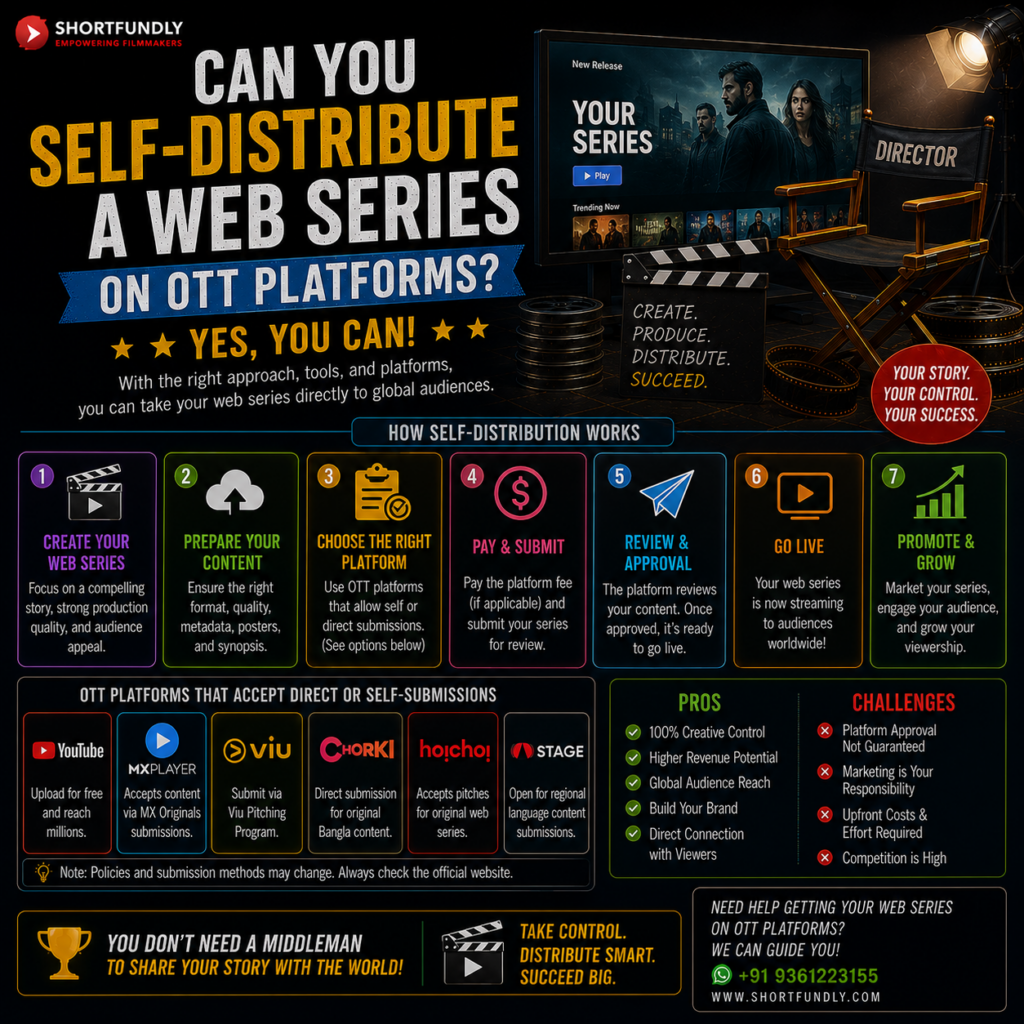
The rapid growth of OTT (Over-the-Top) streaming platforms has transformed how audiences consume entertainment. Today, independent filmmakers and web series creators have more opportunities than ever before to reach global audiences without relying on traditional television broadcasters. However, one question continues to dominate discussions among creators: Can you self-distribute a web series on OTT platforms?
The answer is yes—but with important limitations and strategic considerations. While some platforms accept direct submissions under specific conditions, many premium OTT services work exclusively through approved distributors, aggregators, or acquisition executives. Understanding how self-distribution works can help creators maximize revenue, maintain ownership, and secure wider distribution opportunities.
In this comprehensive guide, we explore everything creators need to know about self-distributing a web series on OTT platforms, including the benefits, challenges, distribution strategies, legal requirements, revenue models, and practical steps for achieving successful OTT placement.
What Does Self-Distribution Mean?
Self-distribution refers to the process of releasing and marketing your web series without signing exclusive rights to a traditional film distributor. Instead of relying on a third party to negotiate every deal, creators retain greater control over their content and determine where and how it is released.
Self-distribution may involve:
- Uploading episodes to digital platforms
- Licensing directly to streaming services
- Working with non-exclusive digital aggregators
- Selling regional rights independently
- Monetizing through advertising, subscriptions, or transactional video-on-demand (TVOD)
Unlike traditional distribution, self-distribution gives producers more flexibility while requiring greater involvement in marketing, technical delivery, and business negotiations.
Can You Upload Directly to Netflix, Prime Video, or Disney+?
One of the biggest misconceptions among independent creators is that they can simply submit their web series directly to Netflix or other major streaming platforms.
In reality, most premium OTT platforms:
- Do not maintain public submission portals.
- Prefer content from established production companies.
- Work with licensed distributors and sales agents.
- Acquire projects through industry relationships.
- Evaluate projects with proven audience demand.
This does not mean independent creators have no opportunity. Instead, successful creators typically reach these platforms through:
- Film festivals
- Distribution companies
- Content aggregators
- Sales agencies
- Industry referrals
- Production partnerships
Advantages of Self-Distributing Your Web Series
Choosing self-distribution offers several compelling benefits.
Complete Creative Control
Creators maintain authority over:
- Release dates
- Marketing campaigns
- Artwork
- Promotional trailers
- Pricing
- Regional availability
Creative independence allows producers to protect their artistic vision.
Higher Revenue Potential
Without multiple intermediaries, creators may retain a larger percentage of revenue generated from:
- Advertising
- Rentals
- Purchases
- Subscription licensing
- International sales
Although marketing costs remain, eliminating unnecessary middlemen can improve profitability.
Ownership of Rights
Many traditional distribution contracts request long-term exclusive rights.
Self-distribution allows creators to maintain ownership of:
- Digital rights
- Television rights
- International rights
- Airline rights
- Educational licensing
- Remake rights
Maintaining ownership provides long-term flexibility for future licensing opportunities.
Challenges of Self-Distribution
Self-distribution also requires significant responsibility.
Marketing Responsibility
Creating an excellent web series is only half the battle.
Without effective marketing, even outstanding content may struggle to find viewers.
Successful campaigns often include:
- Social media marketing
- Influencer collaborations
- Public relations
- Trailer campaigns
- Email newsletters
- Festival participation
Technical Delivery Requirements
OTT platforms demand professional delivery packages including:
- 4K or HD masters
- Broadcast-quality audio
- Closed captions
- Subtitle files
- Metadata
- Artwork
- Promotional assets
Meeting these specifications requires careful preparation.
Business Negotiation Skills
Independent creators must understand:
- Licensing agreements
- Revenue sharing
- Territory rights
- Contract duration
- Payment schedules
- Exclusivity clauses
Poor negotiations can significantly reduce long-term earnings.
Best Platforms for Self-Distribution
Not every streaming platform operates the same way.
Several digital platforms are more accessible to independent creators.
YouTube
Advantages include:
- Global reach
- Advertising revenue
- Channel subscriptions
- Membership programs
- Brand sponsorships
Vimeo On Demand
Ideal for creators seeking:
- Premium presentation
- Rental sales
- Direct purchases
- Audience ownership
Amazon Prime Video Direct (Availability May Vary)
Amazon has historically offered independent publishing options, although its submission policies continue to evolve over time.
Creators should always verify the latest eligibility requirements.
Specialized Distribution Companies
Many independent producers choose professional digital distributors that help deliver content to multiple OTT platforms while allowing creators to retain substantial control.
Professional distribution services simplify:
- Platform delivery
- Metadata preparation
- Rights management
- Technical compliance
- Revenue reporting
Preparing Your Web Series for OTT Distribution
Before approaching any platform, ensure your project is fully prepared.
Essential materials include:
- High-resolution master files
- Episode descriptions
- Poster artwork
- Key art
- Promotional stills
- Trailer
- Cast information
- Production credits
- Subtitle files
- Closed captions
Professional presentation significantly improves acquisition opportunities.
Building an Audience Before Distribution
OTT buyers increasingly evaluate audience demand.
Creators should focus on:
- Growing YouTube subscribers
- Building Instagram followers
- Expanding TikTok reach
- Collecting email subscribers
- Engaging online communities
Audience engagement demonstrates market potential.
Film Festivals Can Open OTT Doors
Film festivals remain valuable pathways toward OTT distribution.
Benefits include:
- Industry exposure
- Distributor meetings
- Press coverage
- Awards
- Networking
- Investor interest
Many acquisition executives discover new creators through respected festivals.
Monetization Models for Independent Web Series
Several revenue models exist.
Advertising (AVOD)
Revenue generated from advertisements displayed before or during episodes.
Subscription (SVOD)
Platforms pay licensing fees or share subscription revenue.
Transactional Video on Demand (TVOD)
Viewers pay individually to rent or purchase episodes.
Hybrid Revenue Models
Many successful creators combine:
- Advertising
- Sponsorships
- Merchandise
- Crowdfunding
- International licensing
- Brand partnerships
Diversified income reduces financial risk.
Common Mistakes to Avoid
Many creators unintentionally reduce their chances of successful distribution.
Avoid:
- Poor audio quality
- Missing subtitles
- Weak promotional materials
- Incomplete copyright documentation
- Unclear licensing rights
- Unrealistic pricing expectations
- Ignoring audience development
- Signing unfavorable contracts
Preparation often determines long-term success.
Legal Documents Every Creator Should Have
Before distribution, maintain complete documentation.
Essential documents include:
- Copyright registration
- Music licenses
- Talent agreements
- Location releases
- Trademark permissions
- Insurance documentation
- Chain of title records
Distributors frequently request these materials before negotiations proceed.
Marketing Strategies That Increase OTT Opportunities
Effective marketing creates measurable demand.
Recommended strategies include:
- Professional trailers
- Behind-the-scenes videos
- Festival announcements
- Press releases
- Influencer outreach
- Podcast interviews
- Email campaigns
- Social media advertising
Strong visibility often attracts acquisition interest.
Should You Work with a Distribution Partner?
Although self-distribution offers flexibility, many creators eventually benefit from experienced distribution partners.
Professional distribution companies can provide:
- Industry relationships
- Technical expertise
- Rights management
- Contract negotiation
- Platform access
- International sales
Choosing the right partner depends on your budget, objectives, and long-term distribution strategy.
Also read:https://blog.shortfundly.com/ott/web-series-netflix-guide/
Final Thoughts
Self-distributing a web series on OTT platforms is entirely possible, but success requires much more than uploading episodes online. Professional production quality, audience development, legal readiness, marketing strategy, and strong business planning all contribute to successful digital distribution.
Independent creators who approach self-distribution as both a creative and commercial venture position themselves for sustainable growth. Whether pursuing direct digital releases, festival exposure, regional licensing, or partnerships with experienced distribution companies, maintaining control of your intellectual property while delivering exceptional content remains the strongest foundation for long-term success in the competitive OTT marketplace.