Table of Contents
Introduction: Two Buttons, Two Different Viewing Experiences
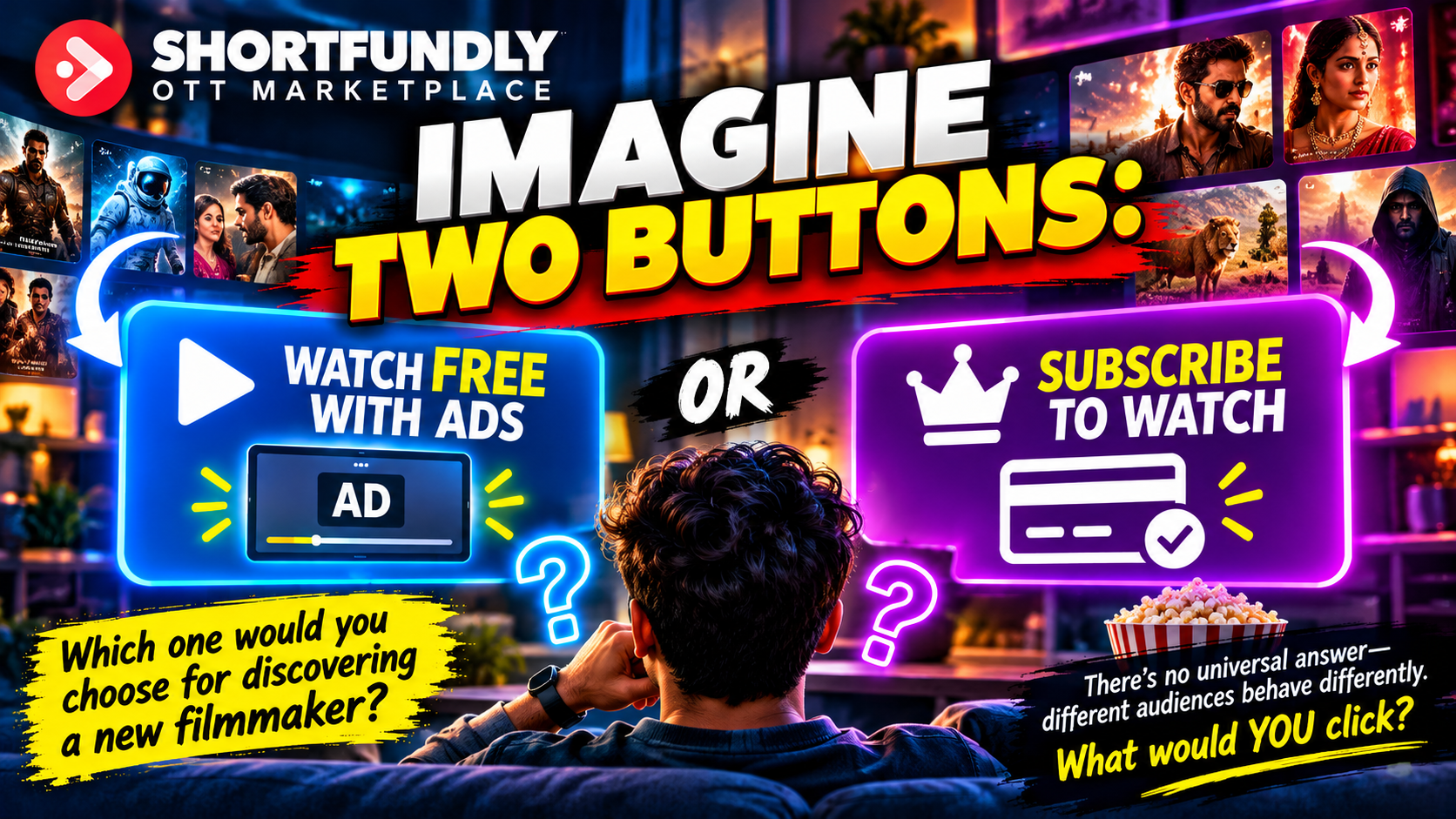
Imagine you’re browsing a streaming platform and discover a filmmaker whose work you’ve never seen before. Two buttons appear on the screen:
- WATCH FREE WITH ADS
- SUBSCRIBE TO WATCH
Which one would you choose?
Would you watch free with ads and accept a few commercial breaks, or subscribe to watch without the interruption of advertisements? There’s no universal answer. Your choice may depend on your budget, viewing habits, interest in independent cinema, and willingness to support new creative voices.
For viewers, both options can open the door to exciting stories. For filmmakers and distributors, they represent two different ways to reach an audience and build a sustainable viewing experience.
The choice becomes even more interesting when we’re discovering a new filmmaker. An established director may already have a loyal audience, but an emerging filmmaker is still building recognition. Viewers may be curious about the story but unsure whether they want to spend money on a subscription before watching.
This is where free, ad-supported streaming and subscription-based viewing each have a role.
In this guide, we’ll explore seven powerful ways to think about the decision, compare both viewing models, and explain how each can support independent filmmakers. We’ll also look at what viewers should consider before choosing a platform and how film distribution services such as Shortfundly Distribution fit into the wider journey of bringing films to audiences.

1. Understanding the Two Viewing Options
Before choosing a button, it’s useful to understand what each option means. Both models allow audiences to watch digital content, but they use different approaches to fund the viewing experience.
1.1 What Does Watch Free With Ads Mean?
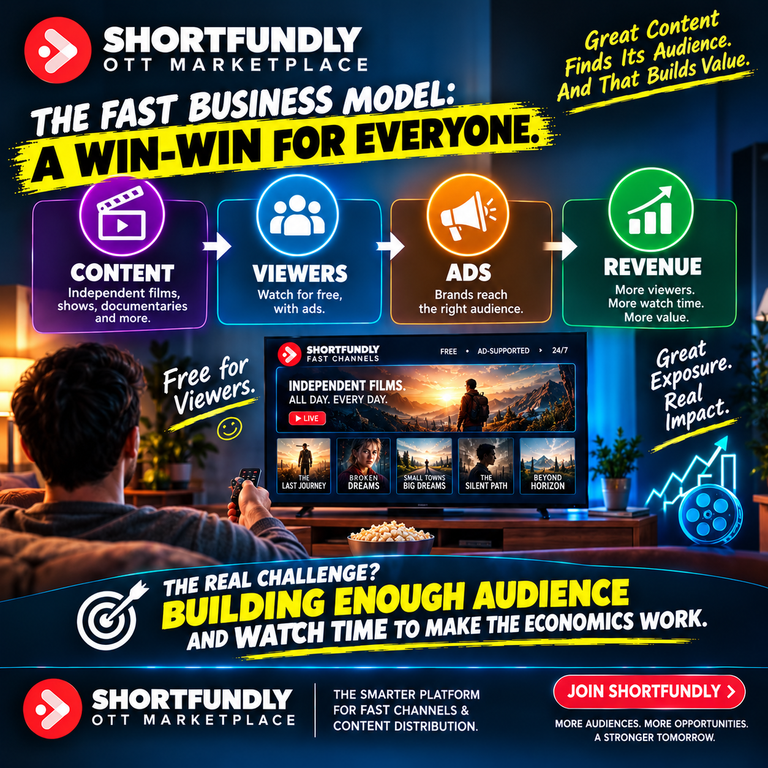
The phrase watch free with ads describes an advertising-supported viewing model. Viewers can access selected content without paying a direct subscription fee. Instead, advertisements help support the platform and its content operations.
You may see an advertisement before a film begins, during a natural break, or after the content finishes. The exact format depends on the platform.
This model is commonly associated with free ad-supported streaming television, often called FAST, as well as other advertising-supported video services.
For viewers, the main attraction is simple: they can explore content without committing to a monthly payment.
For independent filmmakers, ad-supported services may create another route to audience discovery. Someone who wouldn’t pay to watch an unfamiliar film may still give it a chance when access is free.
However, free access doesn’t mean every film is available without restrictions. Platforms may have regional limitations, content availability windows, licensing conditions, or other viewing requirements.
1.2 What Does Subscribe to Watch Mean?
A subscription-based viewing model asks audiences to pay a recurring fee for access to a platform or a selected collection of content.
Depending on the service, a subscription may provide:
- Access to a catalogue of films and series.
- Fewer advertisements or an ad-free experience.
- Exclusive or premium content.
- Multiple viewing profiles.
- Personalised recommendations.
- Additional features such as offline viewing, where supported.
The subscription model is often attractive to viewers who watch content regularly. Instead of paying separately for every title, they pay a recurring fee for access to a wider library.
For filmmakers, subscription services can offer access to audiences who are already interested in watching films. However, being included in a subscription catalogue doesn’t automatically guarantee that a film will receive significant attention.
Visibility, recommendations, promotion, audience interest, and the platform’s content strategy all matter.
1.3 AVOD, SVOD, and FAST: What Are the Differences?
Streaming business models have different names. Understanding these terms helps viewers and filmmakers make better decisions.
| Model | Full Form | How It Works |
|---|---|---|
| AVOD | Advertising Video on Demand | Viewers access on-demand content supported by advertisements |
| SVOD | Subscription Video on Demand | Viewers pay a recurring subscription fee for access |
| TVOD | Transactional Video on Demand | Viewers pay to rent or purchase individual titles |
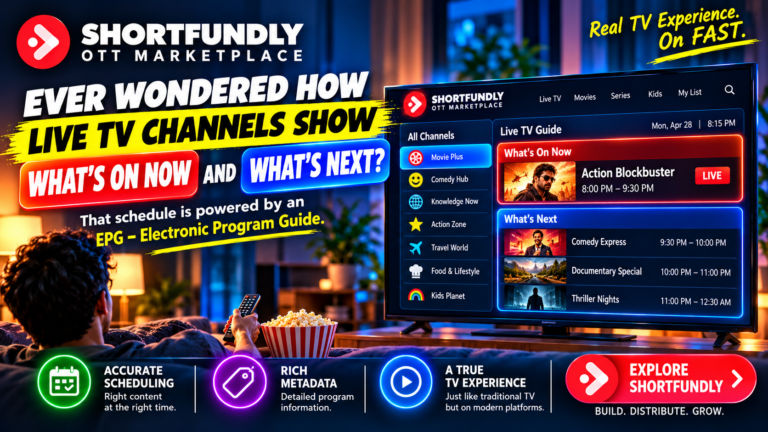
| FAST | Free Ad-Supported Streaming Television | Viewers watch scheduled channels supported by advertisements |
| Hybrid | Multiple revenue models | A service combines two or more monetisation approaches |
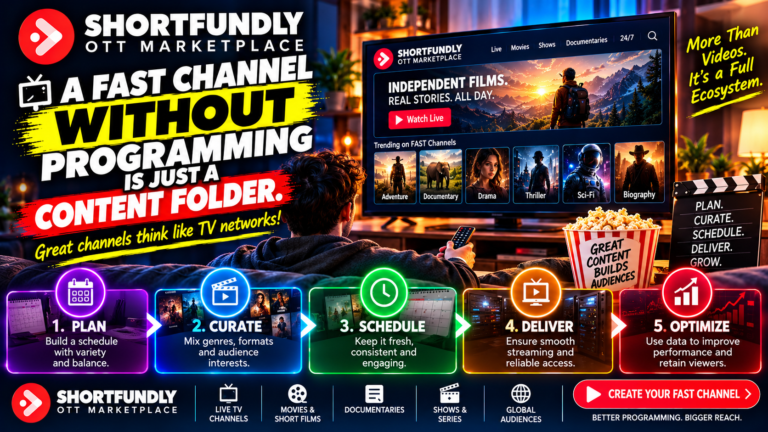
AVOD and FAST are related, but they aren’t identical. AVOD usually focuses on choosing individual videos from a catalogue. FAST services generally provide scheduled, channel-based programming that resembles traditional television.
A filmmaker’s distribution opportunities may vary across these models. The best route depends on the film’s rights, audience, technical requirements, commercial terms, and platform availability.
1.4 Why Does This Choice Matter for New Filmmakers?
When audiences discover an emerging filmmaker, they aren’t only choosing a viewing method. They’re also deciding whether to spend time with a creative voice they may not know.
A free viewing option can lower the first barrier to discovery. A subscription option may attract viewers who already value the platform’s catalogue.
Neither model is automatically better. The important question is whether the viewing experience matches the audience and the film.
For example, a short independent film may attract viewers who enjoy exploring unfamiliar stories. A feature film with a dedicated fan base may appeal to audiences willing to pay for premium access.
The filmmaker’s challenge is to make the film easy to discover, present it professionally, and reach viewers through suitable distribution channels.
2. Why Watch Free With Ads? The Power of Easy Film Discovery
Free, ad-supported viewing can be an inviting starting point for audiences who want to explore films without making a financial commitment.
This is especially useful when viewers are unfamiliar with a filmmaker. They may be interested in the trailer, poster, subject, or genre, but they might not be ready to pay for a subscription just to test one title.
2.1 It Lowers the Cost of Trying Something New
One of the biggest barriers to discovering an unfamiliar film is uncertainty.
A viewer may wonder:
- Is the story interesting?
- Will the film match my taste?
- Is the production quality good?
- Will I enjoy this filmmaker’s storytelling?
- Is it worth paying to watch?
When a film is available through a free, ad-supported option, the viewer may be more willing to take that first step.
This can be valuable for independent cinema because emerging filmmakers often don’t have the same recognition as major studios or established directors.
A free entry point can encourage viewers to explore a wider range of stories, including regional films, documentaries, short films, experimental projects, and films from new creative teams.
2.2 It Encourages Casual Viewing
Not every viewing decision is carefully planned.
Sometimes viewers open a streaming service because they have a few minutes to spare. They browse the catalogue, look at recommendations, and choose something that catches their attention.
A free viewing option can suit this behaviour.
For instance, a viewer may discover a short film while browsing a themed collection. If the film is available without a separate payment, the viewer may decide to watch it immediately.
This kind of casual discovery can help unfamiliar titles reach people outside the filmmaker’s existing network.
However, discovery still depends on how the film is presented. A strong title, clear description, attractive poster, accurate genre information, and useful recommendations can all help viewers understand what they’re about to watch.
2.3 It Can Introduce Audiences to Independent Cinema
Independent films often explore subjects and storytelling styles that differ from mainstream commercial releases.
They may focus on:
- Local cultures and communities.
- Personal experiences.
- Social issues.
- New filmmaking techniques.
- Unusual story structures.
- Regional languages.
- Fresh perspectives from emerging directors.
An advertising-supported model can make it easier for some audiences to explore this variety.
A viewer who usually watches mainstream entertainment may discover a documentary or a regional short film simply because it appears in a free catalogue.
That first experience can lead to further exploration. The viewer might search for more films by the same director, follow a production company, or share a recommendation with friends.
2.4 Advertisements Are Part of the Viewing Trade-Off
Free viewing usually comes with a trade-off: advertisements.
Some viewers don’t mind a short commercial break. Others prefer uninterrupted storytelling, especially during emotional scenes or films with complex narratives.
The experience also depends on how advertisements are placed and how frequently they appear.
A well-planned advertising experience should aim to avoid unnecessary disruption. Natural breaks, suitable ad frequency, and relevant advertising can make the experience more comfortable.
Still, viewers should remember that ad-supported access is not always completely free of conditions. Platforms may require registration, display regional advertisements, or limit certain content.
2.5 It Can Help Build a Wider Audience Funnel
For filmmakers, free access may help attract viewers who are not yet familiar with their work.
A possible audience journey looks like this:
- A viewer notices a film poster or recommendation.
- The viewer watches the film through a free, ad-supported option.
- The viewer enjoys the story and searches for the filmmaker.
- The viewer watches another film by the same creator.
- The viewer follows the filmmaker’s future releases or shares the work.
This journey isn’t guaranteed, but it shows why free access can be useful for discovery.
The key takeaway: Free, ad-supported viewing can reduce the first barrier to trying an unfamiliar film. Its value depends on discoverability, a good viewing experience, and the film’s ability to connect with its audience.
3. Why Subscribe to Watch? The Value of Premium Viewing
Free access is attractive, but it isn’t the only way to discover a new filmmaker. Subscription viewing can also offer meaningful benefits.
For regular streaming audiences, a subscription may provide a more convenient way to explore a curated catalogue. It can also support a platform’s recurring business model.
3.1 A Subscription May Offer a More Continuous Experience
Many viewers prefer watching films without frequent commercial breaks.
A subscription plan may provide an ad-free or reduced-ad experience, depending on the platform and plan. This can be appealing when watching a feature film, a documentary, or a series that benefits from uninterrupted attention.
Imagine watching a suspense film. A sudden advertisement during an important moment may affect the atmosphere. A plan without mid-roll advertisements may provide a smoother experience.
However, not every subscription is ad-free. Some services offer different tiers, including lower-cost plans with advertisements.
Before subscribing, viewers should check exactly what the selected plan includes.
3.2 It Can Suit Frequent Viewers
A subscription may make sense for people who regularly watch films and series.
Instead of deciding whether to pay for each title, they may prefer a recurring plan that provides access to a catalogue.
The value depends on viewing frequency and content quality.
A viewer who watches several films every month may find a subscription useful. Someone who watches only occasionally may prefer free or rental-based options.
A simple way to evaluate a subscription is to consider:
- How often do you watch?
- Does the catalogue include content you enjoy?
- Are the films available in your region?
- Does the service offer the features you need?
- Is the monthly price reasonable for your budget?
A subscription is most useful when viewers regularly find content worth watching.
3.3 Curated Libraries Can Help Viewers Find New Voices
Some subscription platforms organise their catalogues into collections, genres, themes, and recommendations.
This can help audiences move beyond familiar titles.
For example, a viewer who enjoys independent drama may discover a collection featuring first-time directors. Someone interested in documentaries may find films about local communities, history, or social change.
Good curation can make the difference between a large catalogue and a useful discovery experience.
However, a film’s presence in a catalogue doesn’t guarantee that viewers will find it. The platform still needs effective search, metadata, recommendations, and editorial presentation.
3.4 Subscription Revenue Can Support Platform Operations
Subscription revenue gives a platform a recurring source of income. This may help fund technology, content acquisition, customer support, marketing, and other operating costs.
For filmmakers, the commercial arrangements depend on the distribution agreement.
A subscription platform may acquire content through licensing, revenue-sharing arrangements, or other contractual structures. The specific payment method and reporting process should be understood before a filmmaker agrees to distribute a title.
It’s important not to assume that every subscription platform pays every filmmaker in the same way.
The filmmaker should ask clear questions about:
- Licensing fees.
- Revenue shares, if applicable.
- Reporting frequency.
- Payment schedules.
- Territory and language rights.
- Exclusivity.
- Contract duration.
- Renewal and termination conditions.
A professional agreement should explain the commercial arrangement in clear terms.
3.5 Premium Access Doesn’t Guarantee Film Success
A paid platform may provide access to a dedicated audience, but a subscription alone won’t make an independent film successful.
A film still needs a strong presentation and a clear audience.
Its performance may depend on:
- Story and production quality.
- Genre and audience fit.
- Search visibility.
- Platform recommendations.
- Marketing activity.
- Reviews and word of mouth.
- Release timing.
- Competition from other titles.
A new filmmaker should treat distribution as a process, not a single upload.
The key takeaway: Subscription viewing can suit regular audiences who value catalogue access and a potentially more continuous experience. For filmmakers, it can be one distribution route, but the contract and audience strategy matter just as much as the platform model.
4. Seven Powerful Ways to Choose Between Free Viewing and a Subscription
So, which button should you click?
The right answer depends on your needs. Instead of choosing based only on price, consider these seven factors.
4.1 Consider Your Monthly Entertainment Budget
Start with your budget.
If you’re trying to control monthly expenses, free ad-supported viewing may be a practical option. You can explore selected films without adding another recurring payment.
If you already pay for several streaming subscriptions, consider whether you need another one.
On the other hand, if you watch films regularly and the subscription catalogue offers content you genuinely enjoy, a paid plan may be worthwhile.
The goal isn’t to choose the cheapest option every time. It’s to choose the option that provides suitable value.
4.2 Think About How Often You Watch Films
Your viewing frequency can influence the decision.
| Viewing Habit | Option Worth Considering | Why |
|---|---|---|
| Occasional viewing | Free with ads | No recurring subscription is needed |
| Frequent viewing | Subscription | A recurring plan may offer better convenience |
| Exploring unfamiliar filmmakers | Free with ads | Lower financial commitment for discovery |
| Watching selected premium titles | Subscription or rental | Depends on availability and price |
| Watching scheduled channels | FAST | Offers a television-style experience |
These are general suggestions, not fixed rules. A viewer’s preferences and the platform’s actual offerings should guide the final choice.
4.3 Decide How Much Advertisements Affect You
Be honest about your tolerance for advertisements.
Some people use commercial breaks to make a snack or check their messages. Others find advertisements distracting.
If you prefer uninterrupted viewing, check whether the subscription plan actually removes advertisements.
If you don’t mind occasional breaks, free viewing may be perfectly comfortable.
Also consider the type of content. A short comedy may feel less affected by an advertisement than an intense drama or documentary.
4.4 Check the Film Catalogue Before Paying
A subscription is only as valuable as the content it gives you access to.
Before subscribing, explore the catalogue where possible.
Look for:
- Independent films.
- Regional cinema.
- Documentaries.
- Short films.
- Films by emerging directors.
- Your preferred genres and languages.
- New releases and curated collections.
If the catalogue doesn’t match your interests, the subscription may not be worth the cost.
Likewise, don’t assume that every free service has a limited or low-quality selection. Some ad-supported platforms offer a wide range of licensed content.
4.5 Look for a Better Discovery Experience
A good streaming platform should make it easy to find something interesting.
Useful discovery features include:
- Search by title and filmmaker.
- Genre and language filters.
- Clear film descriptions.
- Accurate cast and crew information.
- Recommendations.
- Curated collections.
- Watchlists and viewing history.
These features matter because an unfamiliar film needs more than availability. It needs a way to reach the right viewer.
4.6 Check Device and Regional Availability
Before choosing a service, confirm that it works on your preferred device and in your region.
Check whether the platform supports your television, smartphone, tablet, or web browser. Also confirm that the film is available in your country.
Content rights can vary by territory. A film available in one market may not be accessible in another.
If you travel frequently, review the platform’s regional access rules before subscribing.
4.7 Decide Whether You Want to Support the Filmmaker
Some viewers choose films based on their interest in supporting independent creators.
If you want to support a filmmaker, look for legitimate viewing and purchase options. Follow the filmmaker’s official channels, share the film with interested friends, and recommend it when you genuinely enjoy the work.
Remember that the way a filmmaker earns money depends on the agreement with the platform or distributor. Watching a film through an ad-supported or subscription service doesn’t necessarily mean the filmmaker receives a direct payment for each individual view.
If direct support is important to you, check whether the filmmaker offers official rentals, purchases, screenings, merchandise, or crowdfunding opportunities.
5. How Free and Subscription Models Can Support New Filmmakers
The choice between free and paid viewing also matters beyond the audience. It can influence how emerging filmmakers approach distribution, promotion, and long-term audience development.
Neither model guarantees success. Each offers different opportunities and challenges.
5.1 Free Access Can Reduce the Discovery Barrier
New filmmakers often face a simple problem: audiences don’t know them yet.
A viewer may be willing to watch a film by a famous director but hesitate when the filmmaker’s name is unfamiliar.
Free access can reduce that hesitation.
For example, a short film by a first-time director may attract viewers who are browsing a free catalogue. If the story connects with them, they may look for the director’s other work.
This can help independent filmmakers build recognition over time.
However, free availability must still be supported by good presentation, rights clearance, and an appropriate distribution strategy.
5.2 Subscription Services Can Reach Dedicated Streaming Audiences
Subscription services may attract viewers who actively use streaming platforms to discover films.
These audiences may be interested in curated collections, new releases, and niche genres.
For an independent filmmaker, reaching the right audience can be more valuable than simply reaching a large number of viewers.
A documentary about a specific subject, for instance, may appeal strongly to a smaller group of viewers who care about that topic.
The filmmaker should consider whether the platform’s audience and catalogue are a good match for the film.
5.3 A Film’s Genre Can Influence Its Distribution Strategy
Different films may perform differently across viewing models.
| Film Type | Possible Audience Opportunity | Important Consideration |
|---|---|---|
| Short film | Easy discovery and sampling | Clear synopsis and strong presentation |
| Documentary | Interest-based audiences | Accurate subject and category metadata |
| Independent drama | Curated film collections | Genre and audience positioning |
| Regional film | Language-focused communities | Correct language and territory rights |
| Family entertainment | Broad household viewing | Suitable classification and accessibility |
| Experimental film | Niche creative audiences | Context and filmmaker information |
This table is a planning guide, not a prediction of commercial performance.
A filmmaker should test the strategy against the actual rights, audience, platform requirements, and commercial terms.
5.4 Metadata Helps Films Become Discoverable
Metadata is the information that describes a film.
It may include:
- Film title.
- Director.
- Producer.
- Cast.
- Synopsis.
- Genre.
- Language.
- Country of production.
- Release year.
- Runtime.
- Subtitles.
- Classification.
- Keywords.
- Artwork and promotional images.
Accurate metadata helps platforms organise their catalogues and helps viewers understand what a film offers.
For example, a film with a clear synopsis, correct language information, and relevant genre tags may be easier to discover than a title with incomplete information.
Metadata should be accurate. Adding unrelated keywords or misleading descriptions can damage audience trust.
5.5 Promotional Materials Can Encourage the First Click
A viewer often decides whether to explore a film based on its poster, title, trailer, and description.
Independent filmmakers should prepare promotional materials that communicate the film’s identity.
A useful promotional package may include:
- A high-quality poster.
- A short and engaging synopsis.
- A trailer or teaser, where available.
- Director and cast details.
- Genre and language information.
- Suitable still images.
- Official social media links.
- A clear call to action.
The materials should reflect the actual film. Avoid exaggerated claims that create expectations the content can’t meet.
5.6 Audience Feedback Can Inform Future Releases
Viewer feedback can help filmmakers understand what connects with an audience.
Useful signals may include:
- Views and viewing duration.
- Completion rates, where available.
- Audience reviews.
- Search interest.
- Social engagement.
- Repeat viewing.
- Geographic and language trends, where reported.
These signals should be interpreted carefully. A high number of views doesn’t automatically mean a film has strong audience engagement or commercial success.
Still, reliable performance information can help filmmakers plan future releases, improve promotional messages, and understand which audiences are responding.
5.7 Think Beyond One Film
A filmmaker’s long-term goal may be to build a body of work, not simply distribute one title.
A successful discovery experience can encourage viewers to explore more films by the same creator.
This is why consistent branding, filmmaker profiles, accurate credits, and links between related titles can matter.
The first film may introduce the filmmaker. The next release gives the audience another reason to return.
6. The Role of Film Distribution in Reaching Streaming Audiences
A film must move through several stages before viewers can watch it on a streaming platform. Film distribution helps connect the completed work with suitable exhibition and viewing opportunities.
For independent filmmakers, understanding this process is essential.
6.1 What Does Film Distribution Involve?
Film distribution is the process of making a film available to audiences through appropriate channels.
Depending on the project and agreement, distribution activities may involve:
- Evaluating the film and its distribution potential.
- Confirming ownership and licensing rights.
- Preparing technical assets.
- Collecting metadata.
- Delivering artwork and promotional materials.
- Identifying suitable platforms.
- Negotiating commercial terms.
- Managing release details.
- Reviewing performance information, where available.
Not every distributor offers every service. Filmmakers should confirm the exact scope of work before entering an agreement.
6.2 Why Rights Management Comes First
A filmmaker must have the legal authority to distribute the film in the intended territories and through the selected platforms.
Rights may involve more than the finished video. Music, stock footage, photographs, performances, scripts, and other materials can have separate permissions.
Before distribution, review:
- Copyright ownership.
- Music and soundtrack licences.
- Performer and contributor releases.
- Stock footage permissions.
- Territory restrictions.
- Language and subtitle rights.
- Distribution duration.
- Exclusivity clauses.
- Platform and media rights.
If a film contains third-party material, confirm that the permissions cover the intended type of distribution.
A rights issue can delay a release or create legal problems. When ownership is unclear, seek qualified legal advice.
6.3 Prepare the Film for Delivery
Streaming platforms may have technical requirements for video, audio, subtitles, captions, and artwork.
The exact specifications differ between services, so filmmakers should request the current delivery guidelines.
A typical preparation checklist includes:
| Asset | Purpose |
|---|---|
| Final master file | Main film for distribution |
| Trailer | Audience promotion |
| Poster artwork | Catalogue and promotional display |
| Film synopsis | Explains the story |
| Metadata sheet | Provides title, credits, genre, language, and other details |
| Subtitle files | Supports additional language audiences |
| Rights documentation | Confirms distribution permissions |
| Classification information | Supports appropriate content presentation |
Quality control matters. Check audio levels, picture quality, subtitle timing, spelling, and file integrity before delivery.
6.4 Explore Shortfundly Distribution
Independent filmmakers looking for distribution opportunities can explore Shortfundly Distribution.
Before submitting a film or making a decision, review the current information on the official website and confirm the services and requirements that apply to your project.
Useful questions to ask any distribution provider include:
- Which types of films are accepted?
- Which platforms or distribution channels are currently available?
- What territories and languages are supported?
- What technical files and documents are required?
- Are there submission or distribution fees?
- How are commercial terms explained?
- Is the agreement exclusive or non-exclusive?
- How long does the agreement last?
- What reporting is provided?
- Who controls the film’s rights during and after the agreement?
Don’t assume that every film will be accepted or that every distribution route will be suitable. Compare the available terms with your project’s goals.
6.5 Match the Distribution Model to the Film
A filmmaker shouldn’t select a distribution model simply because it sounds popular.
Instead, consider the film’s genre, audience, language, rights, release goals, and commercial potential.
A free ad-supported channel may be useful for broad discovery. A subscription platform may suit a curated catalogue. A transactional model may work for selected titles that audiences are willing to rent or purchase.
Some projects may benefit from more than one model over time, provided the rights and agreements allow it.
The right distribution plan is the one that gives the film a suitable route to its intended audience while protecting the filmmaker’s interests.
7. Frequently Asked Questions
FAQ 1: Is It Better to Watch Free With Ads or Subscribe to Watch?
It depends on your viewing habits. Free, ad-supported streaming may suit occasional viewers and people who want to explore unfamiliar films without a recurring fee. A subscription may suit frequent viewers who value catalogue access and a potentially more continuous viewing experience.
FAQ 2: Does Free Ad-Supported Streaming Mean Every Film Is Free?
No. A platform may offer selected titles for free while keeping other content behind a subscription, rental, or purchase option. Availability can also depend on region, licensing rights, and the platform’s current catalogue.
FAQ 3: Do Filmmakers Earn Money When People Watch Free Films With Ads?
They may, depending on the platform’s business model and the filmmaker’s distribution agreement. Advertising revenue may be shared or handled through another commercial arrangement. The filmmaker should review the contract to understand payment terms and reporting.
FAQ 4: Do Subscription Platforms Pay Filmmakers for Every View?
Not necessarily. Payment structures vary. A platform may use a licensing fee, revenue-sharing arrangement, or another agreement. Filmmakers should confirm the exact terms rather than assume that every view creates a direct payment.
FAQ 5: What Is the Difference Between AVOD and FAST?
AVOD means advertising-supported video on demand. Viewers usually select individual titles from a catalogue. FAST means free ad-supported streaming television. It generally provides scheduled channels with programming arranged into a continuous viewing experience.
FAQ 6: Can Independent Films Be Distributed Through Free Streaming Platforms?
Yes, independent films may be distributed through suitable free streaming services when the platform accepts the content and the filmmaker has the necessary rights. Acceptance, technical requirements, territories, and commercial terms vary by service.
FAQ 7: How Can a New Filmmaker Improve the Chances of Being Discovered?
Start with a strong film and prepare accurate metadata, a clear synopsis, quality artwork, and suitable promotional materials. Choose distribution channels that match the film’s audience. Promote the release through relevant communities and use reliable performance information to improve future campaigns.
FAQ 8: Should Filmmakers Choose Free or Subscription Distribution?
There isn’t one answer for every project. Filmmakers should compare audience fit, platform availability, rights, commercial terms, marketing support, and reporting. The best choice is the model that aligns with the film’s goals and the filmmaker’s distribution strategy.
FAQ 9: Can a Film Be Available on Both Free and Subscription Platforms?
It may be possible, depending on the rights and agreements. Exclusivity clauses, territory restrictions, release windows, and licensing conditions can prevent or limit simultaneous distribution. Always review the contract before making the film available elsewhere.
FAQ 10: What Should Filmmakers Prepare Before Approaching a Distributor?
Prepare the final film, rights documentation, synopsis, metadata, poster, trailer, subtitles where available, and relevant credits. Ask the distributor for its current technical and submission requirements before delivering the assets.
Also read: https://blog.shortfundly.com/ott/fast-channel-programming/
Conclusion: Which Button Would You Choose?
So, we’re back to the original question:
WATCH FREE WITH ADS or SUBSCRIBE TO WATCH — which one would you choose to discover a new filmmaker?
If you enjoy exploring unfamiliar films without adding another monthly expense, free ad-supported viewing may be the right starting point. If you watch regularly and value a catalogue that fits your interests, a subscription may offer better convenience.
For independent filmmakers, both models can create opportunities to reach audiences. Free access may lower the barrier to discovery, while subscription services may connect films with regular streaming viewers. Neither guarantees success. Strong storytelling, suitable distribution, accurate metadata, clear rights, and effective promotion remain essential.
Most importantly, don’t let an unfamiliar filmmaker remain unfamiliar. Explore new stories, support the creators whose work you enjoy, and share films that deserve a wider audience.
For filmmakers preparing their next distribution step, explore Shortfundly Distribution and review the current requirements and available opportunities.