Table of Contents
Telefilm OTT Distribution Success Stories reveal 15 powerful lessons filmmakers can use to prepare content, secure distribution, reach audiences, and monetize telefilms.
Telefilm OTT Distribution Success Stories offer useful lessons for independent filmmakers who want to move beyond traditional release methods and reach streaming audiences. While every telefilm has a different journey, successful OTT releases often share several practical habits: clear rights, professional technical delivery, strong storytelling, accurate metadata, effective localization, realistic platform targeting, and careful contract management.
For independent filmmakers, these lessons are especially valuable. A telefilm doesn’t need an enormous production budget to become distribution-ready. Instead, we need to make sure that the finished project is professionally packaged and commercially positioned for the right audience.
In this guide, we examine the patterns behind successful telefilm distribution approaches rather than treating success as a guaranteed formula. We will explore what filmmakers did right, how they prepared their projects, how they approached distributors, how they improved international accessibility, and how they protected their long-term rights.
The goal is simple: create a practical roadmap that filmmakers can use when preparing a telefilm for OTT distribution.
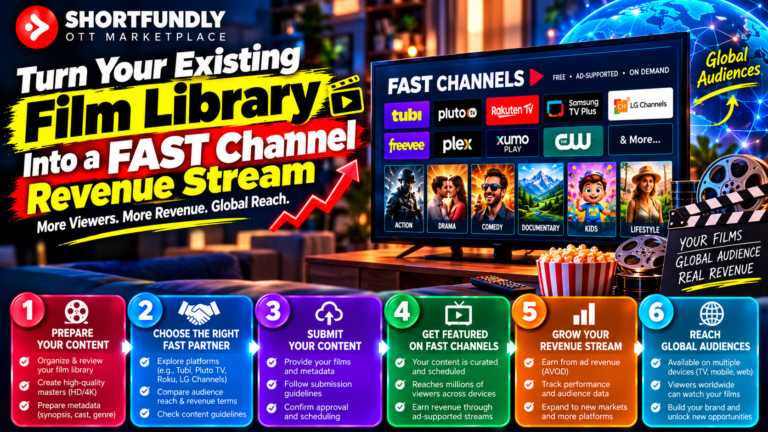
Comprehensive Outline
| Section | Key Topics |
|---|---|
| Introduction | Lessons from successful telefilm OTT strategies |
| OTT Distribution | How the modern distribution process works |
| Story Quality | Building content with audience appeal |
| Rights Management | Protecting copyright and distribution rights |
| Technical Preparation | Creating OTT-ready masters |
| Metadata | Improving content presentation and discoverability |
| Localization | Subtitles, dubbing, and regional audiences |
| Platform Selection | Matching telefilms with suitable platforms |
| Distribution Partners | Working with aggregators and distributors |
| Pitching | Creating a professional OTT pitch |
| Monetization | SVOD, AVOD, TVOD, and licensing |
| Marketing | Building awareness around release |
| Analytics | Using performance data effectively |
| Shortfundly Distribution | Distribution support for independent creators |
| Mistakes | Common problems that successful filmmakers avoid |
| Checklist | Final OTT submission checklist |
| FAQs | Answers to common filmmaker questions |
| Conclusion | Key lessons for future OTT releases |
1. What Telefilm OTT Distribution Success Stories Have in Common
Successful distribution stories can look very different on the surface.
One filmmaker may secure a licensing agreement. Another may reach audiences through a regional OTT service. Another may distribute internationally using subtitles and an aggregator. A fourth may build a catalog that generates revenue across several platforms over time.
Yet beneath these different outcomes, there are often common practices.
They Prepare Before They Submit
One of the biggest differences between organized and disorganized OTT submissions is preparation.
Filmmakers who prepare properly generally have the necessary assets ready before approaching distributors.
These may include:
- Final video master
- Audio master
- Trailer
- Poster
- Key artwork
- Logline
- Short synopsis
- Long synopsis
- Cast and crew details
- Language information
- Runtime
- Subtitle files
- Copyright documentation
- Music rights information
- Distribution rights information
This preparation reduces avoidable delays.
They Treat the Telefilm as a Commercial Asset
A finished telefilm isn’t only a creative work. It can also become a licensable digital asset.
That means we should understand:
Who owns it?
Where can it be distributed?
For how long?
Through which platforms?
Under which business model?
Who receives the revenue?
These questions become increasingly important when a filmmaker begins pursuing multiple territories.
They Don’t Confuse Submission With Acceptance
Submitting a telefilm to a distributor or platform is only one stage of the process.
Acceptance can depend on:
- Content suitability
- Technical quality
- Rights availability
- Platform demand
- Audience fit
- Territory
- Current acquisition strategy
- Commercial terms
This distinction is important because responsible distribution planning doesn’t depend on assumptions of guaranteed placement.
2. Strong Storytelling Comes Before Distribution
Technology may deliver a telefilm, but storytelling gives audiences a reason to watch it.
Successful filmmakers typically understand that OTT distribution begins long before the final upload.
Create a Clear Audience Profile
Before production or distribution, we should identify the likely audience.
For example, a telefilm could target:
- Young adults
- Families
- Regional-language viewers
- Romance audiences
- Thriller audiences
- Comedy viewers
- Diaspora communities
- Niche cultural audiences
- International viewers interested in a particular region
A defined audience can influence everything from poster design to metadata and platform selection.
Universal Themes Can Travel
A telefilm may be deeply regional while still exploring universal themes.
Common examples include:
- Family relationships
- Love
- Friendship
- Ambition
- Loss
- Social pressure
- Identity
- Personal sacrifice
- Justice
- Survival
This combination of local identity and universal emotion can help a film communicate across language and cultural boundaries.
Keep the Story Focused
A telefilm doesn’t necessarily need a huge cast or complicated production design.
A strong central conflict, memorable characters, and controlled pacing can create an engaging viewing experience.
For independent filmmakers, this is good news.
We can focus resources on the elements that directly affect audience experience instead of trying to imitate the production scale of large studio projects.
3. Rights Management Is a Major Success Factor
One of the most important lessons from professional telefilm OTT distribution is that rights must be clear before distribution begins.
A distributor needs confidence that the producer has the authority to license the content.
Understand the Chain of Title
The chain of title documents how ownership or exploitation rights were obtained.
Depending on the project, documentation can involve:
- Script rights
- Story rights
- Production agreements
- Actor agreements
- Director agreements
- Music licenses
- Composer agreements
- Footage licenses
- Artwork permissions
- Distribution authorization
Missing documentation can create problems during platform review.
Review Music Rights
Music deserves special attention.
A track used in a telefilm may have different permissions for:
- Theatrical release
- Television
- Streaming
- Social media
- International distribution
- Promotional use
We should verify that the intended OTT distribution rights are actually covered.
Define Distribution Rights Precisely
A distribution contract may cover one or more of the following:
| Right | Example |
|---|---|
| OTT Streaming | Online streaming |
| TVOD | Rental or purchase |
| AVOD | Advertising-supported viewing |
| SVOD | Subscription-based viewing |
| Television | Broadcast rights |
| Mobile | Mobile distribution |
| International | Overseas territories |
| Promotional | Trailers and excerpts |
| Dubbing | Local-language adaptation |
| Subtitles | Translated versions |
The broader the rights grant, the more carefully the agreement should be reviewed.
4. Filmmakers Prepare Professional OTT Masters
A telefilm can have excellent storytelling and still experience distribution problems because of technical issues.
Successful filmmakers understand that OTT technical delivery is part of the production workflow, not an afterthought.
Video Preparation
Depending on the platform, requirements may cover:
- Resolution
- Frame rate
- Codec
- Bitrate
- Aspect ratio
- File container
- Color space
- Mastering specifications
We should always confirm current platform requirements before exporting a master.
Audio Preparation
Audio should be checked for:
- Dialogue clarity
- Synchronization
- Background noise
- Music levels
- Sound effects
- Channel configuration
- Sudden volume changes
If localization is planned, maintaining high-quality source audio can make future dubbing easier.
Technical Quality Control
Before submission, we should watch the complete master.
Don’t just inspect the first few minutes.
A final QC review should check the entire program for:
- Black frames
- Picture glitches
- Audio dropouts
- Subtitle errors
- Incorrect credits
- Editing mistakes
- Color inconsistencies
- Sync issues
A professional QC process can prevent avoidable rejection or delivery delays.
5. Metadata Can Improve OTT Discoverability
Another common lesson from successful OTT distribution is the importance of metadata.
Metadata tells a platform what the telefilm is and helps organize it within its catalog.
Essential Metadata
A professional metadata sheet may contain:
- Title
- Alternate title
- Logline
- Short synopsis
- Long synopsis
- Genre
- Language
- Runtime
- Release year
- Country
- Director
- Producer
- Cast
- Crew
- Keywords
- Content rating
Write for Real Viewers
Metadata shouldn’t read like a legal document.
A strong synopsis should quickly explain:
Who is the protagonist?
What do they want?
What obstacle do they face?
Why should the audience care?
The description should remain accurate while still being engaging.
Use Relevant Keywords Naturally
Useful terms can include:
- Telefilm
- Regional telefilm
- OTT streaming
- Independent film
- Digital distribution
- Regional-language content
- Original movie
- Streaming film
Keywords should support the content rather than make the synopsis unnatural.
6. Localization Opens International Opportunities
A successful regional telefilm doesn’t necessarily need to change its identity to reach international audiences.
Instead, localization can make the existing story easier to understand.
Subtitles Are a Cost-Effective Starting Point
For many independent productions, subtitles are a practical first step toward international distribution.
English subtitles can make regional-language content accessible to a wider audience.
Additional languages can be considered according to target territories.
Subtitle Quality Matters
Professional subtitles should preserve:
- Meaning
- Tone
- Timing
- Character voice
- Cultural context
- Humor
Literal translation isn’t always effective.
A culturally accurate translation may communicate the intended meaning more effectively than translating every word directly.
Dubbing Can Expand Reach Further
Dubbing can be considered when a particular market demonstrates sufficient potential.
However, dubbing involves additional costs, including:
- Translation
- Voice casting
- Recording
- Direction
- Mixing
- Quality control
For a low-budget production, subtitles may therefore be the more practical initial strategy.
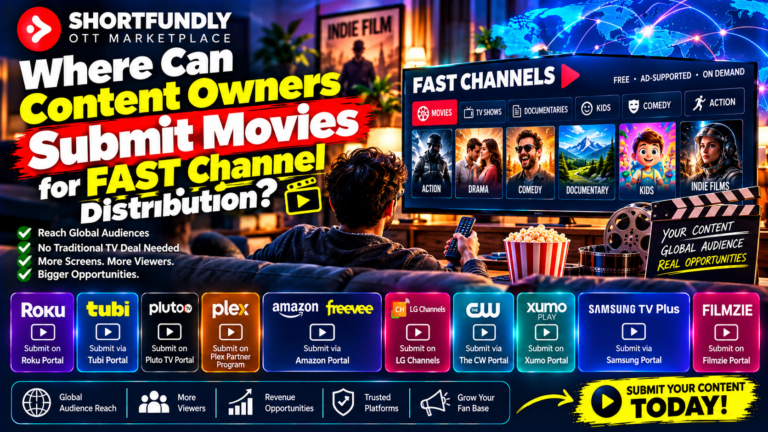
7. Successful Filmmakers Choose Platforms Strategically
A common misconception is that distribution success means getting onto the biggest OTT platform available.
In reality, platform suitability depends on the project.
Consider Audience Fit
We should ask:
- Who watches this type of content?
- What language do they prefer?
- Which territories are relevant?
- Does the platform serve that audience?
- Is the platform accepting comparable content?
- Are the rights available?
A specialized regional platform can sometimes be more relevant to a specific telefilm than a large general entertainment service.
Consider Multiple Platforms
Where contract terms permit, producers may consider non-exclusive opportunities across multiple channels.
However, we must check whether one agreement prevents additional licensing.
A multi-platform strategy can include:
- Regional OTT
- International OTT
- AVOD services
- TVOD services
- Digital aggregators
- Television licensing
The actual strategy should depend on the rights agreement.
8. Professional Filmmakers Build a Strong OTT Pitch
An OTT pitch shouldn’t be a long production diary.
It should help a buyer or distributor quickly understand the title.
A Useful Pitch Deck Can Include
- Telefilm title
- Logline
- Synopsis
- Genre
- Runtime
- Language
- Director
- Producer
- Key cast
- Trailer
- Poster
- Audience profile
- Comparable content
- Rights availability
- Territory availability
- Contact information
Lead With the Story
The first page should communicate the project’s identity quickly.
A distributor should be able to understand:
What is this telefilm?
Who is it for?
What makes it interesting?
Where can it be distributed?
What rights are available?
This keeps the pitch useful and buyer-friendly.
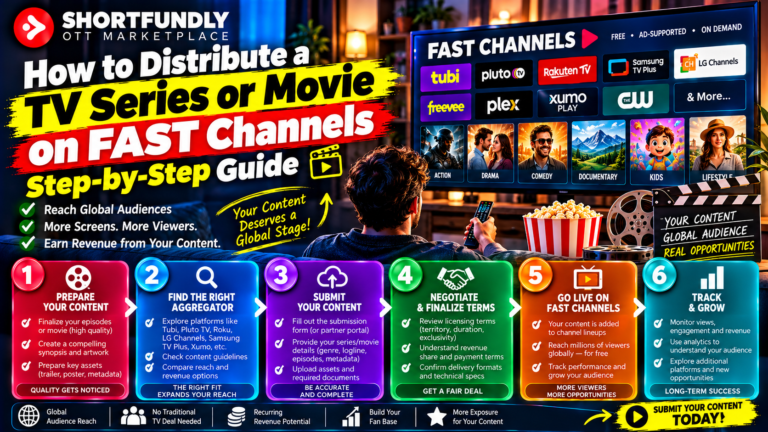
9. Distribution Partners Can Simplify the Process
Independent producers often don’t have direct relationships with dozens of OTT services.
This is where distributors and aggregators can become useful.
A distribution partner may assist with:
- Platform pitching
- Content delivery
- Metadata
- Technical QC
- Rights administration
- Localization coordination
- Revenue reporting
- Platform communication
Ask What the Distributor Actually Does
Before signing an agreement, we should ask:
- Which services are currently available?
- Which territories are covered?
- Is the distribution exclusive?
- What fees apply?
- What services are included?
- How is revenue calculated?
- When are payments made?
- How frequently are reports provided?
- What happens after termination?
Clear answers make the commercial relationship easier to understand.
10. Shortfundly Distribution and Independent Filmmakers
Independent creators can also explore specialized distribution services that help organize the OTT delivery process.
Shortfundly Distribution provides information about distribution opportunities for independent content, including telefilms and other formats such as short films, web series, documentaries, pilot films, movies, songs, and micro dramas.
Its distribution portal describes services and workflows involving content preparation, metadata, subtitles, artwork, OTT strategy, distribution, revenue tracking, and post-release analytics.
For any distribution service, filmmakers should verify the current terms applicable to their particular project. Platform availability, fees, rights, territories, revenue arrangements, and eligibility requirements can change.
The most useful approach is to evaluate the actual agreement and deliverables rather than relying solely on promotional descriptions.
11. Successful Releases Use Multiple Monetization Models
OTT monetization doesn’t follow one universal model.
SVOD
Subscription Video on Demand allows audiences to watch content through a subscription service.
The producer’s commercial arrangement may involve:
- Licensing fees
- Revenue sharing
- Minimum guarantees
- Hybrid agreements
AVOD
Advertising-supported platforms generate revenue through advertisements.
This model can work well when content can attract a broad viewing audience.
TVOD
Transactional Video on Demand allows viewers to rent or purchase access.
This can be useful for niche content where an identifiable audience is willing to pay directly.
Fixed Licensing
A platform can license content for a defined term, territory, and set of rights.
The producer receives the agreed amount under the contract.
Revenue Sharing
Revenue sharing can align distributor and producer interests, but the contract should clearly define:
- Gross revenue
- Platform deductions
- Distributor commission
- Approved expenses
- Taxes
- Net revenue
- Producer percentage
- Payment schedule
A percentage alone isn’t enough to understand the economics.
12. Filmmakers Support Their OTT Release With Marketing
Distribution provides access, but audience awareness still matters.
Successful filmmakers often create promotional material before the OTT release.
Useful Promotional Assets
- Trailer
- Teaser
- Poster
- Character posters
- Short clips
- Behind-the-scenes footage
- Cast interviews
- Director interviews
- Social media graphics
- Release announcements
Build Regional and Diaspora Audiences
A regional-language telefilm can target:
- Local audiences
- Other Indian-language audiences
- Diaspora communities
- International viewers interested in regional cinema
This can make localization and digital promotion more valuable.
Don’t Reveal Everything
A trailer should create curiosity without giving away the complete story.
Short clips should highlight:
- Characters
- Conflict
- Emotional moments
- Unique scenes
- Story hooks
while preserving the viewing experience.
13. Successful Filmmakers Use Analytics After Release
Distribution doesn’t end when the telefilm goes live.
Where platform reporting is available, we should examine performance data.
Useful metrics may include:
| Metric | What It Can Tell Us |
|---|---|
| Views | Audience reach |
| Watch Time | Engagement |
| Completion Rate | Viewer retention |
| Geography | Strong territories |
| Revenue | Commercial performance |
| Transactions | Direct purchasing behavior |
| Platform Performance | Channel-level results |
| Audience Trends | Future targeting opportunities |
Use Data for Future Projects
Suppose a filmmaker discovers that a particular language market delivers strong viewing performance.
That information can influence future decisions around:
- Subtitles
- Dubbing
- Marketing
- Platform selection
- Genre
- Release timing
- Territory licensing
In other words, one telefilm can teach us how to distribute the next one more effectively.
14. Successful Filmmakers Protect Long-Term Rights
One of the most valuable lessons from Telefilm OTT Distribution Success Stories is that immediate exposure should not automatically outweigh long-term rights considerations.
Review Exclusivity
An exclusive agreement may prevent the producer from licensing the same rights elsewhere during the contract term.
We should understand exactly what is exclusive.
Review Territory
A contract should clearly state whether rights apply to:
- India
- Specific countries
- Asia
- Selected territories
- Worldwide
Review Term
We should know:
- Start date
- End date
- Renewal process
- Termination conditions
- Post-termination obligations
Review Rights Reversion
Rights reversion determines when rights return to the producer.
This can become extremely important when building a long-term content catalog.
15. Common Mistakes That Successful Filmmakers Avoid
1. Submitting Without Rights Documentation
A distributor can’t effectively commercialize rights that aren’t clearly documented.
2. Using Unprofessional Metadata
A weak synopsis can make a strong film difficult to evaluate.
3. Ignoring Localization
Regional-language content may lose international opportunities if subtitles aren’t prepared properly.
4. Choosing a Distributor Only Because of a Low Fee
The cheapest option may not provide the required services.
5. Accepting Vague Worldwide Rights
Territories should be clearly defined.
6. Ignoring Revenue Deductions
Producers need to understand exactly how revenue is calculated.
7. Assuming Platform Placement Is Guaranteed
Distribution services and OTT platforms generally retain their own content-selection criteria.
8. Failing to Prepare Multiple Assets
A single video file and poster may not satisfy every delivery requirement.
9. Neglecting Post-Release Promotion
A streaming release still benefits from audience awareness.
10. Forgetting About Rights After the Contract Ends
Producers should know what happens to the content when the distribution term expires.
16. The Ultimate Telefilm OTT Distribution Checklist
Before submitting a telefilm, we can use the following checklist.
Legal Checklist
- Copyright ownership confirmed
- Chain of title organized
- Music rights cleared
- Performer agreements available
- Digital rights confirmed
- International rights reviewed
- Distribution authority confirmed
Technical Checklist
- Final master completed
- Video QC completed
- Audio QC completed
- Subtitle files prepared
- Trailer exported
- Artwork prepared
- Required delivery formats confirmed
Metadata Checklist
- Title
- Logline
- Short synopsis
- Long synopsis
- Genre
- Language
- Runtime
- Cast
- Crew
- Keywords
- Rating information
Commercial Checklist
- Distribution territories selected
- Exclusive/non-exclusive terms understood
- Revenue model identified
- Distributor fees understood
- Revenue deductions defined
- Reporting schedule confirmed
- Payment schedule confirmed
- Termination clause reviewed
- Rights reversion confirmed
17. FAQs About Telefilm OTT Distribution Success Stories
1. What makes a telefilm successful on OTT platforms?
Success can depend on several factors, including story quality, audience fit, technical quality, platform suitability, rights availability, localization, marketing, and commercial terms. No single factor guarantees OTT success.
2. Can independent filmmakers distribute telefilms on OTT platforms?
Yes. Independent filmmakers can explore distributors, aggregators, direct platform submissions, licensing representatives, and regional OTT services, depending on their rights and the applicable platform requirements.
3. Does a low-budget telefilm have a chance of reaching international audiences?
Yes. A low production budget does not automatically prevent international distribution. Strong storytelling, professional technical quality, clear rights, subtitles, metadata, and appropriate platform targeting can make a telefilm more distribution-ready.
4. Are subtitles necessary for international OTT distribution?
Requirements vary by platform and territory, but subtitles can significantly improve accessibility. English subtitles are particularly useful when distributing regional-language content to audiences outside the original language market.
5. Should a telefilm use an OTT aggregator?
An aggregator can be useful when a filmmaker needs centralized content delivery, metadata management, platform communication, rights administration, or reporting. The filmmaker should compare the services and commercial terms before signing.
6. How much does telefilm OTT distribution cost?
There isn’t one universal price. Costs can vary based on the distributor, services, localization, territories, technical requirements, and commercial structure. Some arrangements use fixed fees, while others use revenue sharing or licensing models.
7. Does paying a distribution fee guarantee OTT placement?
No. A fee for distribution services doesn’t necessarily guarantee that a specific OTT platform will accept or feature the telefilm. Platform selection can depend on content suitability, rights, market demand, technical standards, and acquisition decisions.
8. What documents should filmmakers prepare before distribution?
Common documents include ownership records, chain-of-title materials, music licenses, performer agreements, distribution authorization, and other rights documentation relevant to the project.
9. Which monetization model is suitable for an independent telefilm?
The appropriate model depends on the audience, platform, territory, content type, and commercial agreement. Producers can evaluate SVOD, AVOD, TVOD, fixed licensing, revenue sharing, or hybrid structures.
10. Can one telefilm be distributed in multiple countries?
Potentially, yes. International distribution depends on the rights available, territory restrictions, platform demand, localization, technical requirements, and agreements with distributors or platforms.
11. How important is metadata for OTT distribution?
Metadata is highly important because it helps platforms categorize, present, and describe content. Accurate titles, synopses, genres, cast details, languages, keywords, and other information make a telefilm easier to evaluate and manage.
12. What should filmmakers check in an OTT distribution contract?
Key areas include rights, territory, exclusivity, duration, renewal, revenue share, deductions, payment schedule, reporting, marketing rights, termination, and rights reversion.
13. Can regional-language telefilms attract global viewers?
They can, particularly when the content combines strong storytelling with accurate subtitles, localized metadata, professional presentation, and targeted international distribution.
**14. What should filmmakers do after their telefilm goes live?
Where data is available, filmmakers should monitor views, watch time, completion, audience geography, transactions, and revenue. These insights can help shape future marketing and distribution decisions.
**15. How can Shortfundly Distribution help independent filmmakers?
Shortfundly Distribution provides information about OTT distribution services for independent content, including telefilms and other formats. Producers can review its current distribution services, eligibility requirements, and commercial terms to determine whether they fit a particular project.
Also read: https://blog.shortfundly.com/ott/telefilm-ott-distribution-2/
18. Conclusion: Turning Distribution Lessons Into Action
The most useful lessons from Telefilm OTT Distribution Success Stories aren’t about one particular platform or one guaranteed path to streaming success.
They are about preparation.
Successful filmmakers generally understand that distribution starts with a finished project that is legally clear, technically reliable, professionally presented, properly localized, and commercially understandable.
They prepare their masters before submission. They organize their rights. They create strong metadata. They understand their audiences. They research platforms instead of blindly submitting everywhere. They review distribution contracts carefully. They also continue promoting and analyzing the telefilm after release.
For independent filmmakers, these practices can create a stronger foundation without requiring a massive distribution budget.
The process can be summarized simply:
Create strong content → Clear the rights → Prepare OTT assets → Localize the content → Identify suitable platforms → Compare distribution terms → Submit professionally → Promote the release → Track performance → Build the next opportunity.
A telefilm’s journey doesn’t have to end when production wraps. With a structured OTT distribution strategy, the finished project can potentially reach regional, national, diaspora, and international audiences through appropriate digital channels.
The smartest long-term approach is to treat every telefilm as both a creative achievement and a carefully managed digital asset. When storytelling, rights, technical delivery, localization, platform targeting, and commercial planning work together, independent filmmakers can create more opportunities for sustainable OTT distribution.