Table of Contents
Introduction
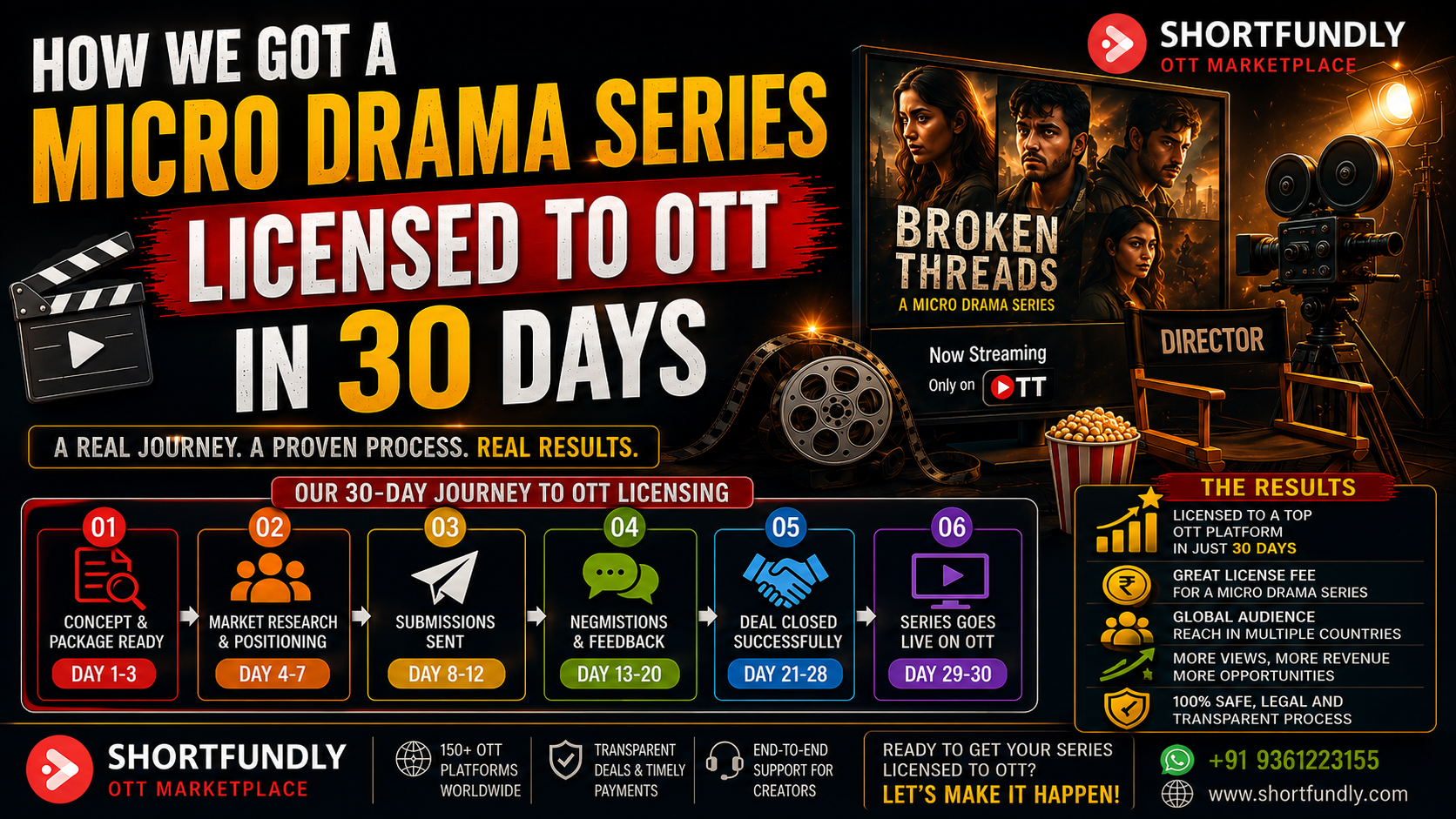
The rapid rise of micro drama series has transformed the digital entertainment industry. With audiences increasingly consuming short-form, mobile-friendly content, OTT platforms are actively looking for engaging micro dramas that deliver compelling storytelling in just a few minutes per episode. However, many creators believe licensing a micro drama to an OTT platform takes months or even years.
Our experience proved otherwise.
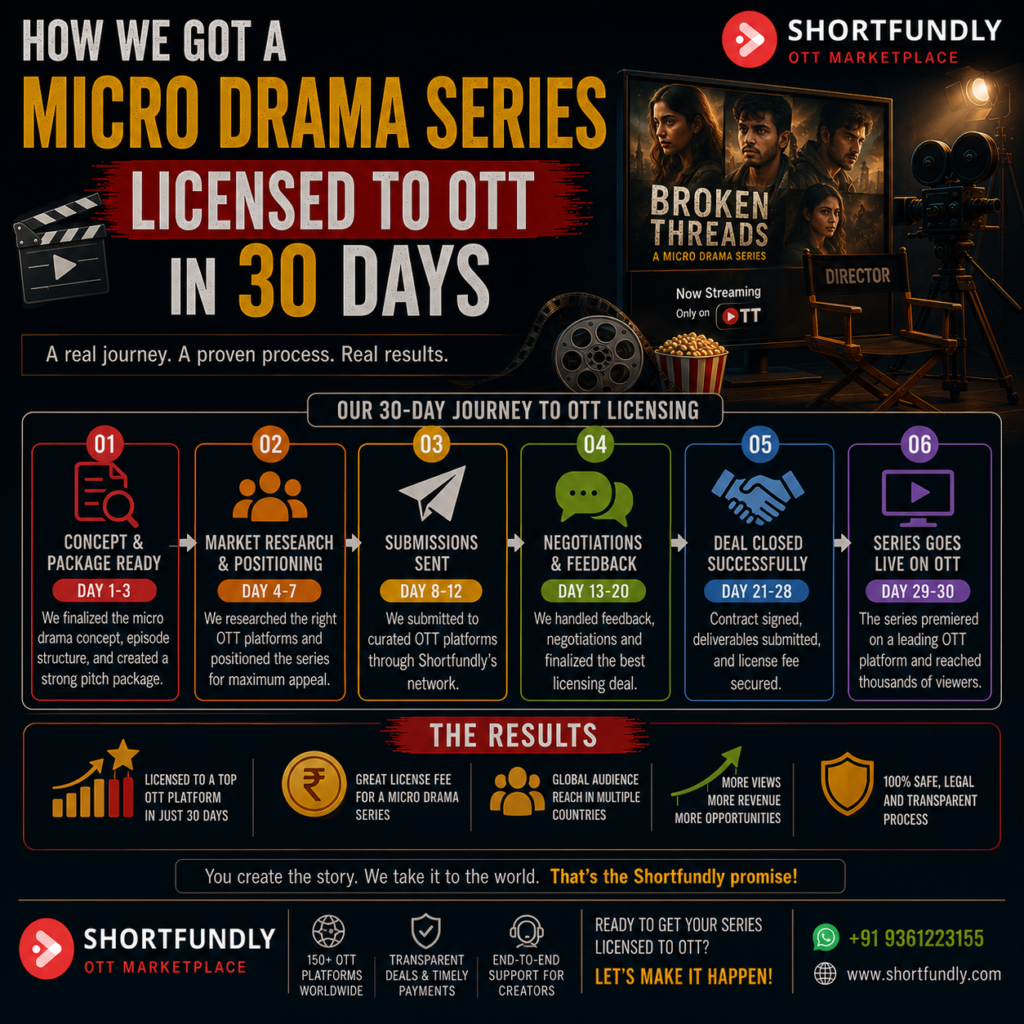
By following a structured distribution strategy, preparing professional deliverables, targeting the right OTT buyers, and presenting a market-ready package, we successfully licensed our micro drama series to an OTT platform in just 30 days.
This guide shares the exact process we followed—from development and production to pitching, negotiations, technical delivery, and licensing—so independent creators can improve their chances of securing an OTT deal quickly.
Why Micro Drama Series Are Growing So Fast
Short-form storytelling has become one of the fastest-growing entertainment formats worldwide. Viewers increasingly prefer content that fits into their daily routines, making episodes of two to ten minutes highly attractive.
OTT platforms are responding to this trend by expanding their libraries with original and licensed micro drama content.
Several factors drive this growth:
- Higher mobile consumption
- Shorter viewer attention spans
- Lower production costs
- Faster content creation
- Excellent binge-watching potential
- Growing regional language demand
For independent creators, micro dramas represent an affordable and scalable way to enter the OTT market.
Week One: Developing a Marketable Concept
The licensing journey began long before production.
Instead of creating content solely for artistic expression, we developed a concept that aligned with current OTT viewing trends.
We focused on:
- Strong emotional storytelling
- Fast-paced narrative
- Cliffhanger endings
- Relatable characters
- Universal themes
- Regional authenticity
Our series was designed specifically for digital audiences rather than traditional television.
Researching OTT Platform Preferences
Before writing the screenplay, we studied:
- Trending genres
- Popular episode lengths
- Viewer demographics
- Regional language demand
- Successful micro drama formats
This research helped us create content with genuine commercial potential.
Writing a Binge-Worthy Screenplay
Every episode ended with a compelling hook.
This encouraged viewers to immediately continue watching the next episode.
We also ensured:
- Minimal filler scenes
- Quick pacing
- Memorable dialogue
- Emotional conflict
- Strong character development
High completion rates are extremely valuable for OTT platforms.
Week Two: Producing Professional-Quality Content
Although our budget was limited, we refused to compromise on production quality.
We prioritized:
Professional Cinematography
Sharp visuals immediately increase perceived value.
High-Quality Audio
Clear dialogue matters more than expensive cameras.
Poor audio often causes content rejection.
Professional Color Grading
Consistent color creates a polished viewing experience.
Clean Editing
Fast editing maintained audience engagement throughout every episode.
Creating a Strong Visual Identity
Branding matters.
We developed:
- Series logo
- Official poster
- Episode thumbnails
- Promotional banners
- Character posters
- Social media templates
Professional branding strengthened our OTT submission package.
Week Three: Preparing OTT Deliverables
Many creators underestimate the importance of technical deliverables.
OTT platforms expect content that is immediately ready for distribution.
Our delivery package included:
- 4K master files
- Stereo audio
- Closed captions
- Subtitle files
- Metadata spreadsheet
- Synopsis
- Episode descriptions
- Trailer
- Promotional stills
- Cast information
- Director biography
Having every asset prepared accelerated the approval process.
Building a Professional Pitch Package
Instead of sending only a trailer, we created a complete presentation.
Our pitch included:
Series Overview
A concise explanation of the story.
Target Audience
Clearly defined demographics.
Genre Positioning
We explained where the series fit within current OTT trends.
Marketing Potential
We highlighted:
- Social media campaigns
- Promotional ideas
- Audience engagement strategy
Platforms appreciate content with built-in marketing opportunities.
Finding the Right Distribution Partner
Rather than approaching dozens of OTT platforms individually, we worked with an experienced distribution partner familiar with platform requirements and licensing workflows.
A professional distributor can help creators:
- Package content professionally
- Prepare OTT-compliant deliverables
- Pitch projects to relevant buyers
- Negotiate licensing agreements
- Coordinate technical delivery
- Manage communication throughout the distribution process
For example, Shortfundly Distribution supports independent filmmakers and web series creators by helping them prepare and submit projects for OTT distribution. Working with an experienced distribution company can simplify the process and improve the professionalism of a submission.
Week Four: Pitching to OTT Buyers
Once everything was ready, submissions began.
Instead of mass emailing every platform, we targeted buyers whose content strategy matched our series.
Each pitch included:
- Personalized email
- Trailer
- Series bible
- Artwork
- Metadata
- Technical specifications
- Rights availability
Professional communication significantly improved response rates.
Responding Quickly to Buyer Requests
OTT buyers often request additional information.
We prepared responses for:
- Runtime confirmation
- Subtitle availability
- Territory rights
- Music licenses
- Copyright documentation
- Technical specifications
Fast communication demonstrated professionalism.
Negotiating the Licensing Agreement
Negotiations focused on:
- License duration
- Territory rights
- Revenue model
- Marketing support
- Payment schedule
- Content delivery timeline
Understanding these terms helped us secure a balanced agreement.
Technical Quality Review
Before licensing was finalized, the platform conducted quality control.
They evaluated:
- Video quality
- Audio consistency
- Subtitle accuracy
- Metadata
- Encoding
- File structure
Preparation prevented costly delays.
Marketing Before Release
Even after licensing, promotion remained essential.
Our marketing strategy included:
- Trailer launches
- Countdown campaigns
- Cast interviews
- Behind-the-scenes videos
- Influencer collaborations
- Press releases
Strong audience engagement increases the likelihood of additional platform promotion.
Lessons Learned During the 30-Day Journey
Several factors contributed to the rapid licensing timeline.
Preparation Saves Time
Every required document was ready before pitching.
Professional Presentation Matters
High-quality packaging created a positive first impression.
Research Reduces Rejection
Targeting the right buyers increased efficiency.
Fast Communication Builds Trust
Responding quickly accelerated negotiations.
Technical Compliance Prevents Delays
Meeting platform specifications simplified delivery.
Common Mistakes That Slow OTT Licensing
Many creators unknowingly delay distribution by making avoidable mistakes.
Common issues include:
- Poor audio quality
- Missing subtitles
- Incomplete metadata
- Weak promotional artwork
- Unclear copyright ownership
- Unlicensed music
- Generic pitch emails
- Inconsistent branding
Avoiding these mistakes improves the chances of a faster licensing process.
Tips for Independent Creators Seeking Fast OTT Deals
If your goal is to license a micro drama series quickly, focus on these best practices:
- Develop stories with strong binge potential.
- Produce technically polished content.
- Create professional posters and promotional assets.
- Prepare every required deliverable before pitching.
- Research platforms that match your genre and audience.
- Maintain organized copyright and licensing documentation.
- Respond promptly to buyer inquiries.
- Consider working with an experienced distribution partner.
A structured approach can significantly reduce delays and improve your project’s market readiness.
The Future of Micro Drama OTT Distribution
The demand for short-form scripted entertainment continues to rise as streaming platforms expand their content offerings. Advances in mobile viewing, AI-powered recommendations, regional language programming, and personalized content discovery are creating new opportunities for micro drama creators.
Independent producers who consistently deliver high-quality, audience-focused content and maintain professional distribution practices will be well positioned to capitalize on this growing market.
Also read: https://blog.shortfundly.com/ott/featured-on-ott-homepages/
Final Thoughts
Licensing a micro drama series to an OTT platform within 30 days is achievable when every stage of the process is carefully planned. Success depends on developing a commercially appealing concept, maintaining professional production standards, preparing complete technical deliverables, presenting a polished pitch package, and approaching the right buyers with a clear distribution strategy.
By treating distribution as an essential part of the production process—not an afterthought—independent creators can increase their chances of securing OTT licensing opportunities more efficiently. Professional preparation, strategic positioning, and consistent communication remain the keys to turning a completed micro drama into a successful streaming release.