Table of Contents
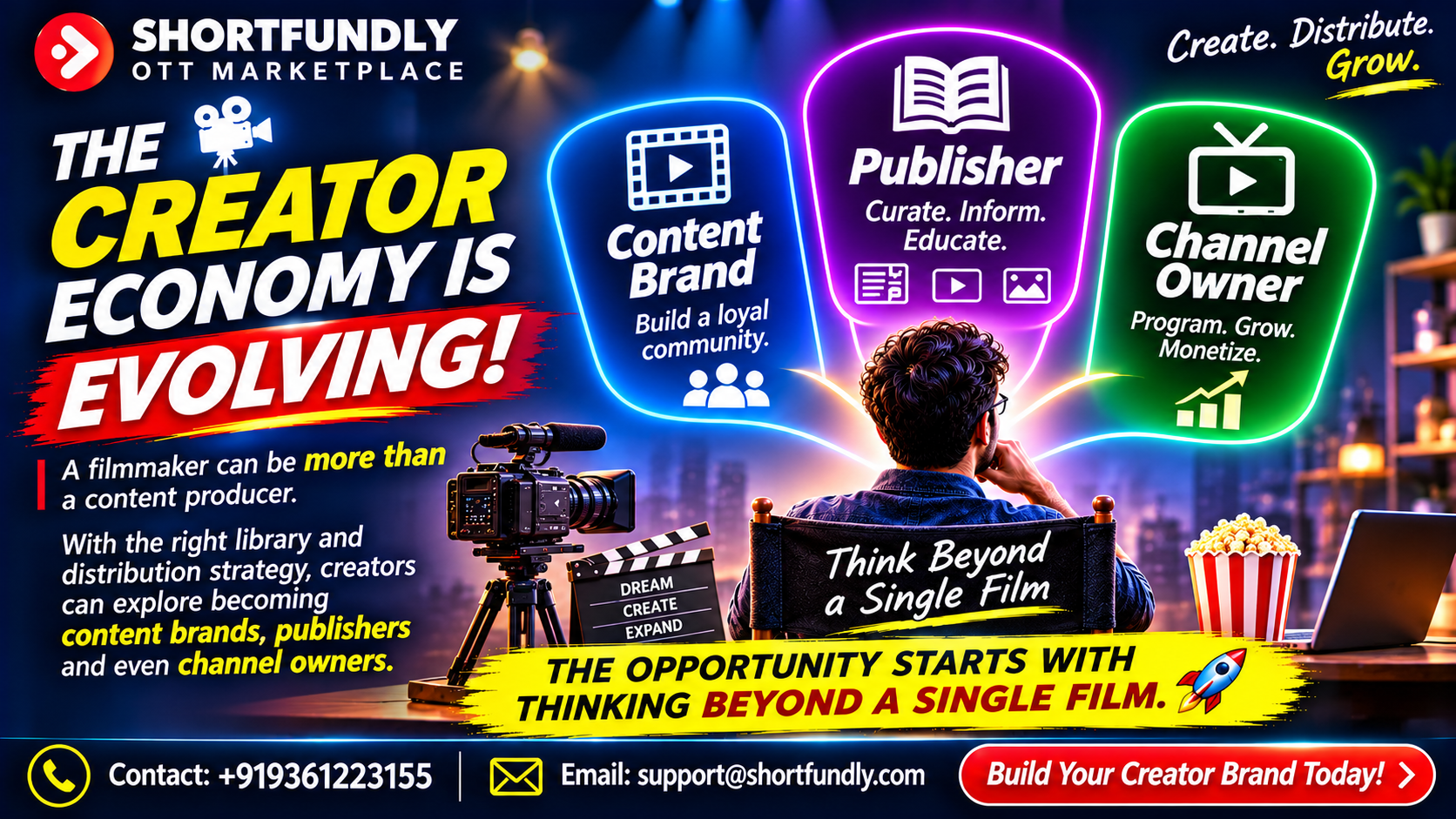
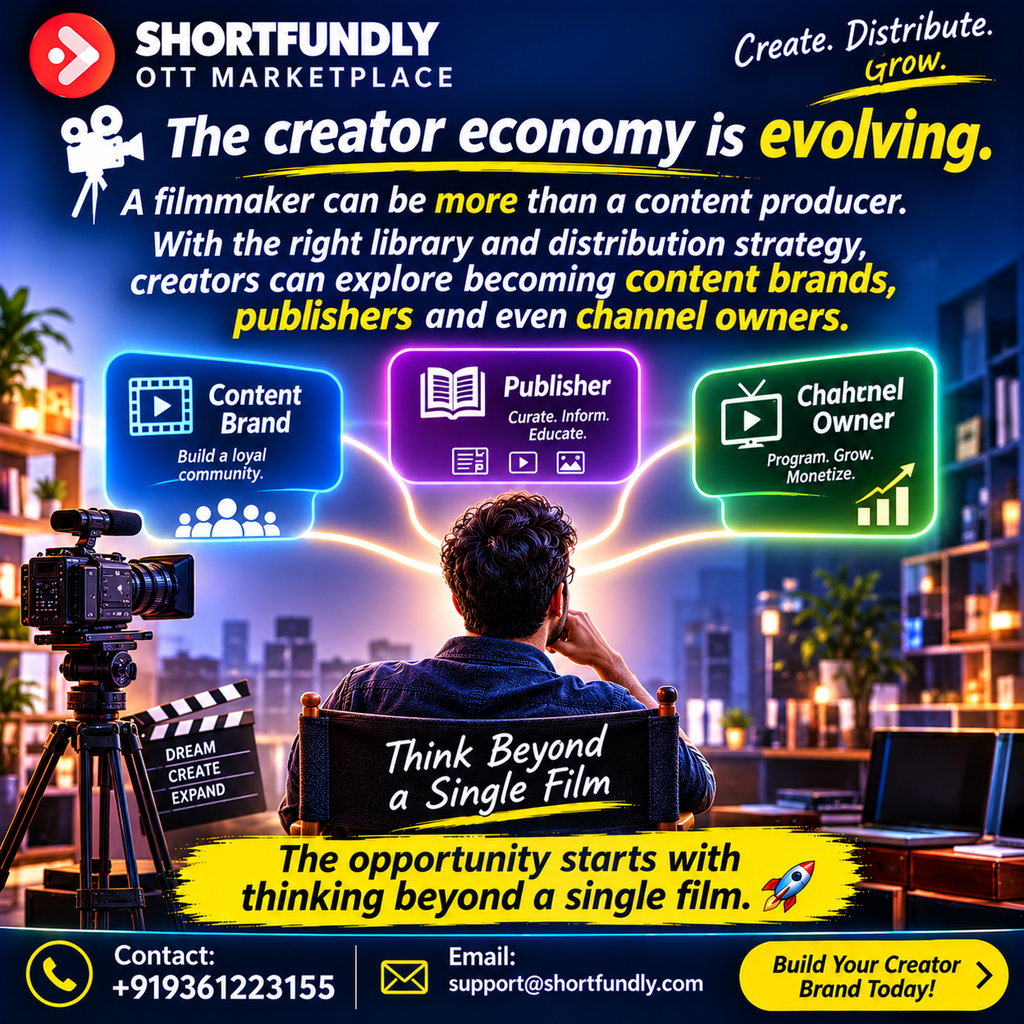
The creator economy is changing how filmmakers think about their work. A filmmaker is no longer limited to producing a film, releasing it, and moving on to the next project. With a clear filmmaker content brand strategy, creators can build a library, develop a loyal audience, publish related material, explore multiple distribution channels, and even operate their own media channels.
This shift creates new possibilities for independent filmmakers, production companies, documentary creators, and digital storytellers. A single film can become the starting point for a larger creative business. Its themes may support interviews, short-form videos, educational content, behind-the-scenes features, themed collections, and future productions.
The opportunity isn’t simply to upload more videos. It is to build a recognizable identity around the stories, subjects, genres, and creative values that make a filmmaker different. When audiences understand what a creator represents, they have a reason to follow the next release.
A strong content brand also needs a practical distribution plan. Films and related material can reach audiences through OTT platforms, FAST channels, television, mobile applications, connected TV, websites, newsletters, and international services. Each route has its own requirements, so creators must understand their rights, audience, and business goals before choosing where to publish.
In this article, we explore nine practical ways filmmakers can move beyond the single-film model and build a sustainable presence in the creator economy.
1. Think Beyond the Single-Film Model
A film is a creative work, but it can also be a long-term content asset. When filmmakers think beyond one release, they begin to see opportunities that may otherwise be overlooked.
The single-film model usually follows a simple path: develop a project, produce it, promote it, distribute it, and move on. This process can work, but it may not make full use of the creative material, audience interest, and knowledge built during production.
A broader approach treats each project as part of a growing catalogue. The filmmaker can build a collection of related works, develop a consistent subject area, and create additional material that supports the original release.
Why One Release Is Only the Beginning
A completed film can generate interest beyond its first release window. Depending on the rights and available material, creators may develop:
- Behind-the-scenes videos
- Director and cast interviews
- Short clips and trailers
- Production diaries
- Educational discussions
- Commentary and analysis
- Related short films
- Follow-up episodes or documentaries
- Themed collections
- Promotional material for future projects
These assets can help keep a project visible. They can also introduce audiences to the filmmaker’s wider body of work.
For example, a documentary about local history could support interviews with researchers, short educational videos, archival discussions, and a series exploring related subjects. A filmmaker who creates independent dramas could publish conversations about storytelling, character development, and production methods.
The goal is to build a connected body of work rather than treat every release as an isolated event.
The Filmmaker as a Creator and Publisher
Filmmakers already work with stories, images, sound, research, and ideas. These skills can support publishing in several formats.
A filmmaker may publish articles about production, create a newsletter, host interviews, or produce a recurring video series. This doesn’t mean every filmmaker must become a full-time influencer. It means we can use publishing as an additional way to communicate with audiences.
A clear editorial direction helps. If a filmmaker focuses on independent cinema, for example, related publishing could include filmmaker interviews, festival coverage, production insights, and recommendations.
The most effective approach is one that fits the creator’s skills and interests. We should choose formats we can maintain without taking attention away from the quality of the core creative work.
2. Build a Recognizable Filmmaker Content Brand
A content brand gives audiences a clear idea of what they can expect from a creator. It connects the filmmaker’s identity with a consistent subject, style, or promise.
A recognizable brand doesn’t require a large marketing budget. It starts with clarity. We need to understand what makes the work distinct and communicate that difference consistently.
Define a Clear Creative Identity
We should begin with a few simple questions:
- What kinds of stories do we create?
- Which subjects do we understand deeply?
- What themes appear across our work?
- Who is most likely to enjoy our content?
- What makes our approach different?
- What should audiences remember about our work?
The answers can help shape the filmmaker’s positioning.
For example, one creator may focus on regional stories and local culture. Another may specialize in documentaries about science and society. A third may produce independent thrillers with a distinctive visual style.
The identity should be authentic. We shouldn’t choose a niche simply because it appears popular. A strong brand needs to connect with the creator’s actual interests, skills, and available content.
Choose a Niche That Can Grow
A niche helps audiences understand a creator’s work. It also makes content planning easier because we can develop ideas within a clear subject area.
Possible filmmaker brand directions include:
| Brand direction | Possible content |
|---|---|
| Independent cinema | Short films, features, interviews, film discussions |
| Regional storytelling | Local films, cultural documentaries, language-based series |
| Documentary filmmaking | Factual films, research videos, expert interviews |
| Horror and thriller | Genre films, short stories, behind-the-scenes content |
| Social issues | Documentaries, conversations, educational videos |
| Film education | Production tutorials, editing discussions, filmmaking lessons |
| Micro dramas | Short episodic stories, character-based series |
A niche doesn’t have to be narrow forever. We can expand into related subjects as the audience and content library grow. The key is to make each expansion feel connected to the brand.
Create Consistent Brand Elements
A filmmaker’s brand can be supported by:
- A recognizable name and logo
- A clear description of the creative focus
- Consistent artwork and typography
- A professional website or portfolio
- Consistent social media presentation
- A regular publishing style
- A clear contact and business enquiry process
Consistency makes it easier for audiences, partners, and distributors to recognize the creator’s work.
3. Turn Individual Films Into a Valuable Content Library
A content library is one of the most useful assets a filmmaker can build. It brings films and related material together in an organized catalogue that can support future distribution and publishing.
A library doesn’t need to contain hundreds of titles. It needs to be relevant, properly documented, and organized so that the creator can understand what is available and how it can be used.
Build a Catalogue Around Themes
We can organize content around genres, subjects, languages, filmmakers, or recurring themes.
For example, a production company that creates regional dramas may group its work into collections based on language, location, or subject. A documentary filmmaker may organize titles around history, environment, culture, and social issues.
Collections help audiences explore related work. They can also make it easier to pitch a group of titles to a platform or distribution partner.
Include More Than Feature Films
A content library can include different formats:
- Feature films
- Short films
- Documentary films
- Web series
- Micro dramas
- Interviews
- Behind-the-scenes videos
- Educational videos
- Trailers and promotional clips
- Event recordings
- Commentary and bonus features
Each format can serve a different purpose. A feature film may be the main distribution asset, while interviews and short videos can support audience engagement.
We should still maintain clear quality standards. Adding more content is not useful if it weakens the brand or creates an inconsistent viewing experience.
Create a Content Inventory
A simple inventory can help us track each asset.
| Information | Why it matters |
|---|---|
| Title | Identifies the work |
| Format | Film, series, interview, or other content |
| Genre or subject | Supports organization and discovery |
| Language | Helps identify relevant audiences |
| Runtime | Supports scheduling and delivery |
| Release year | Provides catalogue context |
| Rights status | Confirms permitted use |
| Available territories | Shows where the content may be distributed |
| Technical status | Tracks file readiness |
| Metadata status | Shows whether descriptions and artwork are complete |
A well-maintained inventory reduces confusion when we prepare a submission, negotiate a licence, or plan a new release.
4. Understand Rights and Content Ownership
Building a content brand requires more than creative output. We must understand what we own, what we have licensed, and what we are permitted to distribute.
Rights management is especially important when a filmmaker plans to use the same content across OTT platforms, FAST channels, television, mobile applications, and international services.
Know Which Rights We Control
A film may involve several rights holders, including producers, writers, directors, composers, performers, and other contributors. Agreements determine which rights can be used and by whom.
Before distributing a title, we should review:
- Film and underlying story rights
- Music and soundtrack clearances
- Performer and contributor agreements
- OTT and VOD rights
- FAST and advertising-supported rights
- Television and broadcast rights
- Mobile and connected TV rights
- Territory and language restrictions
- Promotional clip permissions
- Exclusivity and licensing periods
We shouldn’t assume that owning a final video file means owning every right required for distribution.
Create a Rights Register
A rights register helps us track the permitted use of every title. It should record the rights holder, territories, platforms, languages, start and end dates, restrictions, and supporting agreements.
This becomes increasingly important as the catalogue grows. Without a central record, we may accidentally submit content to a platform where the rights are unavailable or have expired.
When contract terms are unclear, we should seek appropriate legal advice before proceeding.
Protect the Long-Term Value of the Library
We should store master files, contracts, artwork, subtitles, and metadata securely. We should also keep clear records of which versions have been approved for distribution.
This protects the catalogue and makes it easier to respond to partner requests. Good rights and asset management may not be visible to viewers, but it supports every part of the content business.
5. Explore Multiple Distribution Channels
A content brand needs ways to reach viewers. Different distribution channels can serve different audience needs, and we should select them based on the content and rights available.
The goal isn’t to publish everywhere. It’s to identify the routes that fit the brand and its audience.
OTT and On-Demand Distribution
OTT platforms deliver video over the internet. Many allow viewers to choose specific films or programmes rather than follow a fixed schedule.
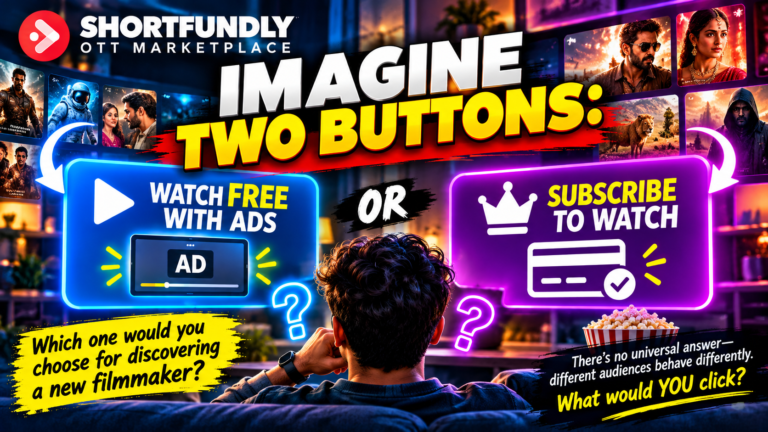
Depending on the service, content may be offered through subscription, rental, purchase, or advertising-supported models.
For filmmakers, OTT can provide a route for feature films, documentaries, series, and other catalogue titles. Platform requirements vary, so we should check content eligibility, delivery specifications, metadata, territories, and commercial terms.
FAST Channels and Scheduled Programming
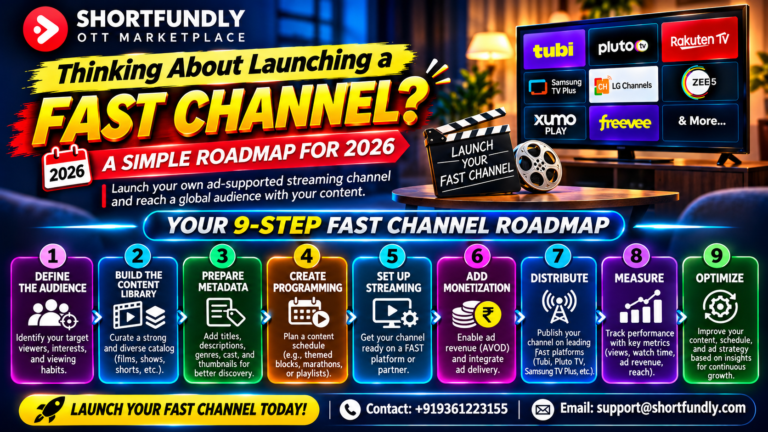
FAST stands for Free Ad-Supported Streaming Television. It gives viewers access to scheduled channels supported by advertising.
A filmmaker or content owner with a suitable library may explore FAST distribution through an existing channel or, where practical, develop a dedicated channel.
A focused channel could feature independent films, regional cinema, documentaries, horror, classic titles, or short-form stories.
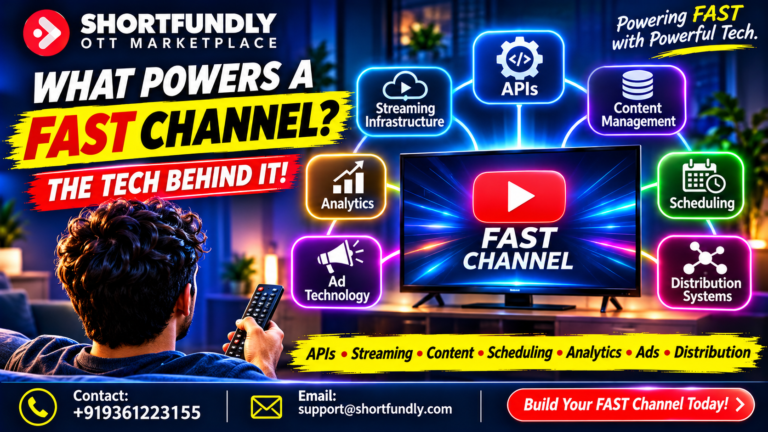
However, channel ownership requires more than content. We must plan programming, rights, metadata, artwork, streaming infrastructure, advertising, distribution, and ongoing operations.
Television and International Distribution
Traditional television can still provide valuable access to audiences. Broadcasters and cable networks may be suitable for films, documentaries, and series that fit their programming needs.
International distribution can also create opportunities for content with cross-border appeal. We should consider language versions, territory rights, local platform requirements, and promotional needs before entering a new market.
Match Each Title to the Right Channel
| Content type | Potential distribution routes |
|---|---|
| Independent feature film | OTT, television, specialist film services |
| Documentary | Documentary platforms, OTT, television, FAST |
| Regional film | Language-focused OTT, television, regional services |
| Short films | Curated digital platforms, FAST collections, creator channels |
| Micro dramas | Mobile-first platforms, social video, suitable OTT services |
| Educational content | Learning platforms, websites, video channels |
These are possible routes, not guaranteed placements. Each platform has its own eligibility and commercial requirements.
6. Develop a Direct Relationship With the Audience
A filmmaker’s audience is more than a list of viewers. It can become a community that follows the creator’s work, shares recommendations, attends events, and supports future releases.
Platform audiences are valuable, but creators should also consider ways to maintain direct communication with interested viewers.
Build an Audience Hub
A professional website can act as the central location for the filmmaker’s work. It can include:
- Film catalogue
- Creator biography
- Trailers and approved clips
- News and release updates
- Interviews and articles
- Contact details
- Distribution and licensing enquiries
The website should make it easy for visitors to understand the creator’s identity and explore the content.
Use Newsletters and Social Channels
A newsletter can help filmmakers share release announcements, production updates, interviews, and new content. Social media can support discovery through short clips, artwork, conversations, and behind-the-scenes material.
We should choose channels based on where the intended audience is active. Maintaining a few relevant channels consistently is often more practical than trying to be active everywhere.
Create Meaningful Audience Engagement
Audience engagement doesn’t need to be complicated. We can invite viewers to discuss a film, share questions with the filmmaker, participate in a live conversation, or suggest topics for future projects.
We should also listen to feedback. Audience responses can help us understand which themes connect, what viewers want to see next, and where the content experience can improve.
The aim is to build trust through useful communication rather than relying only on promotional messages.
7. Explore Publishing and Creator-Led Media
A filmmaker can become a publisher by creating useful content around their area of expertise. Publishing allows creators to share ideas between major film releases and build a recognizable voice.
This doesn’t mean every filmmaker must become a journalist or produce daily content. A practical publishing plan can be built around formats that support the creator’s work.
Develop Recurring Editorial Formats
Examples include:
- Monthly filmmaker interviews
- Behind-the-scenes articles
- Production diaries
- Film industry explainers
- Documentary research notes
- Reviews and recommendations
- Screenwriting discussions
- Editing and cinematography tutorials
- Conversations with regional artists
Recurring formats make planning easier. They also help audiences know what to expect.
Connect Publishing With the Film Catalogue
Publishing should support the content brand, not distract from it. An article about the research behind a documentary can introduce viewers to the film. An interview with a director can highlight a short-film collection. A production diary can create interest in an upcoming release.
We should use relevant links between articles, videos, and film pages. This helps audiences move naturally from one piece of content to another.
Maintain Accuracy and Editorial Quality
Creators should distinguish personal opinion from verified information. When discussing technical, legal, or industry subjects, we should use reliable sources and avoid unsupported claims.
Clear writing, accurate details, and consistent publishing help build credibility over time.
8. Consider Becoming a Channel Owner
Some filmmakers may eventually want to move beyond distributing individual titles and explore owning or operating a channel. This can create more control over programming and brand identity, but it also introduces new responsibilities.
Channel ownership is a business and operational decision. We should assess the content library, audience, rights, technical needs, and financial plan before committing.
Choose a Channel Concept
A channel needs a clear promise. It should tell viewers what kind of content they can expect.
Possible concepts include:
- Independent cinema
- Regional films
- Documentary programming
- Horror and thriller
- Classic films
- Short films and micro dramas
- Film education and creator interviews
The concept should be supported by enough content to maintain a consistent schedule.
Plan Programming and Scheduling
A linear channel needs a programme schedule. We should create blocks based on genre, theme, language, or audience interest.
For example, an independent film channel could schedule short films during one part of the day, documentaries in another block, and feature films during evening viewing hours.
We should plan content rotation carefully so that viewers don’t experience excessive repetition.
Understand the Technology and Operations
A channel may require:
- Content ingestion and storage
- Video encoding and transcoding
- Quality control
- Playout and scheduling
- Stream packaging
- Content delivery
- Programme guide information
- Advertising technology
- Analytics and monitoring
The exact setup depends on the chosen platform, technology provider, and distribution model. We should compare available solutions and confirm responsibilities before launch.
Start With a Practical Scope
We don’t need to build a large operation immediately. We can begin by testing the channel concept, organizing the available rights-cleared library, and understanding partner requirements.
A smaller, well-managed project can provide useful learning before we expand.
9. Build Sustainable Revenue Opportunities
A content brand needs a business model that supports its creative work. Revenue can come from several sources, but not every model will suit every filmmaker.
We should select opportunities based on the audience, content type, rights, production capacity, and commercial goals.
Explore Content Licensing
Content licensing allows another organization to use a film or programme under agreed terms. Agreements may define the permitted platform, territory, duration, language, exclusivity, and payment structure.
We should understand the value of each title and avoid agreeing to terms without reviewing the rights and commercial implications.
Consider Advertising-Supported Distribution
Advertising can support free viewing through AVOD services and FAST channels. Depending on the arrangement, revenue may be based on advertising impressions, revenue sharing, or other agreed terms.
We should confirm who manages advertising sales, ad placement, reporting, payment, and any platform deductions.
Develop Brand Partnerships
Filmmakers may explore sponsorships and partnerships that fit their audience and content. A documentary series, for example, may be relevant to organizations working in the same subject area.
Any partnership should be transparent and should not compromise editorial integrity or contractual obligations.
Offer Creative and Educational Services
A filmmaker’s skills can also support workshops, production consultations, editing services, educational courses, and industry talks.
These activities can create additional income while strengthening the creator’s professional identity. We should keep the service offering connected to our real experience and capabilities.
Build a Balanced Revenue Model
| Revenue route | Possible opportunity | Key consideration |
|---|---|---|
| Content licensing | Licence fees or negotiated payments | Rights and agreement terms |
| AVOD | Advertising-supported viewing | Platform and ad revenue arrangements |
| FAST | Scheduled ad-supported programming | Channel operations and monetization |
| Sponsorship | Brand support for suitable content | Audience fit and transparency |
| Education | Courses and workshops | Time and delivery capacity |
| Creative services | Production and post-production work | Service scope and resources |
| Partnerships | Joint projects and campaigns | Responsibilities and commercial terms |
A balanced model can reduce dependence on one source of income. However, we should evaluate costs and workload before adding new activities.
How Shortfundly Distribution Fits Into a Filmmaker’s Growth Plan
Filmmakers exploring ways to distribute their content can review Shortfundly Distribution as part of their research.
A distribution service may be relevant when creators want to understand how their films can reach suitable platforms and audiences. Before choosing any provider, we should review its current services and confirm whether they match our content and business goals.
Useful questions include:
- What types of films and content are accepted?
- Which distribution platforms or routes are supported?
- What territories are available?
- What rights and clearances are required?
- What technical files and metadata must be submitted?
- What are the submission and review procedures?
- What commercial terms apply?
- What reporting and support are available?
We should confirm these details directly with the provider because services, eligibility, platform relationships, and commercial terms can change.
A distribution partner should form one part of a wider creator strategy. We should understand how it supports the content library, audience goals, rights position, and future releases.
Common Mistakes Filmmakers Should Avoid
Building a content brand takes planning. A few common mistakes can make the process harder than it needs to be.
Treating Every Film as a Separate Business
When each project has its own disconnected identity, we may miss opportunities to build audience recognition. We should look for themes and creative strengths that connect our work.
Publishing Without a Clear Audience
More content doesn’t automatically mean more engagement. We should understand who we want to reach and create material that serves their interests.
Ignoring Rights and Agreements
We must verify the rights attached to every film and related asset. This includes music, artwork, clips, territories, and platform-specific permissions.
Choosing Platforms Only for Their Popularity
A large platform may not be suitable for every title. We should evaluate audience fit, content eligibility, rights, and commercial terms.
Starting a Channel Without Enough Content
A channel requires consistent programming. We should check whether the available library can support the planned schedule before investing in channel operations.
Neglecting Audience Communication
A content brand grows through consistent interaction. We should maintain useful communication with viewers rather than appearing only when a new film is released.
Expanding Too Quickly
Trying to launch a website, newsletter, channel, course, and multiple distribution routes at the same time can stretch a small team. We should build one manageable system, learn from it, and expand when resources allow.
Frequently Asked Questions About the Filmmaker Creator Economy
1. What is a filmmaker content brand?
A filmmaker content brand is a recognizable creative identity built around a creator’s films, subjects, storytelling style, and related publishing. It can include a content library, website, audience community, social channels, and distribution activities.
2. How can filmmakers earn beyond releasing one film?
Filmmakers can explore content licensing, OTT and FAST distribution, television opportunities, advertising-supported services, sponsorships, educational products, workshops, and creative services. The right options depend on rights, audience demand, available resources, and commercial terms.
3. What is a content library for a filmmaker?
A content library is an organized collection of a creator’s films and related assets. It may include feature films, short films, documentaries, series, interviews, trailers, and behind-the-scenes material. A well-managed library supports distribution, publishing, and future projects.
4. Can independent filmmakers launch their own FAST channel?
It may be possible, depending on the content library, rights, technology, platform eligibility, and business model. Filmmakers should plan programming, metadata, streaming delivery, advertising, distribution, and operations before launching a channel.
5. Do filmmakers need a website to build a content brand?
A website isn’t the only way to build a brand, but it can provide a useful central location for a film catalogue, biography, trailers, articles, release updates, and business enquiries. It also gives creators a place to present their work independently of social media platforms.
6. How important are distribution rights when building a content library?
Rights are essential. They determine where, how, and for how long a title can be distributed. Filmmakers should review platform rights, territories, languages, music clearances, promotional permissions, exclusivity, and agreement dates before making content available.
7. How can filmmakers reach international audiences?
Creators can explore international OTT services, television partners, regional distributors, and specialist platforms. They should review territory rights, subtitles, dubbing, technical requirements, local rules, and commercial terms before entering each market.
8. What is the difference between being a filmmaker and a content publisher?
A filmmaker primarily creates films and video stories. A content publisher develops and distributes material across ongoing formats and channels. A filmmaker can take on a publisher role by creating articles, interviews, educational videos, recurring series, and other related material.
9. How can Shortfundly Distribution help filmmakers explore distribution?
Filmmakers can visit Shortfundly Distribution to review its current services and determine whether they fit their content. They should confirm accepted formats, platform coverage, territories, rights requirements, submission procedures, and commercial terms directly.
10. Should every filmmaker try to become a channel owner?
No. Channel ownership is one possible growth path, not a requirement. It involves programming, technology, rights management, advertising, distribution, and ongoing operations. Some filmmakers may achieve their goals more effectively through licensing, partnerships, or established distribution services.
Also read: https://blog.shortfundly.com/ott/fast-channel-strategy/
Conclusion: Build a Content Brand That Can Grow Beyond One Film
The creator economy gives filmmakers more ways to develop the value of their work. A film can be the beginning of a wider content library, a recognizable creative identity, a publishing platform, or even a dedicated channel.
The first step is to think beyond the individual release. We should define our creative identity, understand our audience, organize our content, protect our rights, and choose distribution routes that fit each title. From there, we can build direct audience relationships, publish useful related material, and explore sustainable revenue opportunities.
Not every filmmaker needs to become a publisher or channel owner. The right path depends on creative goals, resources, rights, and audience demand. But every filmmaker can benefit from treating their work as part of a larger, carefully managed body of content.