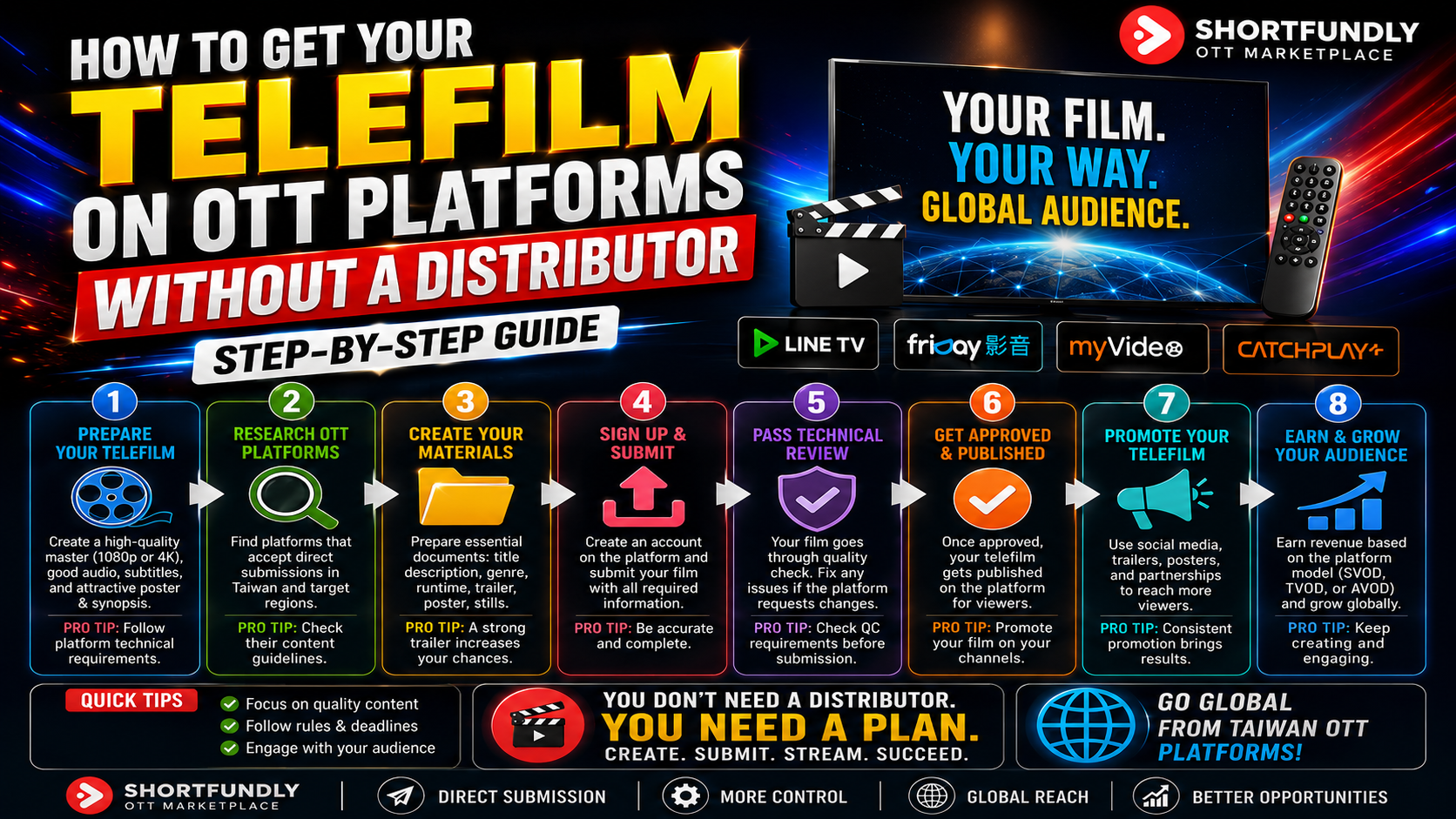
Table of Contents
Getting a telefilm on OTT platforms without a distributor is possible when we understand how digital content acquisition works and prepare the project for direct submission. Independent producers and filmmakers can approach selected streaming platforms, submit their telefilms through official channels, negotiate licensing terms, and manage delivery without necessarily appointing a traditional distributor.
However, direct OTT distribution requires significantly more preparation from the producer. We need to manage rights, metadata, subtitles, artwork, technical masters, quality control, contracts, platform communication, and post-release reporting ourselves.
This step-by-step guide explains how we can take a telefilm from a completed production to an OTT-ready submission while also showing where an OTT distribution service such as Shortfundly Distribution can become useful if direct platform access proves difficult.
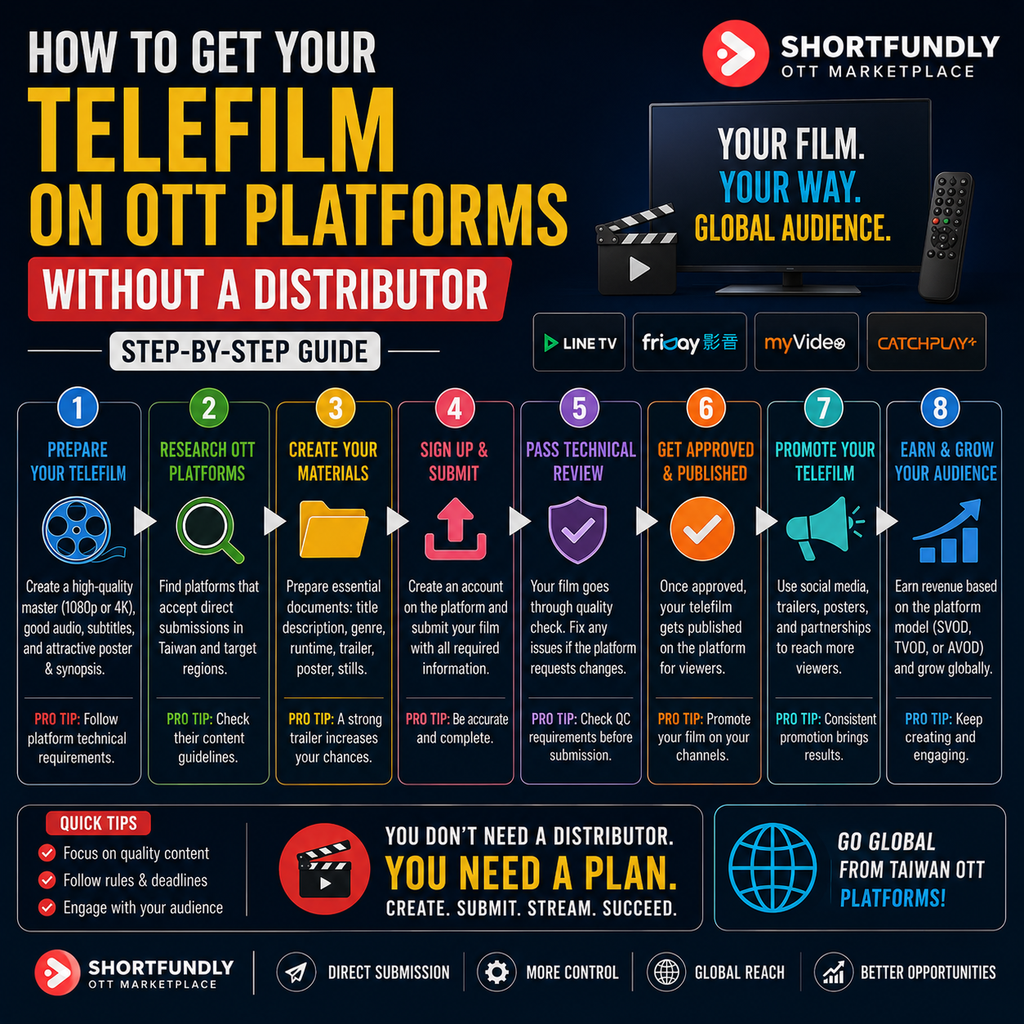
Can We Get a Telefilm on OTT Without a Distributor?
Yes, depending on the platform and its content-acquisition policy.
Some OTT platforms provide official submission or acquisition channels, while others primarily acquire content through production companies, sales agents, aggregators, established distributors, or direct industry relationships.
Therefore, getting a telefilm on an OTT platform without a distributor does not mean that every streaming service will accept an unsolicited submission.
The practical process is:
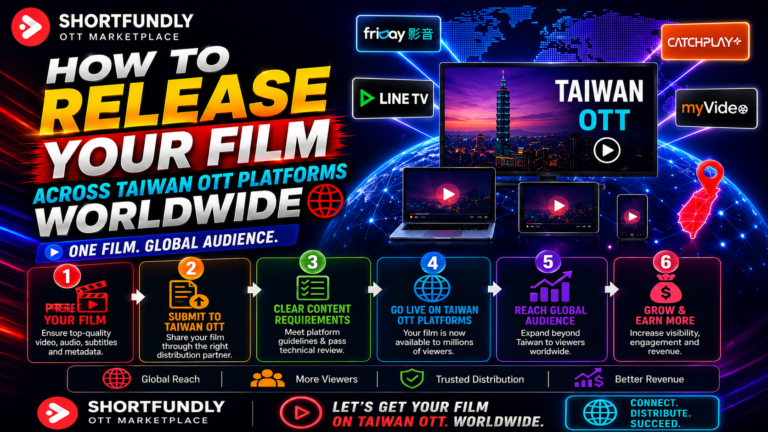
Complete the telefilm → Secure rights → Prepare OTT assets → Identify suitable platforms → Submit directly → Pass review → Negotiate → Deliver → Complete QC → Launch
The advantage is greater control over the project and negotiations.
The disadvantage is that we must perform many responsibilities that a professional distributor would normally handle.
Step 1: Confirm That We Own the OTT Rights
Before contacting any streaming platform, we should establish exactly which rights we own.
A telefilm may have been produced under agreements involving producers, writers, directors, actors, musicians, broadcasters, investors, or production companies.
We should verify that the necessary rights are available for OTT exploitation.
Important rights may include:
- OTT streaming rights
- Digital rights
- Internet rights
- Mobile rights
- Television rights
- Download rights
- Rental rights
- Advertising rights
- Subtitling rights
- Dubbing rights
- Promotional rights
- Trailer rights
- International distribution rights
If a television broadcaster already has exclusive rights, we should review that agreement before approaching an OTT platform.
The objective is to create a clear chain of title demonstrating who owns and controls the telefilm.
Step 2: Check Music, Footage, and Talent Clearances
A common mistake is assuming that owning the finished telefilm automatically means owning every commercial exploitation right.
Music may have separate rights.
Stock footage may have licensing restrictions.
Actors may have contractual limitations.
Archival images may have separate permissions.
We should therefore organize documentation covering:
- Actor agreements
- Writer agreements
- Director agreement
- Producer ownership
- Music licenses
- Composer agreements
- Stock footage licenses
- Location releases
- Artwork permissions
- Archive material
- Third-party content
- Brand or trademark permissions where relevant
For worldwide OTT distribution, territorial limitations are particularly important.
A music license valid for one country may not necessarily provide worldwide streaming rights.
Step 3: Decide Which OTT Audience We Want to Reach
We should not begin by asking, “Which OTT platform will accept our telefilm?”
A better question is:
“Which OTT audience is most likely to watch our telefilm?”
For example, our project might appeal to:
- Family audiences
- Young adults
- Regional-language viewers
- Romance audiences
- Thriller audiences
- Comedy audiences
- Religious or cultural audiences
- International viewers
- Diaspora audiences
- Short-form viewers
Once the audience is identified, we can create a more focused OTT target list.
This makes direct pitching considerably more effective.
Step 4: Research OTT Platforms That Accept Independent Content
Not every major streaming service accepts direct submissions from independent filmmakers.
Some platforms have formal acquisition teams, while others rely heavily on established content suppliers.
We should research each platform’s current submission policy before sending a project.
Potential OTT categories include:
Major Subscription Platforms
These platforms operate primarily through subscription-based viewing and generally have selective acquisition processes.
Advertising-Supported Platforms
AVOD services can provide opportunities for content monetized through advertising.
Transactional Platforms
TVOD services allow audiences to rent or purchase individual titles.
Regional OTT Platforms
Regional services may be particularly relevant for telefilms produced in local languages.
Specialized OTT Platforms
Genre-specific platforms can be useful when a telefilm serves a clearly defined audience.
The correct platform is not necessarily the largest platform. Audience fit is more important than platform size alone.
Step 5: Prepare an OTT-Ready Master
A completed telefilm is not automatically an OTT delivery package.
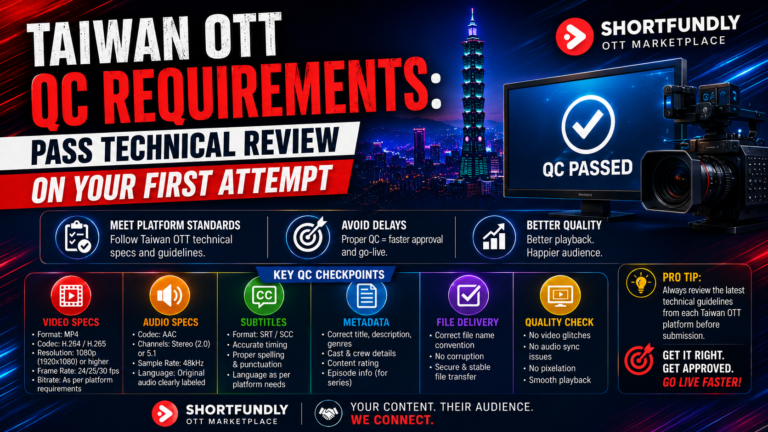
We should prepare a high-quality master according to the technical specifications requested by the target platform.
Potential requirements include:
- Resolution
- Frame rate
- Codec
- Bitrate
- Aspect ratio
- Audio configuration
- Audio sample rate
- Loudness
- File container
- Subtitle format
- Caption requirements
- Textless elements
Different platforms can have different specifications.
Therefore, we should retain the highest-quality master and create platform-specific versions only after receiving confirmed delivery requirements.
Step 6: Create Professional Subtitles
Subtitles can significantly expand the audience for a telefilm.
If the telefilm is produced in Hindi, Tamil, Telugu, Malayalam, Bengali, Marathi, Kannada, Punjabi, or another regional language, English subtitles can help reach audiences outside the original language market.
For international OTT distribution, additional localization may be required.
Depending on the target territory, we may need:
- English subtitles
- Traditional Chinese subtitles
- Simplified Chinese subtitles
- Spanish subtitles
- Arabic subtitles
- French subtitles
- Other territory-specific languages
We should maintain subtitle files separately from the master whenever possible.
Subtitle quality should be checked for:
- Translation accuracy
- Timing
- Spelling
- Grammar
- Character names
- Punctuation
- Line breaks
- Reading speed
Poor subtitles can make an otherwise professional telefilm appear unfinished.
Step 7: Create a Strong Telefilm Metadata Package
OTT metadata is one of the most important assets in a direct submission.
Platforms need information that allows them to understand, categorize, display, and promote the title.
We should prepare:
Title
Official telefilm title and approved localized titles.
Logline
One compelling sentence explaining the story.
Short Synopsis
A concise description suitable for platform listings.
Long Synopsis
A more detailed description for acquisition teams.
Genre
Primary and secondary genres.
Runtime
Exact completed runtime.
Language
Original dialogue language and available localization.
Country
Production country or countries.
Release Year
Official release year.
Cast
Principal cast members.
Crew
Director, writer, producer, cinematographer, and other relevant credits.
Keywords
Relevant themes, genres, characters, locations, and audience terms.
A well-prepared metadata package allows an OTT acquisition team to understand the project quickly.
Step 8: Design Professional OTT Artwork
We should never send an OTT pitch with only a basic poster or low-resolution promotional image.
Prepare:
- Main poster
- Landscape key art
- Portrait artwork
- Thumbnail
- Background image
- Character artwork where relevant
- Promotional stills
- Trailer thumbnail
Artwork should accurately communicate the telefilm’s genre.
For example, a romantic telefilm should have a different visual identity from a crime thriller.
The poster should remain readable at small thumbnail sizes because many OTT viewers encounter titles through mobile interfaces.
Step 9: Produce a Professional Trailer
A trailer allows an acquisition team to understand the project’s storytelling, production value, characters, tone, and audience.
A strong telefilm trailer should:
- Establish the premise quickly
- Introduce the primary characters
- Show the central conflict
- Highlight production quality
- Avoid unnecessary spoilers
- Maintain appropriate pacing
- End with clear title branding
We should also prepare a shorter promotional cut when appropriate.
The trailer should match the final telefilm and should not contain material that is absent from the final version.
Step 10: Create an OTT Pitch Deck
When approaching OTT platforms directly, we should provide a concise and professional pitch.
The pitch deck can include:
Project Overview
- Telefilm title
- Genre
- Runtime
- Language
- Production country
- Release year
Story
- Logline
- Short synopsis
- Full synopsis
Audience
Explain the intended viewer demographic and geographic markets.
Cast
Highlight principal actors and relevant credentials.
Creators
Introduce the director, writer, and producer.
Achievements
Include:
- Awards
- Festival selections
- Reviews
- Audience statistics
- Previous releases
- Media coverage
Commercial Information
Clearly state which rights are available.
Assets
Provide:
- Screener
- Trailer
- Poster
- Metadata
- Subtitles
The pitch should be professional enough for an acquisition executive to forward internally.
Step 11: Find the Correct OTT Submission Contact
We should avoid sending a telefilm randomly to customer support unless the platform specifically instructs creators to do so.
Look for official:
- Content acquisition pages
- Partner portals
- Creator submission pages
- Content licensing contacts
- Business development contacts
- Production submission programs
- Aggregator instructions
The submission route should always be verified through the platform’s official channels.
We should also maintain a spreadsheet containing:
| Platform | Contact | Date Submitted | Status | Follow-Up | Rights |
|---|---|---|---|---|---|
| Platform A | Acquisition Team | Date | Submitted | Date | Territory |
| Platform B | Content Team | Date | Reviewing | Date | Territory |
| Platform C | Partner Portal | Date | Pending | Date | Territory |
This prevents duplicate submissions and helps us manage multiple negotiations.
Step 12: Submit the Telefilm Directly
Once the project is ready, we can submit it according to the platform’s official requirements.
A direct submission should typically contain:
Subject: OTT Content Submission – [Telefilm Title]
Title: Official title
Genre: Genre
Runtime: Runtime
Language: Original language
Production country: Country
Logline: One-line concept
Synopsis: Short synopsis
Audience: Target viewers
Rights: Available OTT rights
Localization: Available subtitles/dubs
Screening link: Secure screener
Trailer: Trailer link
Metadata: Attached or supplied through the requested system
Contact: Rights holder or producer
We should avoid sending extremely large attachments unless the platform specifically requests them.
Step 13: Follow Up Professionally
Direct OTT submissions can take time.
We should avoid sending repeated emails every few days.
A better process is to record the submission date and send a professional follow-up after a reasonable interval if the platform’s stated process does not specify another timeline.
A follow-up can briefly confirm:
- Title
- Original submission date
- Project category
- Rights availability
- Screener location
- Contact details
If the platform declines the project, we can ask whether it accepts future submissions or whether another content category would be more appropriate.
Step 14: Negotiate the OTT Licensing Agreement
If an OTT platform expresses interest, the next stage is commercial negotiation.
The contract should specify:
Territory
Is the deal limited to one country or worldwide?
Term
How long will the platform have the rights?
Exclusivity
Is the agreement exclusive or non-exclusive?
Media
Which forms of digital exploitation are included?
Revenue
Is the agreement based on a fixed license fee, revenue share, minimum guarantee, or another model?
Localization
Who pays for subtitles and dubbing?
Marketing
What promotional support is included?
Reporting
How often will revenue and performance statements be supplied?
Rights Reversion
When and how do rights return to the producer?
We should never sign a contract simply because a well-known OTT service shows interest.
The economics and rights restrictions must make sense for the telefilm.
Step 15: Understand Fixed-Fee OTT Licensing
A platform may offer a fixed licensing payment for the telefilm.
For example, the agreement may specify:
Rights holder → licenses defined rights → platform → pays agreed license fee
The producer receives the agreed amount according to the contract.
This model can provide predictable income, but we should compare the offer against the value of the rights being granted.
A worldwide exclusive license for several years may deserve considerably more consideration than a limited non-exclusive Taiwan-only license.
Step 16: Understand Revenue Sharing
Another possibility is OTT revenue sharing.
Under this model, revenue generated by the title is divided according to an agreed formula.
We should establish whether the percentage is based on:
- Gross revenue
- Adjusted gross revenue
- Net revenue
We should also understand permitted deductions.
A contract that says “50% revenue share” is incomplete from a commercial perspective unless the agreement explains 50% of what.
Step 17: Complete Technical Quality Control
Before final delivery, we should perform a complete QC review.
Check:
- Video quality
- Audio quality
- Audio synchronization
- Subtitle synchronization
- Subtitle spelling
- Black frames
- Encoding errors
- Aspect ratio
- Credits
- Logos
- End cards
- Metadata
- Artwork
The complete telefilm should be watched after final encoding.
A project that passes creative review can still fail technical QC.
Step 18: Deliver the Final OTT Package
Once the contract is signed, the platform may request a complete delivery package.
This can include:
- Final master
- Trailer
- Subtitle files
- Caption files
- Dialogue list
- Metadata
- Poster
- Key art
- Promotional stills
- Cast information
- Crew information
- Legal documentation
- Music cue sheet
- Rights documentation
We should keep copies of every delivered asset.
This creates a reliable archive for future distribution opportunities.
Step 19: Monitor the OTT Release
Getting the telefilm onto an OTT platform is not the end of the distribution process.
After launch, we should monitor:
- Release date
- Platform availability
- Viewer feedback
- Reviews
- Ratings
- Social engagement
- Marketing placements
- Revenue
- Territory performance
- Licensing reports
If the contract provides analytics or revenue statements, we should maintain them systematically.
This information can also strengthen future pitches.
For example, if the telefilm performs strongly in a particular region, we can use that evidence when approaching another platform in that market.
Can We Release a Telefilm Worldwide Without a Distributor?
Potentially, but worldwide direct distribution is significantly more difficult than obtaining one platform placement.
We may need separate relationships across:
- India
- Taiwan
- Hong Kong
- Singapore
- Malaysia
- Indonesia
- Thailand
- Japan
- South Korea
- Middle East
- Europe
- North America
- Australia
Each market can have different:
- Platform requirements
- Localization requirements
- Rights structures
- Content preferences
- Licensing models
- Technical specifications
Therefore, we should decide whether worldwide rights should be handled directly or through a professional distribution partner.
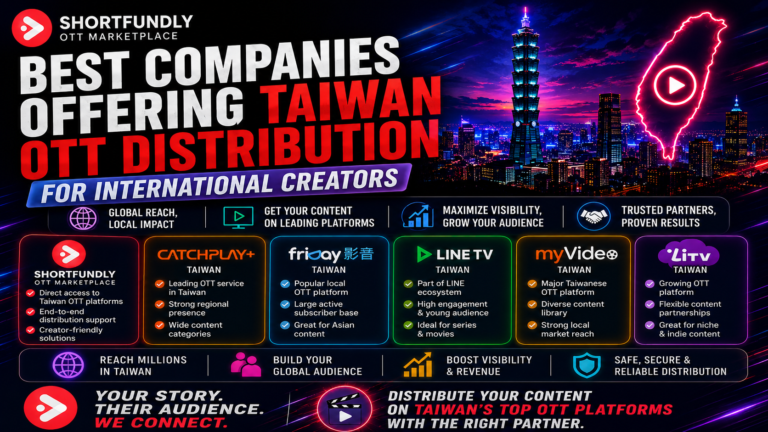
Where Does Shortfundly Distribution Fit In?
Although the objective of this guide is to explain how to distribute a telefilm without a distributor, there are situations where direct platform outreach may not be efficient.
Shortfundly Distribution can be evaluated as an alternative route for filmmakers seeking OTT distribution opportunities. Its distribution portal provides information about submitting content for OTT and digital distribution.
We should evaluate the service based on the specific project and confirm:
- Which OTT platforms are currently available
- Which territories are covered
- Whether the telefilm is eligible
- Distribution fees
- Revenue-sharing terms
- Rights requested
- Exclusivity
- Contract duration
- Localization services
- Technical delivery
- Marketing support
- Reporting
- Payment schedule
The official portal is:
Using a distributor is not automatically better than going direct. The correct choice depends on our platform relationships, experience, available resources, project size, target territories, and commercial objectives.
Direct OTT Distribution vs Using a Distributor
| Factor | Direct OTT Submission | Distribution Partner |
|---|---|---|
| Platform communication | Managed by producer | Often managed by distributor |
| Rights negotiation | Producer handles | Distributor may negotiate |
| Metadata | Producer prepares | May receive assistance |
| Localization | Producer arranges | May receive assistance |
| Technical delivery | Producer manages | May receive assistance |
| Platform relationships | Must build independently | Partner may already have relationships |
| Revenue reporting | Producer manages directly | Distributor may provide reporting |
| Control | High | Depends on contract |
| Workload | High | Lower |
| Market expansion | More difficult | Potentially easier |
Direct distribution gives us greater control, but it also requires more operational work.
Common Mistakes When Getting a Telefilm on OTT Without a Distributor
1. Approaching Every Platform
Mass submissions rarely produce the strongest results.
We should identify platforms that fit the telefilm.
2. Submitting Without Rights Documentation
An acquisition team may lose confidence if ownership cannot be demonstrated.
3. Ignoring Localization
International audiences need accessible subtitles and, where commercially justified, dubbing.
4. Using Weak Metadata
Incomplete metadata makes the project harder to evaluate and position.
5. Sending an Unprofessional Screener
The screener should be easy to access and should represent the final production.
6. Ignoring Technical Requirements
Every platform can have different delivery specifications.
7. Giving Away Worldwide Rights Too Quickly
We should understand the long-term value of our rights before granting worldwide exclusivity.
8. Focusing Only on the Platform Brand
A recognizable OTT name does not automatically mean that the deal is commercially advantageous.
9. Not Tracking Submissions
Without a submission tracker, projects can become difficult to manage.
10. Ignoring Post-Release Data
Viewer and revenue data can become valuable evidence for future licensing negotiations.
OTT Telefilm Submission Checklist
Before approaching an OTT platform directly, we should confirm that the following materials are ready.
Legal
- Copyright ownership
- Chain-of-title documents
- Talent agreements
- Music clearances
- Footage licenses
- Distribution rights
- Territory rights
Content
- Final telefilm master
- Trailer
- Screener
- High-quality audio
- Final credits
Localization
- English subtitles
- Original-language subtitles where applicable
- Territory-specific subtitles
- Dialogue list
Metadata
- Title
- Logline
- Synopsis
- Genre
- Runtime
- Language
- Country
- Release year
- Cast
- Crew
- Keywords
Artwork
- Poster
- Key art
- Thumbnail
- Promotional stills
- Trailer artwork
Commercial
- Rights available
- Preferred territories
- Exclusive/non-exclusive preference
- Licensing expectations
- Revenue model
- Contract requirements
Frequently Asked Questions About Getting a Telefilm on OTT Without a Distributor
Can we submit our telefilm directly to an OTT platform?
Yes, where the platform provides a direct submission or acquisition route. However, many major services use selective acquisition processes and may prefer established content suppliers.
Do we need a distributor to release a telefilm on OTT?
Not always. A producer can potentially negotiate directly with a platform, but a distributor can provide access, industry relationships, technical support, and administrative services that may otherwise need to be handled internally.
Can independent producers approach OTT platforms?
Yes. Independent producers can approach platforms that accept relevant content, provided the project meets the platform’s requirements.
What documents do OTT platforms require?
Requirements vary, but common materials include a final master, metadata, artwork, subtitles, synopsis, trailer, rights documentation, and other legal or technical deliverables.
Do telefilms need subtitles for OTT release?
Subtitles are strongly recommended, particularly when targeting audiences outside the original language market. Exact requirements depend on the platform and territory.
Can we release our telefilm worldwide?
Potentially. However, worldwide distribution requires appropriate rights and a strategy covering multiple territories, languages, platforms, contracts, and technical requirements.
How much does it cost to put a telefilm on OTT?
There is no universal price. Costs can include mastering, subtitles, dubbing, artwork, QC, delivery, marketing, platform fees, or distribution commissions depending on the route used.
What is better: direct OTT submission or distribution?
Direct submission offers more control but requires more work and platform relationships. A distributor may simplify the process and provide broader market access. We should compare the specific commercial terms before choosing.
Can Shortfundly Distribution help with telefilm OTT distribution?
Shortfundly Distribution can be evaluated as an OTT distribution option for eligible content. We should review its current platform coverage, territories, fees, rights, revenue model, and telefilm eligibility before entering an agreement.
How long does OTT approval take?
There is no universal timeline. Review, rights verification, negotiations, localization, technical delivery, QC, and scheduling can all affect the final release date.
Final Step-by-Step Roadmap
For producers who want to get a telefilm onto OTT platforms without a distributor, the complete workflow is:
1. Complete the telefilm
↓
2. Verify copyright and chain of title
↓
3. Confirm OTT and territorial rights
↓
4. Clear music, talent, footage, and third-party materials
↓
5. Prepare the final technical master
↓
6. Create subtitles and localization assets
↓
7. Prepare metadata
↓
8. Create professional artwork
↓
9. Produce a trailer and secure screener
↓
10. Identify suitable OTT platforms
↓
11. Research official submission procedures
↓
12. Submit the telefilm directly
↓
13. Track submissions and follow up professionally
↓
14. Negotiate licensing terms
↓
15. Sign the OTT agreement
↓
16. Deliver the required technical and legal assets
↓
17. Complete platform QC
↓
18. Confirm the OTT release
↓
19. Monitor performance and revenue
↓
20. Use performance data for additional international distribution
Also read: https://blog.shortfundly.com/ott/taiwan-ott-distribution-company/
Conclusion
Getting a telefilm on OTT platforms without a distributor is achievable when we treat the project as a complete digital distribution package rather than simply submitting a finished video.
The most important preparation areas are rights ownership, technical quality, subtitles, metadata, artwork, trailer, legal documentation, platform research, and commercial negotiation.
Direct distribution can be particularly attractive when we already have strong relationships with OTT acquisition teams and want maximum control over negotiations. However, managing international OTT distribution independently becomes increasingly complex as the number of territories and platforms grows.
For producers seeking an alternative route, Shortfundly Distribution can be considered alongside direct submissions. The right approach depends on the telefilm’s genre, language, audience, rights availability, target territories, budget, and long-term distribution objectives.
The strongest strategy is to begin with a professionally prepared telefilm, identify the right OTT audience, approach relevant platforms through legitimate acquisition channels, protect the project’s rights, negotiate carefully, and maintain complete control over the distribution documentation.
With a structured process, independent producers can turn a completed telefilm into a professionally packaged OTT property capable of reaching audiences locally and internationally.