Table of Contents
Introduction
The streaming industry has opened doors for independent filmmakers, producers, and content creators around the world. Today, a movie no longer needs a major theatrical release to reach global audiences. Through OTT platforms, filmmakers can distribute content directly to viewers and generate revenue from subscriptions, advertising, rentals, and licensing deals.
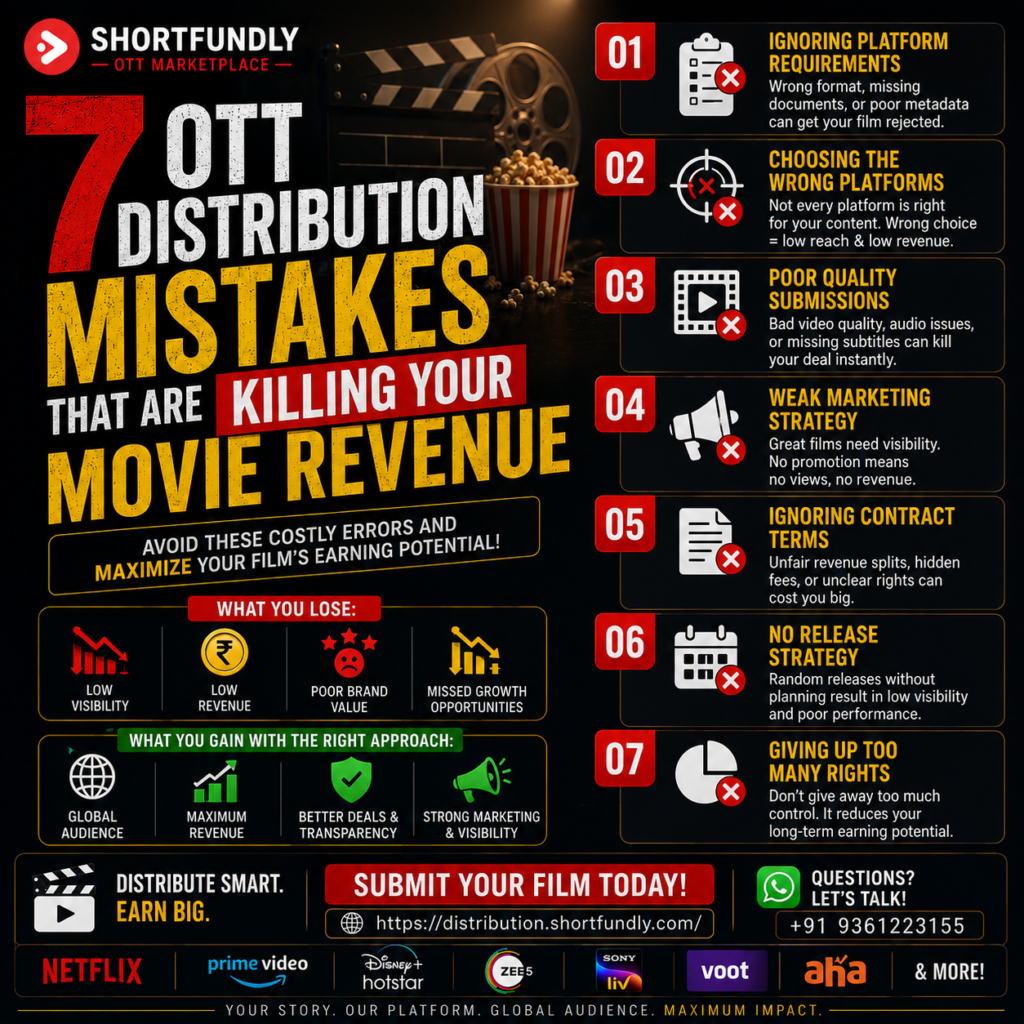
However, many creators unknowingly make critical mistakes that dramatically reduce their earnings. These OTT distribution mistakes often lead to lower visibility, weaker platform performance, missed licensing opportunities, and reduced long-term profits.
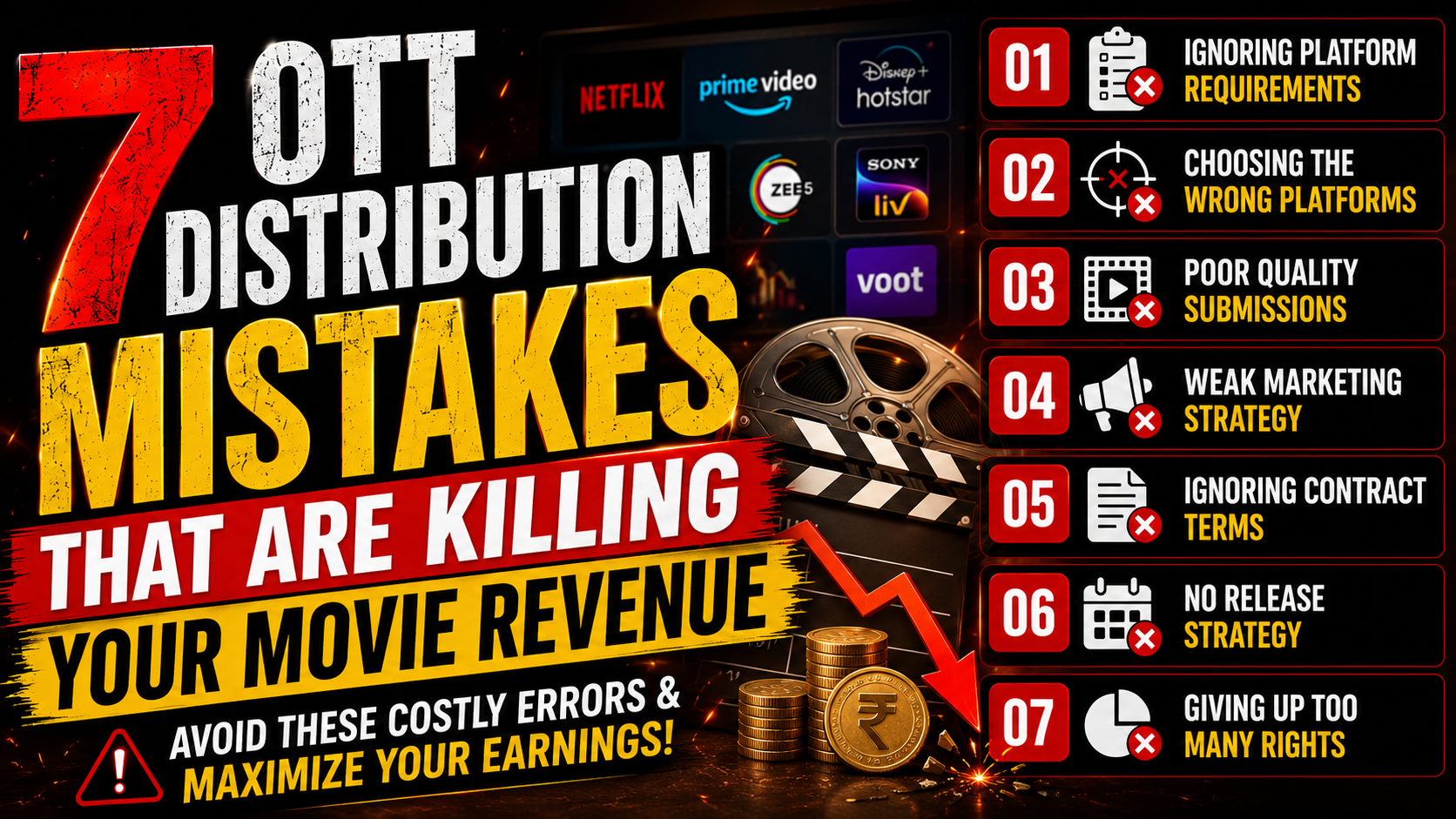
Understanding these common pitfalls can help filmmakers protect their investments and maximize revenue potential. In this guide, we explore the seven biggest OTT distribution mistakes that are killing your movie revenue and explain how to avoid them.
Why Revenue Loss Happens More Often Than Filmmakers Realize
Many filmmakers focus heavily on production while giving limited attention to distribution strategy. Unfortunately, a great movie alone doesn’t guarantee strong financial results.
Revenue loss commonly occurs because of:
- Poor platform selection
- Weak discoverability
- Inadequate marketing
- Unfavorable contracts
- Limited international reach
- Technical delivery issues
- Lack of long-term planning
The good news is that these challenges are avoidable with the right approach.
Mistake #1: Choosing the Wrong OTT Distribution Partner
Selecting the wrong distribution partner is one of the most expensive mistakes filmmakers can make.
Why This Mistake Hurts Revenue
Many distributors promise access to numerous streaming platforms but fail to deliver meaningful exposure or revenue opportunities.
Potential consequences include:
- Limited platform access
- Hidden fees
- Poor reporting transparency
- Delayed payments
- Weak marketing support
A poor partnership can restrict growth opportunities for years.
Warning Signs of Poor Distribution Services
Be cautious if a distributor:
- Makes unrealistic guarantees
- Refuses to explain revenue structures
- Provides limited reporting
- Has few platform relationships
- Charges excessive upfront fees
Questions to Ask Before Signing
| Question | Why It Matters |
| Which platforms do you work with? | Measures reach |
| How is revenue reported? | Ensures transparency |
| What fees are deducted? | Protects profits |
| How often are payments issued? | Improves cash flow |
| What marketing support is included? | Drives visibility |
Professional distribution services such as Shortfundly Distribution help filmmakers navigate OTT ecosystems while improving platform access and operational efficiency.
Mistake #2: Ignoring Metadata Optimization
One of the most overlooked OTT distribution mistakes is poor metadata management.
Why Metadata Drives Discoverability
Streaming platforms rely heavily on metadata to recommend content.
Metadata includes:
- Title
- Synopsis
- Keywords
- Genres
- Cast information
- Language details
Without proper optimization, even exceptional films may remain invisible.
Essential Metadata Elements
| Element | Purpose |
| Title | Search visibility |
| Description | Viewer engagement |
| Genre Tags | Recommendation algorithms |
| Keywords | Discoverability |
| Cast Information | Audience attraction |
Think of metadata as the digital storefront for your movie.
Common Metadata Mistakes
- Generic descriptions
- Missing keywords
- Incorrect genres
- Incomplete cast listings
- Weak promotional copy
Better metadata often translates directly into better viewing performance.
Mistake #3: Accepting Unfavorable Revenue Share Agreements
Many filmmakers become excited about OTT placement and overlook contract details.
Understanding OTT Revenue Models
Most OTT agreements use one of three models:
Licensing
Fixed payment for streaming rights.
Revenue Share
Percentage of revenue generated by the film.
Hybrid
Combination of licensing and revenue sharing.
Contract Clauses to Review Carefully
Pay close attention to:
- Revenue split percentages
- Platform deductions
- Territory rights
- Exclusivity periods
- Reporting frequency
- Payment schedules
Example Revenue Comparison
| Agreement Type | Revenue Potential |
| Poor Revenue Share | Low |
| Balanced Revenue Share | Medium |
| Hybrid Agreement | High |
| Premium Licensing Deal | Very High |
A contract signed today can affect earnings for years, making careful review essential.
Mistake #4: Failing to Market Your Movie After Release
Many creators mistakenly assume OTT platforms will automatically generate viewers.
Unfortunately, that’s rarely the case.
The Myth of Automatic OTT Success
Thousands of titles compete for attention every day.
Without marketing, movies often struggle to gain traction regardless of quality.
Marketing Channels That Matter
Effective promotion includes:
- YouTube trailers
- Instagram campaigns
- Facebook advertising
- Press releases
- Influencer partnerships
- Email marketing
Why Marketing Directly Impacts Revenue
Increased visibility leads to:
- More views
- Better completion rates
- Stronger platform recommendations
- Greater revenue opportunities
Successful filmmakers continue marketing long after release day.
Mistake #5: Neglecting International Distribution Opportunities
Many movies earn most of their revenue outside their home market.
Global Markets and Revenue Growth
Streaming has eliminated traditional geographic limitations.
Viewers worldwide now consume content from different languages and cultures.
International distribution can:
- Expand audience reach
- Increase licensing opportunities
- Improve platform performance
- Generate additional revenue streams
Localization Strategies
Localization includes:
- Subtitles
- Dubbing
- Multilingual metadata
- Region-specific artwork
Revenue Impact of Localization
| Distribution Strategy | Revenue Potential |
| Domestic Only | Limited |
| Domestic + Subtitles | Moderate |
| Global Localized Release | High |
Ignoring international markets means leaving money on the table.
Mistake #6: Delivering Content That Doesn’t Meet Platform Standards
Technical quality remains critical for OTT success.
Technical Quality Requirements
Most platforms require:
- High-definition video
- Professional audio
- Accurate subtitles
- Proper encoding
- Quality control approval
Common Rejection Reasons
Many submissions fail because of:
- Audio inconsistencies
- Subtitle errors
- Encoding problems
- Missing deliverables
- Copyright concerns
Protecting Revenue Through Quality Control
Before submission:
- Conduct final QC reviews
- Verify subtitle accuracy
- Confirm legal clearances
- Test playback on multiple devices
Technical compliance helps prevent costly delays and platform rejections.
Mistake #7: Treating OTT Distribution as a One-Time Event
Perhaps the most damaging OTT distribution mistake is focusing only on a single release.
Building Long-Term Streaming Revenue
Successful creators think beyond one project.
Instead, they build:
- Film libraries
- Documentary catalogs
- Series collections
- Branded content portfolios
Why Content Libraries Matter
Every new release strengthens:
- Audience loyalty
- Brand recognition
- Platform relationships
- Revenue stability
Creating a Sustainable Content Strategy
Focus on:
- Consistent production
- Audience engagement
- Market research
- Long-term partnerships
Filmmakers with multiple titles often generate recurring income long after initial releases.
Revenue Comparison: Before and After Fixing OTT Distribution Mistakes
| Scenario | Estimated Revenue |
| Poor Distribution Strategy | $500 – $5,000 |
| Improved Metadata | $2,000 – $15,000 |
| Better Revenue Agreements | $5,000 – $50,000 |
| Global Distribution Strategy | $10,000 – $100,000+ |
| Complete Revenue Optimization | $25,000 – $250,000+ |
While actual results vary, strategic improvements consistently increase revenue potential.
Best Practices for Maximizing OTT Revenue
To avoid these common OTT distribution mistakes:
- Research distribution partners carefully.
- Optimize metadata for discoverability.
- Negotiate fair revenue agreements.
- Invest in marketing campaigns.
- Pursue international distribution.
- Meet technical platform requirements.
- Build a long-term content portfolio.
Additionally, filmmakers can explore industry insights from platforms such as Amazon Prime Video Direct Information Hub to better understand streaming ecosystems and distribution opportunities.
Frequently Asked Questions
1. What is the biggest OTT distribution mistake filmmakers make?
Choosing the wrong distribution partner is often the most costly mistake because it affects platform access, revenue reporting, and overall visibility.
2. Does metadata really affect movie revenue?
Yes. Better metadata improves discoverability, which can increase views and overall earnings.
3. Should independent filmmakers focus on international markets?
Absolutely. Global audiences often provide significant additional revenue opportunities.
4. How important is marketing after OTT release?
Marketing remains essential. Without promotion, many titles struggle to gain visibility on crowded platforms.
5. Can poor technical quality cause rejection?
Yes. Platforms regularly reject content that fails to meet technical standards.
6. What revenue model is best for filmmakers?
The best model depends on the project, but hybrid agreements often balance upfront payments with long-term earning potential.
7. How can filmmakers generate recurring OTT revenue?
Building a content library and maintaining ongoing platform relationships are key strategies for recurring income.
8. Is OTT distribution profitable for independent films?
Yes. With proper strategy, independent films can generate meaningful revenue through licensing, advertising, subscriptions, and
global distribution deals.
Also read: https://blog.shortfundly.com/ott/sell-movie-to-ott-platforms/
Conclusion
OTT distribution offers tremendous opportunities for filmmakers, but success depends on avoiding costly mistakes. Choosing the right distribution partner, optimizing metadata, negotiating strong agreements, investing in marketing, expanding internationally, meeting technical standards, and building long-term strategies all play critical roles in maximizing revenue.
The streaming marketplace continues to grow, creating new opportunities for independent creators. Filmmakers who proactively address these seven OTT distribution mistakes position themselves for stronger visibility, greater audience reach, and significantly higher revenue potential in 2026 and beyond.