Table of Contents
The rapid expansion of streaming platforms has created exciting opportunities for filmmakers worldwide. Independent creators, production houses, documentary makers, and short film producers can now reach global audiences without relying solely on theatrical releases.
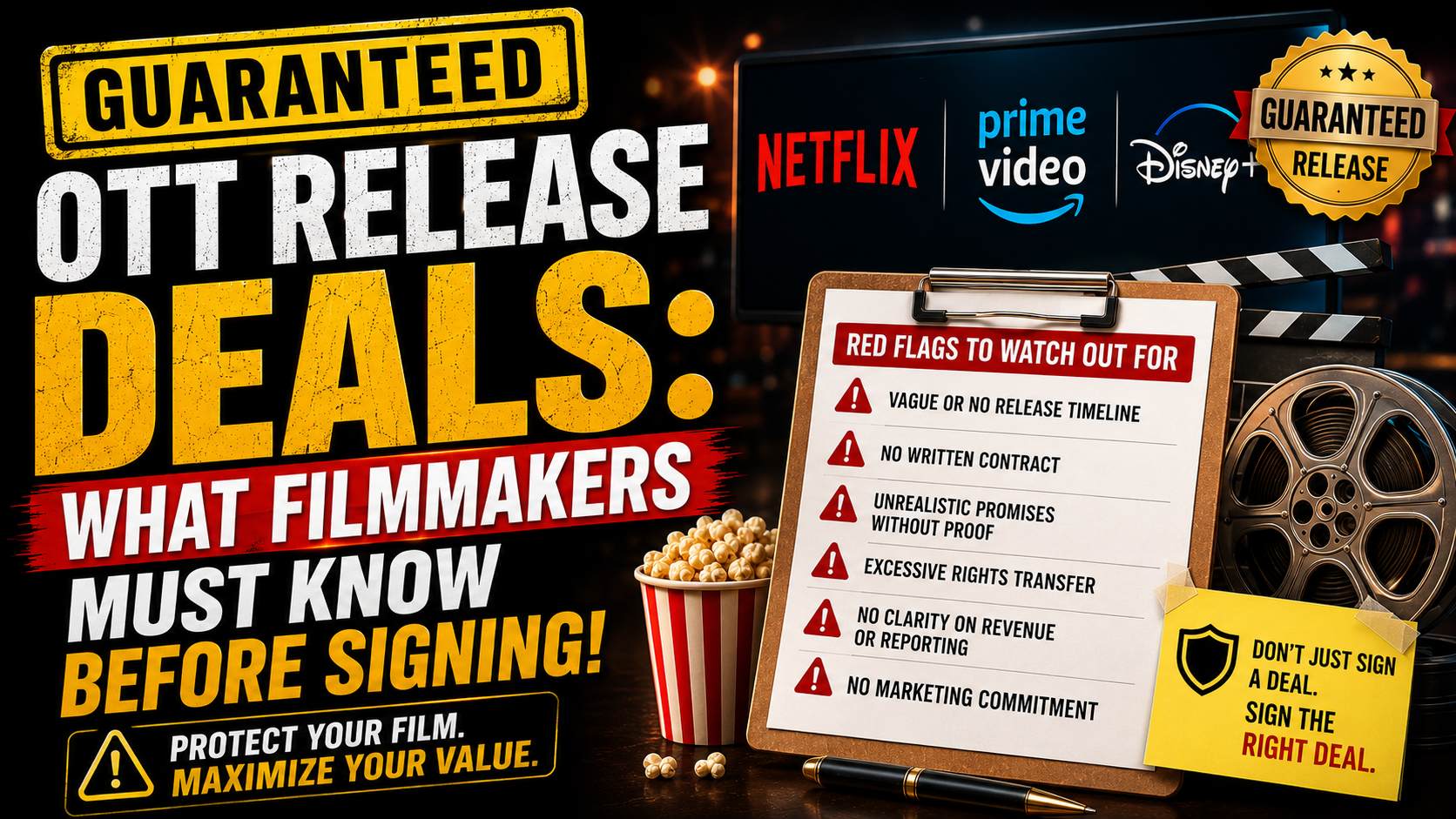
As OTT platforms continue to grow, many distribution companies promote guaranteed OTT release deals as a fast-track path to streaming success. These offers often attract filmmakers who are eager to secure distribution and generate revenue quickly.
However, before signing any agreement, filmmakers must understand exactly what a guaranteed OTT release deal includes, what protections it offers, and what obligations it creates. Not all guarantees are equal, and misunderstanding contract terms can lead to disappointing results.
This guide explores the most important considerations filmmakers should evaluate before entering any OTT distribution agreement.
Understanding Guaranteed OTT Release Deals
Why OTT Distribution Is Important Today
Streaming has fundamentally changed content consumption habits.
Modern audiences increasingly prefer:
- On-demand viewing
- Multi-device accessibility
- Global content libraries
- Flexible subscription models
As a result, OTT platforms have become essential distribution channels for independent films and original productions.
The Growing Demand for Streaming Content
Platforms constantly seek fresh content to attract subscribers and maintain viewer engagement.
Popular content categories include:
- Independent films
- Documentaries
- Regional cinema
- Short films
- Web series
- Niche genre productions
This demand has encouraged the emergence of numerous distribution companies offering guaranteed OTT release deals.
What Does a Guaranteed OTT Release Really Mean?
Common Interpretations in the Industry
One of the biggest misconceptions is assuming that a guaranteed OTT release automatically guarantees substantial viewership or revenue.
In reality, guarantees may refer to:
- Placement on a streaming platform
- Delivery to multiple OTT services
- Distribution through a partner network
- Technical acceptance for publication
Marketing Claims vs Contractual Commitments
Filmmakers should distinguish between promotional language and contractual obligations.
Consider the difference:
| Marketing Statement | Contract Reality |
| Guaranteed OTT Release | Platform placement only |
| Worldwide Distribution | Limited territories may apply |
| Revenue Opportunity | Revenue not guaranteed |
| Global Reach | Depends on platform availability |
Always rely on written contract language rather than marketing promises.
Point 1: Verify Platform Access Claims
Many guaranteed OTT release deals emphasize platform access.
Questions to Ask Distributors
Before signing, ask:
- Which OTT platforms are included?
- Are placements direct or through aggregators?
- Is distribution exclusive?
- Are regional platforms included?
- How long will the content remain available?
Why Platform Access Matters
Not all streaming platforms offer the same visibility.
Factors influencing performance include:
- Audience size
- Regional reach
- Genre relevance
- Recommendation algorithms
The more transparent a distributor is about platform access, the easier it becomes to evaluate potential opportunities.
Point 2: Understand Revenue Structures
Revenue terms often determine whether a distribution agreement becomes profitable.
Licensing vs Revenue Sharing
Most OTT agreements use one of three structures.
Licensing Model
The platform pays a fixed fee.
Benefits:
- Predictable income
- Lower performance risk
Revenue Share Model
Earnings depend on content performance.
Benefits:
- Long-term earning potential
- Scalable revenue growth
Hybrid Model
Combines fixed payments with revenue sharing.
Benefits:
- Immediate revenue
- Ongoing earning opportunities
Revenue Questions to Clarify
Ask distributors:
- What percentage is retained?
- What deductions apply?
- How frequently are payments issued?
- How is revenue calculated?
Clear answers help avoid future disputes.
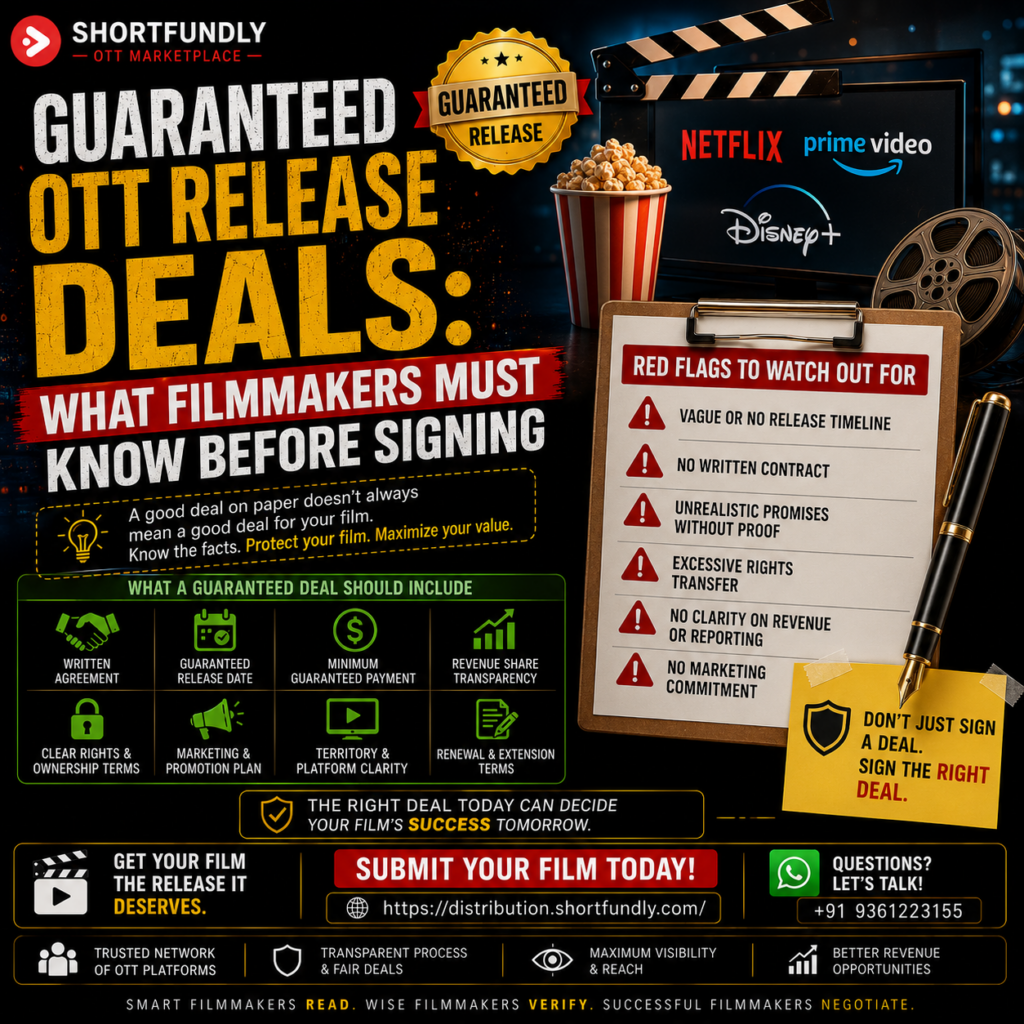
Point 3: Review Contract Terms Carefully
Contracts determine the true value of guaranteed OTT release deals.
Key Clauses Every Filmmaker Should Read
Pay close attention to:
- Exclusivity provisions
- Contract duration
- Territory rights
- Termination clauses
- Revenue reporting requirements
- Intellectual property ownership
Common Contract Risks
Potential concerns include:
- Excessively long exclusivity periods
- Broad rights transfers
- Limited termination options
- Undefined reporting obligations
Professional legal review is strongly recommended before signing any agreement.
Point 4: Evaluate Territory Coverage
Distribution territory significantly impacts revenue potential.
Global vs Regional Distribution
| Distribution Type | Audience Potential |
| Regional | Limited |
| National | Moderate |
| Multi-Country | Strong |
| Global | Highest |
Many guaranteed OTT release deals advertise worldwide distribution but only provide access to selected regions.
Why International Reach Matters
International audiences can:
- Increase viewership
- Generate additional licensing opportunities
- Improve platform recommendations
- Expand long-term revenue streams
Global distribution often delivers stronger financial outcomes.
Point 5: Examine Marketing Support
Distribution alone rarely guarantees success.
Why Visibility Matters
Thousands of titles compete for attention on OTT platforms.
Without promotion, even quality content may struggle to gain traction.
Marketing Services Worth Evaluating
Ask whether the distributor provides:
- Social media promotion
- Press outreach
- Platform merchandising
- Trailer distribution
- Email marketing
The Connection Between Marketing and Revenue
Effective promotion helps:
- Increase discovery
- Improve watch time
- Generate reviews
- Enhance audience engagement
Visibility remains one of the strongest drivers of OTT performance.
Point 6: Confirm Technical Delivery Requirements
Technical compliance is essential for OTT acceptance.
OTT Quality Standards
Most platforms require:
- HD or 4K resolution
- Professional audio mixing
- Accurate subtitles
- Proper encoding formats
- Quality control approval
Common Delivery Problems
Frequent issues include:
- Audio inconsistencies
- Subtitle errors
- Missing documentation
- Incorrect file formats
Addressing technical requirements before submission reduces delays and improves approval chances.
Point 7: Protect Intellectual Property Rights
Intellectual property protection is often overlooked during negotiations.
Ownership and Licensing Concerns
Filmmakers should clearly understand:
- Which rights are licensed
- Which rights remain retained
- Whether future licensing is restricted
- How content can be reused
Rights Categories to Review
- Streaming rights
- Broadcast rights
- International rights
- Promotional rights
- Derivative rights
Protecting ownership preserves future revenue opportunities.
Point 8: Analyze Reporting Transparency
Accurate reporting builds trust and supports informed decision-making.
Revenue Tracking Best Practices
Strong distributors provide:
- Detailed revenue reports
- Geographic performance data
- Viewing statistics
- Payment documentation
Questions About Reporting
Ask:
- How often are reports issued?
- What metrics are included?
- Can performance data be audited?
Transparency helps filmmakers evaluate success and plan future projects.
Point 9: Assess Distributor Reputation
Reputation often predicts reliability.
Research Before You Sign
Evaluate:
- Industry experience
- Client testimonials
- Platform relationships
- Case studies
- Payment history
Useful Evaluation Criteria
| Factor | Importance |
| Industry Reputation | High |
| Platform Access | High |
| Revenue Transparency | High |
| Client Support | High |
| Marketing Services | Medium |
Professional distributors such as Shortfundly Distribution focus on helping filmmakers navigate OTT ecosystems while improving accessibility to multiple streaming opportunities.
Point 10: Plan for Long-Term Revenue Growth
Successful filmmakers view OTT distribution as part of a broader business strategy.
Building a Sustainable OTT Strategy
Focus on:
- Expanding content libraries
- Building audience relationships
- Improving production quality
- Pursuing multiple revenue streams
Why Long-Term Thinking Matters
Benefits include:
- Recurring revenue
- Stronger platform relationships
- Increased bargaining power
- Greater audience loyalty
A single film may generate income, but a growing catalog creates lasting value.
OTT Deal Comparison Table
| Feature | Weak Agreement | Strong Agreement |
| Platform Access | Limited | Diverse |
| Revenue Transparency | Minimal | Detailed |
| Marketing Support | None | Included |
| Territory Coverage | Regional | Global |
| Rights Protection | Weak | Strong |
| Reporting Frequency | Irregular | Consistent |
Evaluating these factors helps filmmakers identify high-quality opportunities.
Best Practices Before Signing Any OTT Agreement
Follow these steps before committing:
- Verify platform access claims.
- Understand revenue structures.
- Review contracts carefully.
- Confirm territory coverage.
- Assess marketing support.
- Meet technical standards.
- Protect intellectual property.
- Demand reporting transparency.
- Research distributor reputation.
- Focus on long-term revenue growth.
For additional industry information, filmmakers can explore resources available through Netflix Partner Resources and other official streaming platform channels.
Frequently Asked Questions
1. What is a guaranteed OTT release deal?
A guaranteed OTT release deal generally refers to an agreement that promises content placement on one or more streaming platforms, subject to contractual conditions.
2. Does a guaranteed OTT release guarantee revenue?
No. Platform placement does not automatically ensure viewership or earnings.
3. Should filmmakers accept exclusive distribution agreements?
Exclusivity may be beneficial in some cases, but filmmakers should carefully evaluate duration, compensation, and restrictions before agreeing.
4. How important is international distribution?
International markets often contribute significantly to audience growth and revenue generation.
5. What documents are typically required for OTT distribution?
Requirements often include rights clearances, subtitles, metadata, promotional materials, and technical deliverables.
6. Why is revenue reporting important?
Transparent reporting helps filmmakers understand performance, verify earnings, and make strategic business decisions.
7. Can short films qualify for OTT distribution?
Yes. Many streaming platforms and distributors actively accept short-form content.
8. Should filmmakers consult legal professionals before signing?
Yes. Professional legal review can help identify risks, clarify obligations, and protect long-term interests.
Also read : https://blog.shortfundly.com/ott/ott-distribution-revenue/
Conclusion
Guaranteed OTT release deals can provide valuable opportunities for filmmakers seeking wider audience reach and distribution access. However, the true value of any agreement depends on platform access, revenue structure, territory coverage, marketing support, technical requirements, rights protection, and reporting transparency.
By carefully evaluating these ten critical areas before signing, filmmakers can reduce risk, protect their intellectual property, and position their projects for stronger long-term success. In an increasingly competitive streaming landscape, informed decisions remain one of the most effective tools for maximizing both visibility and revenue.