Table of Contents
Introduction
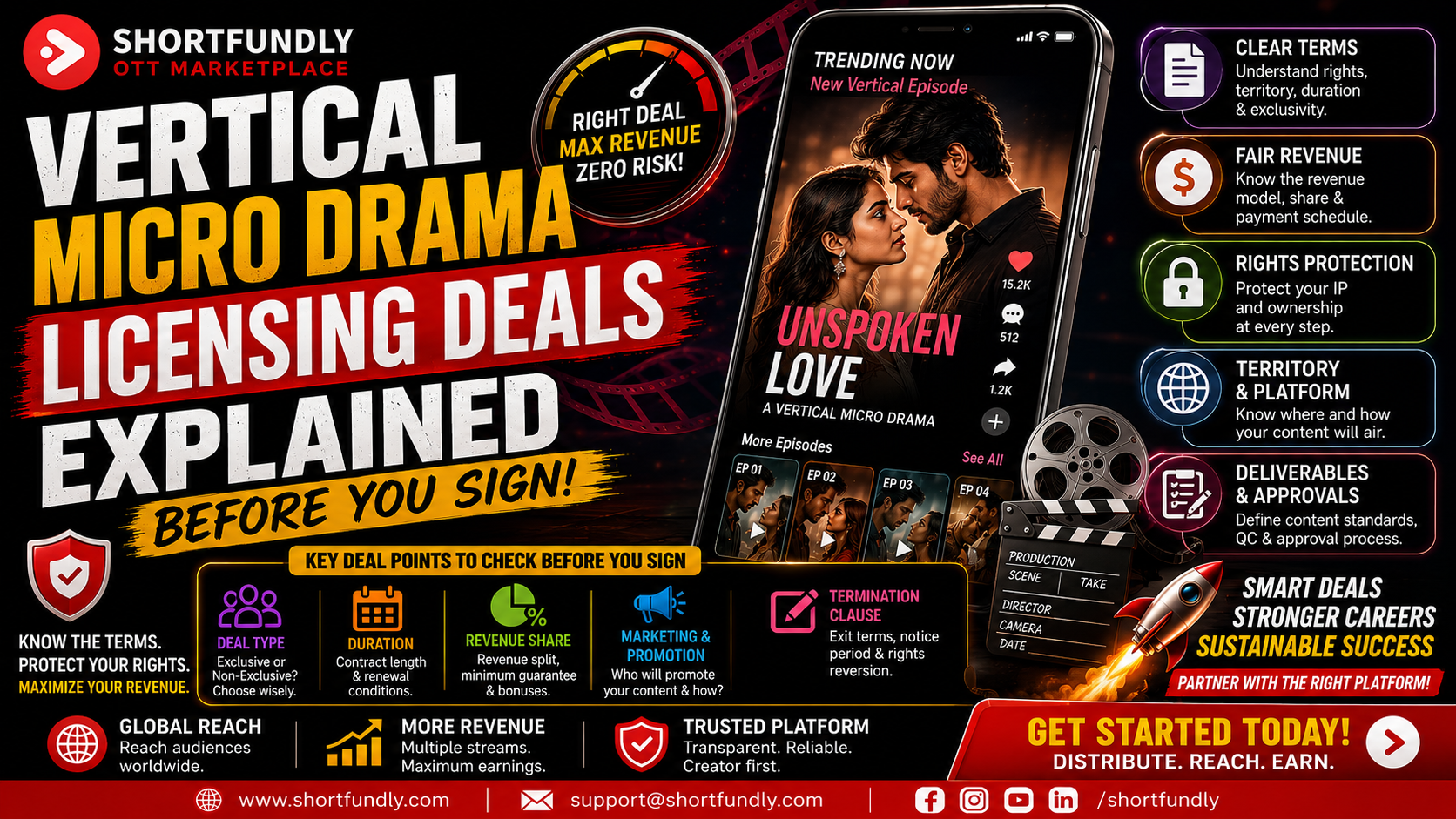
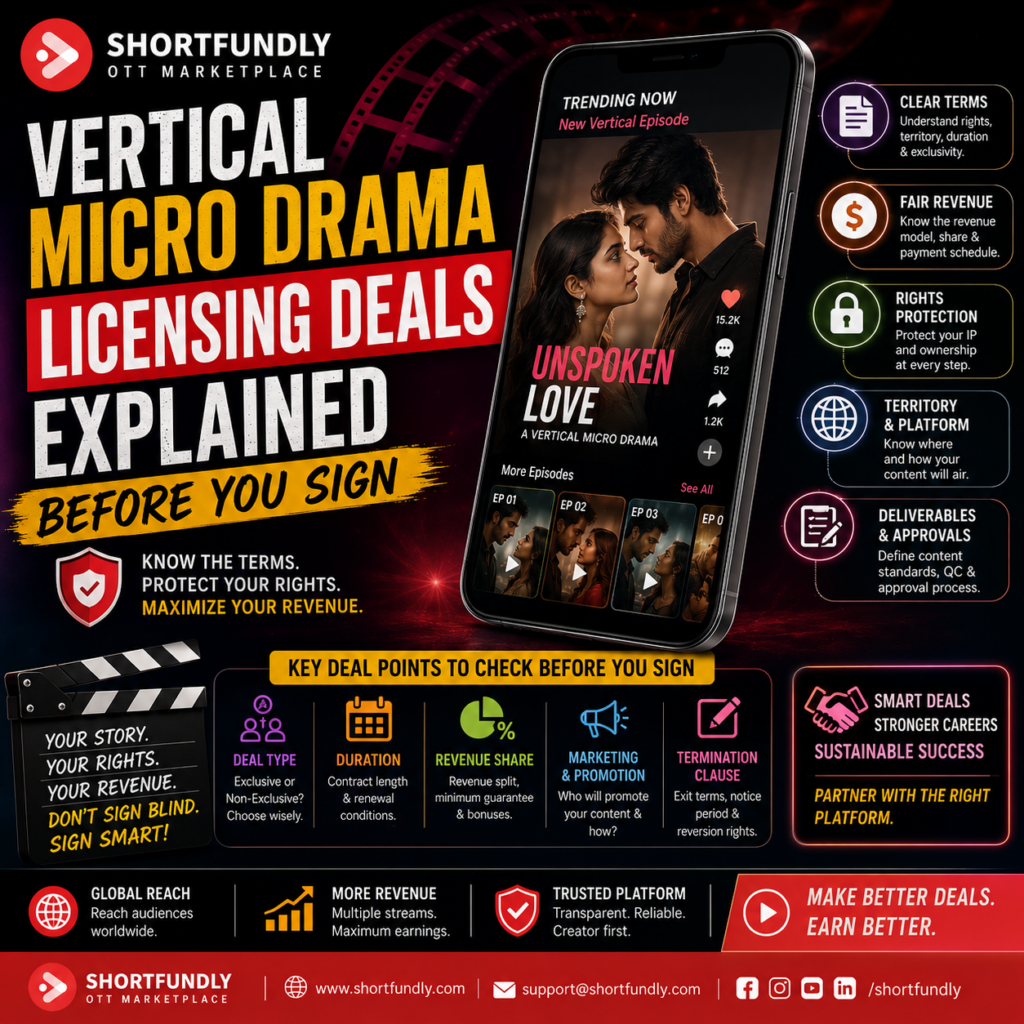
The explosive rise of vertical micro dramas has created exciting opportunities for independent filmmakers, production companies, and digital creators. With mobile-first storytelling becoming a dominant entertainment format, OTT platforms worldwide are actively acquiring high-quality vertical series. However, while securing a licensing offer is an important milestone, understanding the terms of the agreement before signing is even more critical.
A licensing contract determines how your content is distributed, how much you earn, how long the platform controls your rights, and whether you can monetize the same series elsewhere. Signing without fully understanding the agreement can limit your future revenue and ownership.
In this guide, we explain the most important aspects of vertical micro drama licensing deals, helping producers make informed decisions before entering an agreement. We also explore how Shortfundly Distribution helps creators navigate OTT licensing and connect with global streaming platforms.
Why Licensing Agreements Matter
A licensing agreement is more than just a payment contract. It defines the legal relationship between the content owner and the OTT platform.
A well-structured agreement should clearly specify:
- Rights being licensed
- Territory of distribution
- License duration
- Payment structure
- Content delivery requirements
- Marketing permissions
- Revenue reporting
- Renewal conditions
- Termination clauses
Understanding these elements protects your intellectual property while maximizing long-term earnings.
Types of OTT Licensing Deals
Different OTT platforms offer different licensing structures depending on their business model and content strategy.
Exclusive Licensing
An exclusive deal grants a single OTT platform the sole right to stream your vertical micro drama within the agreed territory and contract period.
Advantages
- Higher upfront payments
- Stronger promotional support
- Premium platform placement
- Greater marketing investment
Considerations
- You cannot license the same content elsewhere during the contract period.
- Future revenue opportunities may be limited until exclusivity expires.
Exclusive agreements often work well for premium original productions with strong commercial potential.
Non-Exclusive Licensing
A non-exclusive agreement allows you to license your series to multiple OTT platforms simultaneously.
Benefits include:
- Multiple income streams
- Wider audience reach
- Lower dependency on one buyer
- Greater international exposure
Many independent producers choose non-exclusive licensing to maximize the lifetime value of their content.
Fixed License Fee vs Revenue Share
Most licensing agreements fall into one of two payment models.
Fixed License Fee
The platform pays a predetermined amount for the licensing period regardless of audience performance.
Advantages include:
- Guaranteed income
- Predictable budgeting
- Lower financial risk
- Immediate returns
This model is popular among independent producers seeking faster recoupment of production costs.
Revenue Sharing
Revenue-sharing agreements compensate creators based on actual platform performance.
Payments may depend on:
- Viewer engagement
- Watch hours
- Subscription growth
- Advertising revenue
- Territory performance
Although income is less predictable, successful vertical dramas can generate recurring revenue over time.
Territory Rights Explained
One of the most important clauses in any licensing agreement concerns territory rights.
Examples include:
- Worldwide
- Asia-Pacific
- India
- North America
- Europe
- Middle East
- Individual countries
Granting worldwide rights may increase the licensing fee but can prevent additional sales in other regions.
Some producers maximize earnings by licensing content separately across multiple territories.
License Duration
Every agreement specifies how long the OTT platform can distribute your content.
Typical licensing periods include:
- 12 months
- 24 months
- 36 months
- 5 years
Longer agreements often provide higher payments, but they also delay opportunities to renegotiate or sell to additional platforms.
Always evaluate whether the duration aligns with your long-term monetization strategy.
Content Ownership
Licensing does not automatically transfer ownership.
As the producer, you should retain ownership of:
- Copyright
- Master files
- Characters
- Story
- Scripts
- Branding
A licensing agreement grants usage rights—not ownership—unless explicitly stated otherwise.
Carefully review any clause relating to intellectual property.
Content Delivery Requirements
Before approving your project, OTT platforms require professionally prepared deliverables.
These commonly include:
- High-resolution master files
- Subtitle files
- Closed captions
- Promotional artwork
- Episode thumbnails
- Metadata
- Synopsis
- Cast information
- Trailer
- Legal documentation
Missing deliverables can delay distribution and payment.
Marketing and Promotional Rights
Many agreements allow OTT platforms to promote licensed content across:
- Websites
- Mobile apps
- Social media
- Television advertising
- Digital campaigns
- Outdoor promotions
Review these clauses carefully to understand how your brand and production will be represented.
Revenue Reporting
If your agreement includes revenue sharing, transparency becomes essential.
Your contract should specify:
- Reporting frequency
- Payment schedule
- Performance metrics
- Revenue calculation method
- Audit rights
Clear reporting provisions help avoid misunderstandings throughout the licensing period.
Termination Clauses
Every licensing agreement should explain when either party may terminate the contract.
Common reasons include:
- Contract violations
- Copyright disputes
- Delivery failures
- Payment defaults
- Legal issues
Understanding exit conditions protects both parties.
Common Mistakes Producers Make
Independent creators sometimes sign agreements without fully reviewing important details.
Common mistakes include:
- Accepting perpetual rights
- Ignoring territory restrictions
- Overlooking exclusivity clauses
- Missing renewal conditions
- Not verifying payment schedules
- Forgetting subtitle obligations
- Accepting vague revenue-share formulas
Taking time to review every clause can prevent costly mistakes later.
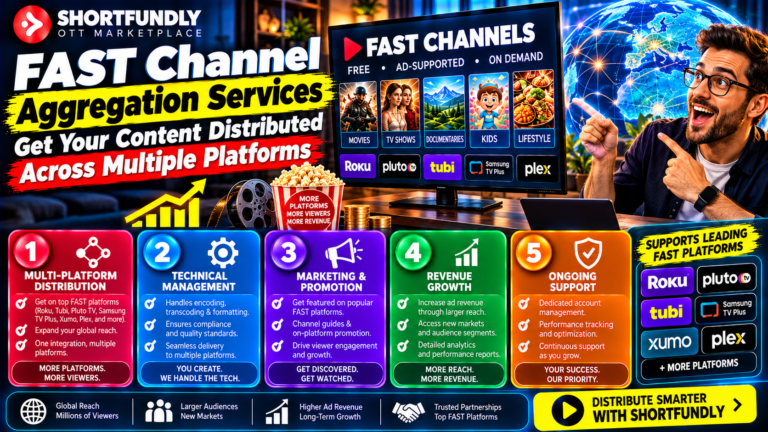
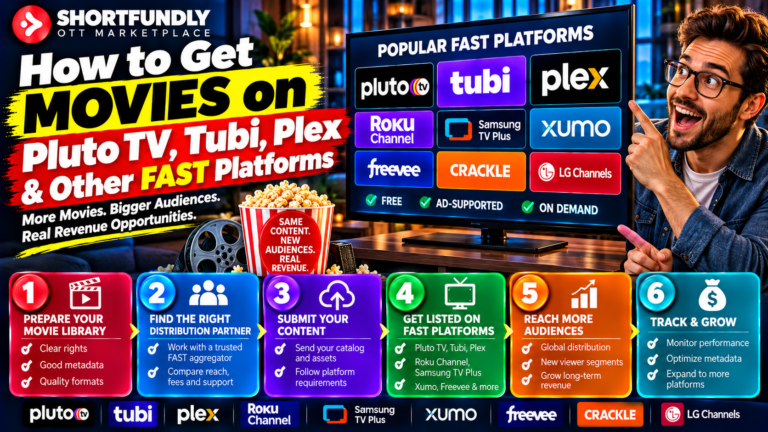
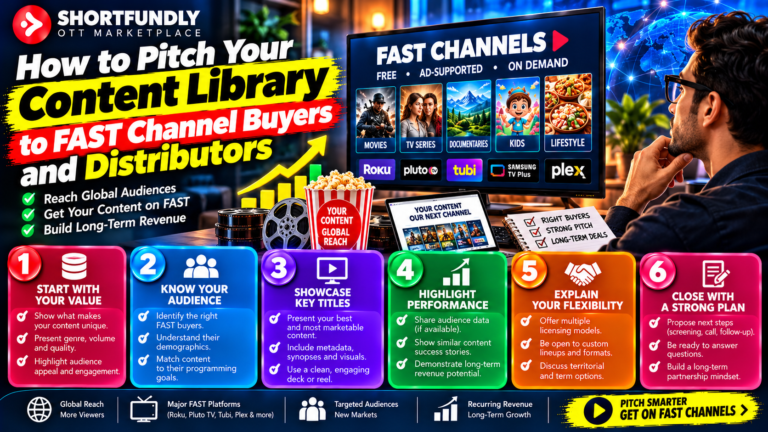
How Shortfundly Distribution Helps Producers
Negotiating licensing agreements can be overwhelming, especially for first-time producers. This is where Shortfundly Distribution provides valuable support.
Shortfundly Distribution helps independent creators prepare their projects for OTT licensing by assisting with:
- Professional content packaging
- OTT-ready deliverables
- Metadata preparation
- Technical compliance
- Subtitle coordination
- Platform submissions
- Licensing guidance
- Distribution strategy
- Global OTT opportunities
Rather than navigating complex acquisition requirements alone, creators benefit from a streamlined process designed specifically for independent productions and vertical micro dramas.
Learn more about their distribution services at:
https://distribution.shortfundly.com
Questions to Ask Before Signing
Before accepting any licensing agreement, ask the following questions:
- Is the agreement exclusive or non-exclusive?
- Which territories are included?
- How long is the licensing period?
- How will payments be calculated?
- When will payments be made?
- Who owns the intellectual property?
- Can the agreement be renewed?
- Are there minimum marketing commitments?
- What reporting will be provided?
- What happens if either party terminates the agreement?
These questions help ensure you fully understand your rights and future earning potential.
Best Practices for Successful OTT Licensing
To improve your chances of securing favorable deals:
- Produce high-quality content.
- Prepare complete legal documentation.
- Deliver professional marketing materials.
- Optimize metadata.
- Include multilingual subtitles.
- Maintain organized production files.
- Work with experienced distribution partners.
- Review contracts carefully before signing.
Professional preparation demonstrates credibility and increases buyer confidence.
Also read: https://blog.shortfundly.com/ott/vertical-micro-drama-ott-check/
Conclusion
Vertical micro drama licensing agreements are powerful tools for monetizing creative content, but they should never be signed without careful review. Understanding exclusivity, payment structures, territory rights, license duration, intellectual property ownership, and reporting obligations enables producers to protect their work while maximizing revenue.
Independent creators who combine strong storytelling with professional distribution strategies are best positioned to succeed in today’s competitive OTT marketplace.
Shortfundly Distribution supports filmmakers throughout the licensing journey by helping prepare OTT-ready projects, simplifying platform submissions, and connecting creators with streaming opportunities worldwide. With the right guidance and a clear understanding of licensing terms, producers can confidently secure deals that support both immediate income and long-term growth.
To explore professional OTT distribution services, visit https://distribution.shortfundly.com/ and discover how your next vertical micro drama can reach audiences across the globe.