Table of Contents
Introduction
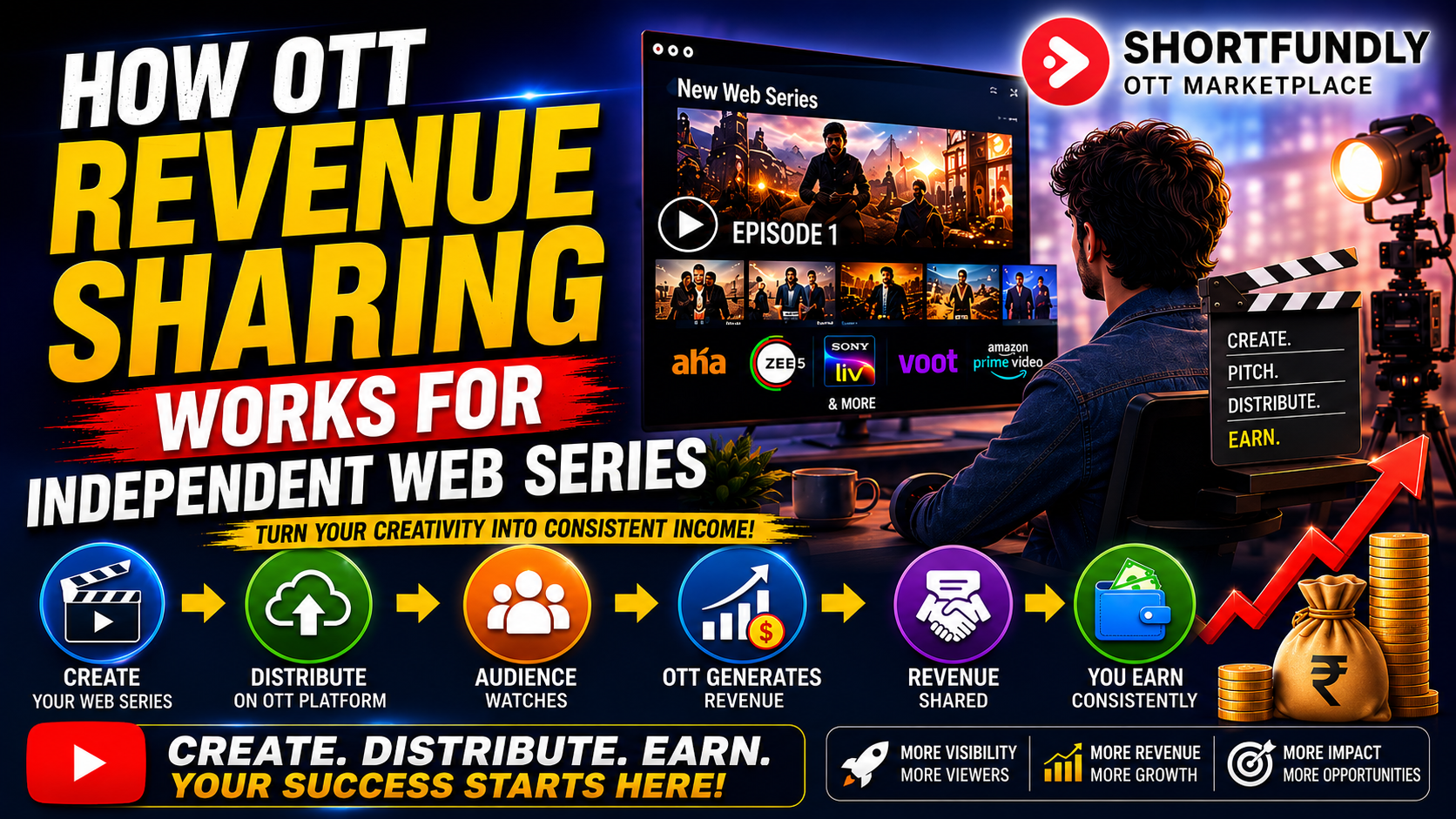
The rapid growth of streaming platforms has created unprecedented opportunities for independent creators. Today, OTT revenue sharing for independent web series has become one of the most effective ways to monetize original content without relying on traditional television broadcasters. Whether we produce a thriller, comedy, documentary, or regional-language series, understanding how OTT revenue sharing works enables us to negotiate better deals, recover production costs faster, and build sustainable income from our creative work.
Unlike outright content sales, revenue-sharing agreements allow us to earn ongoing income based on the performance of our web series. However, every agreement is different, and not all revenue-sharing models are equally beneficial. Knowing how these contracts work is essential before signing any distribution agreement.
This comprehensive guide explains every aspect of OTT revenue sharing, including licensing models, payment structures, negotiation strategies, revenue calculations, common contract clauses, and practical tips that help independent creators maximize their earnings.
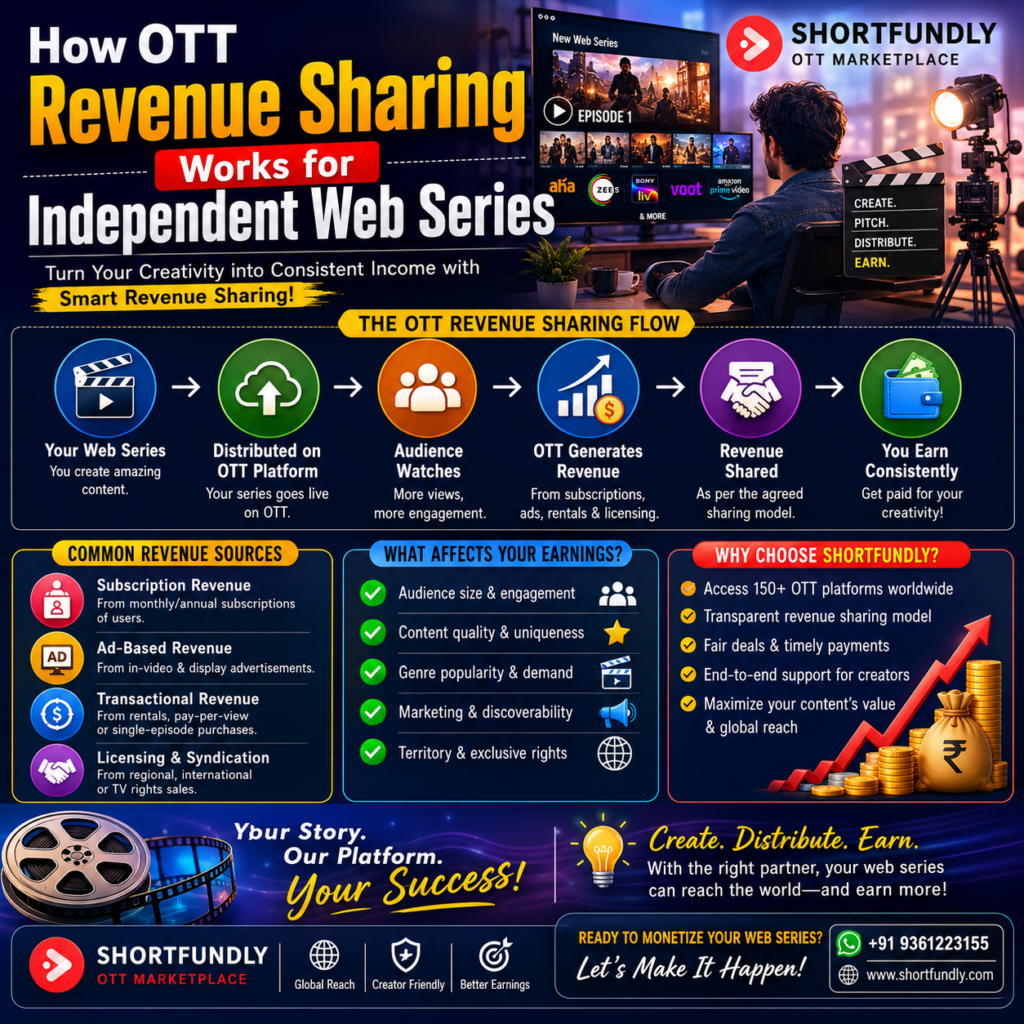
What Is OTT Revenue Sharing?
OTT (Over-the-Top) revenue sharing is a business arrangement in which a streaming platform or distribution company shares part of the revenue generated by a web series with its creator or rights owner.
Instead of receiving only a fixed licensing fee, creators receive a percentage of revenue generated through streaming, subscriptions, advertising, rentals, or digital purchases.
Revenue-sharing agreements benefit creators because successful content continues generating income long after its release.
Typical revenue sources include:
- Subscription Video on Demand (SVOD)
- Advertising Video on Demand (AVOD)
- Transactional Video on Demand (TVOD)
- Premium rentals
- Digital purchases
- International licensing
- FAST Channels
- Content syndication
Understanding these revenue streams helps us identify the most profitable distribution opportunities.
Why Revenue Sharing Benefits Independent Web Series Creators
Traditional content licensing usually involves a one-time payment. Although that approach offers immediate cash flow, it limits future earning potential.
Revenue sharing provides several advantages.
Long-Term Income
Instead of earning once, creators continue receiving payments as viewers watch the series.
Scalable Earnings
Popular content can generate revenue for several years.
Global Audience Reach
Streaming platforms distribute content internationally, increasing viewership.
Performance-Based Growth
Higher audience engagement often leads to higher earnings.
Multiple Distribution Opportunities
Some agreements allow creators to license regional rights separately, creating multiple income streams.
These benefits explain why many independent filmmakers now prefer revenue-sharing agreements over fixed licensing deals.
Common OTT Revenue Sharing Models
Not every streaming agreement follows the same structure. Understanding the different models helps us evaluate offers more effectively.
Revenue Share Only
The platform pays no upfront licensing fee.
Instead, creators receive a percentage of revenue generated by the content.
This model carries higher risk but offers greater upside if the series performs well.
Minimum Guarantee Plus Revenue Share
This model combines upfront security with long-term earning potential.
Creators receive:
- Guaranteed licensing payment
- Additional revenue share after recoupment
- Performance bonuses in some agreements
Independent producers often prefer this arrangement because it reduces financial uncertainty.
Flat Licensing Fee
Some OTT platforms purchase digital rights for a fixed amount.
After payment, the platform keeps all future revenue.
Although predictable, this model may limit long-term profits if the series becomes highly successful.
Hybrid Distribution Model
Many distributors combine multiple monetization methods.
Revenue may come from:
- OTT licensing
- YouTube monetization
- International sales
- Airline entertainment
- Educational licensing
- Television syndication
Hybrid distribution often generates higher overall returns than relying on a single platform.
How OTT Revenue Is Calculated
Many creators mistakenly believe revenue sharing simply means splitting subscription income.
In reality, calculations are more complex.
Revenue may depend on:
- Viewer watch time
- Subscriber growth
- Advertising revenue
- Geographic territory
- Platform profitability
- Revenue allocation formulas
- Content category
- Exclusive or non-exclusive rights
Some platforms calculate revenue based on total viewing hours.
Others allocate earnings according to advertising impressions or subscriber engagement.
Always request a detailed explanation of the payment methodology before signing any agreement.
Typical Revenue Share Percentages
Revenue-sharing percentages vary widely.
Examples include:
| Distribution Model | Creator Share |
|---|---|
| Independent Aggregator | 60%–90% |
| Distribution Company | 40%–70% |
| Premium OTT Partnership | Negotiated Case-by-Case |
| AVOD Platforms | 50%–80% |
| TVOD Platforms | 60%–80% |
Higher percentages do not always mean better deals. Marketing support, audience reach, and platform reputation also influence total earnings.
What Factors Affect Revenue Sharing?
Several variables determine how much income a creator ultimately receives.
Content Quality
Professional production increases licensing value.
Audience Demand
Popular genres attract better revenue opportunities.
Examples include:
- Crime thrillers
- Horror
- Romance
- Comedy
- Family entertainment
Language
Regional-language web series have experienced rapid growth across India and international markets.
Exclusivity
Exclusive rights generally command higher payments.
Platform Size
Larger streaming services usually reach bigger audiences.
Hidden Deductions to Watch For
Many revenue-sharing agreements include deductions before profits are distributed.
Common deductions include:
- Marketing expenses
- Platform fees
- Encoding costs
- Delivery charges
- Subtitle creation
- Promotional campaigns
- Distribution commissions
- Tax withholding
These deductions can significantly reduce creator earnings.
Always request a complete breakdown of deductible expenses.
How to Negotiate a Better OTT Revenue Sharing Agreement
Successful negotiation begins before discussions start.
We should always prepare:
- Audience statistics
- Festival selections
- Awards
- Trailer performance
- Social media engagement
- Previous viewing history
Negotiation points include:
Revenue Percentage
Ask whether higher performance increases your share.
Minimum Guarantee
Request upfront payment whenever possible.
Reporting Schedule
Monthly reporting offers better transparency than quarterly reporting.
Payment Frequency
Clarify payment dates before signing.
Territory Rights
Avoid granting worldwide rights unless compensation justifies exclusivity.
Important Contract Clauses
Every distribution agreement should clearly define:
- License duration
- Revenue calculation
- Payment schedule
- Audit rights
- Ownership of intellectual property
- Renewal conditions
- Marketing obligations
- Termination procedures
- Dispute resolution
Professional legal review remains one of the best investments independent creators can make.
Maximizing OTT Revenue
Several practical strategies increase revenue potential.
Invest in Professional Packaging
Strong artwork improves discoverability.
Create Multiple Language Subtitles
International accessibility increases licensing opportunities.
Develop Strong Marketing
Audience engagement influences negotiations.
Build Social Proof
Awards, reviews, and positive ratings strengthen bargaining power.
Release Strategic Content
Consistent releases build credibility with distributors.
Mistakes Independent Creators Should Avoid
Many creators reduce their earnings through preventable errors.
Avoid:
- Accepting the first offer
- Ignoring contract language
- Selling perpetual rights
- Overlooking expense deductions
- Failing to register copyright
- Delivering incomplete technical files
- Signing exclusive agreements too early
Each mistake limits future monetization opportunities.
Future Trends in OTT Revenue Sharing
Streaming platforms continue evolving rapidly.
Emerging trends include:
- AI-powered audience recommendations
- Performance-based licensing
- Regional content expansion
- FAST channel monetization
- Hybrid advertising models
- Creator-friendly distribution platforms
- Cross-platform revenue sharing
Independent creators who understand these trends will remain competitive as the streaming industry continues growing.
Also read: https://blog.shortfundly.com/ott/web-series-ott-distribution/
Final Thoughts
Understanding OTT revenue sharing for independent web series is essential for creators seeking sustainable income from their content. The most successful producers treat distribution as strategically as production, carefully evaluating licensing models, negotiating transparent agreements, and protecting their intellectual property. A well-structured revenue-sharing contract can generate recurring earnings long after the initial release, especially when combined with regional licensing, international sales, and additional digital monetization channels.
Rather than accepting the first offer available, we should compare multiple opportunities, examine contract terms closely, and prioritize agreements that balance upfront security with long-term earning potential. By approaching OTT distribution with preparation, market knowledge, and a clear negotiation strategy, independent creators can maximize profits while expanding their audience across global streaming platforms.