Table of Contents
Introduction to OTT Revenue Share
The entertainment industry has undergone a dramatic transformation over the last decade. Traditional television networks and theatrical releases are no longer the only paths to audience success. Today, streaming platforms dominate the content landscape, creating exciting opportunities for filmmakers, producers, and content creators.
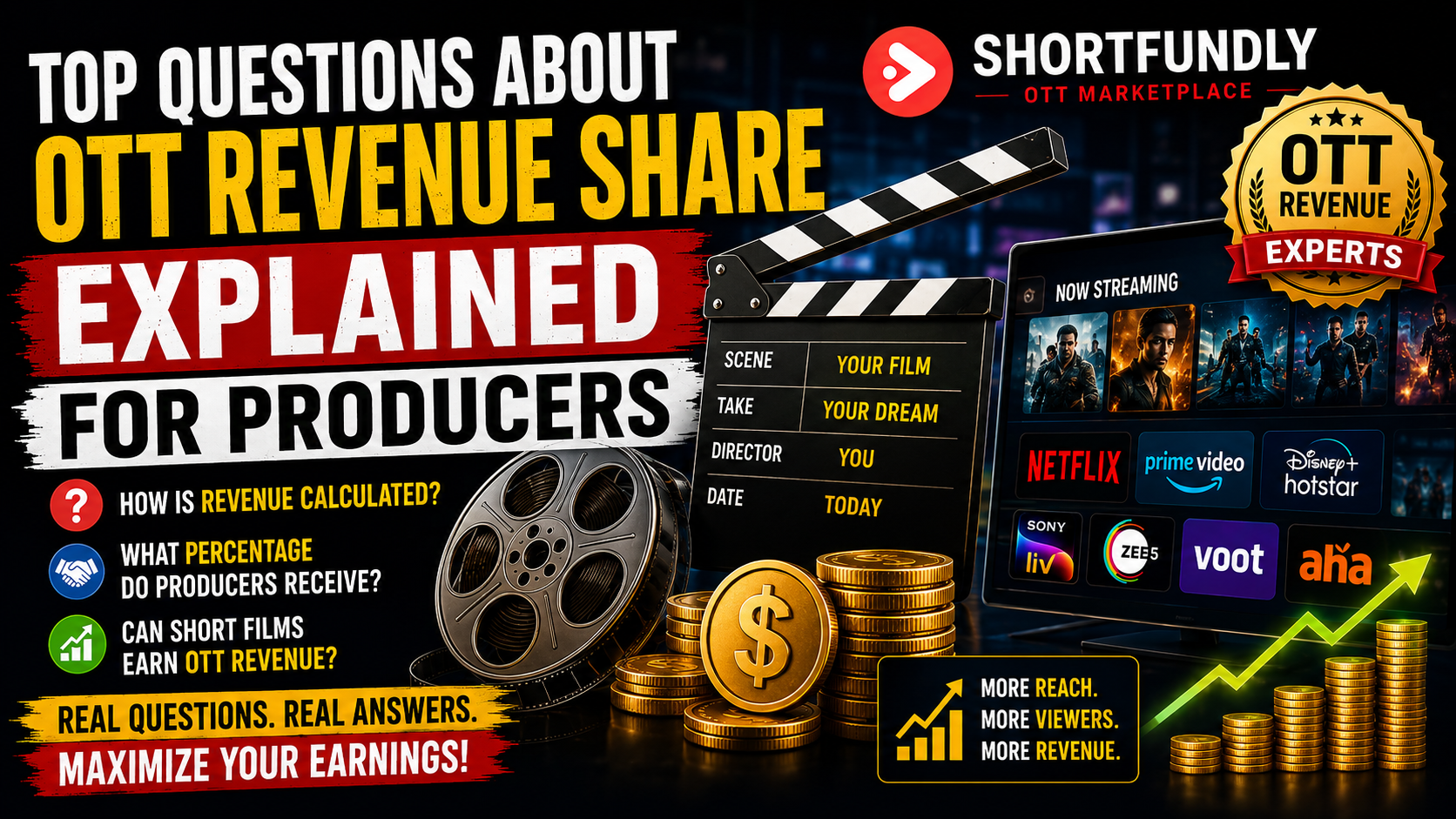
One of the most discussed topics among filmmakers is OTT revenue share. Whether you’re producing a feature film, short film, web series, documentary, or regional content, understanding how revenue sharing works can significantly impact your earnings.
OTT platforms such as Netflix, Amazon Prime Video, Disney+, Hulu, and many regional streaming services have created multiple monetization models. These models determine how producers get paid and how much revenue they can expect from their content.
Many producers enter OTT distribution without fully understanding revenue structures. As a result, they often miss opportunities to negotiate better deals or maximize profits. That’s why learning the fundamentals of OTT revenue share is essential for sustainable success.
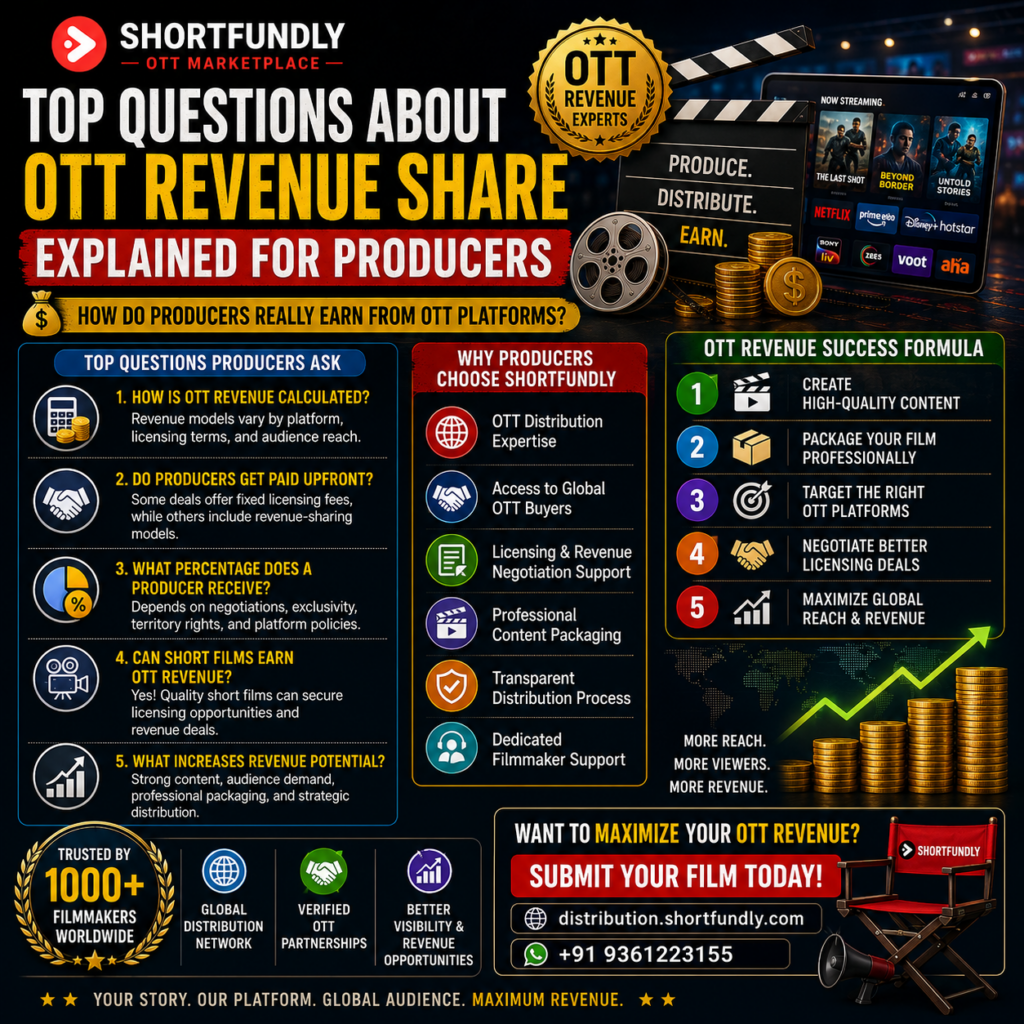
In this comprehensive guide, we’ll answer the most important questions about OTT revenue share, explain payment models, and provide practical strategies that can help producers increase their streaming income.
Understanding the OTT Business Model
Why Revenue Sharing Matters
Revenue sharing serves as the bridge between content creators and streaming platforms. Instead of receiving a one-time payment, producers may earn ongoing income based on performance, viewership, subscriptions, or advertising revenue.
This arrangement creates a mutually beneficial relationship. The platform gains quality content while the producer gains access to potentially millions of viewers worldwide.
Revenue sharing matters because it:
- Creates recurring income opportunities
- Rewards successful content
- Encourages long-term partnerships
- Supports independent creators
- Improves profitability over time
For producers looking to build sustainable careers, understanding OTT revenue share can become just as important as understanding filmmaking itself.
Growth of Digital Streaming Platforms
The rise of streaming services has changed audience behavior dramatically. Consumers now prefer on-demand content that can be watched anytime and anywhere.
This shift has created enormous demand for:
- Original films
- Independent productions
- Regional cinema
- Documentary content
- Short-form entertainment
- Educational programming
As content demand increases, so do opportunities for producers to generate revenue through OTT revenue share agreements.
How OTT Revenue Share Works
Revenue Sharing Basics
At its core, OTT revenue share is a financial arrangement where revenue generated from content is divided between the platform and the content owner.
The exact percentage varies depending on several factors:
- Platform policies
- Content quality
- Audience demand
- Exclusivity agreements
- Market competition
For example, a platform may retain a percentage of subscription income while distributing the remaining portion to content providers based on performance metrics.
Common Payment Structures
OTT platforms typically use one of the following structures:
| Model | Description |
| Fixed License Fee | Producer receives a predetermined amount |
| Revenue Share | Income is split between platform and producer |
| Hybrid Model | Combines licensing fee and revenue share |
| Minimum Guarantee | Guaranteed payment plus additional revenue |
Each model has unique advantages and risks.
Fixed licensing provides predictable income but limits upside potential. Revenue sharing can generate higher returns if content performs exceptionally well.
Different OTT Revenue Models
Subscription Video on Demand (SVOD)
SVOD platforms generate income through recurring subscriptions.
Examples include:
- Netflix
- Disney+
- Amazon Prime Video
- Apple TV+
In this model, platforms collect monthly subscription fees and distribute revenue internally based on content performance and contractual agreements.
For producers, SVOD deals often involve licensing agreements rather than direct viewer-based revenue sharing.
Benefits include:
- Stable platform income
- Large audience reach
- Global exposure
Challenges include:
- Limited transparency
- Complex performance calculations
Advertising Video on Demand (AVOD)
AVOD platforms generate revenue through advertisements displayed during content playback.
Popular AVOD examples include:
- YouTube
- Tubi
- Pluto TV
Here, OTT revenue share is often easier to understand because earnings are tied directly to advertising revenue generated by viewers.
Advantages include:
- Continuous earning potential
- Audience scalability
- Lower barriers to entry
Transactional Video on Demand (TVOD)
TVOD platforms charge users per transaction.
Examples include:
- Google TV rentals
- Apple TV rentals
- Amazon Video purchases
Revenue is generated every time a viewer rents or purchases content.
This model benefits producers with strong niche audiences willing to pay for premium content.
Factors That Influence Revenue Share
Content Performance
One of the most significant factors affecting OTT revenue share is content performance.
Platforms evaluate metrics such as:
- Watch time
- Completion rate
- Viewer retention
- Repeat viewership
- Engagement
Content that keeps viewers engaged typically receives greater promotional support and may generate stronger earnings.
Audience Engagement
Engagement metrics influence content visibility.
Important engagement signals include:
- Ratings
- Reviews
- Shares
- Social media discussions
- Recommendations
High engagement often translates into increased platform value, which can positively affect revenue opportunities.
Geographic Reach
Global distribution can significantly improve revenue potential.
Producers who create content appealing to multiple regions often benefit from:
- Larger audiences
- Expanded licensing opportunities
- Multiple language markets
- Better negotiation leverage
Localization through subtitles and dubbing can dramatically increase geographic reach.
Licensing vs Revenue Sharing
Many producers wonder whether licensing or revenue sharing is better.
The answer depends on goals and risk tolerance.
Licensing Benefits
- Immediate payment
- Predictable income
- Reduced financial uncertainty
- Easier budgeting
Revenue Sharing Benefits
- Long-term earnings
- Unlimited upside potential
- Better alignment with platform success
- Ongoing passive income
A licensing agreement may be ideal for producers seeking guaranteed returns, while revenue-sharing arrangements may benefit those confident in their content’s performance.
Revenue Share Percentages Across Platforms
Revenue share percentages vary considerably.
Typical arrangements may include:
| Platform Type | Producer Share Range |
| AVOD | 40%-70% |
| TVOD | 50%-80% |
| Independent OTT Platforms | 40%-80% |
| Hybrid Models | Variable |
Several factors influence final percentages:
- Exclusivity
- Content quality
- Negotiation power
- Distribution territory
- Platform size
There is no universal standard for OTT revenue share, making negotiation skills extremely valuable.
How Independent Producers Earn More
Independent producers often face greater competition, but they also have flexibility.
Metadata Optimization
Metadata plays a surprisingly important role in content discovery.
Important metadata includes:
- Titles
- Descriptions
- Keywords
- Categories
- Cast information
Accurate metadata improves discoverability and increases viewing opportunities.
Marketing Strategies
Great content alone isn’t enough.
Effective marketing should include:
- Social media campaigns
- Influencer collaborations
- Trailer promotion
- Press coverage
- Community engagement
The more viewers discover your content, the greater your OTT revenue share potential becomes.
Producers should also build direct audience relationships through newsletters and social channels.
Role of Distribution Aggregators
Many platforms do not accept direct submissions from independent producers.
Distribution aggregators bridge this gap by helping content creators deliver films to streaming services.
Benefits of aggregators include:
- Technical delivery support
- Metadata management
- Rights administration
- Revenue tracking
- Platform access
For independent filmmakers, services such as Shortfundly Distribution can help simplify the OTT distribution process and improve access to multiple streaming opportunities.
Additionally, producers can learn more about streaming distribution trends through Amazon Prime Video Direct Information.
Choosing the right distribution partner can significantly influence overall earnings and operational efficiency.
Common Challenges in OTT Revenue Sharing
Despite the opportunities, several challenges remain.
Revenue Transparency
Some platforms provide limited visibility into performance calculations.
This can make it difficult for producers to verify earnings accurately.
Platform Competition
The streaming market is crowded.
Thousands of new titles compete for viewer attention every month.
Audience Fragmentation
Consumers subscribe to multiple services, making audience acquisition more challenging.
Content Saturation
Increased content supply can reduce discoverability for independent productions.
To overcome these challenges, producers should prioritize quality, marketing, analytics, and strategic distribution partnerships.
Future Trends in OTT Monetization
The future of OTT revenue share continues to evolve.
Emerging trends include:
AI-Powered Recommendations
Recommendation engines improve content discovery and viewer retention.
Hybrid Monetization
Many platforms are combining:
- Subscription revenue
- Advertising revenue
- Transactional revenue
This creates diversified income streams.
Regional Content Expansion
Demand for local-language content continues to grow globally.
Creator-Centric Models
New platforms are offering more favorable revenue-sharing arrangements to attract creators.
Blockchain and Smart Contracts
Future systems may provide greater transparency and automated royalty payments.
These innovations could make OTT revenue share more predictable and equitable for producers worldwide.
Frequently Asked Questions
1. What is OTT revenue share?
OTT revenue share is a payment arrangement where income generated from streaming content is divided between the platform and the content owner based on contractual terms.
2. Which OTT model generates the highest earnings?
There is no single best model. Earnings depend on audience size, content quality, platform reach, and monetization strategy.
3. Can short films earn revenue on OTT platforms?
Yes. Short films can generate income through licensing agreements, advertising-supported platforms, and revenue-sharing models.
4. Do all OTT platforms offer revenue sharing?
No. Some platforms provide fixed licensing fees, while others use revenue-sharing structures or hybrid arrangements.
5. How often are producers paid?
Payment schedules vary by platform. Monthly, quarterly, and semi-annual payments are common.
6. Can independent filmmakers negotiate better revenue splits?
Yes. Producers with strong content, proven audiences, or exclusive rights often have greater negotiating leverage.
7. What role do aggregators play in OTT revenue share?
Aggregators help distribute content, manage metadata, track earnings, and facilitate payments from streaming platforms.
8. How can producers increase OTT revenue?
They can improve content quality, optimize metadata, expand marketing efforts, localize content, and partner with effective distribution services.
Also read: https://blog.shortfundly.com/ott/short-film-ott-platforms-guide/
Conclusion
Understanding OTT revenue share is no longer optional for modern producers. As streaming platforms continue to dominate global entertainment, the ability to evaluate revenue models, negotiate agreements, and optimize content performance becomes increasingly valuable.
Whether you are producing feature films, documentaries, web series, or short films, revenue-sharing opportunities can provide significant long-term earnings when approached strategically. By understanding licensing structures, performance metrics, distribution channels, and emerging monetization trends, producers can make informed decisions that maximize profitability.
The future of streaming remains bright. Producers who stay informed, embrace innovation, and build strong audience connections will be best positioned to benefit from the evolving OTT ecosystem.