Table of Contents
Introduction to Upfront Film Distribution Deals
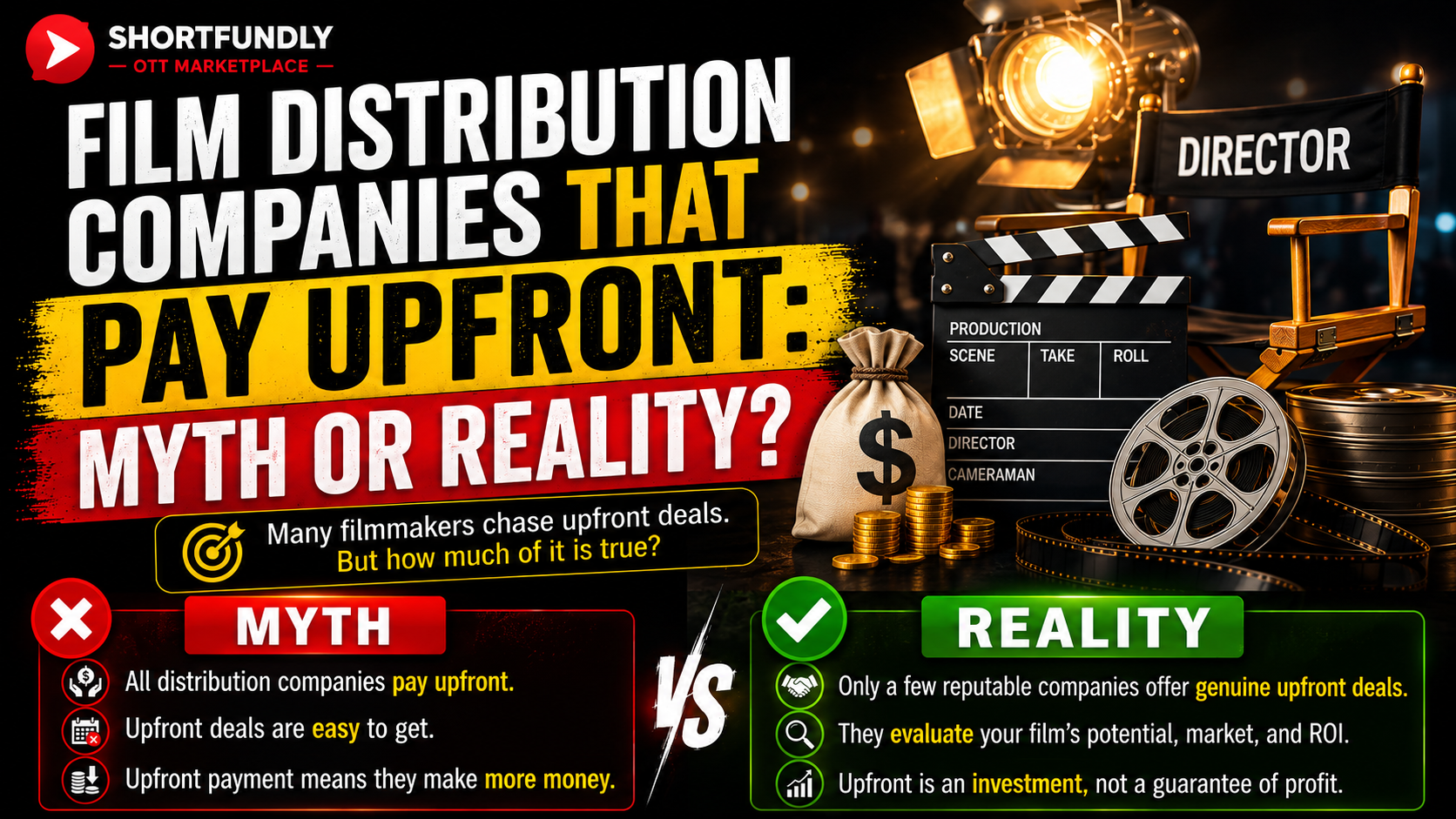
One of the most common questions independent filmmakers ask is whether film distribution companies that pay upfront actually exist. The idea sounds attractive. A distributor watches your film, signs a contract, and transfers a licensing payment before the movie even reaches audiences. For many producers facing budget constraints, this seems like the perfect outcome.
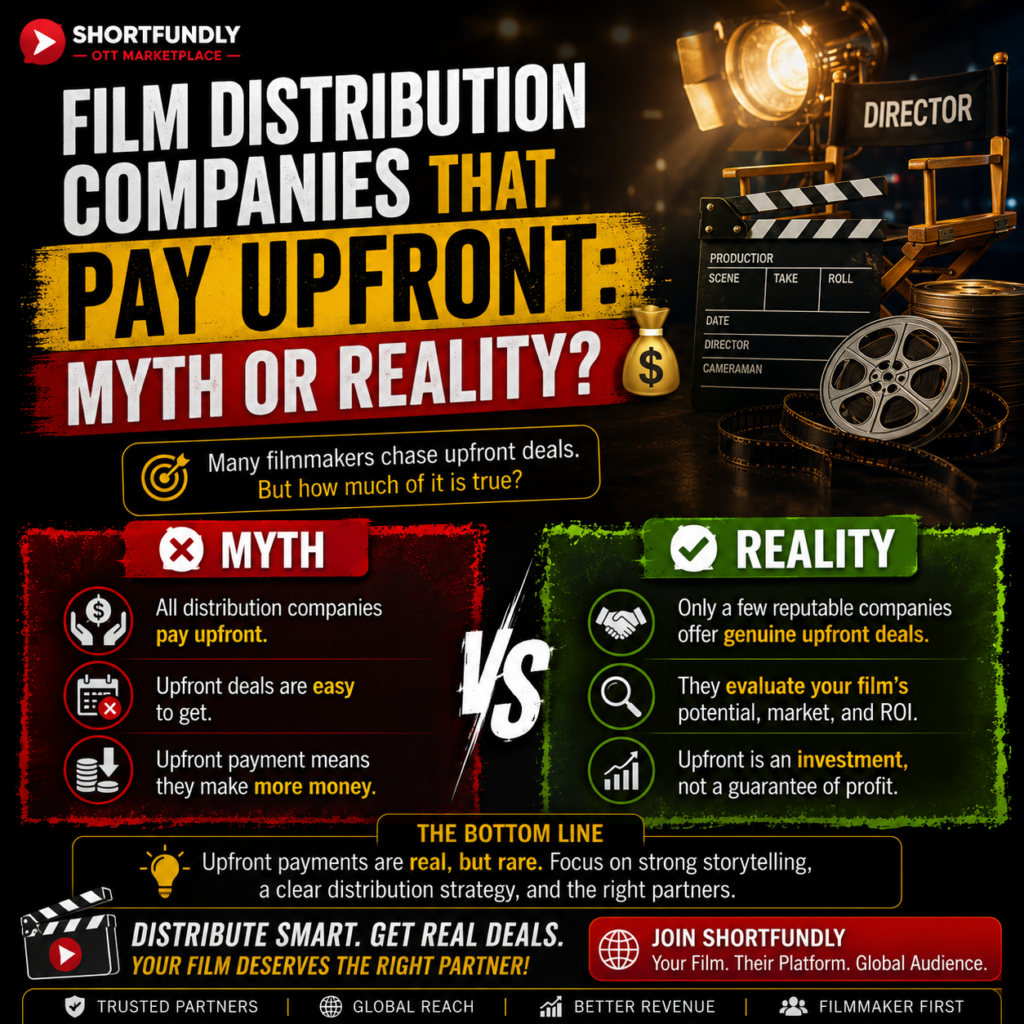
However, the reality is more nuanced. While upfront payments do exist, they are usually tied to specific conditions, market demand, audience potential, and distribution strategies. Understanding how these deals work can help filmmakers avoid unrealistic expectations and negotiate better contracts.
Today’s film industry has evolved significantly due to streaming platforms, digital rights acquisitions, and OTT marketplaces. Traditional theatrical models are no longer the only path to profitability. Streaming services, regional OTT platforms, and digital aggregators have created multiple opportunities for content creators.
The key question is not whether upfront payments exist. The real question is: what type of films qualify for upfront licensing deals, and how can filmmakers improve their chances of securing them?
What Does “Pay Upfront” Mean in Film Distribution?
Minimum Guarantees Explained
In distribution terminology, an upfront payment is often called a Minimum Guarantee (MG).
A minimum guarantee is an advance payment provided by a distributor in exchange for distribution rights. The distributor assumes the risk and hopes to recover the investment through future revenue.
For example:
| Deal Type | Payment Structure |
|---|---|
| Minimum Guarantee | Paid before release |
| Revenue Share | Paid after earnings |
| Hybrid Deal | Partial advance + revenue share |
| License Purchase | Fixed payment for rights |
A minimum guarantee is attractive because it provides immediate income and reduces financial uncertainty.
Licensing Fees vs Revenue Share
Not all distributors operate with minimum guarantees.
Many OTT distributors prefer revenue-sharing models where filmmakers earn a percentage of future revenue instead of receiving a fixed advance.
Revenue sharing offers long-term upside but comes with greater uncertainty. Upfront licensing provides immediate security but may limit future earnings.
Why Filmmakers Seek Upfront Payments
Risk Reduction Benefits
Independent filmmaking involves substantial investment.
Costs may include:
- Production
- Equipment
- Cast salaries
- Post-production
- Marketing
- Festival submissions
An upfront payment helps recover these expenses quickly.
Cash Flow Advantages
Cash flow is critical for filmmakers planning future projects.
Benefits include:
- Immediate budget recovery
- Reduced financial stress
- Funding for new productions
- Marketing support
- Investor confidence
For many producers, securing an upfront deal means they can move on to their next project faster.
The Reality Behind Upfront Distribution Deals
How Distributors Evaluate Films
Distributors rarely provide advances without careful evaluation.
Key assessment areas include:
Content Quality
- Storytelling
- Acting
- Production value
- Technical standards
Commercial Potential
- Genre popularity
- Audience demand
- Regional appeal
- International marketability
Market Performance Indicators
- Festival selections
- Awards
- Online engagement
- Trailer performance
Factors Influencing Advance Payments
The following factors increase the likelihood of receiving an upfront payment:
| Factor | Impact |
|---|---|
| Film Festival Awards | High |
| Recognizable Cast | High |
| Strong Genre Demand | High |
| Existing Audience | Medium |
| Social Media Presence | Medium |
| Positive Reviews | Medium |
Distributors view these indicators as evidence that the film can generate revenue.
Types of Distribution Companies
Traditional Distributors
Traditional distributors may acquire:
- Theatrical rights
- TV rights
- Digital rights
- International rights
These companies are the most likely to offer minimum guarantees for commercially attractive films.
OTT Aggregators
Aggregators help filmmakers deliver content to platforms but usually do not pay advances.
Instead, they:
- Manage technical delivery
- Handle metadata
- Coordinate platform submissions
- Collect royalties
OTT Marketplaces
OTT marketplaces are becoming increasingly important.
Rather than relying solely on direct acquisitions, filmmakers can present their content to multiple buyers simultaneously.
This increases visibility and improves negotiation leverage.
How OTT Licensing Deals Work
Exclusive Licensing
Exclusive deals provide a platform with sole rights to distribute the film.
Benefits include:
- Higher licensing fees
- Premium positioning
- Marketing support
Challenges include:
- Restricted distribution options
- Longer contract terms
Non-Exclusive Licensing
Non-exclusive agreements allow content to appear on multiple platforms.
Advantages:
- Wider reach
- Multiple revenue streams
- Reduced dependency
Disadvantages:
- Lower individual licensing fees
- Increased administrative management
Red Flags in Upfront Payment Offers
Hidden Fees
Some distributors advertise upfront payments while charging:
- Delivery fees
- Encoding costs
- Marketing deductions
- Administrative expenses
Always review contract details carefully.
Long-Term Rights Clauses
A large advance may come with lengthy rights ownership periods.
Watch for:
- 10–20 year terms
- Automatic renewals
- Worldwide exclusivity
- Broad rights assignments
Short-term agreements often provide greater flexibility.
Strategies to Increase Your Chances of Getting Paid Upfront
Festival Success
Festival recognition remains one of the strongest negotiating tools.
Important achievements include:
- Official selections
- Jury awards
- Audience awards
- Industry showcases
Audience Metrics
Modern distributors analyze audience data.
Useful metrics include:
- YouTube trailer views
- Social media followers
- Streaming engagement
- Mailing list subscribers
Strong Marketing Assets
Professional materials increase perceived value:
- Posters
- Teasers
- Press kits
- Reviews
- Behind-the-scenes content
Strong branding can significantly improve licensing opportunities.
OTT Marketplace Platforms and New Opportunities
Shortfundly OTT Marketplace
The rise of OTT marketplaces has transformed independent film distribution.
One notable platform is Shortfundly OTT Marketplace, which connects filmmakers with OTT buyers, distributors, broadcasters, and content acquisition teams.
Benefits may include:
- Direct industry access
- Increased visibility
- Licensing opportunities
- Regional and international reach
- Faster content discovery
Filmmakers can learn more through the official platform:
Such marketplaces can help filmmakers present their content to multiple decision-makers rather than relying on a single distributor.
Revenue Models Compared
| Model | Upfront Payment | Future Revenue | Risk Level |
|---|---|---|---|
| Minimum Guarantee | High | Limited | Low |
| Revenue Share | None | High Potential | High |
| Hybrid Deal | Medium | Medium | Medium |
| License Sale | Fixed | None | Low |
Each model serves different objectives.
Filmmakers seeking immediate cash flow often prefer minimum guarantees, while those confident in long-term audience performance may choose revenue-sharing structures.
Common Mistakes Filmmakers Make
Overpricing Content
Many filmmakers expect unrealistic licensing values.
Pricing should reflect:
- Market demand
- Genre performance
- Production quality
- Audience potential
Ignoring Contract Details
Signing quickly can lead to:
- Lost rights
- Reduced earnings
- Long exclusivity periods
Weak Presentation Materials
Poor pitches reduce acquisition interest.
Always prepare:
- Trailer
- Synopsis
- Technical specifications
- Press kit
Lack of Distribution Strategy
Distribution should be planned before release, not afterward.
Future of Film Distribution Payments
The distribution landscape continues evolving.
Key trends include:
Data-Driven Acquisitions
Platforms increasingly rely on audience analytics before making offers.
Growth of Regional Content
Regional-language films are attracting significant OTT investment.
Marketplace-Based Licensing
More deals are expected through digital content marketplaces.
Flexible Licensing Models
Hybrid agreements combining advances and revenue sharing are becoming more common.
These developments create new opportunities for independent filmmakers seeking upfront payments.
Frequently Asked Questions
1. Do film distribution companies really pay upfront?
Yes. Some distributors offer minimum guarantees or fixed licensing fees, but these deals are generally reserved for films with strong commercial potential.
2. What is a minimum guarantee?
A minimum guarantee is an advance payment made by a distributor in exchange for distribution rights.
3. Can independent filmmakers secure upfront OTT deals?
Yes, particularly if the film has awards, audience traction, recognizable talent, or strong market demand.
4. Are OTT aggregators the same as distributors?
No. Aggregators mainly handle content delivery and technical requirements, while distributors actively acquire and market films.
5. Does festival success help secure upfront payments?
Absolutely. Festival recognition often increases a film’s perceived value and acquisition potential.
6. What is the safest distribution model?
There is no universal answer. Minimum guarantees reduce risk, while revenue-sharing agreements may generate higher long-term earnings.
7. Can OTT marketplaces help filmmakers find buyers?
Yes. Platforms such as Shortfundly OTT Marketplace can improve exposure and facilitate licensing discussions with multiple buyers.
8. Should filmmakers accept the first offer they receive?
Not necessarily. Comparing multiple offers often leads to better terms and stronger long-term revenue opportunities.
Also read: https://blog.shortfundly.com/ott/best-film-distribution-company/
Conclusion
The belief that film distribution companies that pay upfront are either a guaranteed opportunity or a complete myth is inaccurate. The truth lies somewhere in between. Upfront payments absolutely exist through minimum guarantees, licensing acquisitions, and select distribution agreements. However, distributors only make these investments when they see clear commercial value and revenue potential.
Filmmakers who want to secure advance payments should focus on creating high-quality content, building audience demand, participating in festivals, and presenting strong marketing materials. At the same time, emerging solutions such as OTT marketplaces are making it easier to connect directly with buyers and acquisition teams.
Success in modern distribution comes from understanding the market, negotiating carefully, and selecting the right partners. When approached strategically, upfront film distribution deals can become a reality rather than just an industry myth.
Article Summary: Film distribution companies do sometimes pay upfront through minimum guarantees and licensing deals, but these opportunities depend heavily on a film’s commercial potential, audience appeal, and distribution strategy. OTT marketplaces such as Shortfundly are creating new pathways for filmmakers to connect with buyers and maximize revenue opportunities