Table of Contents
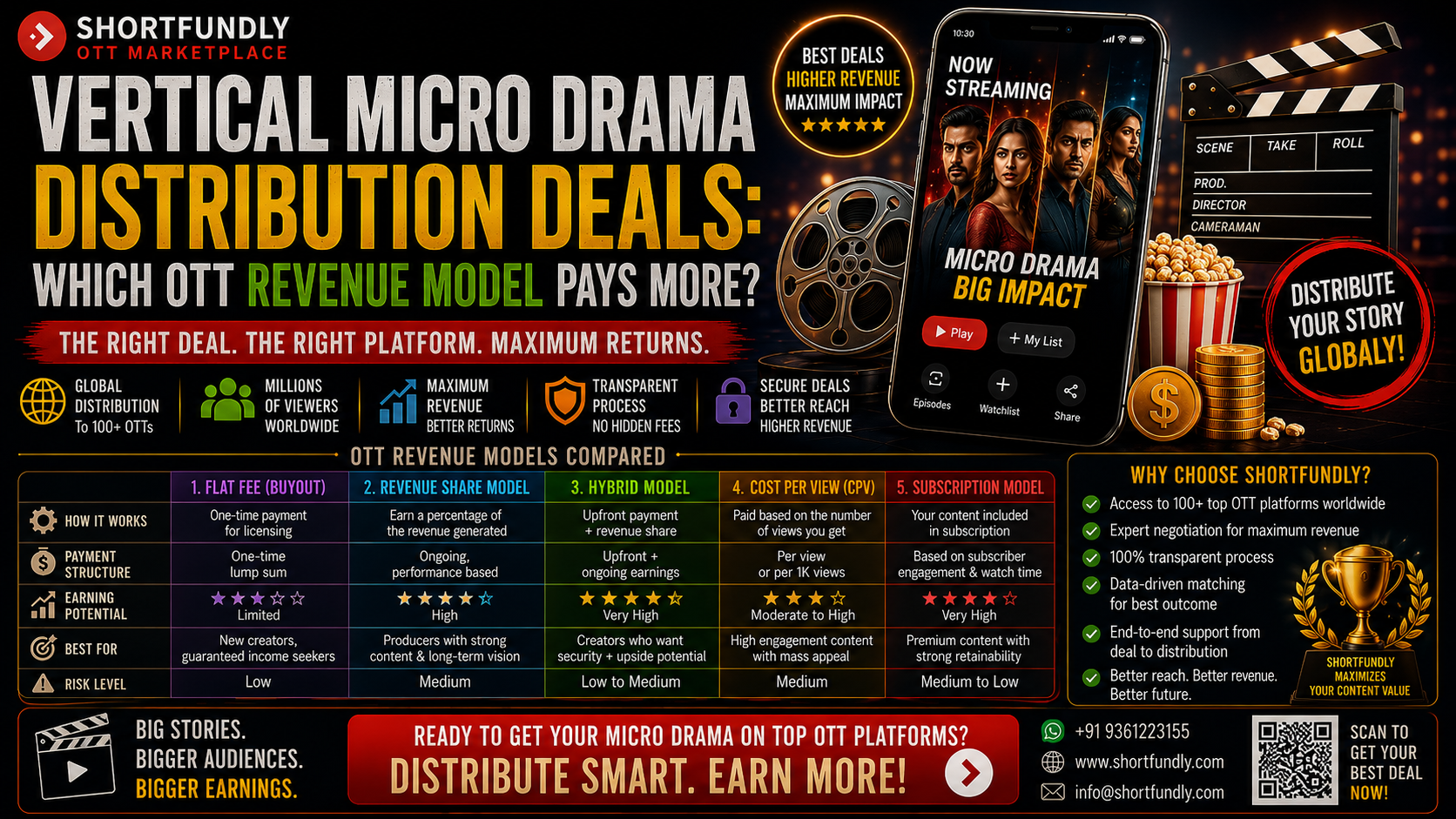
The rapid growth of vertical micro dramas has transformed the OTT entertainment landscape, creating new opportunities for independent filmmakers, production companies, and digital content creators. As audiences increasingly prefer short, engaging, mobile-first stories, OTT platforms worldwide are investing heavily in acquiring vertical drama content. However, one of the most important decisions producers face is choosing the right OTT revenue model.
Should we accept a fixed licensing fee, negotiate a revenue-sharing agreement, or pursue a hybrid distribution deal? Each model offers unique advantages, and selecting the right one can significantly influence long-term profitability.
In this comprehensive guide, we explore the most common vertical micro drama distribution deals, compare their earning potential, and explain how Shortfundly Distribution helps creators secure the most suitable licensing opportunities across global OTT platforms.
Why Choosing the Right OTT Revenue Model Matters
Producing a vertical micro drama requires substantial investment in writing, production, editing, music, marketing, and post-production. Distribution is the stage where that investment begins generating returns. The structure of your licensing agreement determines not only how much you earn but also how quickly you receive payments and whether your content can continue generating revenue over time.
A well-negotiated distribution deal can:
- Maximize long-term income
- Reduce financial risk
- Expand international reach
- Increase brand recognition
- Open opportunities for future projects
Understanding the available revenue models allows producers to make informed business decisions rather than simply accepting the first offer.
Understanding OTT Distribution Deals
OTT platforms acquire content using several licensing structures depending on the platform’s business model, audience size, and content strategy.
The most common distribution deals include:
- Fixed License Fee
- Revenue Share
- Minimum Guarantee
- Hybrid Agreements
- Territory-Based Licensing
- Exclusive Licensing
- Non-Exclusive Distribution
Each agreement offers different benefits depending on the goals of the producer.
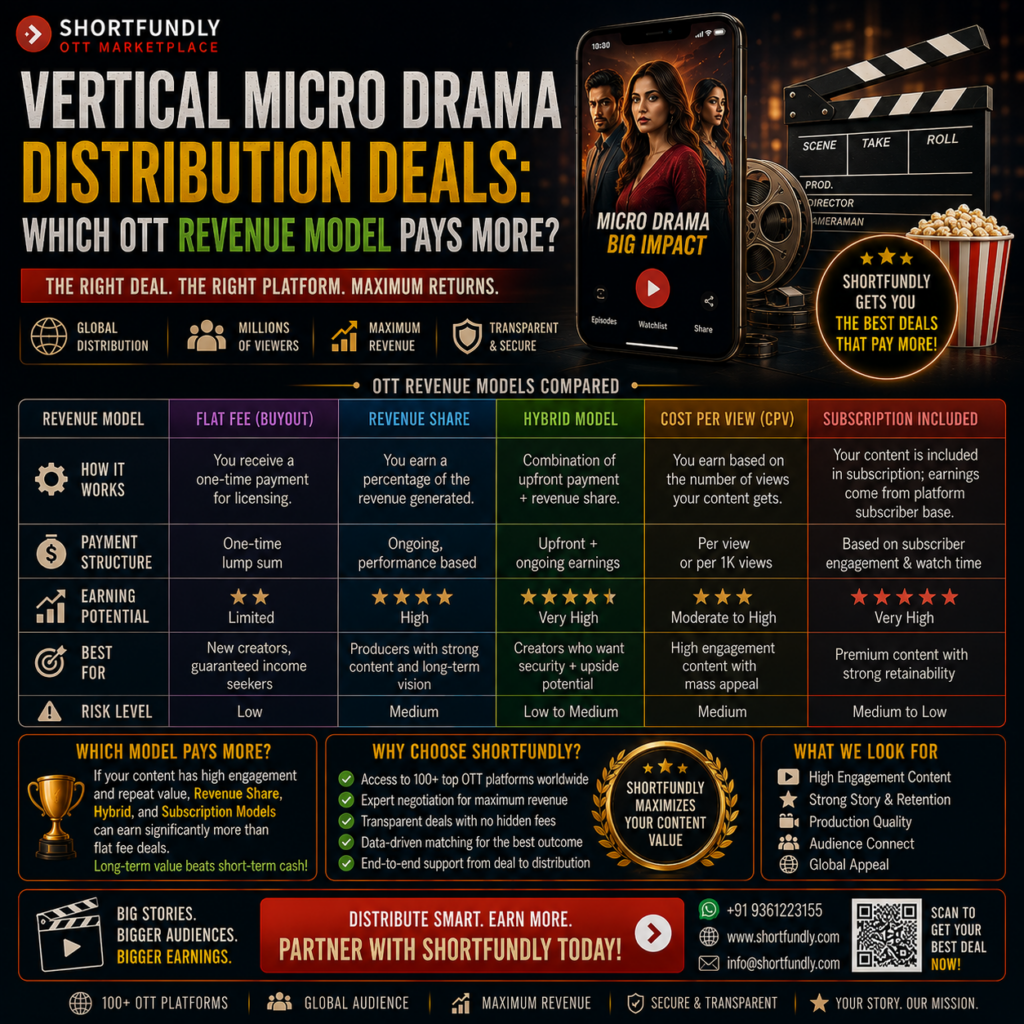
Fixed License Fee: Predictable Income for Producers
A fixed license fee is one of the simplest OTT distribution models. Under this agreement, the platform pays a predetermined amount to license your vertical micro drama for a specific duration and territory.
Advantages
- Immediate payment
- Predictable cash flow
- Lower financial uncertainty
- Easier production budgeting
Disadvantages
- No additional earnings if the series becomes highly successful
- Revenue remains fixed regardless of audience size
This model works well for producers seeking guaranteed returns and immediate project recovery.
Revenue Share Agreements: Higher Long-Term Potential
In a revenue-sharing model, producers receive a percentage of the revenue generated by their content instead of a one-time payment.
Revenue may come from:
- Subscription income
- Advertising revenue
- Pay-per-view transactions
- Premium purchases
- Viewer engagement incentives
Advantages
- Unlimited earning potential
- Ongoing revenue
- Shared success with the platform
Challenges
- Earnings fluctuate
- Revenue depends on platform performance
- Payments may take longer
For highly engaging vertical micro dramas with strong audience retention, revenue sharing can significantly outperform fixed licensing.
Minimum Guarantee Deals
Some OTT distributors combine both approaches by offering a Minimum Guarantee (MG).
Under this model:
- Producers receive an upfront payment.
- Additional revenue is shared after the guarantee is recovered.
This provides financial security while preserving upside potential.
Benefits include:
- Reduced financial risk
- Opportunity for additional earnings
- Strong incentive for distributors to market the content
Hybrid OTT Distribution Models
Hybrid agreements have become increasingly popular in the vertical drama market.
Typical hybrid structures include:
- Lower upfront licensing fee
- Revenue sharing
- Performance bonuses
- Territory expansion incentives
This model balances predictable income with long-term profitability.
Exclusive vs Non-Exclusive Distribution
Another important factor affecting revenue is exclusivity.
Exclusive Licensing
Advantages:
- Higher licensing fees
- Premium platform placement
- Strong promotional support
Disadvantages:
- Limited availability on other platforms
- Reduced diversification
Non-Exclusive Licensing
Advantages:
- Multiple revenue streams
- Wider audience reach
- Greater international exposure
Disadvantages:
- Lower individual licensing fees
- More complex rights management
Choosing between these options depends on your long-term distribution strategy.
Which Revenue Model Pays the Most?
There is no universal answer because profitability depends on several factors.
Revenue potential is influenced by:
- Genre
- Audience demand
- Platform size
- Viewer engagement
- Marketing effectiveness
- International appeal
For example:
A romance series with millions of viewers may generate substantially more income through revenue sharing.
A niche educational drama may perform better with a fixed licensing agreement.
Evaluating your project’s commercial potential is essential before selecting a revenue model.
Factors OTT Buyers Consider Before Making an Offer
OTT acquisition teams evaluate much more than production quality.
They assess:
- Storytelling strength
- Viewer retention
- Episode pacing
- Technical quality
- Mobile optimization
- Subtitle availability
- International appeal
- Cast recognition
- Marketing potential
The stronger your submission package, the better your negotiating position.
How Shortfundly Distribution Helps Producers Maximize Revenue
Finding the right OTT partner can be challenging, especially for independent filmmakers entering the streaming market.
Shortfundly Distribution simplifies this process by connecting creators with suitable OTT platforms while helping maximize licensing opportunities through professional distribution services.
Their services include:
- Vertical micro drama distribution
- OTT submission support
- Technical quality review
- Metadata preparation
- Subtitle coordination
- Licensing guidance
- Distribution strategy
- International platform access
Rather than relying on a single revenue model, Shortfundly Distribution works with creators to identify opportunities that best match each project’s commercial potential, helping producers optimize both short-term income and long-term revenue.
Negotiating Better OTT Distribution Deals
Successful negotiations begin before approaching OTT buyers.
We should prepare:
- Complete rights documentation
- Professional trailers
- High-quality posters
- Audience analytics
- Social media performance
- Festival selections
- Press coverage
- Viewer engagement metrics
Demonstrating market demand strengthens our negotiating position.
Avoid Common Licensing Mistakes
Many producers unintentionally reduce their earnings by accepting unfavorable terms.
Common mistakes include:
- Granting worldwide rights unnecessarily
- Accepting perpetual licenses
- Ignoring renewal clauses
- Overlooking revenue reporting requirements
- Signing exclusive agreements too early
- Failing to negotiate marketing commitments
Carefully reviewing every licensing agreement protects future revenue.
How Global Distribution Increases Revenue
International distribution dramatically expands monetization opportunities.
Benefits include:
- Multiple licensing deals
- Regional platform acquisitions
- Language localization
- Cross-border audiences
- Increased brand recognition
Localized subtitles and culturally adaptable storytelling improve global licensing success.
Preparing Your Vertical Micro Drama for Premium Licensing
Premium OTT platforms expect professionally prepared content.
Recommended deliverables include:
- Broadcast-quality master files
- High-resolution artwork
- Subtitle files
- Episode metadata
- Promotional trailer
- Synopsis
- Cast information
- Rights documentation
Well-prepared projects often receive faster consideration and stronger offers.
The Future of OTT Revenue Models
The OTT industry continues evolving alongside changing viewer behavior.
Emerging trends include:
- Performance-based licensing
- AI-driven recommendation payments
- Interactive vertical storytelling
- Regional revenue partnerships
- Creator incentive programs
- Flexible hybrid licensing
Producers who understand these evolving models will be better positioned to maximize future earnings.
Also read: https://blog.shortfundly.com/ott/ott-distribution-blueprint/
Conclusion
Selecting the right vertical micro drama distribution deal is one of the most important financial decisions producers make. Fixed licensing provides predictable income, revenue sharing offers greater long-term earning potential, while hybrid agreements balance security and growth. The ideal revenue model depends on your project’s audience appeal, commercial potential, and long-term business goals.
Working with an experienced distribution partner such as Shortfundly Distribution gives creators access to professional guidance, OTT platform connections, technical delivery support, and strategic licensing advice. By carefully evaluating each revenue model and negotiating from a position of strength, producers can maximize both immediate returns and ongoing profitability while expanding the global reach of their vertical micro drama series.