Table of Contents
Introduction: Choose Your Next Streaming Channel Idea
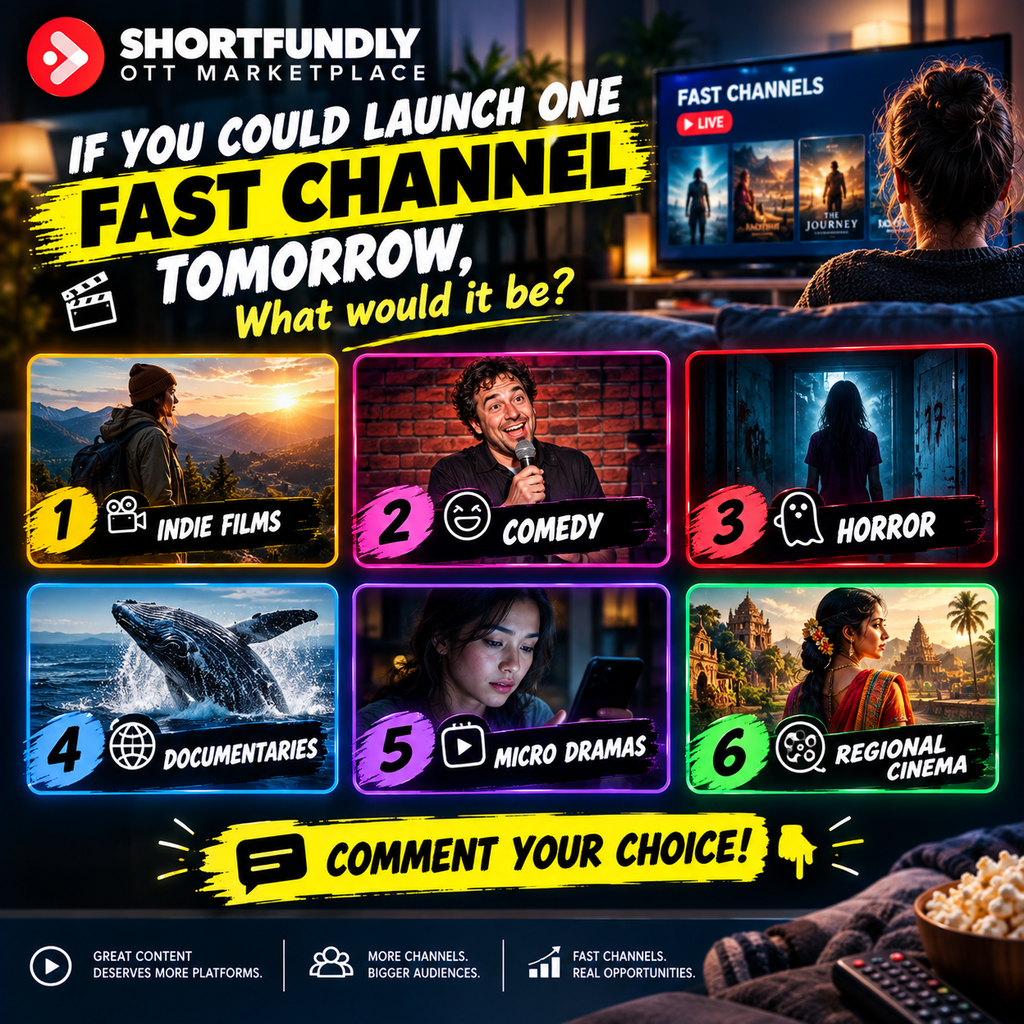
If you could launch one FAST channel tomorrow, what would it be? 🎬
- Indie Films
- Comedy
- Horror
- Documentaries
- Micro Dramas
- Regional Cinema
Each option represents a different entertainment experience, audience, and programming opportunity. Some viewers want to discover independent films. Others want a quick laugh after a long day, a frightening late-night movie, or a documentary that opens their eyes to something new.
Meanwhile, the growing variety of internet-based television experiences gives content owners new ways to think about how films and programs reach viewers.
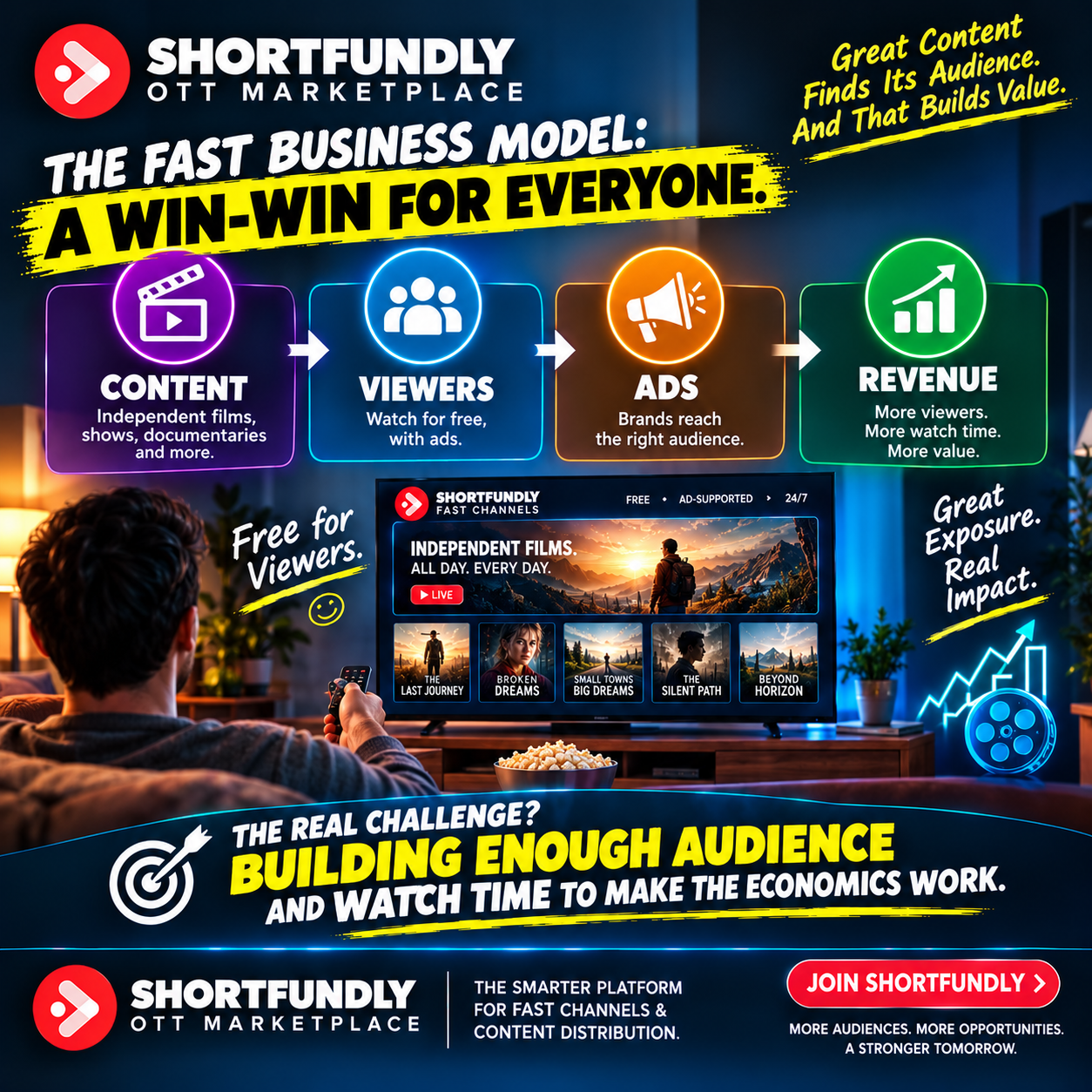
FAST, which stands for Free Ad-Supported Streaming Television, combines scheduled channel programming with internet-based distribution. Viewers can watch participating channels without paying a traditional subscription fee, while advertising generally supports the business model.
Unlike a purely on-demand library, a FAST channel offers a continuous stream of scheduled content. Viewers can tune in, watch what’s playing, discover something unexpected, and keep watching.
But launching a successful channel requires more than choosing a popular genre. You need a clear audience, a suitable content library, a thoughtful programming schedule, distribution planning, reliable technology, and a realistic monetization strategy.
In this article, we’ll explore six powerful FAST channel ideas, explain their potential advantages, and outline how filmmakers and content owners can approach distribution with resources such as Shortfundly Distribution.
Understanding FAST TV: How Does It Work?
Before choosing a channel concept, it’s important to understand the FAST model.
FAST channels provide scheduled video programming over the internet. Instead of requiring viewers to select each title individually, a channel plays a continuous lineup.
For example, an independent film channel might feature a short film in the afternoon, a feature-length drama in the evening, and a filmmaker interview later at night.
A horror channel might schedule supernatural stories during the evening and a themed movie marathon on weekends.
The programming creates a viewing experience that resembles traditional television while using internet-based delivery.
What Makes FAST Channels Different?
FAST channels typically offer three important features:
- Free viewing: Audiences can generally watch without a paid subscription to the channel.
- Scheduled programming: Content plays in a planned sequence.
- Advertising support: Advertisements can provide revenue under the relevant commercial arrangements.
The exact experience depends on the platform and channel operator.
Why Channel Selection Matters
A channel’s identity helps viewers understand what to expect. If the programming is focused, audiences can quickly decide whether the channel suits their interests.
A channel devoted to independent cinema, for example, can create a recognizable destination for viewers who want to discover films outside mainstream releases.
A comedy channel can build its identity around light entertainment, while a documentary channel can focus on real-world stories.
The best channel concept is not necessarily the broadest one. It is the one that matches available content with an audience the operator can realistically reach.
1. Indie Films: Build a Home for Independent Cinema
An indie film FAST channel could be an excellent choice for anyone passionate about original storytelling, emerging filmmakers, and distinctive cinematic voices.
Independent films often explore subjects, characters, and perspectives that differ from those found in mainstream commercial productions. A dedicated channel can organize these films into a continuous viewing experience.
Instead of leaving each title to compete for attention in a large content library, the channel can bring related films together under a clear identity.
Why Launch an Indie Film Channel?
Independent cinema offers several possible programming directions.
A channel could feature:
- Award-winning independent films
- Short films by emerging directors
- Independent documentaries
- Experimental cinema
- International indie films
- Student films with appropriate distribution permissions
- Filmmaker interviews and behind-the-scenes features
The selection should reflect the channel’s target audience and the rights available.
Create Programming That Encourages Discovery
An indie film channel can use themed programming blocks to make content easier to explore.
For example:
| Programming Block | Content Idea |
|---|---|
| Indie Spotlight | A selected independent feature |
| Short Film Showcase | Several short films in one block |
| New Voices | Films by emerging filmmakers |
| International Stories | Films from different countries |
| Behind the Film | Interviews or production features, where available |
| Weekend Indie Cinema | A curated feature-film lineup |
These blocks give the channel structure and help viewers understand its identity.
Distribution Opportunities for Independent Filmmakers
For filmmakers, inclusion in a distribution strategy may create opportunities to introduce their work to audiences beyond an initial release.
However, distribution depends on rights ownership, licensing terms, platform requirements, and commercial arrangements. A channel operator must confirm that each title is cleared for its intended use.
Filmmakers researching their options can explore Shortfundly Distribution as a resource for film distribution opportunities.
Before entering an agreement, they should verify the current services, eligibility criteria, platform coverage, territories, and contractual terms.
Best for: Content owners interested in independent cinema, original storytelling, and discovering emerging filmmakers.
2. Comedy: Create a Channel That Makes People Smile
Comedy is another compelling FAST channel idea because it offers a clear entertainment promise: viewers can tune in when they want something funny.
A comedy channel might feature stand-up performances, sitcom episodes, comedy films, sketches, short-form entertainment, or other suitable humorous content.
The key is to establish a recognizable tone and schedule.
Why Comedy Could Work as a FAST Channel
Comedy supports several programming formats, making it possible to build variety around one broad genre.
A channel could offer short comedy segments during the day, feature-length comedies in the evening, and recurring themed blocks on weekends.
For example, a programming lineup might include:
- Classic comedy films
- Stand-up comedy
- Sitcom episodes
- Sketch comedy
- Short comedic films
- Regional-language comedy
- Family-friendly humor
The exact content mix should reflect the intended audience and applicable content restrictions.
Build Repeatable Comedy Blocks
A recurring schedule can help viewers understand what the channel offers.
Consider a weekly lineup:
| Day | Example Programming Theme |
|---|---|
| Monday | Classic Comedy |
| Tuesday | Sitcom Night |
| Wednesday | Short Comedy Showcase |
| Thursday | Stand-Up Features |
| Friday | Comedy Movie Night |
| Saturday | Weekend Laugh Marathon |
| Sunday | Family-Friendly Comedy |
This is an illustrative schedule rather than a proven formula. The channel should use audience feedback and available performance data to refine its programming.
Balance Variety With Channel Identity
A comedy channel shouldn’t simply collect every program that contains a joke.
A consistent identity helps viewers know what to expect. A channel focused on family-friendly humor may need different content from one specializing in adult stand-up performances.
Clear descriptions, appropriate ratings, and thoughtful sequencing help the channel maintain that identity.
Best for: Operators with access to suitable comedy films, performances, episodes, or short-form entertainment.
3. Horror: Turn Suspense Into a Distinct Viewing Experience
Horror is a natural candidate for a genre-focused FAST channel because it supports recognizable themes, recurring programming blocks, and movie marathons.
Fans may enjoy supernatural stories, psychological thrillers, creature features, slasher films, or classic horror cinema. A dedicated channel can bring these interests together.
Why Consider a Horror FAST Channel?
A horror channel can build a strong identity around atmosphere, suspense, and genre discovery.
Possible programming categories include:
- Classic horror films
- Supernatural stories
- Psychological horror
- Creature features
- Horror short films
- Independent horror cinema
- Mystery and thriller programming
The content should be selected carefully to match the channel’s intended audience and platform rules.
Create Themed Horror Programming
A schedule can organize films around common themes.
For example:
Supernatural Saturdays: A collection of suitable ghost stories and supernatural films.
Independent Horror Spotlight: Films from emerging or independent filmmakers.
Classic Horror Nights: Older horror titles selected for genre fans.
Short Scare Sessions: A block featuring short horror films.
Thriller Marathon: A sequence of suspense-focused films.
These themes make it easier to promote the channel and give viewers a reason to return for particular programming blocks.
Manage Content Suitability
Horror films can differ significantly in intensity and content. The operator should consider ratings, age suitability, platform policies, and audience expectations.
A channel targeting a broad audience may require a different selection from one intended specifically for adult horror fans.
Rights management also matters. A film should only be scheduled when the necessary permissions cover the intended distribution.
Best for: Operators with access to horror films, suspense titles, and a library large enough to support a consistent genre-focused schedule.
4. Documentaries: Give Real Stories a Dedicated Platform
A documentary FAST channel could appeal to viewers who want to explore real people, places, events, and ideas.
Documentaries can cover history, science, nature, culture, technology, society, travel, and many other subjects.
A dedicated channel can organize this material into a coherent viewing experience rather than requiring viewers to search for each documentary separately.
Why Launch a Documentary Channel?
Documentary programming offers opportunities to serve audiences with different interests.
For example, a channel might focus on:
- Historical documentaries
- Nature and wildlife
- Science and technology
- Travel and culture
- Social issues
- Biography and personal stories
- Arts and filmmaking
- Regional history and traditions
The channel can be broad or specialized, depending on its content inventory and target audience.
Build Educational and Thematic Blocks
Programming blocks can group documentaries around a topic.
A history-focused channel might schedule programs about a particular era. A nature channel could organize content around wildlife, oceans, forests, and conservation.
A broader documentary channel might dedicate different days to science, culture, travel, and biography.
These categories help create a predictable schedule without limiting the channel to a single subject.
Consider Credibility and Context
Documentary programming should be selected with care. Operators should review content quality, factual presentation, rights, and any relevant editorial considerations.
Descriptions should accurately represent the material, especially when a documentary covers sensitive or controversial subjects.
Best for: Operators with access to documentary films, factual series, educational content, or specialized nonfiction libraries.
5. Micro Dramas: Build Around Short, Episodic Stories
Micro dramas are short, serialized dramatic stories designed to deliver plot, emotion, and character development in brief episodes.
This format has attracted attention in mobile entertainment, where viewers may prefer compact stories that fit into shorter viewing sessions.
A micro drama FAST channel could organize these episodes into scheduled blocks, allowing viewers to discover stories without browsing an entire library.
Why Explore a Micro Drama Channel?
Micro dramas can provide a different experience from feature-length films.
Potential content categories include:
- Romantic mini-series
- Family dramas
- Suspense stories
- Short-form thrillers
- Youth-oriented dramas
- Comedy dramas
- Episodic stories with cliffhangers
The format depends on the actual content available. Not every short video is a micro drama, and not every serialized story is suitable for every audience.
Programming Micro Dramas
Operators should consider episode duration, story continuity, and the order in which episodes appear.
For example, a channel might schedule several episodes from one series in a recurring block. It could also introduce different stories in separate programming windows.
A useful schedule should help viewers understand whether they are joining a story at the beginning or in the middle.
Respect the Story Structure
Micro dramas often depend on character development, suspense, and continuity. Randomly rearranging episodes can make a story confusing.
Before scheduling a series, the operator should verify episode order, rights, runtime, metadata, and any platform requirements.
Best for: Operators with access to properly licensed short-form serialized dramas and an audience interested in compact storytelling.
6. Regional Cinema: Celebrate Language and Culture
A regional cinema FAST channel could serve audiences interested in films made in a particular language or connected to a specific culture.
Regional cinema can include feature films, short films, documentaries, classic titles, and other licensed content that reflects a language or community.
A focused channel can help organize these stories for audiences who want entertainment that feels culturally familiar or offers a window into another community.
Why Regional Cinema Is a Strong Channel Concept
Language can be an important factor in viewing choices. Some viewers actively seek films in their preferred language, while others enjoy discovering cinema from different regions.
A regional channel could focus on:
- Tamil cinema
- Telugu cinema
- Malayalam cinema
- Kannada cinema
- Bengali cinema
- Marathi cinema
- Punjabi cinema
- Other language-based film collections
The operator should choose a focus that matches its content library and audience research.
Combine Familiar Titles With New Discoveries
A regional cinema channel could combine recognizable films with independent productions, short films, documentaries, and newer storytelling voices.
This mix can give viewers a reason to explore beyond titles they already know.
Where appropriate, subtitles or additional language options may help broaden accessibility. Their availability depends on the rights and assets supplied for each title.
Understand Regional Distribution Requirements
Regional content still requires proper licensing, metadata, technical preparation, and platform compatibility.
Content owners should verify the territories and languages covered by their rights and consider any localization requirements before distributing a film.
Best for: Operators with access to a suitable regional-language library and a clear understanding of the audience they want to serve.
How to Choose the Best FAST Channel Idea
Each of the six ideas has potential, but the right choice depends on the operator’s resources and goals.
Instead of selecting a genre simply because it sounds popular, evaluate the practical requirements.
Compare Your Content Inventory
Begin by asking what content you already have access to.
If your library contains many independent films, an indie channel may be a natural starting point. If you have licensed documentary collections, a factual channel may be easier to develop.
A micro drama channel requires suitable episodic content, while a regional cinema channel depends on rights to films that fit the intended language or cultural focus.
Understand Your Target Audience
Consider the viewers you want to reach.
Questions to ask include:
- What genres do they enjoy?
- Which languages do they prefer?
- Are they looking for long-form or short-form content?
- What makes the channel different from other options?
- Which platforms can they access?
- What would encourage them to return?
Use available research and audience evidence wherever possible.
Evaluate the Operational Requirements
A FAST channel needs more than a name and a playlist.
The operator may need content acquisition, rights verification, metadata preparation, scheduling and playout technology, streaming delivery, advertising integration, and ongoing quality assurance.
The complexity depends on the chosen technology and distribution arrangement.
Use a Practical Decision Table
| Evaluation factor | Questions to consider |
|---|---|
| Content availability | Do you have enough suitable, licensed content? |
| Audience demand | Is there a clear audience for this channel? |
| Differentiation | What makes the channel distinct? |
| Programming | Can you create a consistent schedule? |
| Distribution | Are suitable platforms or partners available? |
| Monetization | Is there a realistic commercial model? |
| Operations | Can the channel be maintained reliably? |
| Long-term sustainability | Can the content library and schedule be refreshed? |
The strongest choice is one that fits your resources while offering a clear reason for viewers to watch.
Content Rights and Distribution: What You Need to Know
Content rights are central to any FAST channel strategy.
Owning a video file does not automatically grant permission to distribute it through every platform. A producer may control some rights while other rights remain subject to contracts, licenses, or third-party permissions.
Verify Rights Before Scheduling
Before a film is added to a channel, the operator should confirm that the necessary rights cover the intended use.
This may include:
- Streaming and digital distribution rights
- Relevant territories
- Permitted platforms
- License duration
- Exclusivity restrictions
- Advertising-supported use, where applicable
- Music and other third-party clearances
- Required content ratings or restrictions
The exact requirements depend on the project and applicable agreements.
Keep a Rights Register
A rights register can record the current status of each title.
It should identify the rights holder, licensed territories, permitted uses, agreement dates, restrictions, and any upcoming expiration dates.
This helps operators avoid scheduling content that is no longer available for the intended use.
Prepare Content for Delivery
Platforms may require specific technical formats, metadata fields, artwork, subtitles, captions, and other materials.
Preparing these assets in advance can reduce avoidable delays during delivery and quality assurance.
How Shortfundly Distribution Fits Into Your Strategy
For filmmakers and content owners, distribution planning is an important step in understanding how a completed film might reach audiences.
Shortfundly Distribution is a resource you can explore when researching film distribution opportunities.
If you’re considering launching a FAST channel, distributing an independent film, or organizing a library for future opportunities, it helps to understand the distribution options available to you.
Questions to Ask When Researching Distribution Options
Before choosing a service or entering an agreement, verify:
- Which content types are eligible?
- Which platforms and territories are covered?
- What rights must be granted?
- Are exclusive rights required?
- How are fees, revenue, and payments structured?
- What video formats and metadata are needed?
- What reporting is available?
- How long does the agreement last?
- What happens when the agreement ends?
These questions help you assess whether an opportunity fits your objectives.
Connect Film Distribution With Channel Programming
Distribution and programming serve different purposes.
Distribution determines how content can be made available to audiences. Programming determines how that content is arranged and presented within a channel.
For example, an independent film may be suitable for a particular distribution opportunity but still need a relevant programming block to fit a FAST channel.
By considering both aspects, content owners can make more informed decisions about their libraries and potential audience opportunities.
Visit Shortfundly Distribution to review its current offerings and verify whether they suit your distribution needs.
Monetization: How Can a FAST Channel Generate Revenue?
FAST channels generally use advertising to support free viewing. However, monetization depends on the channel’s audience, platform arrangements, advertising demand, and commercial terms.
Advertising-Supported Revenue
Advertising may be delivered during scheduled programming through technology supported by the platform.
Potential measures include ad impressions, fill rates, completion rates, and advertising revenue. Reporting availability varies.
Content Licensing
Depending on ownership and licensing rights, content owners may earn revenue by licensing titles to platforms or other distribution partners.
The financial terms depend on the specific agreement. Some arrangements may include fixed licensing fees, revenue shares, or other commercial structures.
Sponsorship and Partnerships
Some channels may explore sponsorships or other partnerships that fit their audience and content.
Any such arrangement should comply with platform policies, contractual requirements, and relevant advertising rules.
Keep Revenue Expectations Realistic
A channel’s launch does not guarantee immediate income. Operators need a sustainable content strategy, suitable distribution, audience development, technical reliability, and a clear understanding of costs.
A realistic business plan should account for both the potential revenue model and the resources needed to maintain the channel.
A Practical FAST Channel Launch Roadmap
Once you’ve chosen your channel idea, use a structured process to move from concept to launch.
| Step | Action | Goal |
|---|---|---|
| 1 | Choose the channel concept | Define the channel’s identity |
| 2 | Research the audience | Understand viewing interests |
| 3 | Audit the content library | Identify suitable titles |
| 4 | Verify content rights | Confirm permitted uses |
| 5 | Prepare metadata and assets | Organize content for delivery |
| 6 | Build the programming schedule | Create a coherent lineup |
| 7 | Select suitable technology | Support scheduling and streaming |
| 8 | Research distribution options | Identify relevant platforms and partners |
| 9 | Test the complete stream | Check playback and transitions |
| 10 | Launch and promote the channel | Help viewers discover it |
| 11 | Review available analytics | Identify areas for improvement |
| 12 | Refine the strategy | Improve the channel over time |
Start With a Manageable Scope
You don’t necessarily need to build the largest possible channel from day one.
Start with a clear concept, a rights-cleared content pool, a realistic schedule, and a reliable delivery setup.
Then use available evidence to determine where expansion makes sense.
Common FAST Channel Mistakes to Avoid
Even a promising channel concept can struggle if the fundamentals are overlooked.
1. Choosing a Genre Without a Content Plan
A channel needs enough suitable content to support its intended schedule. Evaluate the available library before making major commitments.
2. Ignoring Audience Needs
A channel should have a clear identity and a reason for viewers to choose it. Avoid building a schedule solely around the content that happens to be available.
3. Overlooking Rights Restrictions
Verify the relevant rights, territories, and license periods before scheduling or distributing content.
4. Treating Distribution as an Afterthought
Research potential platforms and partners early. Their requirements may influence content preparation, metadata, and commercial planning.
5. Ignoring Programming Quality
A channel needs a coherent schedule. Randomly rotating videos may not provide the same experience as thoughtful programming.
6. Expecting Immediate Monetization
Revenue depends on audience performance, advertising demand, licensing arrangements, and operating costs. Plan realistically.
7. Failing to Review Performance
Use available analytics and audience feedback to refine scheduling, content selection, and promotion.
Frequently Asked Questions About FAST Channel Ideas
1. What are the best FAST channel ideas?
Potential ideas include indie films, comedy, horror, documentaries, micro dramas, and regional cinema. The best choice depends on content availability, audience demand, distribution opportunities, and the operator’s goals.
2. What does FAST stand for?
FAST stands for Free Ad-Supported Streaming Television. It describes streaming channels that viewers can generally access without a conventional paid subscription, with advertising supporting the business model.
3. How do FAST channels work?
FAST channels deliver continuous scheduled programming over the internet. Viewers tune in and watch the current program, while channel operators manage content, scheduling, distribution, and advertising according to their setup.
4. Can independent filmmakers benefit from FAST channels?
FAST channels may offer another distribution opportunity for eligible independent films. However, participation depends on rights, platform availability, licensing terms, and commercial arrangements.
5. How much does it cost to launch a FAST channel?
Costs vary according to content acquisition, technology, infrastructure, distribution arrangements, staffing, marketing, and other requirements. There is no single price that applies to every channel.
6. How do FAST channels make money?
FAST channels generally rely on advertising. Depending on the business model, other commercial arrangements may also be possible. Revenue depends on audience scale, advertising demand, platform terms, and operating costs.
7. What content is suitable for a FAST channel?
Content may include feature films, short films, documentaries, television episodes, comedy, horror, regional-language cinema, and other formats. The right selection depends on the channel’s identity, rights, and intended audience.
8. Do FAST channels need a content schedule?
Yes. A linear FAST channel requires a planned programming lineup. Scheduling helps create a coherent viewing experience and ensures that content plays in the intended order.
9. What is the difference between FAST and video-on-demand?
FAST provides scheduled, continuous channel programming. Video-on-demand lets viewers select individual titles and choose when to watch them. Some services combine both experiences.
10. Where can filmmakers explore distribution opportunities?
Filmmakers can research distribution resources such as Shortfundly Distribution. They should review current services, eligibility, supported territories, rights requirements, and commercial terms before proceeding.
11. Can a FAST channel focus on one language or genre?
Yes. A channel can focus on a particular genre, language, community, or interest, provided it has suitable content and a viable distribution plan.
12. How can a FAST channel attract viewers?
A channel can build its identity through consistent programming, accurate metadata, suitable promotional materials, platform discovery opportunities, and content that matches its intended audience. Results depend on the market and execution.
Also read: https://blog.shortfundly.com/ott/fast-channel-programming/
Conclusion: Which FAST Channel Would You Launch Tomorrow?
The six channel ideas offer different ways to approach free, ad-supported streaming.
An indie film channel can celebrate original storytelling. Comedy can deliver light entertainment. Horror can create a focused destination for genre fans. Documentaries can bring real-world stories together. Micro dramas can offer short, serialized narratives. Regional cinema can connect viewers with language and culture.
There isn’t one perfect choice for every operator.
The best FAST channel idea is the one that matches your content library, audience, distribution options, and ability to maintain a consistent viewing experience.
Before launching, research your market, verify content rights, organize your assets, plan your schedule, and evaluate suitable distribution resources. If you’re exploring film distribution opportunities, visit Shortfundly Distribution and review its current offerings and terms.