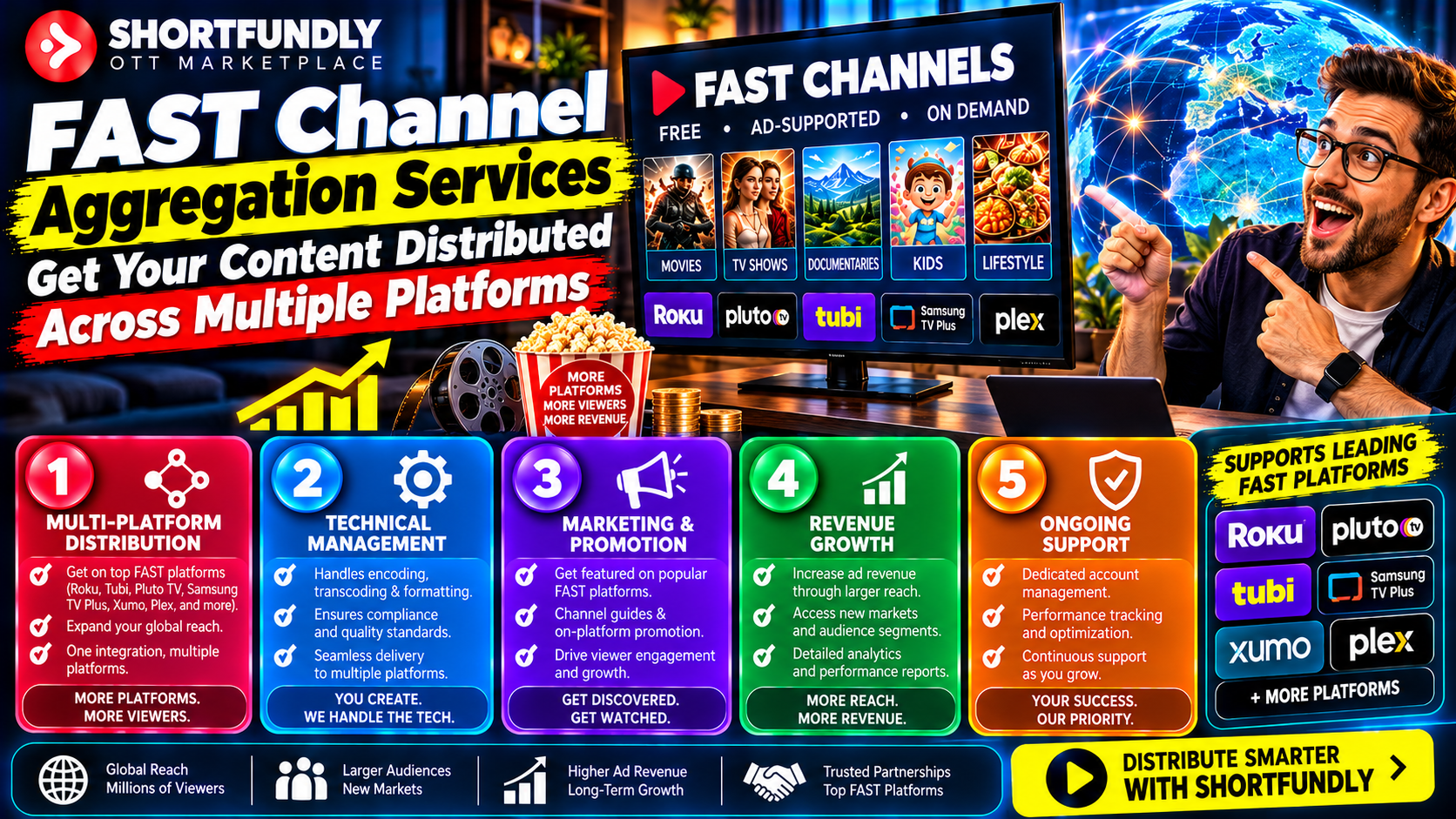
Table of Contents
The streaming industry is evolving rapidly, creating new opportunities for filmmakers, production companies, content owners, and independent creators to reach global audiences. One of the most significant developments is the growth of Free Ad-Supported Streaming TV (FAST), which allows viewers to watch movies, television shows, documentaries, and other video content for free while platforms generate revenue through advertising.
However, distributing content across multiple FAST platforms can be challenging. Each platform may have different technical specifications, content requirements, licensing terms, and delivery processes. This is where FAST channel aggregation services become valuable. By helping content owners prepare and distribute their libraries across multiple streaming platforms, aggregation services can simplify distribution and expand potential audience reach.
In this guide, we explore how FAST channel aggregation works, its benefits, and how filmmakers and content owners can approach multi-platform distribution with support from services such as Shortfundly Distribution.
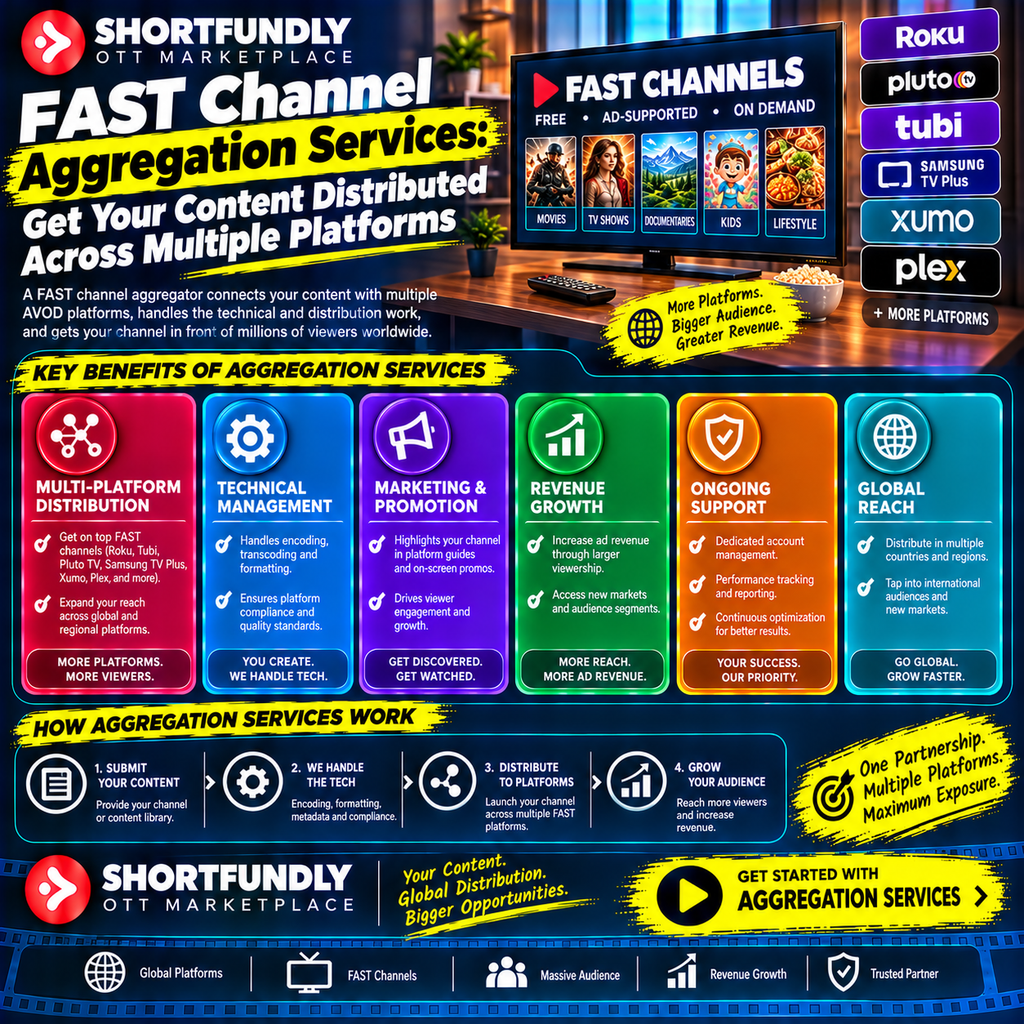
What Are FAST Channel Aggregation Services?
FAST channel aggregation services help organize, prepare, and distribute video content to compatible streaming platforms. Depending on the provider and agreement, these services may include content onboarding, metadata preparation, technical quality checks, delivery coordination, rights documentation, and distribution management.
Instead of approaching every platform independently, content owners may be able to work with an aggregation partner that coordinates parts of the distribution process.
FAST platforms typically offer one of two viewing experiences:
- Linear FAST channels: Programmed channels that operate on a schedule, similar to traditional television.
- On-demand content within FAST services: Movies and shows that viewers can select from a catalog, often supported by advertising.
The services offered by an aggregator can vary. Some focus on delivering content to existing platforms, while others may also support channel creation, programming, monetization reporting, or ongoing content management.
Why Is FAST Channel Aggregation Important?
Getting a film or television program onto a streaming service involves more than uploading a video file. Content owners must consider platform compatibility, distribution rights, artwork, metadata, subtitles, captions, and delivery standards.
FAST channel aggregation can help simplify these requirements and make it easier to pursue distribution opportunities across multiple services.
1. Reach More Potential Viewers
Distributing content across multiple eligible platforms can increase the number of places where audiences may discover it. Different services attract different viewer groups, genres, and geographic markets.
For example, an independent film may appeal to audiences who enjoy documentaries, international cinema, classic movies, family entertainment, or independent productions. A multi-platform distribution strategy can help content owners explore suitable outlets for their titles.
However, availability depends on platform acceptance, licensing arrangements, territory restrictions, and the aggregator’s distribution network.
2. Simplify the Distribution Process
Every streaming platform may have its own onboarding process, delivery specifications, and documentation requirements. Managing these requirements individually can consume significant time and resources.
A FAST aggregation partner may help coordinate tasks such as:
- Preparing and organizing video assets.
- Reviewing technical specifications.
- Collecting metadata, artwork, and supporting documents.
- Coordinating content delivery.
- Tracking onboarding progress and delivery issues.
These services can help content owners manage distribution more efficiently, although the exact support depends on the provider.
3. Improve Content Discoverability
Metadata plays an important role in helping streaming platforms organize and present content. Accurate titles, descriptions, genres, release years, cast information, and artwork help platforms understand a title and display it appropriately.
High-quality metadata can support catalog organization and improve the information available to viewers. However, it does not guarantee prominent placement, recommendations, or increased viewership.
4. Explore Advertising-Based Revenue Opportunities
FAST services typically generate revenue by displaying advertisements during programming or around content. Depending on the platform and distribution agreement, content owners may receive revenue through a revenue-sharing arrangement or another agreed commercial model.
Aggregation services may help coordinate distribution and, where included in their offering, reporting or monetization administration.
Before signing an agreement, content owners should understand the revenue calculation, platform deductions, payment schedule, reporting process, and any distribution fees. Revenue is not guaranteed and depends on factors such as audience engagement, advertising demand, platform terms, and content performance.
How Does FAST Channel Aggregation Work?
Although workflows differ by provider, the process commonly involves several stages.
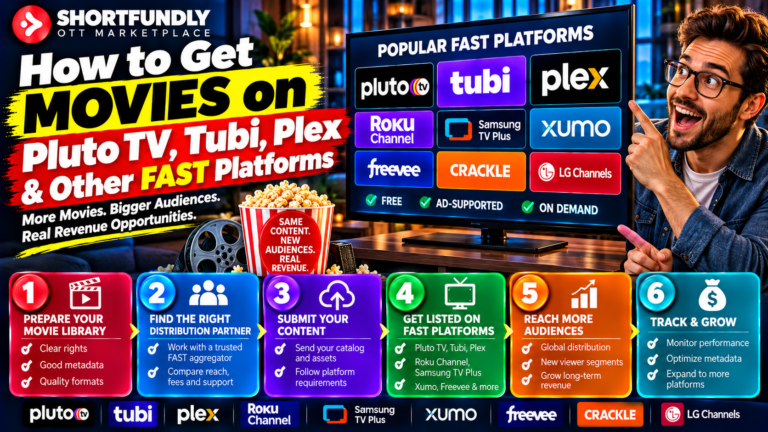
Step 1: Evaluate Your Content Library
Start by identifying the films, television episodes, documentaries, short films, or other video assets you want to distribute.
Create a catalog containing key information, including:
- Content title and format.
- Genre and language.
- Runtime and release year.
- Synopsis and production details.
- Available territories and distribution rights.
- Existing subtitles, captions, and audio versions.
A well-organized catalog makes it easier for a distribution partner to assess your content and identify potential opportunities.
Step 2: Confirm Your Distribution Rights
Rights verification is one of the most important stages of streaming distribution. You should have the necessary permissions to distribute the content through the intended platforms and in the relevant territories.
Depending on the project, this may involve confirming rights for streaming, advertising-supported viewing, music, underlying material, performances, and promotional assets.
Prepare contracts, rights declarations, and other supporting documents when required. Unclear or incomplete rights can delay onboarding or prevent a title from being distributed.
Step 3: Prepare Technical Assets
Streaming services may specify requirements for video resolution, aspect ratio, codecs, audio, file formats, captions, subtitles, and quality control.
An aggregation partner can help identify and address asset requirements before delivery. This may reduce avoidable technical issues and resubmissions.
Always confirm the current specifications for the intended destination platforms rather than assuming that one master file will meet every requirement.
Step 4: Create Accurate Metadata and Artwork
Metadata helps platforms identify, categorize, and present your content. Prepare clear and consistent information for each title.
Essential materials may include:
- A compelling synopsis.
- Genre and language details.
- Cast and crew information.
- Release date and runtime.
- Poster artwork and still images.
- Trailer and promotional materials.
- Subtitle and caption files.
Use accurate information and artwork that you have permission to distribute. Avoid exaggerated descriptions or misleading claims about a film’s content.
Step 5: Select Suitable FAST Platforms
Not every platform accepts every type of content, and platform availability varies by region. Some services may work with approved aggregators or distribution partners, while others may have their own submission procedures.
Potential destinations in the broader streaming ecosystem include Pluto TV, Tubi, Plex, The Roku Channel, Samsung TV Plus, and other FAST services. Their acceptance policies, supported content formats, territories, and commercial arrangements differ.
An aggregation partner can help you evaluate which destinations may be relevant to your catalog. Do not assume that working with an aggregator guarantees placement on every platform.
Step 6: Submit Content and Complete Onboarding
Once the content, rights documentation, and metadata are ready, the next step is to submit the package through the appropriate distribution channel.
The platform or its distribution partner may review the material for technical quality, rights compliance, editorial suitability, and metadata accuracy. Additional materials or corrections may be requested before approval.
Timelines vary, and acceptance is determined by the relevant platform and its agreements.
Step 7: Monitor Availability and Performance
After content goes live, maintain an organized record of its availability, platform listings, territories, and contractual status.
Where reporting is available, review metrics such as views, watch time, audience retention, advertising revenue, and title-level performance. Use those insights to improve metadata, evaluate your catalog, and plan future distribution efforts.
What Should You Look for in a FAST Aggregation Partner?
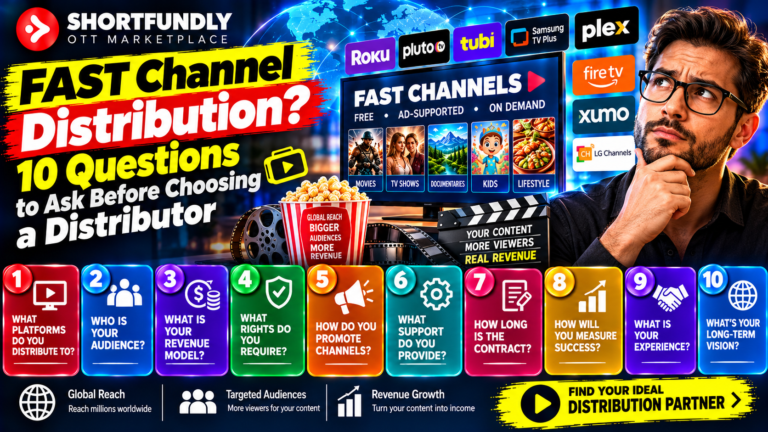
Choosing the right distribution partner is an important decision for independent filmmakers and content owners. Compare providers based on their services, experience, transparency, and suitability for your catalog.
Multi-Platform Distribution Support
Ask which platforms the provider currently supports and whether it can distribute your specific content types. Request clear information about destination availability, territories, and any platform-specific restrictions.
Transparent Commercial Terms
Review all fees, revenue-sharing arrangements, payment thresholds, reporting practices, and deductions. Understand how revenue is calculated and when payments are made.
Technical and Metadata Assistance
Find out whether the provider helps with file preparation, quality control, metadata, artwork, captions, subtitles, and delivery requirements. Confirm which services are included and which may incur additional charges.
Rights Management and Content Protection
Ask how the provider handles rights documentation, licensing terms, takedown requests, and territory restrictions. Make sure you understand the exclusivity provisions and the duration of the agreement.
Reporting and Communication
A reliable partner should explain how content status, delivery issues, and available performance reports will be communicated. Clear communication can make it easier to manage a growing content catalog.
How Shortfundly Distribution Can Help Content Owners
For filmmakers, production houses, and independent content owners looking to explore digital distribution, Shortfundly Distribution is a resource to consider when evaluating distribution support for their content.
Before proceeding, content owners should review the service’s current offerings and confirm whether they match their particular distribution goals.
When evaluating Shortfundly Distribution or any other provider, ask about:
- Supported streaming and FAST platforms.
- Eligibility requirements for films, series, and other content formats.
- Distribution territories and licensing options.
- Technical delivery and metadata support.
- Revenue models, fees, and payment terms.
- Rights requirements and contract duration.
- Reporting, content updates, and takedown procedures.
These questions help filmmakers understand the scope of the service and determine whether it is suitable for their library. Platform placement, availability, and monetization depend on the applicable agreements and the acceptance decisions of the destination services.
Visit Shortfundly Distribution to explore its distribution services and learn more about potential options for your content.
FAST Channel Aggregation vs. Direct Distribution
Content owners generally have two broad approaches to streaming distribution: work with platforms directly where submissions are available, or work through an aggregator or distribution partner.
| Factor | Direct Distribution | Aggregation or Distribution Partner |
|---|---|---|
| Onboarding | Managed separately for each platform | May be coordinated through a partner |
| Technical delivery | Content owner manages platform requirements | Partner may assist with preparation and delivery |
| Metadata | Prepared according to each platform’s requirements | May be organized or adapted for multiple destinations |
| Platform access | Depends on each platform’s submission process | Depends on the partner’s network and agreements |
| Reporting | Varies by platform | May consolidate some reporting, if offered |
| Fees and revenue | Depends on direct platform terms | Depends on the partner’s contract and commercial model |
Neither approach is automatically better for every content owner. Direct distribution may suit teams that have the resources and access to manage individual platform relationships. Aggregation may be useful for content owners who want help coordinating multiple delivery workflows.
The best option depends on your catalog size, rights, target markets, operational capacity, and commercial priorities.
Common Challenges in FAST Distribution
Even with aggregation support, content owners should plan for several potential challenges.
Different platform requirements: Video specifications, artwork rules, metadata fields, and acceptance criteria can vary.
Rights and licensing limitations: A title may be available for distribution in some territories but not others.
Content discoverability: Publishing a title does not guarantee viewers will find it. Genre fit, metadata, audience demand, and platform merchandising can influence visibility.
Revenue uncertainty: Advertising demand, viewing activity, revenue-sharing terms, and platform deductions can affect earnings.
Catalog maintenance: Updated metadata, corrected assets, rights expirations, and removal requests may require ongoing attention.
A practical distribution plan accounts for these factors from the beginning and includes a process for monitoring performance and maintaining compliance.
Best Practices for a Successful Multi-Platform FAST Strategy
To make your catalog more distribution-ready, follow these best practices:
- Organize your content library. Maintain a complete inventory of titles, masters, artwork, metadata, and rights documentation.
- Prioritize quality control. Check video, audio, subtitles, captions, and artwork before delivery.
- Target relevant platforms. Consider genre, audience, territory, language, and platform requirements when evaluating destinations.
- Understand your contracts. Review exclusivity, licensing periods, revenue terms, fees, and termination clauses.
- Use consistent metadata. Ensure that titles, descriptions, cast details, and release information are accurate across all submissions.
- Track distribution status. Record which titles have been submitted, approved, published, or rejected.
- Review available performance data. Use reporting to identify trends and improve future distribution decisions.
- Keep rights information current. Monitor license expirations and territorial restrictions to avoid compliance problems.
These steps help create a more professional workflow and can make it easier to pursue suitable distribution opportunities.
The Future of FAST Channel Aggregation
The FAST ecosystem continues to develop as streaming companies expand their catalogs and viewers look for free, convenient alternatives to subscription-based entertainment.
For filmmakers and content owners, this creates opportunities to explore additional distribution channels, make existing libraries available to new audiences, and test different approaches to content monetization.
As the market grows, aggregation services may become increasingly valuable for coordinating technical delivery, metadata, licensing information, and multi-platform workflows. However, the effectiveness of any distribution strategy depends on platform eligibility, content quality, rights clearance, audience demand, and commercial terms.
Content owners who prepare their libraries carefully and choose distribution partners based on clear requirements will be better positioned to evaluate opportunities in this changing environment.
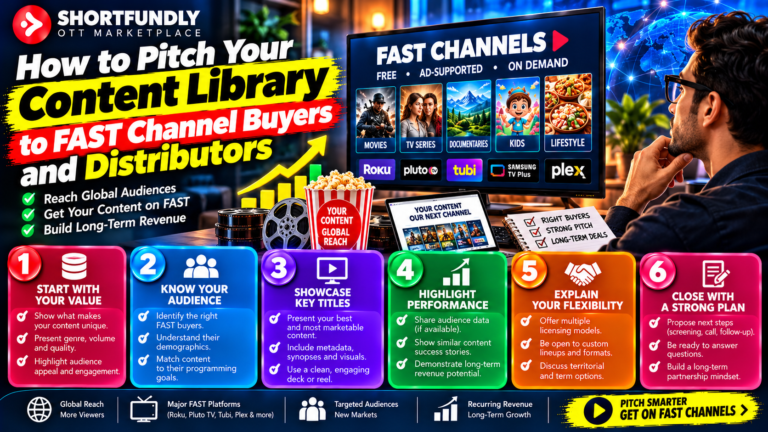
Also read: https://blog.shortfundly.com/ott/pitch-content-fast-channel/
Conclusion
FAST channel aggregation services can help filmmakers, production companies, and content owners navigate the complexities of distributing video content across multiple streaming platforms. By coordinating technical preparation, metadata, rights documentation, and delivery workflows, the right partner may reduce operational burdens and help content owners explore a broader range of distribution opportunities.
Before choosing a provider, confirm its supported platforms, service scope, territories, commercial terms, and reporting capabilities. Remember that aggregation does not guarantee acceptance, audience reach, or revenue, so a clear strategy and realistic expectations are essential.
If you are exploring digital distribution for your films or content library, visit Shortfundly Distribution to review its current services and assess whether they align with your distribution goals.
Ready to explore multi-platform distribution for your content? Start by organizing your catalog, confirming your rights, preparing platform-ready assets, and identifying a distribution partner that fits your needs.