Table of Contents
Introduction
The global OTT industry has transformed how web series reach audiences. Streaming platforms such as Netflix, Amazon Prime Video, JioHotstar, Sony LIV, ZEE5, Sun NXT, aha, and other regional OTT services continue investing in original content. However, producing a great web series is only half the journey. Before any OTT platform can license or stream your content, it must receive a complete package of OTT deliverables that meets professional broadcast standards.
Many independent filmmakers lose valuable distribution opportunities because they submit incomplete or technically incorrect materials. Missing subtitles, poor audio masters, incorrect file formats, or incomplete legal documents can delay or even cancel an OTT acquisition.
In this comprehensive guide, we explain everything required to prepare OTT web series deliverables, from video masters and metadata to legal paperwork and marketing assets. By following this step-by-step checklist, independent producers can present their projects professionally and improve their chances of securing successful OTT distribution deals.
Why OTT Deliverables Matter
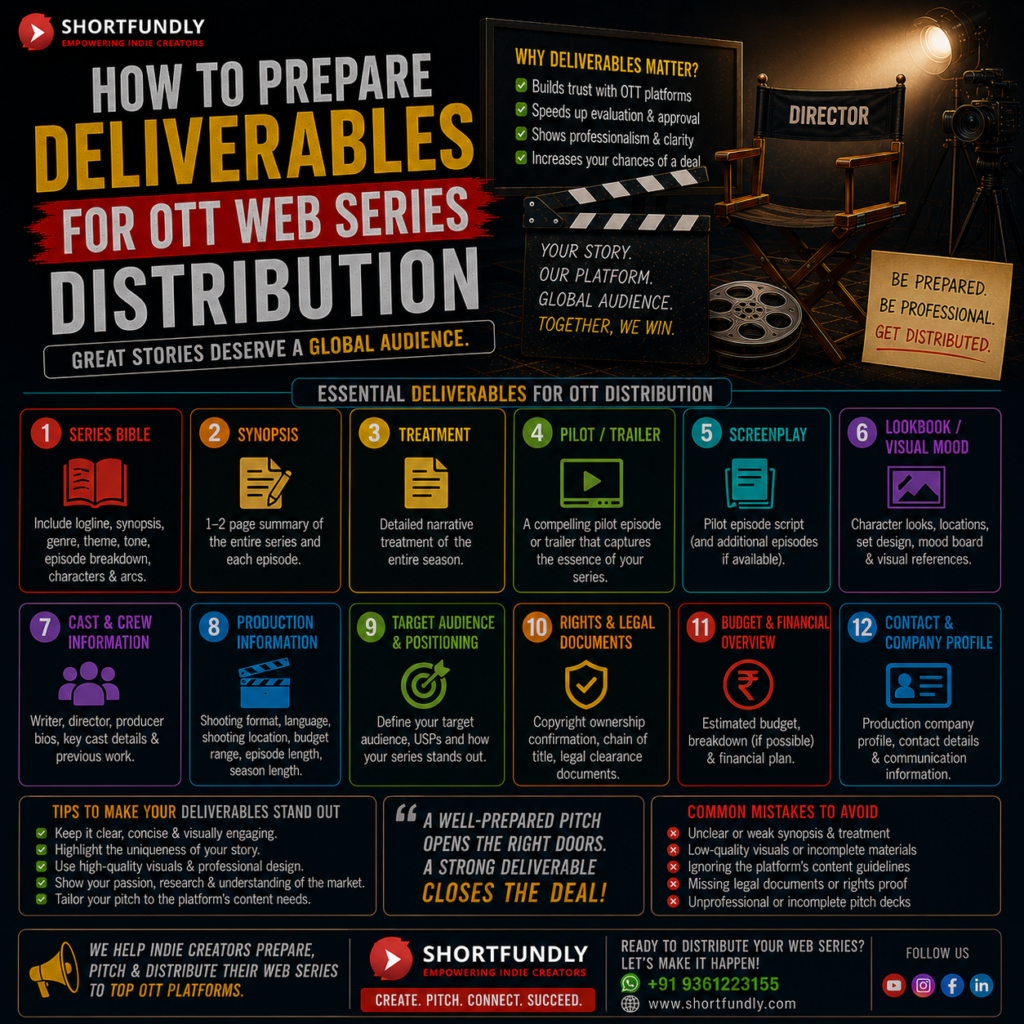
OTT platforms maintain strict technical and operational standards. Every web series uploaded to a streaming service must deliver a consistent viewing experience across televisions, smartphones, tablets, and desktop devices.
Professional deliverables help OTT platforms:
- Maintain consistent streaming quality
- Reduce technical issues
- Speed up content ingestion
- Improve discoverability through metadata
- Protect copyright ownership
- Localize content for international audiences
Even an outstanding web series may be rejected if the required deliverables are incomplete or fail technical quality checks.
Understanding OTT Distribution Requirements
Each OTT platform has its own delivery specifications. While requirements differ slightly, most platforms request similar materials before accepting a web series.
Typical OTT deliverables include:
- Video master files
- Audio master files
- Subtitle files
- Closed captions
- Metadata
- Artwork
- Trailer
- Promotional images
- Episode synopsis
- Legal documents
- Copyright certificates
- Music licenses
- Talent agreements
Preparing these assets before approaching a distributor saves time and demonstrates professionalism.
Step 1: Prepare the Final Video Masters
The master video file is the most critical deliverable. OTT platforms expect broadcast-quality exports without compression artifacts or technical defects.
Recommended Video Specifications
Most distributors recommend:
- Resolution: 1920×1080 (Full HD) or 3840×2160 (4K UHD)
- Codec: ProRes, DNxHD, or high-quality H.264/H.265
- Frame Rate: 23.976, 24, 25, or 29.97 fps
- Aspect Ratio: 16:9
- Color Space: Rec.709 (unless HDR is specified)
- Bitrate: Platform-specific, typically 50–200 Mbps for mezzanine files
Before exporting, carefully inspect each episode for:
- Dead pixels
- Compression artifacts
- Flash frames
- Audio sync issues
- Incorrect titles
- Spelling mistakes
- Color inconsistencies
Every episode should be reviewed multiple times before submission.
Step 2: Deliver High-Quality Audio Masters
Poor audio is one of the most common reasons for content rejection. Clear dialogue, balanced music, and accurate sound effects significantly enhance viewer experience.
Required Audio Deliverables
Most OTT buyers request:
- Stereo Mix
- 5.1 Surround Mix (if available)
- Dialogue Stem
- Music Stem
- Effects Stem (M&E Track)
The Music & Effects (M&E) track is especially important for international dubbing, allowing platforms to replace dialogue without losing background audio.
Ensure your audio meets broadcast loudness standards and is free from distortion, clipping, or unwanted background noise.
Step 3: Create Accurate Subtitle Files
Subtitles are essential for accessibility and international distribution. Even if your web series targets a regional audience, English subtitles are almost always required.
Best Practices for Subtitles
Include:
- English subtitles
- Original language subtitles (if requested)
- Accurate timing
- Proper punctuation
- Speaker identification when necessary
- Consistent formatting
Common subtitle formats include:
- SRT
- WebVTT
- STL
- TTML
Poor subtitles can negatively affect audience engagement and reduce licensing opportunities.
Step 4: Prepare Closed Captions
Closed captions differ from subtitles because they include non-dialogue audio descriptions.
Examples include:
- [Door closes]
- [Phone rings]
- [Soft music playing]
- [Audience applauds]
Many OTT platforms require captions to meet accessibility regulations for viewers with hearing impairments.
Step 5: Organize Metadata for Every Episode
Metadata determines how your series appears in search results, recommendations, and category listings.
Prepare detailed information, including:
- Series title
- Episode titles
- Genre
- Language
- Runtime
- Release year
- Country of origin
- Cast
- Crew
- Director
- Producer
- Synopsis
- Keywords
- Content rating
Well-optimized metadata increases discoverability and helps platforms recommend your series to relevant audiences.
Step 6: Design Professional Artwork
Visual assets are often the first thing viewers notice. High-quality artwork significantly improves click-through rates on OTT platforms.
Essential artwork includes:
Series Poster
High-resolution portrait image.
Landscape Banner
Used for homepage promotions.
Episode Thumbnails
Individual artwork for every episode.
Social Media Graphics
Useful for promotional campaigns.
Logo Files
Transparent PNG and vector versions.
Ensure all artwork maintains consistent branding across platforms.
Step 7: Produce an Engaging Trailer
Your trailer is often the deciding factor during content evaluation.
An effective OTT trailer should:
- Introduce the main story quickly
- Showcase key characters
- Highlight production quality
- Maintain suspense
- End with a memorable hook
Recommended duration:
- 60–120 seconds
Avoid revealing major spoilers while emphasizing the series’ strongest moments.
Step 8: Prepare Legal Documentation
Legal paperwork is just as important as creative assets. OTT platforms need assurance that all rights are properly secured.
Common legal deliverables include:
- Copyright registration
- Script ownership documents
- Music licenses
- Location agreements
- Talent contracts
- Crew agreements
- Producer agreements
- Errors and Omissions (E&O) Insurance (when required)
- Trademark clearances
Incomplete legal documentation can halt negotiations even if the series is approved creatively.
Step 9: Compile Marketing Materials
Distributors and OTT platforms often request promotional assets to support marketing campaigns.
Prepare:
- Press kit
- Director biography
- Cast biographies
- Behind-the-scenes photos
- Production stills
- Official logo
- Social media handles
- Press releases
These materials help platforms promote your series more effectively.
Step 10: Follow Platform-Specific Delivery Guidelines
Every OTT platform has unique technical requirements.
Some request:
- IMF Packages
- AS-11 files
- XML metadata
- Multiple language tracks
- HDR masters
- Dolby Atmos audio
Always review the latest delivery specifications provided by your distributor or platform before exporting final assets.
Working with an OTT Distribution Partner
Independent creators often find the technical delivery process overwhelming. Professional distribution companies simplify the workflow by reviewing deliverables before submission and ensuring compliance with platform standards.
An experienced distribution partner can assist with:
- Technical quality control
- Metadata preparation
- Subtitle verification
- Artwork optimization
- Contract negotiation
- Rights management
- Platform submissions
- Revenue reporting
For independent filmmakers and web series creators seeking professional OTT distribution support, Shortfundly Distribution offers end-to-end assistance, helping creators prepare deliverables and connect with OTT platforms.
Learn more at:
https://distribution.shortfundly.com
Working with experienced professionals minimizes costly errors and increases the likelihood of successful platform acceptance.
Common Mistakes to Avoid
Many creators unknowingly delay distribution by making avoidable mistakes.
These include:
- Exporting compressed video files
- Submitting incomplete subtitles
- Missing artwork dimensions
- Incorrect metadata
- Audio synchronization errors
- Missing music licenses
- Unorganized file naming
- Inconsistent episode numbering
- Poor quality control
- Forgetting backup copies
Carefully reviewing every deliverable before submission saves time and protects professional credibility.
Professional File Organization Tips
Maintain a clear folder structure, such as:
Web Series
│
├── Episode Masters
├── Audio Masters
├── Subtitles
├── Closed Captions
├── Artwork
├── Metadata
├── Trailer
├── Legal Documents
├── Marketing Materials
└── Backup Files
Consistent organization allows distributors and OTT platforms to process content efficiently.
OTT Deliverables Checklist
Before submitting your web series, confirm that you have:
- ✅ Final video masters
- ✅ Stereo and surround audio
- ✅ M&E tracks
- ✅ English subtitles
- ✅ Closed captions
- ✅ Metadata spreadsheet
- ✅ Posters and banners
- ✅ Episode thumbnails
- ✅ Official trailer
- ✅ Copyright documents
- ✅ Music licenses
- ✅ Talent agreements
- ✅ Promotional assets
- ✅ Backup copies
Completing this checklist significantly improves your readiness for OTT distribution.
Also read: https://blog.shortfundly.com/ott/best-web-series-ott-aggregators/
Conclusion
Preparing OTT web series deliverables requires careful planning, technical precision, and professional organization. Streaming platforms expect creators to provide far more than finished episodes—they require high-quality video masters, broadcast-ready audio, accurate subtitles, detailed metadata, legal clearances, artwork, trailers, and promotional materials. By assembling a complete delivery package, independent producers demonstrate reliability and make the acquisition process smoother for distributors and OTT buyers.
Partnering with an experienced distribution company can further streamline the process, helping creators avoid technical mistakes and ensuring every deliverable meets platform standards. With proper preparation, your web series will be well-positioned for successful licensing, wider audience reach, and long-term commercial success.