Table of Contents
Introduction
The OTT revolution has transformed the global entertainment industry, creating unprecedented opportunities for independent filmmakers, production houses, documentary creators, and content owners. Today, streaming platforms actively seek fresh content to satisfy growing audiences across multiple regions and languages. However, gaining approval from OTT platforms requires far more than simply uploading a completed film.
Many promising projects face delays, rejections, or lost revenue opportunities because critical preparation steps were overlooked before submission. A technically brilliant film can be rejected because of missing documentation, improper metadata, poor audio standards, or incomplete legal clearances.
To maximize approval chances and ensure a smooth distribution process, we must approach OTT submission with the same level of professionalism used during production. This comprehensive checklist covers every essential requirement filmmakers should verify before submitting content to OTT platforms.
Understand OTT Platform Requirements Before Submission
Every OTT platform operates under specific content acquisition guidelines. While technical standards may vary slightly between platforms, the core evaluation criteria remain largely consistent.
Before initiating submissions, we should thoroughly research:
- Content acceptance policies
- Technical delivery specifications
- Supported video formats
- Audio requirements
- Subtitle standards
- Content rating guidelines
- Territory restrictions
- Metadata requirements
Understanding platform expectations before submission prevents costly corrections later in the process.
A film prepared according to platform standards has a significantly greater chance of progressing through the review process efficiently.
Verify Film Ownership and Intellectual Property Rights
One of the most common reasons for OTT rejection involves unresolved rights issues.
Before submitting any film, we must ensure complete ownership or licensed use of all intellectual property contained within the project.
This includes:
- Story rights
- Screenplay rights
- Music rights
- Stock footage licenses
- Archive footage permissions
- Image rights
- Character rights
- Artwork permissions
Every agreement should be documented and readily available for review.
Platforms want assurance that content can be distributed legally without future disputes or copyright claims.
Complete Chain of Title Documentation
OTT buyers and distributors frequently request chain of title documents.
These documents establish the legal ownership history of the film.
A complete chain of title package often includes:
- Writer agreements
- Option agreements
- Purchase agreements
- Producer agreements
- Assignment contracts
- Copyright registrations
Without proper documentation, platforms may hesitate to acquire content regardless of quality.
Clear legal ownership removes uncertainty and speeds up approval processes.
Ensure Video Quality Meets OTT Standards
Professional video quality is non-negotiable.
Most OTT platforms require high-resolution masters that comply with strict technical standards.
Before submission, verify:
- Resolution requirements
- Frame rate consistency
- Color correction completion
- Compression quality
- Encoding standards
- Aspect ratio accuracy
Technical issues frequently identified during review include:
- Compression artifacts
- Inconsistent color grading
- Dead pixels
- Frame drops
- Visual noise
- Improper aspect ratios
A final quality control review should be performed on the delivery master before submission.
Perform Comprehensive Audio Quality Checks
Audio problems can immediately undermine viewer experience.
Platforms pay close attention to audio consistency because poor sound quality generates audience complaints.
Before submission, we should confirm:
- Dialogue clarity
- Balanced sound mix
- Proper loudness levels
- Background noise removal
- Consistent volume levels
- Channel configuration compliance
Common audio issues include:
- Distorted dialogue
- Uneven sound levels
- Missing channels
- Clipping
- Synchronization errors
Professional audio mastering significantly improves acceptance prospects.
Prepare Accurate Subtitle Files
Subtitles are no longer optional for most OTT platforms.
Many services require subtitles to improve accessibility and global distribution potential.
Essential subtitle requirements include:
- Accurate timing
- Error-free spelling
- Proper formatting
- Language consistency
- Accessibility compliance
Popular subtitle formats include:
- SRT
- WebVTT
- TTML
Poor subtitles create a negative user experience and may delay approval.
Careful subtitle review is critical before delivery.
Create Closed Captions for Accessibility Compliance
Closed captions differ from subtitles because they include non-dialogue audio information.
Many platforms now prioritize accessibility requirements.
Closed captions should identify:
- Sound effects
- Music cues
- Speaker changes
- Environmental sounds
Examples include:
- [Door Slams]
- [Suspenseful Music]
- [Applause]
Accessible content reaches broader audiences and satisfies platform compliance requirements.
Design High-Quality Key Art and Promotional Assets
Visual presentation strongly influences content performance.
Before submission, prepare professional marketing materials including:
- Poster artwork
- Landscape banners
- Thumbnail images
- Promotional stills
- Cast photographs
Strong visual assets improve discoverability and attract viewer attention.
Most OTT platforms require multiple image dimensions for various display environments.
All promotional materials should reflect the film’s tone, genre, and target audience.
Prepare an Engaging Trailer
A compelling trailer remains one of the most valuable marketing assets during platform evaluations.
Buyers often review trailers before screening full content.
Effective trailers should:
- Highlight the strongest moments
- Introduce central conflict
- Showcase production value
- Generate curiosity
- Maintain professional pacing
An outstanding trailer can significantly improve acquisition interest.
Develop Comprehensive Metadata
Metadata helps platforms categorize and recommend content.
Accurate metadata improves visibility and discoverability.
Essential metadata elements include:
- Film title
- Synopsis
- Short description
- Genre
- Runtime
- Language
- Cast information
- Director information
- Producer information
- Keywords
Strong metadata improves search performance within OTT ecosystems.
Poor metadata can limit audience reach even after approval.
Confirm Runtime and Version Accuracy
Many projects undergo multiple edits before final delivery.
Before submission, we should verify:
- Final runtime
- Version number
- End credits completion
- Opening title accuracy
- Language versions
Submitting incorrect versions creates confusion and may require resubmission.
Maintaining strict version control prevents avoidable delays.
Secure Music Licensing Documentation
Music rights represent one of the most frequently scrutinized areas during OTT acquisition.
Every music track must have documented usage permissions.
Required documentation may include:
- Composer agreements
- Publisher licenses
- Master use licenses
- Synchronization licenses
Even brief unauthorized music usage can prevent distribution.
Comprehensive licensing records protect both filmmakers and platforms.
Verify Content Ratings and Compliance Requirements
Many territories require content classification before distribution.
Depending on target regions, filmmakers may need:
- Age ratings
- Parental guidance classifications
- Regional compliance approvals
Content containing:
- Violence
- Sexual content
- Strong language
- Drug use
must be accurately disclosed.
Transparent content classification reduces legal and regulatory risks.
Review Legal Releases and Talent Agreements
Every identifiable individual appearing in the film should have appropriate release documentation when required.
This may include:
- Actor agreements
- Appearance releases
- Location releases
- Interview releases
- Contributor agreements
Failure to secure releases can create significant legal complications after distribution.
Complete documentation ensures smooth licensing negotiations.
Prepare International Distribution Assets
Many OTT opportunities involve global audiences.
International distribution readiness can dramatically increase licensing value.
Recommended preparation includes:
- Multiple subtitle languages
- Dubbed audio tracks
- Territory-specific artwork
- International metadata
Global accessibility increases marketability and revenue potential.
Platforms frequently prioritize content that can serve multiple territories.
Conduct a Final Technical Quality Control Review
Before submission, every film should undergo a final quality control inspection.
Professional QC reviews typically evaluate:
| QC Category | Key Review Areas |
|---|---|
| Video | Resolution, artifacts, color accuracy |
| Audio | Loudness, clarity, synchronization |
| Subtitles | Timing, formatting, spelling |
| Metadata | Accuracy and completeness |
| Legal | Documentation verification |
| Delivery Files | Format compliance |
A final review identifies problems before platform evaluators encounter them.
Preventative quality control saves time and protects professional reputation.
Choose the Right OTT Distribution Strategy
Submission methods vary depending on platform access.
Common distribution approaches include:
Direct Platform Submission
Some platforms accept direct content submissions under specific programs.
OTT Aggregators
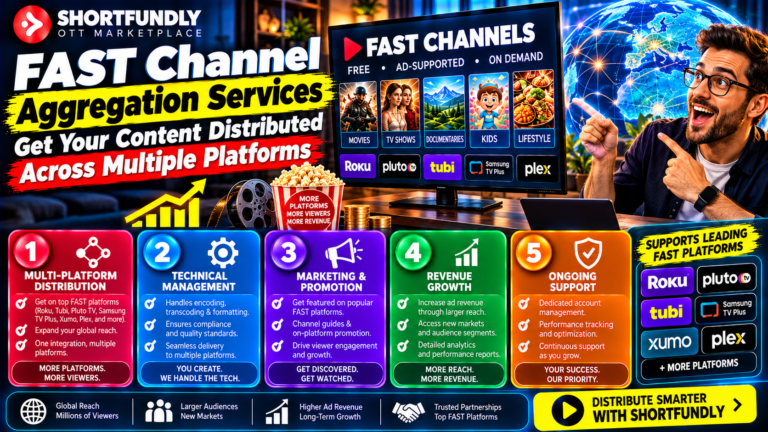
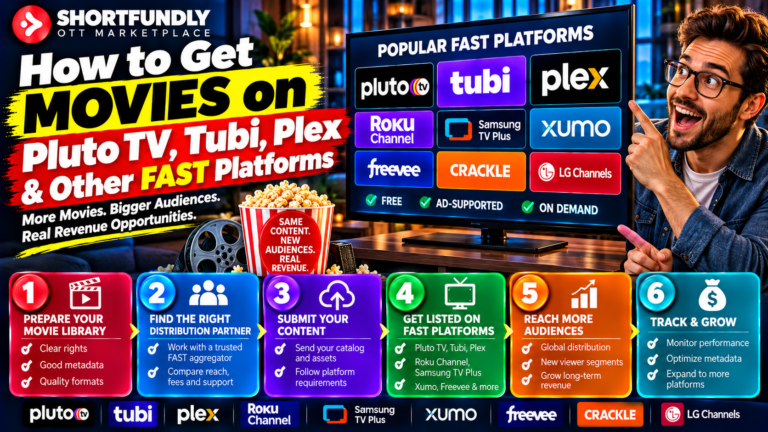
Aggregators provide technical delivery services and platform access.
Distribution Companies
Professional distributors negotiate deals, manage delivery, and oversee monetization.
Sales Agents
Sales agents secure licensing agreements across multiple territories.
Selecting the appropriate strategy depends on:
- Film type
- Budget
- Distribution goals
- Target markets
The right distribution partner can significantly improve exposure and revenue potential.
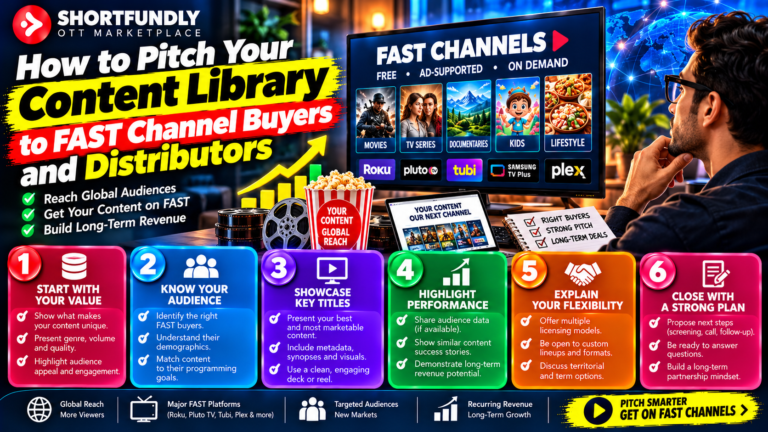
Create a Professional Submission Package
A complete submission package demonstrates professionalism and preparedness.
Essential components include:
- Film master
- Trailer
- Poster artwork
- Metadata package
- Subtitle files
- Closed captions
- Legal documentation
- Music licenses
- Press kit
- Synopsis
Comprehensive submission materials help acquisition teams evaluate projects efficiently.
Well-organized submissions often receive faster responses and more favorable consideration.
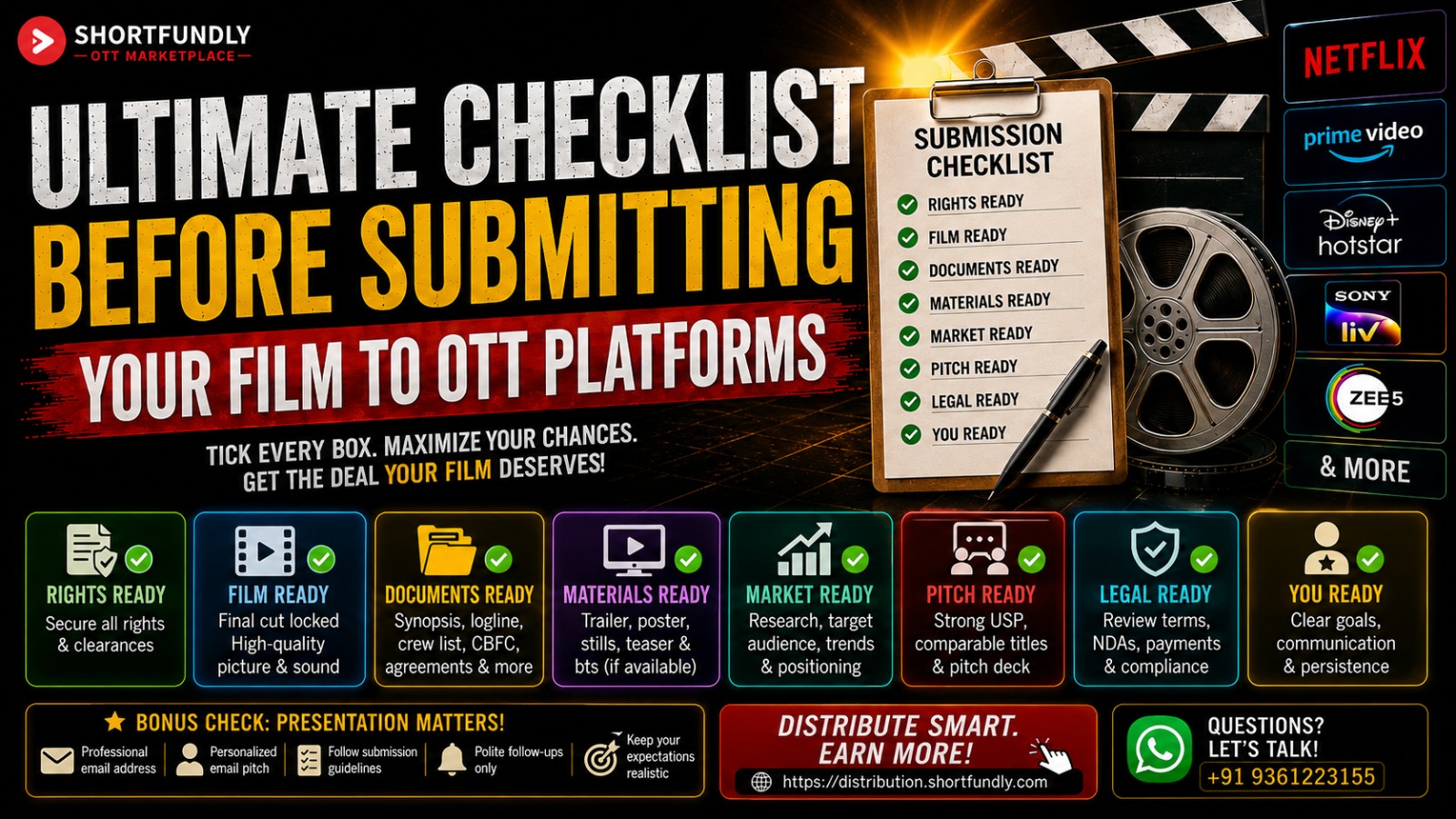
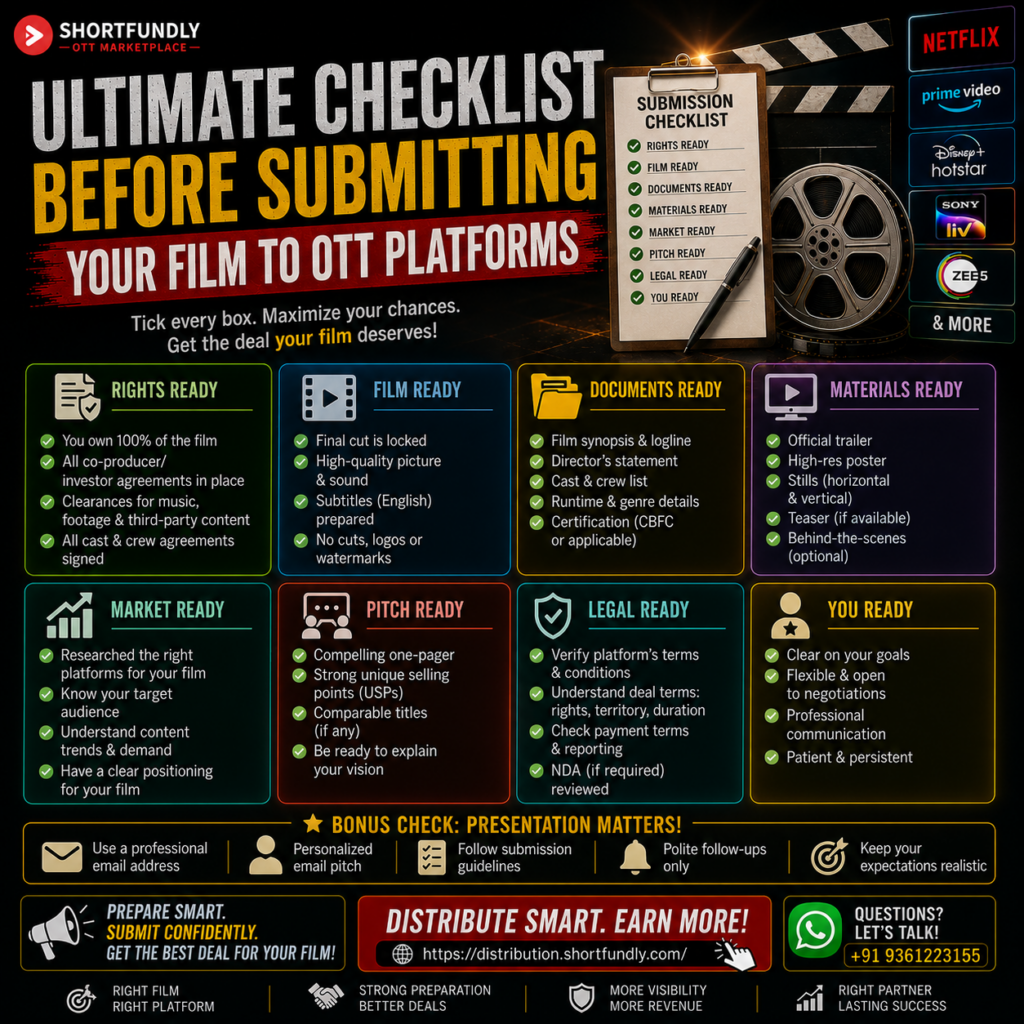
Final OTT Submission Checklist
Before pressing submit, confirm that all items below are complete:
✅ Final approved master file
✅ Audio mix finalized
✅ Subtitles completed
✅ Closed captions completed
✅ Metadata prepared
✅ Poster artwork delivered
✅ Trailer completed
✅ Copyright ownership verified
✅ Music licenses secured
✅ Talent releases collected
✅ Location releases secured
✅ Chain of title documentation completed
✅ Content ratings verified
✅ Quality control review passed
✅ Distribution strategy selected
Completing every item on this checklist dramatically increases the likelihood of successful OTT platform consideration.
Also read: https://blog.shortfundly.com/ott/paid-distribution-ott-release/
Conclusion
Submitting a film to OTT platforms is a highly professional process that extends far beyond completing production. Technical excellence, legal readiness, marketing preparation, accessibility compliance, and strategic packaging all play essential roles in determining whether a project moves from review to release.
Filmmakers who carefully prepare every element before submission position themselves for smoother approvals, stronger licensing opportunities, broader audience reach, and greater revenue potential. By following this ultimate checklist, we ensure that our films meet industry expectations and stand ready to compete successfully in today’s rapidly expanding streaming marketplace.