Table of Contents
Licensing a documentary for Taiwan OTT distribution requires more than simply submitting a finished film. We need to prepare clear rights documentation, professional localization, technical assets, metadata, artwork, and a strong commercial proposal. Taiwan has a developed streaming ecosystem with local and international services, creating opportunities for documentaries that offer distinctive stories, cultural value, strong production quality, or clear audience appeal.
For independent filmmakers, working with a distribution service such as Shortfundly Distribution can be one option when exploring OTT distribution opportunities. However, successful licensing begins with preparing the documentary as a complete, rights-cleared, buyer-ready package.
Understanding Taiwan OTT Documentary Distribution
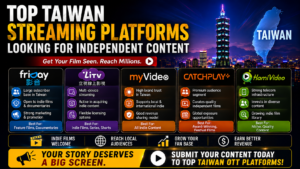
Taiwan’s streaming market includes platforms serving films, television programs, documentaries, Asian content, international cinema, and specialized audiences. The country’s OTT ecosystem includes services such as CATCHPLAY+, LiTV, Hami Video, myVideo, friDay Video, and other digital platforms.
Documentaries can appeal to several audience segments, including viewers interested in:
- Asian culture
- Travel and tourism
- History
- Food
- Social issues
- Environmental subjects
- Technology
- Business
- Sports
- Music
- Art and design
- Biography
- Human-interest stories
- True crime
- LGBTQ+ subjects
- International affairs
Rather than approaching every platform with the same proposal, we should identify services whose existing catalogs and audiences match the documentary’s subject.
What Documentary Rights Should We License?
Before negotiating with a Taiwanese OTT buyer, we should establish exactly which rights we control.
A documentary may involve several different rights categories:
| Rights Category | What We Should Check |
|---|---|
| Streaming rights | Whether OTT streaming is permitted |
| Territory rights | Taiwan-only or broader Asian rights |
| Language rights | English, Chinese, or multilingual availability |
| Music rights | Whether compositions cover digital streaming |
| Archive footage | Whether licenses cover Taiwan OTT |
| Talent rights | Whether participant agreements cover streaming |
| Promotional rights | Whether the platform can use clips and stills |
| Subtitle rights | Whether translated versions can be created |
| Trailer rights | Whether promotional footage can be distributed |
This process is particularly important for documentaries because productions often contain archival footage, interviews, licensed photographs, music, news footage, and third-party materials.
A theatrical or festival license does not automatically mean that OTT rights are available.
Prepare a Complete Chain of Title
A buyer may request evidence showing that the producer controls the necessary rights.
We should therefore organize documentation such as:
- Copyright registration information where applicable
- Producer agreements
- Director agreement
- Writer agreement
- Interview releases
- Participant releases
- Location releases
- Music licenses
- Archive footage licenses
- Stock-footage licenses
- Photograph licenses
- Artwork permissions
- Distribution agreements
- Previous licensing agreements
A clean chain of title makes the project easier to evaluate and reduces uncertainty during negotiations.
Decide Whether Taiwan Rights Are Exclusive
One of the most important commercial decisions concerns exclusivity.
A Taiwan OTT buyer may request exclusive rights for a defined period. Alternatively, we may negotiate non-exclusive streaming rights.
Exclusive Taiwan OTT Rights
An exclusive agreement can provide stronger positioning with a platform. However, it may prevent us from licensing the documentary to competing Taiwanese services during the contract term.
Non-Exclusive Taiwan OTT Rights
Non-exclusive licensing can allow the documentary to appear on multiple services. This approach may increase reach, although the financial terms may differ.
Regional Asian Rights
Some buyers may ask for broader rights covering territories beyond Taiwan.
Before accepting such terms, we should determine whether the additional territories justify the expanded rights grant.
Choose the Right OTT Licensing Model
Documentary licensing can involve different commercial structures.
Flat Licensing Fee
The platform pays an agreed amount for the rights.
This model provides predictable revenue and may be attractive when we want a straightforward transaction.
Revenue Share
The producer receives an agreed percentage of defined revenue.
This structure can provide greater upside if the documentary performs strongly.
Minimum Guarantee
A buyer provides a guaranteed payment, potentially combined with additional revenue participation.
Hybrid Agreement
A hybrid structure can combine an upfront payment with revenue sharing or performance-based payments.
The most suitable structure depends on the documentary’s market value, audience, exclusivity, territory, license term, and negotiating position.
Understand the Net Revenue Definition
When negotiating revenue sharing, the headline percentage isn’t enough.
We should carefully examine what the contract defines as net revenue.
For example, the agreement may permit deductions for:
- Platform fees
- Payment processing
- Taxes
- Localization
- Marketing
- Distribution expenses
- Third-party commissions
- Refunds
- Other approved costs
A 50% revenue share can have very different financial results depending on which deductions occur before the percentage is calculated.
Therefore, we should request a clear example of how revenue is calculated.
Prepare Traditional Chinese Subtitles
Localization can significantly improve a documentary’s presentation for Taiwanese buyers.
For Taiwan, we should generally consider Traditional Chinese localization rather than relying exclusively on Simplified Chinese.
The localization package can include:
- Traditional Chinese subtitles
- Chinese title
- Chinese synopsis
- Chinese short description
- Chinese metadata
- Chinese keywords
- Localized trailer captions
- Content advisories
Subtitle quality matters particularly for documentaries because dialogue, interviews, terminology, names, locations, and technical language can carry significant meaning.
A professional translation and review process can prevent embarrassing errors and improve audience accessibility.
Create a Professional Documentary Metadata Package
Metadata helps buyers understand and categorize the documentary.
A strong metadata sheet can contain:
Title: Official English title and localized title.
Genre: Documentary, history, biography, travel, environmental, music, etc.
Runtime: Exact duration.
Year: Original production or release year.
Country: Country of production.
Language: Original language and available audio versions.
Synopsis: Short and long descriptions.
Logline: One-sentence story proposition.
Director: Name and biography.
Producer: Name and company.
Cast or participants: Key contributors.
Keywords: Relevant search and catalog terms.
Awards: Festivals and industry recognition.
Classification: Any applicable rating or content information.
Build a Strong Documentary Pitch Deck
A pitch deck should make the acquisition opportunity easy to understand.
We can structure it as follows:
1. Cover Page
Use the strongest documentary artwork.
2. Logline
Explain the central story in one concise statement.
3. Synopsis
Describe the documentary without overwhelming the reader.
4. Audience Profile
Explain who is most likely to watch.
5. Unique Selling Points
Highlight the elements that distinguish the documentary.
6. Filmmaker Profile
Present the director and producer’s relevant experience.
7. Recognition
Include awards, festival selections, reviews, press, or audience statistics.
8. Distribution Status
State whether the documentary is available for Taiwan and other territories.
9. Rights Available
Clearly identify exclusive and non-exclusive rights.
10. Contact Information
Provide a professional business contact.
Prepare the Technical Master for OTT Delivery
A private screener isn’t necessarily the same as a final delivery master.
We should retain high-quality source and master files and confirm each buyer’s technical specifications before delivery.
The final package may include:
- Video master
- Clean master
- Textless elements
- Dialogue and music tracks
- Audio stems
- Subtitle files
- Closed captions
- Trailer
- Poster
- Stills
- Metadata
- Legal documentation
Technical specifications can differ between platforms, so we should obtain the buyer’s current delivery requirements before exporting the final package.
Create Artwork That Works for Streaming
The documentary poster should remain recognizable at small sizes.
A strong OTT artwork package should communicate:
- Documentary title
- Central subject
- Visual identity
- Genre
- Emotional tone
- Professional branding
Avoid overcrowding the artwork with excessive text.
We should also maintain layered or high-resolution source files so artwork can be adapted for different platform specifications.
Create a Documentary Trailer for OTT Buyers
A trailer should quickly communicate the documentary’s strongest proposition.
A useful structure might be:
- Establish the central subject.
- Introduce the key question or conflict.
- Present compelling visuals.
- Include strong interview moments.
- Build emotional or intellectual tension.
- End with title and distribution information.
The trailer should represent the finished documentary accurately.
How to Approach Taiwan OTT Buyers
We should avoid sending a generic mass email.
Instead, identify the platform’s programming focus and explain why the documentary belongs in its catalog.
A professional pitch can include:
Subject: Taiwan OTT Licensing Proposal – [Documentary Title]
Then provide:
- Short introduction
- Documentary logline
- Genre
- Runtime
- Production country
- Key achievements
- Taiwan rights availability
- Trailer or screener
- Pitch deck
- Contact information
Keep the initial message concise. The objective is to generate interest and begin a commercial conversation.
Why a Distribution Partner Can Help
Independent producers may not have established relationships with every OTT acquisition team.
A distribution partner can provide an additional route for presenting content to potential digital buyers.
Shortfundly Distribution can be considered by independent filmmakers seeking OTT distribution support.
Before entering a distribution agreement, we should review:
- Territories covered
- Platforms targeted
- Exclusivity
- Contract duration
- Distribution commission
- Marketing obligations
- Reporting
- Payment schedule
- Rights reversion
- Termination provisions
A distribution agreement should clearly explain what happens to rights after the agreement ends.
Taiwan OTT Distribution Checklist
Before submitting the documentary, we can use this checklist:
- Taiwan streaming rights confirmed.
- Chain of title organized.
- Music rights cleared.
- Archive footage cleared.
- Interview releases completed.
- Traditional Chinese subtitles prepared.
- English subtitles prepared.
- Trailer completed.
- Poster completed.
- High-resolution stills prepared.
- Metadata completed.
- Pitch deck completed.
- Private screener available.
- Technical master available.
- Rights territory defined.
- License term defined.
- Exclusivity position defined.
- Proposed commercial model prepared.
Common Mistakes in Documentary OTT Licensing
Ignoring Third-Party Rights
Documentaries often contain material from multiple sources. Every element should be reviewed.
Using Incomplete Music Licenses
Music rights should explicitly cover the intended digital territories and platforms.
Providing Poor Subtitles
Translation errors can damage the viewer experience and buyer confidence.
Failing to Define Territory
We should know whether the proposed agreement covers Taiwan alone or additional territories.
Giving Away Excessive Exclusivity
A broad exclusive agreement may restrict future distribution opportunities.
Ignoring Contract Reporting
Revenue-share deals require clear reporting and payment terms.
How to Negotiate a Taiwan Documentary OTT Deal
We should evaluate the entire commercial package rather than focusing on the initial fee.
Important terms include:
| Contract Term | Key Question |
|---|---|
| License fee | How much is guaranteed? |
| Revenue share | What percentage is paid? |
| Territory | Does it cover Taiwan only? |
| Term | How many months or years? |
| Exclusivity | Can we license elsewhere? |
| Platforms | Which services are covered? |
| Marketing | Who pays for promotion? |
| Localization | Who pays for subtitles? |
| Reporting | How often are statements provided? |
| Audit | Can revenue records be reviewed? |
| Rights reversion | When do rights return? |
A contract that looks attractive financially may become less attractive if it grants broad rights for a long period.
Also read: https://blog.shortfundly.com/ott/sell-short-film-taiwan-ott/
Conclusion: Building a Strong Taiwan OTT Licensing Strategy
Licensing a documentary for Taiwan OTT distribution requires preparation, clear rights, strong localization, and professional commercial positioning.
The strongest submission package combines a finished master with Traditional Chinese subtitles, accurate metadata, compelling artwork, a concise trailer, a professional pitch deck, and complete rights documentation.
We should also research each potential buyer carefully rather than assuming that every streaming platform accepts independent submissions. Market conditions and platform strategies can change, so current acquisition information should always be verified.
For filmmakers seeking an additional distribution route, Shortfundly Distribution can be explored alongside direct OTT outreach.
Ultimately, a successful documentary licensing strategy is about matching the right story, rights package, audience, platform, territory, and commercial model. When these elements are aligned, an independent documentary can be positioned professionally for opportunities in Taiwan’s evolving streaming market.