Table of Contents
Discover how FAST channels deliver free, ad-supported streaming with easy access, TV-style viewing, and new opportunities for filmmakers and content owners.
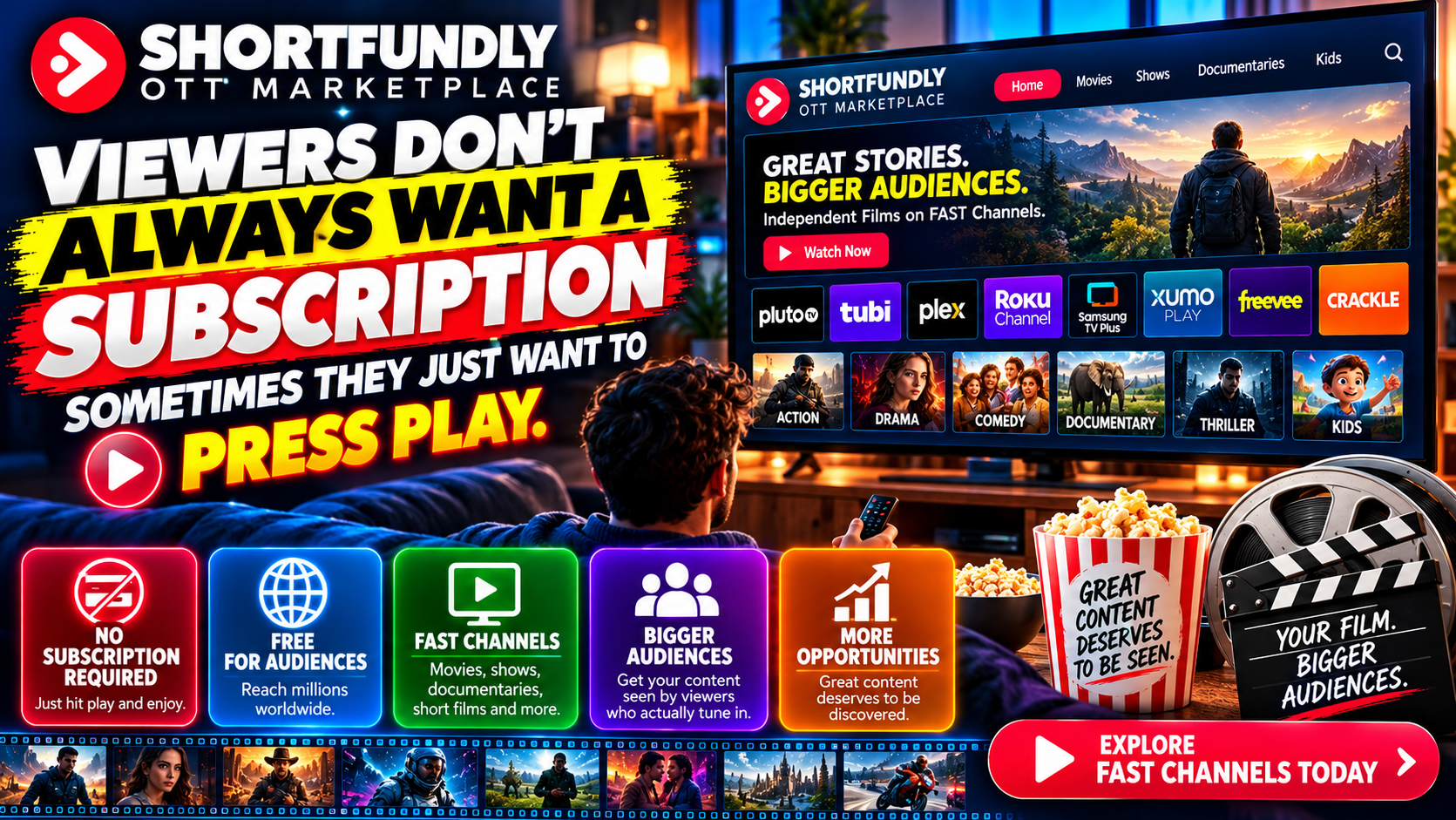
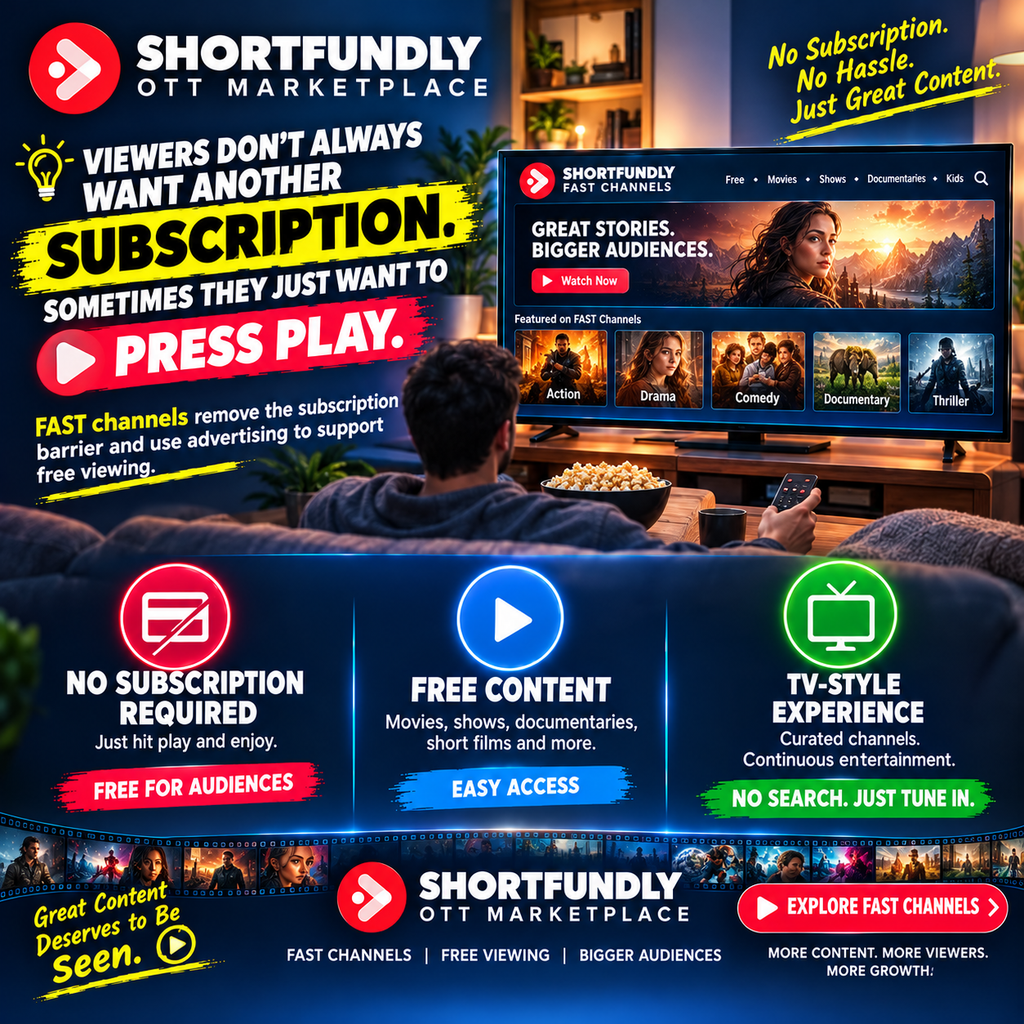
💡 Viewers don’t always want another subscription. Sometimes, they just want to press PLAY. FAST channels remove the subscription barrier and use advertising to support free viewing.
For audiences, the appeal is simple: free content, easy access, and a TV-style experience. 📺
Imagine turning on your television, choosing a channel, and immediately finding a movie, documentary, or entertainment program to watch. You don’t need to choose a monthly subscription just to access that viewing experience. Instead, advertisements help support the service.
This is the idea behind Free Ad-Supported Streaming Television, commonly known as FAST.
FAST channels are becoming an important part of the wider streaming ecosystem. They offer viewers another way to discover entertainment while giving filmmakers, producers, and content owners an additional distribution route to explore.
For content creators, the opportunity goes beyond simply putting a film online. A suitable FAST channel may help introduce a production to viewers who prefer browsing a programmed channel rather than searching through a large on-demand library.
In this guide, we’ll explore how FAST channels work, why viewers enjoy them, how advertising supports free viewing, and what filmmakers should consider before pursuing FAST distribution. We’ll also explain how a distributor such as Shortfundly Distribution may fit into a broader film distribution plan.
1. What Are FAST Channels?
FAST stands for Free Ad-Supported Streaming Television. It describes streaming services that provide television-style programming without charging viewers a subscription for that viewing experience. Advertising helps support the service.
FAST channels are delivered over the internet and can be available through compatible smart televisions, streaming devices, mobile applications, and other supported platforms.
Unlike a traditional television service that relies on cable or satellite delivery, FAST generally uses internet streaming technology. However, the viewing experience can feel familiar because channels often present programs according to a schedule or continuous programming lineup.
How FAST Channels Differ From Traditional TV
Traditional television may require a cable package, satellite service, or broadcast reception, depending on the channel and location.
FAST services deliver programming through internet-connected devices. Viewers can access available channels using the relevant application or supported television interface.
The key characteristics include:
- Free viewing: Viewers generally don’t need a paid subscription to watch the ad-supported channel.
- Advertising: Commercials help support the service.
- Programmed content: Channels often provide a scheduled or continuous lineup.
- Internet delivery: Viewing takes place through a compatible connected device.
- Content variety: Channels may focus on films, documentaries, news, entertainment, lifestyle, or specific interests.
Availability, advertising formats, and channel features vary between services and countries.
FAST Is More Than a Free Movie Library
It’s important to understand that FAST isn’t simply another name for free video streaming.
Many FAST channels recreate the familiar experience of television. Rather than choosing every title individually, viewers can open a channel and watch whatever is currently playing.
Some services also combine channel-based programming with on-demand libraries. This gives audiences more than one way to discover content.
For example, a film enthusiast might browse a classic cinema channel and discover a movie they hadn’t planned to watch. A documentary fan might find a program about nature, history, or science while exploring a themed channel.
This combination of programming and discovery is an important part of the FAST experience.
2. Why Viewers Prefer Free Streaming
Streaming has given audiences more control over what they watch and when they watch it. However, managing multiple paid subscriptions can become expensive or inconvenient.
FAST channels provide an alternative for people who want additional entertainment without adding another monthly subscription.
A More Affordable Way to Watch
One of the biggest attractions of FAST is its free-to-view model.
Viewers can enjoy eligible programming without paying a separate subscription fee for the channel. The service uses advertising to help fund its operations and content offerings.
This can be particularly attractive to people who already pay for internet access but don’t want to spend more on entertainment subscriptions.
Free access doesn’t mean every service is identical. Some platforms may offer premium upgrades, paid features, or additional services. Viewers should check the terms of the particular service they’re using.
Less Pressure to Choose What to Watch
On-demand platforms give viewers control, but choosing a title can sometimes take longer than expected.
FAST channels offer another approach. A viewer can select a channel based on an interest and start watching the current program.
This is useful when someone wants casual entertainment without spending several minutes browsing titles.
For example, someone preparing dinner might turn on a cooking channel. Another viewer might choose a classic film channel for an evening at home.
The programmed format offers a simple way to discover content without having to make a new choice every few minutes.
A Familiar Television Experience
Many viewers grew up with scheduled television. They understand the idea of switching channels and finding a program already in progress.
FAST services bring elements of that experience to internet-connected devices.
The result combines a familiar way of watching television with the convenience of streaming. Viewers can explore different channels and find programming that suits their mood.
Content for Different Interests
FAST channel lineups can cover a wide range of topics, including:
- Movies and classic cinema.
- Documentaries and factual programming.
- Lifestyle and home improvement.
- Food and cooking.
- Sports-related content, where available.
- Music and entertainment.
- Children’s and family programming.
- Regional and language-focused content.
The available lineup depends on the service and market.
For viewers, this variety makes FAST an additional option alongside subscription streaming, paid rentals, and traditional television.
3. How FAST Channels Work
FAST combines internet-based video delivery, programmed content, and advertising.
Although the technical systems can be complex, the basic model is straightforward: a service organizes content into channels, delivers the programs to viewers, and uses advertisements to help generate revenue.
Step 1: Content Is Selected and Organized
A FAST channel needs programming that fits its intended audience.
The content may include movies, television programs, documentaries, interviews, or other licensed video material.
A channel focused on classic films, for instance, needs suitable titles that fit its theme and scheduling requirements.
Content owners or authorized distributors may license suitable programs to channel operators. The agreements define how the material can be used.
Step 2: The Channel Builds Its Programming Schedule
The operator arranges content into a lineup.
This might involve placing related programs together, creating themed blocks, or organizing content according to a regular schedule.
Good programming helps viewers understand what a channel offers and gives them a reason to return.
The exact scheduling process differs between services. Some use traditional-style schedules, while others rely on more flexible programming systems.
Step 3: The Service Delivers Video Online
The service makes the channel available through its supported streaming infrastructure and applications.
Viewers access it using a compatible device and an internet connection.
The service may use video delivery technology that adjusts playback quality according to the device and network conditions. The specific features depend on the platform.
Step 4: Advertising Supports the Service
Advertisements can appear before a program, during commercial breaks, or at other points supported by the platform.
The service may sell advertising directly or work with advertising technology and commercial partners.
The precise arrangements depend on the operator and market.
Step 5: Performance Is Measured
FAST operators may measure audience viewing, advertising delivery, engagement, and other performance indicators.
The information available to content owners depends on their agreements and the reporting practices of their distribution partners.
A film being available on a channel doesn’t automatically mean the rights holder will receive a particular amount of revenue. Payments depend on the commercial terms and actual performance.
Understanding these steps helps filmmakers and content owners assess whether FAST fits their distribution objectives.
4. FAST vs. OTT and SVOD: What’s the Difference?
The streaming industry includes several business models. Understanding them helps viewers choose how to watch and helps filmmakers decide which distribution opportunities to investigate.
OTT, or over-the-top delivery, describes the distribution of video over the internet. It is a broad category rather than a single payment model.
SVOD, or subscription video on demand, allows viewers to access content through a subscription.
FAST provides free, advertising-supported television-style streaming.
These terms are related, but they aren’t interchangeable.
Comparison of Streaming Models
| Feature | FAST | SVOD | TVOD |
|---|---|---|---|
| Full name | Free Ad-Supported Streaming Television | Subscription Video on Demand | Transactional Video on Demand |
| Typical payment model | Free viewing supported by advertising | Recurring subscription | Payment per rental or purchase |
| Advertising | Usually part of the model | Depends on the service and plan | Depends on the service |
| Viewing experience | Often programmed channels | Primarily on-demand libraries | Select a title to rent or buy |
| Content discovery | Channel browsing and programming | Search, recommendations, and browsing | Search and select individual titles |
| Best-known characteristic | Free, television-style viewing | Subscription-based access | Pay for individual titles |
These are general distinctions. Individual services may combine features from multiple models.
FAST and OTT Can Work Together
Because OTT is a broad delivery category, FAST can be considered part of the wider internet-streaming ecosystem.
A content owner may explore several internet-based distribution options, depending on the rights available and the commercial terms.
For example, a film might be licensed to a subscription service for one release window and later considered for an ad-supported channel. That sequence is only possible if the agreements allow it.
Choosing the Right Model for Your Film
Filmmakers shouldn’t assume that one model is automatically better than another.
A new release with strong demand may be suitable for a paid rental or subscription opportunity. A completed film may also fit a FAST channel if its subject, audience, rights, and technical quality meet the operator’s requirements.
The decision should consider audience reach, potential revenue, rights restrictions, costs, and long-term objectives.
A flexible distribution plan evaluates each opportunity on its own merits.
5. Seven Major Benefits of FAST Channels
FAST offers benefits for viewers because it combines free access with a programmed television experience. It may also provide content owners with additional ways to distribute eligible productions.
Here are seven reasons the model deserves attention.
1. Free Access to Entertainment
Viewers can watch available programming without paying a subscription specifically for that channel.
This makes FAST a useful option for audiences who want more entertainment choices without increasing their monthly subscription spending.
2. Easy Access
Many FAST services are available through compatible smart TVs and streaming applications.
Once viewers find a service and connect to it, they can browse its available channels and begin watching.
Actual availability depends on the device, region, and platform.
3. A Familiar TV-Style Experience
Programmed channels bring back the simplicity of choosing a channel and watching the current show.
This can appeal to people who enjoy television but prefer internet delivery.
4. Opportunities to Discover New Content
FAST channels can introduce viewers to films and programs they might not search for independently.
A themed lineup may help a lesser-known film reach someone with a related interest.
5. A Variety of Genres
Viewers may find channels dedicated to movies, documentaries, lifestyle, music, and other subjects.
This makes FAST suitable for casual viewing and interest-based discovery.
6. Additional Distribution Opportunities for Content Owners
Filmmakers and rights holders may be able to license suitable content to FAST operators or authorized distribution partners.
Whether a particular film is accepted depends on the service’s requirements and commercial priorities.
7. Another Potential Revenue Route
Some FAST licensing arrangements provide compensation through fees, revenue sharing, or other negotiated structures.
However, revenue isn’t guaranteed. Content owners should understand the contract, reporting, expenses, and payment conditions before agreeing to a deal.
Together, these benefits make FAST worth considering as one possible part of a broader entertainment and film distribution strategy.
6. What FAST Channels Mean for Filmmakers and Content Owners
FAST isn’t just a viewing option for audiences. It can also create a distribution opportunity for filmmakers, independent producers, and companies managing film libraries.
Content that has completed an initial release may still appeal to suitable channels. A documentary, regional film, older feature, or specialized program could fit a channel’s programming needs if the rights are available and the material meets its requirements.
Extend the Potential Life of a Film
A film’s first release doesn’t have to be its final distribution opportunity.
Depending on the rights and agreements, a production may be suitable for different release windows over time.
For example, a film might complete its festival run, secure an OTT licensing deal, and later be considered for a FAST channel. Another film may follow a different path entirely.
The important point is that each window must be evaluated according to its own commercial and contractual conditions.
Reach Audiences Through Channel Programming
Some viewers actively search for a specific title. Others browse channels and discover content while watching.
FAST programming can introduce films to the second group.
However, placement on a channel doesn’t guarantee a large audience. The channel’s audience, schedule, promotional activity, and content selection all affect discovery.
Make Film Libraries More Useful
Producers and rights holders may control multiple completed films or programs.
A well-organized catalog makes it easier to identify titles that could fit different channel themes.
Useful catalog information includes:
- Film title and genre.
- Runtime and release year.
- Language and available subtitles.
- Synopsis and promotional artwork.
- Technical delivery specifications.
- Rights ownership and restrictions.
- Territories and media rights available.
- Existing licensing agreements.
This information helps potential buyers evaluate content efficiently.
Prepare Before Approaching a Buyer
A filmmaker should confirm that the film is legally and technically ready for distribution.
That includes checking music rights, underlying material, performer permissions, subtitle accuracy, and any contractual restrictions.
Professional preparation won’t guarantee a deal, but it can reduce delays and help the buyer assess the production.
7. How Advertising Supports FAST Channels
Advertising is central to the FAST model. It helps fund the viewing experience while allowing viewers to access the channel without a subscription fee.
The way advertising is sold, delivered, and shared varies among services.
How FAST Advertising Works
A FAST service may sell advertising inventory to brands or work with advertising partners. Commercials are then delivered at suitable points during programming.
The service may use information about the program, viewing environment, or available advertising inventory to manage ad placement. The specific methods depend on the operator and applicable privacy rules.
Advertisers pay according to their agreements with the service or advertising partners.
Why Advertisers May Be Interested
FAST combines digital delivery with a television-style viewing experience.
Depending on the service, advertisers may be able to reach audiences through genre-focused channels or particular programming environments.
A brand targeting cooking enthusiasts, for example, may explore suitable lifestyle or food-related programming.
The actual audience reach and advertising performance vary, so advertisers need to assess available measurement and reporting.
How Advertising Revenue May Reach Content Owners
A content owner doesn’t necessarily receive every dollar generated by advertisements shown around a film.
The agreement may define how revenue is calculated, which expenses are deducted, and how the rights holder is compensated.
Possible arrangements include licensing fees, revenue shares, or other negotiated structures.
Before signing, ask:
- How is revenue calculated?
- What costs or deductions apply?
- Which party sells the advertising?
- How often are reports provided?
- What viewing or revenue data is available?
- When are payments due?
- What happens if the film is removed from the channel?
Clear answers help content owners evaluate the opportunity realistically.
Balancing Advertising and Viewer Experience
Advertising supports free access, but too many or poorly timed interruptions can affect the viewing experience.
FAST operators need to balance commercial requirements with audience satisfaction.
For viewers, this means the amount and placement of advertising can vary from one service to another.
For content owners, it reinforces the importance of understanding the channel’s programming and advertising approach before licensing a film.
8. Types of FAST Channels Viewers Can Explore
FAST channels can serve a wide range of audiences. Their programming may focus on a specific genre, topic, language, or style of entertainment.
Movie Channels
Movie-focused channels may feature selected genres, classic cinema, independent productions, or themed collections.
For filmmakers, the challenge is finding channels whose programming needs match the film.
Documentary Channels
Documentary channels may cover history, nature, science, culture, travel, or real-world stories.
A documentary’s subject, runtime, language, and rights availability can affect its suitability.
Lifestyle and Entertainment Channels
Lifestyle programming may include cooking, home improvement, travel, hobbies, and general entertainment.
These channels can appeal to viewers who want practical information or relaxed viewing.
Music and Performance Channels
Some services offer music-related programming, concerts, interviews, or other performance content.
Music rights can be especially important in this area. Content owners should verify that the necessary permissions cover the intended distribution and territories.
Family and Children’s Channels
Family-focused programming may include animation, educational material, and entertainment suitable for particular age groups.
Classification, editorial standards, and parental controls may influence whether a title is appropriate for a given service.
Regional and Language-Focused Channels
Channels serving specific language groups or cultural interests can help viewers discover relevant programming.
For filmmakers, this may create a reason to investigate regional opportunities, provided the rights, localization, and commercial requirements are suitable.
Not every category is available in every country. Viewers should check their local services, while content owners should research the channels that actually operate in their target markets.
9. How to Get a Film or Program Onto a FAST Channel
Getting content onto a FAST channel usually involves more than uploading a video.
The process may include identifying suitable channels, confirming rights, preparing delivery materials, negotiating terms, and completing technical checks.
The exact route depends on the operator and the relationship between the content owner and the service.
Step 1: Confirm Your Rights
Make sure you own or control the rights needed for the proposed distribution.
Review the film’s music, footage, script, performer agreements, and any previous licensing contracts.
If rights are restricted by territory, language, platform, or term, document those limitations clearly.
Step 2: Research Suitable Channels
Look for channels that program content similar to your production.
A documentary may fit a factual programming channel, while a regional drama may be more suitable for a service serving viewers interested in that language or culture.
Research channel availability, audience profile, content requirements, and commercial model.
Step 3: Prepare Your Materials
Potential delivery materials include:
- A high-quality film master.
- A synopsis and logline.
- Genre, language, runtime, and release information.
- Poster artwork and promotional stills.
- Subtitles or captions where required.
- A trailer, if requested.
- Rights and ownership documentation.
- Technical information about the video and audio.
Always request the current specifications from the intended partner.
Step 4: Identify the Appropriate Route
Depending on the operator, content owners may approach a channel directly or work with a distributor or content aggregator.
A distribution partner may assist with evaluating opportunities, managing delivery, or negotiating licensing, depending on the services it offers.
Confirm the partner’s actual role instead of assuming that it can guarantee placement.
Step 5: Review the Contract
Before signing, confirm the rights being granted, territories, term, exclusivity, payment structure, reporting obligations, and termination provisions.
Ask whether the agreement affects other distribution windows.
For complicated agreements, consider obtaining legal advice from someone familiar with media and entertainment rights.
Step 6: Deliver and Monitor
Once the agreement is in place, provide the approved materials and follow the partner’s delivery process.
Keep copies of the contract, final files, correspondence, and reports.
Review the available performance data and use it to inform future distribution decisions.
10. The Role of Film Distributors in FAST Distribution
A film distributor can help connect content owners with potential buyers and distribution outlets. The services provided vary considerably between companies.
Some distributors specialize in particular regions or genres. Others may work across different platforms and licensing models.
Finding Suitable Opportunities
A distributor may evaluate a film’s genre, audience, rights, and technical readiness to determine which opportunities are worth pursuing.
A strong fit matters. A channel’s programming needs and commercial priorities may be more important than its general popularity.
Managing Delivery Requirements
Distributors or other authorized partners may help coordinate technical delivery, metadata, artwork, captions, and rights documentation.
The extent of this support depends on the agreement.
Supporting Rights Administration
Distribution deals can involve several territories, platforms, and time periods.
Accurate rights records help prevent conflicts and make it easier to determine which opportunities remain available.
Understanding the Limits
Working with a distributor doesn’t guarantee acceptance by a FAST service or a particular level of revenue.
Content owners should verify a company’s services, track record, fees, reporting practices, and contractual terms before proceeding.
The most useful partner is one whose actual capabilities match the film’s distribution goals.
11. Exploring Shortfundly Distribution
Filmmakers looking for distribution opportunities can research Shortfundly Distribution as one potential starting point.
Before deciding whether a service is appropriate, content owners should review its current offering and ask how it may support their specific production.
Questions to Ask
If you’re considering a distribution partner, clarify:
- What types of films and video content are eligible?
- Which distribution services are currently offered?
- Are FAST channel opportunities included in the available services?
- Which territories and platforms may be considered?
- What technical materials are required?
- How are rights, exclusivity, and licensing periods handled?
- Are there fees, commissions, or other expenses?
- What reporting and payment arrangements apply?
These questions are important because distribution services differ, and not every company provides the same access or support.
Match the Service to Your Film
A filmmaker should begin with a clear understanding of the production’s rights, target audience, available materials, and commercial objectives.
Then compare the services offered by Shortfundly Distribution with those offered by other potential partners.
Ask for written information about the process and agreement. Check whether the proposed arrangement allows other release windows, and seek clarification if any terms are unclear.
The goal isn’t simply to get a film listed somewhere. It’s to find a suitable route that supports the film’s audience and long-term distribution plan.
12. FAST Channel Challenges and Important Considerations
FAST offers potential benefits, but filmmakers and viewers should understand its limitations.
Competition for Attention
FAST services may contain many channels and programs. Being available doesn’t automatically make a film easy to discover.
Content owners should ask how a channel organizes programming and whether promotional support is included in the agreement.
Uncertain Revenue
Advertising-supported revenue can depend on audience demand, advertising sales, the channel’s business model, and contractual terms.
A rights holder shouldn’t assume that a large platform automatically produces substantial earnings.
Rights and Exclusivity
A contract may limit where or when a film can be distributed.
Before licensing a title, review whether the agreement conflicts with existing OTT, television, theatrical, or international deals.
Technical Requirements
A film may need specific video, audio, subtitle, caption, or metadata formats.
Preparing and checking these materials can require time and expense.
Geographic Availability
FAST channels and their content libraries may vary by country. A channel available in one territory may not be accessible in another.
Content owners should confirm the actual territories covered by a deal rather than assuming global availability.
Advertising and Brand Suitability
Channel operators may have editorial or brand-safety requirements that affect content selection and advertising placement.
Filmmakers should understand these requirements and clarify any proposed changes to their work.
Recognizing these challenges makes it easier to evaluate FAST opportunities realistically.
13. FAST Channel Trends and the Future of Free Streaming
The streaming market continues to offer audiences different ways to watch entertainment. Subscription services, paid rentals, ad-supported platforms, and traditional television can all play a role in viewing habits.
FAST adds another choice by combining internet delivery with a familiar programmed-channel experience.
More Ways to Discover Content
Channel-based viewing can help audiences find programs they didn’t actively search for.
This can be useful for viewers who enjoy browsing a genre or discovering something new without selecting every title themselves.
For content owners, the opportunity depends on whether their films match the service’s programming and audience needs.
Greater Variety in Programming
FAST services may offer specialized channels for particular genres, interests, and languages.
Such specialization can help viewers identify content relevant to them, while giving producers a reason to research niche distribution opportunities.
However, channel availability and content selection vary across markets.
More Flexible Distribution Planning
As the range of distribution options expands, content owners can assess how different release windows fit together.
A film may have opportunities across festivals, theatrical screenings, OTT, FAST, television, and international markets. Not every title will benefit from all of them.
The best approach is to review each opportunity based on rights, audience, cost, timing, and commercial terms.
A Focus on Value, Not Just Availability
The future of distribution isn’t only about putting more titles on more platforms.
For viewers, value means convenient access to programming they enjoy. For content owners, it means finding appropriate audiences and commercially reasonable opportunities.
FAST may be one part of that picture, but success still depends on content quality, discoverability, rights management, and sound business decisions.
14. Frequently Asked Questions About FAST Channels
1. What Does FAST Stand For?
FAST stands for Free Ad-Supported Streaming Television. It describes streaming services that offer television-style programming without charging a subscription for that viewing experience, using advertising to help support the service.
2. Are FAST Channels Really Free?
FAST channels generally allow viewers to watch available programming without a paid subscription to the channel. Advertising supports the service. Some platforms may offer separate paid features or additional services, so check the relevant terms.
3. Do FAST Channels Require an Internet Connection?
Yes. FAST services use internet streaming, so viewers typically need a suitable internet connection and a compatible device or application.
4. How Are FAST Channels Different From Netflix-Style Streaming?
Subscription video-on-demand services generally require a subscription to access their subscription content. FAST channels provide free, advertising-supported viewing and often use a scheduled or continuous television-style lineup. Individual services may combine different models.
5. Can Independent Filmmakers Submit Films to FAST Channels?
Potentially, yes. The route depends on the channel’s requirements and whether the filmmaker owns or controls the necessary rights. Some operators may work with authorized distributors or content aggregators instead of accepting direct submissions.
6. How Do FAST Channels Make Money?
Advertising is a central source of support. A service may sell advertising inventory directly or work with advertising partners. Its revenue model and any payments to content owners depend on the relevant commercial agreements.
7. Can Older Films Be Distributed Through FAST Channels?
Older films may be suitable if they fit a channel’s programming needs and meet its rights, technical, and commercial requirements. Their age alone doesn’t determine whether they’ll be accepted.
8. Do Filmmakers Automatically Earn Money When Their Film Appears on a FAST Channel?
No. Payment depends on the agreement. Some arrangements may involve licensing fees or revenue sharing, while others may use different commercial structures. Content owners should understand the payment terms and reporting provisions before signing.
9. Can the Same Film Appear on OTT and FAST Services?
It may be possible, depending on the rights available, exclusivity provisions, territories, timing, and agreements already in place. Filmmakers should check their contracts before pursuing another release window.
10. Where Can Filmmakers Explore Distribution Opportunities?
Filmmakers can research distributors, channel operators, and other authorized partners whose services fit their content. Shortfundly Distribution is one option to investigate. Confirm its current services, eligibility requirements, rights terms, and commercial arrangements before proceeding.
Also read: https://blog.shortfundly.com/ott/fast-channel-distribution-4/
Conclusion: Sometimes, Viewers Just Want to Press PLAY
Viewers don’t always want another subscription. Sometimes, they simply want to switch on a screen, choose a channel, and start watching.
FAST channels meet that preference by combining free, advertising-supported viewing with a familiar television-style experience. They give audiences another way to discover films, documentaries, and entertainment without adding a subscription for that viewing experience.
For filmmakers and content owners, FAST may offer another distribution window to explore. A suitable channel can help introduce a film to new viewers, but placement and revenue aren’t guaranteed. Rights, audience fit, technical readiness, and commercial terms remain essential.
The smartest approach is to treat FAST as one part of a wider distribution plan. Evaluate the available opportunities, protect your rights, prepare professional materials, and understand every agreement before committing.
If you’re exploring potential distribution routes, consider researching Shortfundly Distribution alongside other suitable partners. The right decision will depend on your film, your goals, and the actual services available.
Free content. Easy access. A TV-style experience. Sometimes, that’s exactly what viewers are looking for.