Table of Contents
Instruction
Discover how FAST channel distribution helps films reach new audiences through programmed streaming, content discovery, advertising, and strategic distribution.
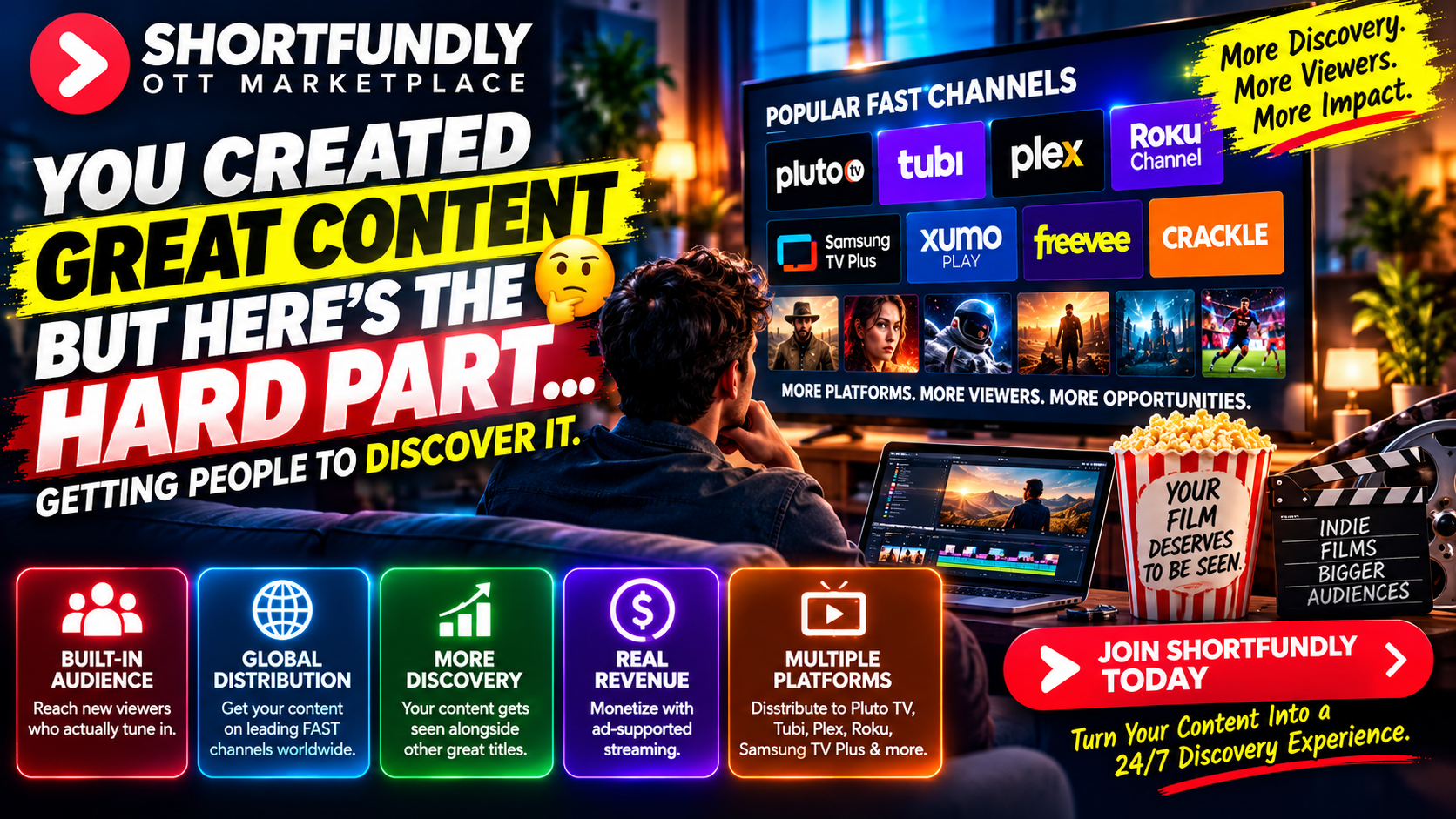
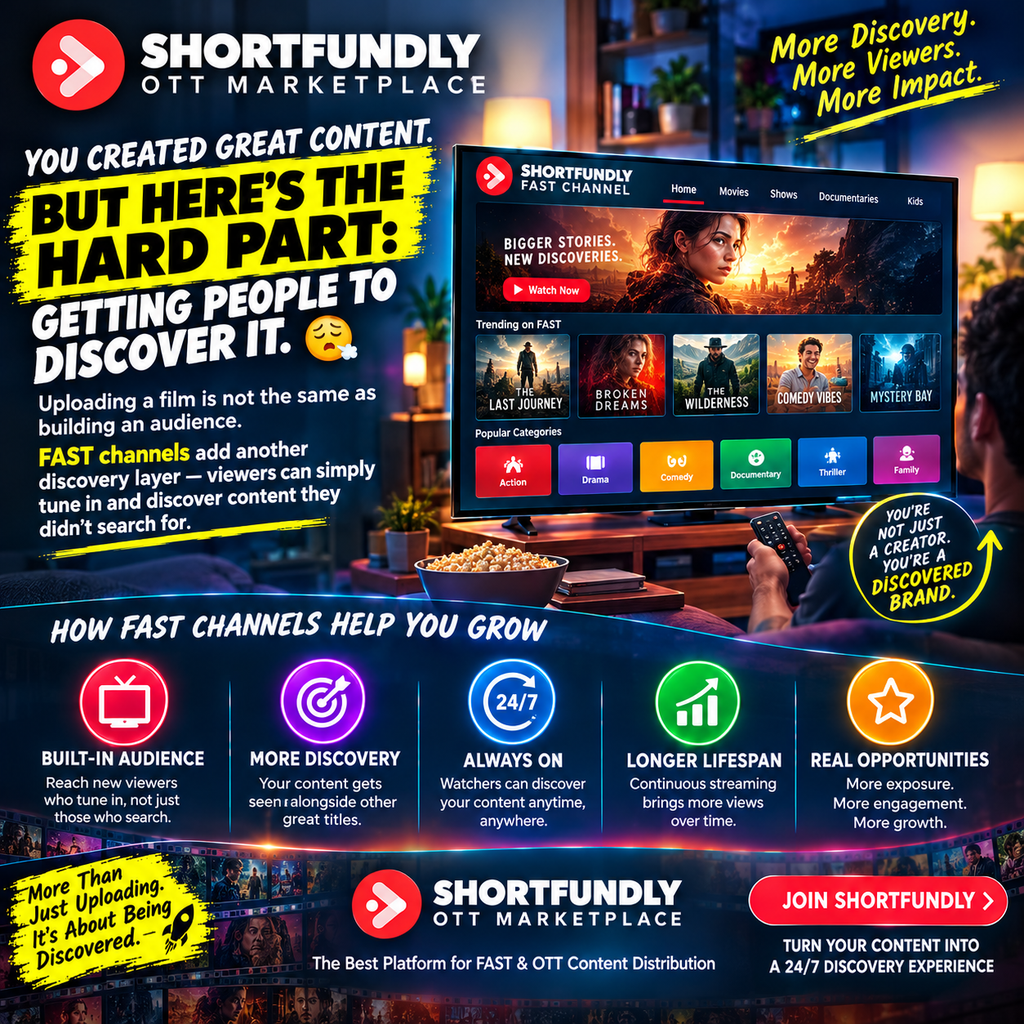
You created great content. But here’s the hard part: getting people to discover it. 😮💨 Uploading a film is not the same as building an audience.
In today’s crowded streaming market, filmmakers face a major challenge: how do you help viewers find a film they don’t already know exists?
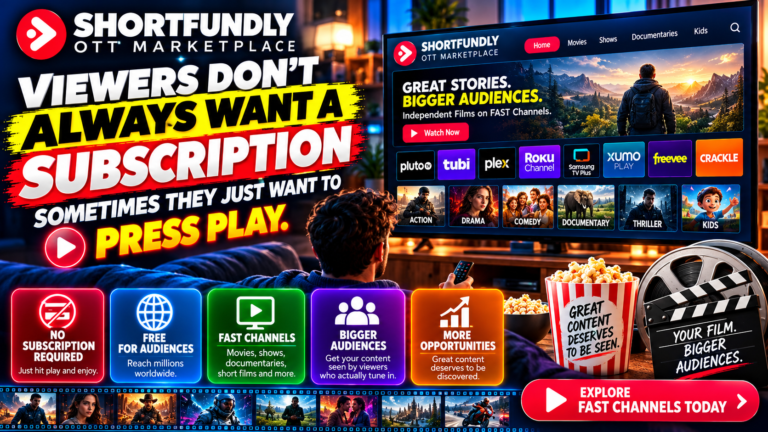
Free Ad-Supported Streaming Television (FAST) channels offer another way to approach this problem. Instead of relying entirely on viewers searching for a specific title, FAST channels provide programmed television-style experiences where audiences can tune in and discover content they might not have searched for.
For filmmakers, producers, and content owners, this creates an opportunity to think beyond simply uploading a film. A thoughtful FAST channel distribution strategy can help connect suitable content with relevant audiences through additional viewing and discovery opportunities.
However, getting a film onto a platform doesn’t automatically guarantee viewers, engagement, or revenue. Content quality, channel selection, programming, rights, and commercial terms all matter.
In this guide, we’ll explore how FAST channels support content discovery, why traditional upload-based thinking can fall short, and how filmmakers can evaluate distribution opportunities. We’ll also discuss how Shortfundly Distribution may fit into a wider film distribution strategy.
1. Why Uploading a Film Isn’t the Same as Building an Audience
Uploading a film makes it available somewhere. Building an audience means helping people discover it, understand why they might enjoy it, and choose to watch it.
These are two different challenges.
A filmmaker might upload a short film, documentary, or feature-length production to an online platform. The film could have strong storytelling, impressive visuals, and a meaningful message. Yet, if viewers never encounter its title, they may never watch it.
This is one of the biggest challenges facing independent filmmakers today.
The Content Discovery Problem
Digital platforms provide access to large libraries of entertainment. Although this creates more opportunities for viewers, it also means individual films compete for attention.
Audiences may discover films through several routes:
- Searching for a particular title or actor.
- Following recommendations from friends.
- Watching trailers on social media.
- Reading reviews and film publications.
- Browsing a streaming service’s catalog.
- Discovering content through programmed channels.
- Receiving recommendations from a platform.
Each route works differently, and none guarantees success.
A newly uploaded film may depend heavily on its creator’s promotional activity. If the filmmaker has a small social media following or a limited marketing budget, reaching new viewers can be difficult.
That’s where additional distribution routes become worth exploring.
Availability Versus Discoverability
Availability means a film can be accessed by an audience. Discoverability means people have a reasonable opportunity to find it.
For example, imagine a filmmaker uploads an independent thriller to an online catalog. The film is technically available, but viewers must already know its title or encounter it through search results and recommendations.
Now imagine that the same film is licensed to a suitable programmed channel. If the channel includes it in its lineup, viewers browsing that channel may encounter the film without searching for it by name.
This doesn’t guarantee more views. The outcome depends on the channel’s audience, programming decisions, schedule, and promotional support.
Nevertheless, it illustrates an important principle: distribution can create additional pathways between content and potential viewers.
2. What Is FAST Channel Distribution?
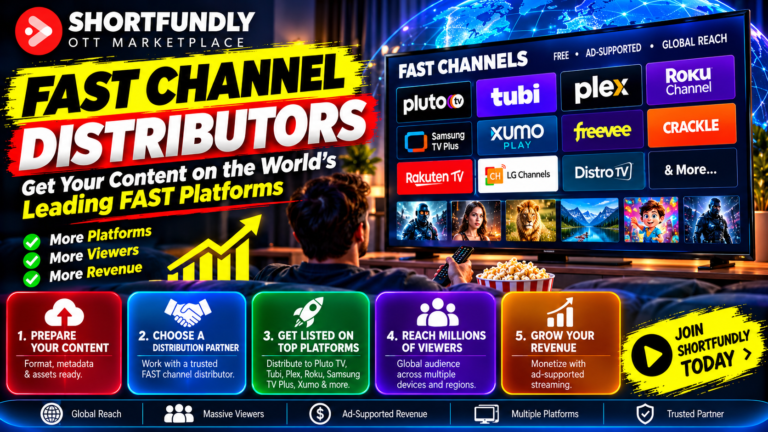
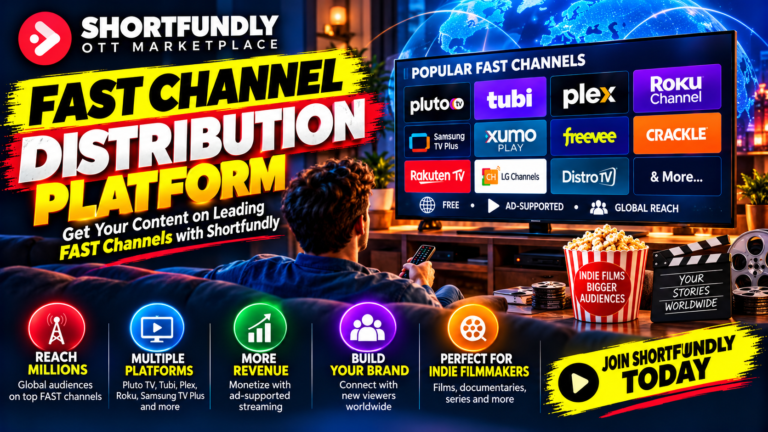
FAST stands for Free Ad-Supported Streaming Television. FAST services deliver television-style programming over the internet and generally allow viewers to watch without paying a subscription for that viewing experience. Advertising helps support the service.
FAST channel distribution involves making suitable films or other video content available through these channels under the appropriate licensing and distribution arrangements.
Unlike a traditional video upload, which may place a film in an on-demand catalog, FAST programming often organizes content into channels with a continuous or scheduled lineup.
Viewers can select a channel and begin watching whatever is currently playing.
How FAST Channels Help Viewers Discover Content
Consider someone who enjoys science fiction but doesn’t have a particular film in mind.
They open a compatible FAST service, browse the available channels, and select one featuring science-fiction entertainment. A film begins playing, and the viewer discovers a production they hadn’t previously encountered.
The viewer didn’t search for that specific title. The channel created an opportunity for discovery.
This is one reason FAST channels are relevant to filmmakers exploring additional distribution windows.
FAST Is Part of a Wider Streaming Ecosystem
FAST doesn’t replace every other distribution method. It offers another option alongside subscription streaming, transactional video services, theatrical releases, and traditional television.
A film might be suitable for FAST after a festival run or another licensing window, provided its rights and agreements allow that use.
Some productions may be a good fit for specialized channels, while others may perform better through different routes.
The important step is to evaluate each opportunity based on the film’s audience, rights, technical readiness, and commercial objectives.
3. Nine Ways FAST Channels Can Support Film Discovery
FAST channels can create additional discovery opportunities, but their effectiveness depends on how the service operates and which content it selects.
Here are nine ways the model may help suitable films reach potential viewers.
1. Discovery Without a Specific Search
Viewers don’t always know which film they want to watch.
With on-demand services, they may browse titles, search for actors, or rely on recommendations. FAST channels offer another option: viewers can tune in and encounter whatever is playing.
This may introduce a film to someone who would never have searched for its title.
2. Channel-Based Programming
FAST channels often organize content around genres, themes, languages, or interests.
A documentary may be considered for a channel focused on factual programming. A classic film might suit a channel specializing in older cinema.
When content aligns with a channel’s identity, viewers who already enjoy that type of programming may be more likely to find it relevant.
3. Opportunities for Catalog Content
A film doesn’t necessarily lose all its distribution potential after its initial release.
Older films, independent productions, and completed documentaries may still be suitable for particular channels.
FAST distribution can be one possible route for catalog content, depending on licensing availability, technical quality, audience interest, and the operator’s requirements.
4. Reaching Viewers With Different Habits
Some viewers actively search for specific titles. Others prefer a more relaxed viewing experience in which they choose a channel and see what’s on.
FAST can serve the latter group.
This gives content owners another audience behavior to consider when planning distribution.
5. Genre-Based Audience Matching
A film’s genre can help determine which channels are worth researching.
For example:
| Film Type | Potential Channel Fit |
|---|---|
| Independent thriller | Thriller or genre-focused programming |
| Nature documentary | Nature or factual entertainment |
| Classic drama | Classic cinema or drama programming |
| Regional-language film | Relevant language or cultural programming |
| Family animation | Suitable family or children’s programming |
| Music documentary | Music or performance-focused programming |
These are illustrative possibilities, not guarantees of placement. Each operator has its own selection criteria.
6. Additional Opportunities Beyond Social Media
Social media can be useful for building awareness, sharing trailers, and engaging with fans. However, social media promotion requires ongoing effort, and reaching viewers outside an existing following can be challenging.
FAST distribution offers a different route because viewers may encounter content through a channel’s programming.
The two approaches can complement each other. A filmmaker might use social media to promote a release while also exploring licensing opportunities for suitable channels.
7. Continued Exposure Through Different Release Windows
A film can have more than one distribution opportunity during its lifetime.
Depending on contractual restrictions, it may move from festivals to other distribution channels, including OTT, FAST, television, or international markets.
Each window should be planned carefully. An exclusive agreement may limit where the film can appear or when another release can begin.
8. Potential for Niche Content Discovery
Some films appeal to specialized audiences rather than the general market.
A documentary about a particular historical event, for instance, may be especially relevant to viewers interested in that subject.
A suitable niche channel may provide a more relevant discovery environment than a broad catalog, although actual results depend on the service and its audience.
9. More Ways to Present a Film to Potential Buyers
A distribution plan that considers FAST alongside other channels may help content owners identify additional licensing opportunities.
However, a wider list of possible channels doesn’t automatically create more commercial value. The rights, costs, audience fit, and agreement terms must justify each opportunity.
The goal is to identify suitable distribution routes, not simply to maximize the number of platforms.
4. FAST Channel Distribution Versus Upload-Only Distribution
Uploading a film can be a useful step, but it is not a complete audience-development strategy.
FAST distribution works differently from a simple upload because it involves channel programming and an agreed route to a streaming service.
| Feature | Upload-Only Approach | FAST Channel Distribution |
|---|---|---|
| Main activity | Making a film available online | Licensing or distributing content through a FAST channel |
| Viewer discovery | May depend on search, recommendations, and promotion | May include discovery through programmed channel viewing |
| Programming | Often an on-demand title listing | Commonly part of a scheduled or continuous channel lineup |
| Audience reach | Depends on the platform and promotional activity | Depends on channel availability, audience, programming, and promotion |
| Revenue | Depends on the upload platform’s model | Depends on the agreement and channel’s commercial model |
| Rights requirements | Depend on the platform and content use | Depend on the licensing and distribution agreement |
| Guaranteed success | No | No |
Neither approach is automatically superior.
A filmmaker may use an upload-based platform to build an online following and explore FAST distribution for additional exposure. Another filmmaker may prioritize festivals, television, or direct licensing.
The best route depends on the content and the goals of its owner.
5. How Filmmakers Can Prepare Content for FAST Distribution
A suitable film needs more than a compelling story. It must also be legally available, technically deliverable, and appropriate for the channel being approached.
Preparation can make the distribution process more efficient.
Confirm the Necessary Rights
Before offering a film to a distributor or channel operator, confirm that you control the relevant rights.
Check permissions relating to:
- Music and sound recordings.
- Scripts and underlying literary works.
- Archive footage and photographs.
- Performers and contributors.
- Artwork and other third-party material.
- Previous distribution agreements.
A filmmaker may own the finished production but still need to verify permissions for particular uses, territories, or distribution windows.
If an existing contract grants exclusive rights to another party, FAST availability may be restricted.
Prepare Technical Materials
Distribution partners may request a master file that meets particular video and audio specifications.
They may also require subtitles, captions, artwork, and metadata.
Common materials include:
- Film title and synopsis.
- Genre, language, and runtime.
- Release year and credits.
- High-quality video and audio masters.
- Poster artwork and still images.
- Trailer or promotional material.
- Subtitle or caption files.
- Rights documentation.
Always obtain the current technical specifications from the intended partner rather than assuming that one format will suit every platform.
Make Metadata Accurate
Metadata helps describe the film and supports catalog management.
An accurate synopsis, genre, language listing, cast information, and runtime make it easier for a buyer to evaluate the title.
Metadata should describe the film honestly. Misleading descriptions can create the wrong expectations and damage audience trust.
Identify the Right Channels
Research operators that program content similar to yours.
A channel’s audience, genre, language, territory, and editorial focus can all affect suitability.
Rather than approaching every available service, prioritize opportunities that align with the film’s strengths and the rights you control.
6. How Distribution Partners Can Help
Distribution partners can help content owners navigate licensing opportunities and delivery requirements. Their exact responsibilities depend on their services and agreements.
Some may specialize in particular territories or types of content. Others may help manage rights, coordinate delivery, or introduce films to potential buyers.
Finding Suitable Opportunities
A distributor may assess a film’s genre, audience, language, rights, and technical readiness when considering potential opportunities.
This can help filmmakers focus on channels that are more relevant to their productions.
However, working with a distributor doesn’t guarantee that a channel will accept the film or that the film will attract a large audience.
Managing Delivery
Depending on the arrangement, a distribution partner may help coordinate video masters, metadata, artwork, subtitles, and other required assets.
Clear responsibilities can reduce confusion and help the delivery process run smoothly.
Supporting Licensing and Rights Administration
A film can be licensed for different territories, platforms, and periods. Managing those arrangements requires accurate records.
Before signing an agreement, confirm the rights being granted, whether exclusivity applies, how revenue is calculated, and when rights will revert.
Exploring Shortfundly Distribution
Filmmakers and content owners can explore Shortfundly Distribution as one potential starting point when researching distribution services.
Before proceeding, review the company’s current offerings and confirm whether they match your film and objectives.
Useful questions include:
- Which types of films and content are eligible?
- What distribution services are currently available?
- Are FAST-related opportunities included?
- Which territories and platforms can be considered?
- What materials are required?
- Are fees, commissions, or other expenses involved?
- How are rights and exclusivity handled?
- What reporting and payment terms apply?
Review the answers in writing and compare them with other potential partners. Choose a distribution arrangement based on the actual services, contract, and opportunities available rather than assuming that any partner can guarantee placement or audience growth.
7. How FAST Channels Generate Revenue
FAST channels generally use advertising to support free viewing. This can create commercial opportunities for service operators and, depending on the agreement, content owners.
However, advertising revenue does not automatically translate into payment for every film shown on a channel.
Advertising-Supported Models
FAST services may sell advertising directly or work with advertising partners.
Advertisements can appear before a program, during breaks, or at other points supported by the service.
Revenue depends on factors such as advertising demand, audience viewing, available inventory, and the operator’s business model.
Licensing Fees and Revenue Sharing
A content owner may receive a negotiated licensing fee or participate in a revenue-sharing arrangement.
The exact terms vary. Agreements should clearly define the relevant revenue, permitted deductions, payment schedule, and reporting requirements.
Evaluate the Commercial Terms
Before agreeing to a FAST deal, ask:
- What rights are being licensed?
- Which territories are covered?
- Is the agreement exclusive?
- How is compensation calculated?
- Which costs or deductions apply?
- How frequently will reports be provided?
- When will payments be made?
- What happens when the agreement expires?
A film’s availability on a FAST channel may create a discovery opportunity, but its financial value depends on the actual deal and performance.
8. Common Mistakes That Limit Film Discovery
Even strong films can struggle to find an audience if distribution is poorly planned.
Assuming Uploading Is Enough
Uploading a film is an important technical step, but viewers still need ways to discover it.
Consider a mix of relevant promotional and distribution routes rather than depending entirely on a single listing.
Choosing Channels Without Research
A popular channel may not be the right place for a particular film.
Research the operator’s programming, audience, territory, and content requirements before investing time in an approach.
Ignoring Rights Restrictions
Existing agreements may limit the ability to license a film to another service.
Maintain a clear record of rights, territories, exclusivity, and contract periods.
Overlooking Metadata and Artwork
A confusing synopsis or incomplete technical package can make a film harder to evaluate.
Prepare accurate information and professional promotional assets before approaching partners.
Expecting Guaranteed Views or Revenue
FAST distribution creates a possible route to viewers, not a guarantee of performance.
Avoid making financial decisions based on unsupported audience or revenue promises. Ask what reporting is available and how commercial outcomes are measured.
Forgetting the Wider Release Plan
FAST should be considered alongside other potential distribution windows.
Review how each agreement affects future opportunities, and avoid committing rights without understanding the consequences.
9. The Future of Film Discovery Through FAST
The entertainment market offers viewers an increasing range of ways to watch content. Some prefer subscriptions, others choose individual rentals, and some enjoy free, advertising-supported viewing.
FAST adds another option by combining internet delivery with a familiar channel-based experience.
Discovery Can Begin Without a Search
A key feature of programmed channels is that viewers can encounter content while watching a channel rather than searching for a specific title.
For suitable films, this may create opportunities to reach people who haven’t heard of the production.
Actual discovery depends on the channel’s programming and audience, so content owners should evaluate each opportunity realistically.
Specialized Channels Can Serve Specific Interests
Channels may focus on genres, languages, or themes.
This can help viewers find programming that matches their interests and give content owners a clearer idea of which channels to research.
The strongest opportunity is not necessarily the biggest channel. It may be the channel whose audience is most relevant to the film.
Distribution Planning Still Matters
As more viewing models become available, filmmakers need to consider how different channels fit together.
A film’s journey may include festivals, theatrical screenings, OTT services, FAST channels, television, and international markets.
Not every film needs every window. Rights, timing, audience demand, and commercial terms should guide the plan.
The central lesson is simple: creating content is one challenge; connecting it with the right audience is another. FAST distribution may help address the second challenge when the film and channel are a suitable match.
10. Frequently Asked Questions About FAST Channel Distribution
What Is FAST Channel Distribution?
FAST channel distribution is the process of licensing or making suitable video content available through Free Ad-Supported Streaming Television channels. These channels deliver television-style programming over the internet and generally support free viewing through advertising.
How Do FAST Channels Help People Discover Films?
FAST channels often present scheduled or continuous programming. Viewers can tune in and encounter films they weren’t specifically searching for. This creates an additional discovery route, although actual viewing depends on the channel, its audience, and its programming.
Is Uploading a Film Enough to Build an Audience?
Not necessarily. Uploading makes a film available, but discovery may also depend on promotion, recommendations, programming, and distribution partnerships. A broader plan can help filmmakers explore more ways to connect their content with potential viewers.
Are FAST Channels Free to Watch?
FAST channels generally offer viewing without a paid subscription for that channel, using advertising to support the service. Availability and any additional paid features depend on the platform and region.
Can Independent Filmmakers Get Their Films on FAST Channels?
Potentially, yes. Eligibility depends on the operator’s requirements, the film’s suitability, rights availability, technical quality, and commercial terms. Some services work through distributors or authorized content partners.
Do FAST Channels Guarantee More Views?
No. FAST can provide another opportunity for discovery, but it doesn’t guarantee that viewers will watch a particular film. Channel selection, programming, audience fit, and promotion all influence results.
How Do Content Owners Earn Money From FAST Distribution?
Depending on the agreement, compensation may involve licensing fees, revenue sharing, or another commercial structure. Content owners should review payment terms, deductions, reporting, and rights restrictions before signing.
Can a Film Appear on FAST and Other Platforms?
It may be possible, but the answer depends on existing contracts, exclusive rights, territories, and release timing. Review the agreements carefully before licensing the same content to another service.
How Can I Prepare My Film for Distribution?
Confirm rights, prepare a high-quality master, organize metadata and artwork, create subtitles or captions where required, and obtain the partner’s delivery specifications. Accurate documentation helps make the film easier to evaluate.
Where Can Filmmakers Explore Distribution Services?
Filmmakers can research distributors whose services match their content and goals. Shortfundly Distribution is one option to investigate. Check its current services, eligibility requirements, contract terms, and available opportunities before making a decision.
Also read: https://blog.shortfundly.com/ott/fast-channels-free-streaming/
Conclusion: Great Content Needs a Path to Discovery
You created a great film. Now the challenge is helping the right people find it.
Uploading a film makes it available, but availability alone doesn’t guarantee an audience. Viewers need opportunities to encounter content that matches their interests, whether through search, recommendations, promotion, or programmed channels.
FAST channel distribution offers another possible route. By combining free, advertising-supported viewing with a television-style experience, FAST channels can introduce suitable films to viewers who might never have searched for those titles directly.
For filmmakers, the opportunity is to think beyond a single upload and build a thoughtful distribution plan. Research suitable channels, prepare professional materials, protect your rights, and evaluate the commercial terms carefully.
Distribution partners may help content owners explore available opportunities. If you’re researching potential services, consider Shortfundly Distribution alongside other relevant partners, and verify what each can actually offer.