Table of Contents
A FAST channel distribution platform can help filmmakers, independent producers, television studios, and digital content owners explore new ways to deliver their content to streaming audiences. As viewers increasingly use connected televisions and internet-based entertainment services, Free Ad-Supported Streaming TV (FAST) has become an important part of the digital distribution landscape.
Unlike traditional subscription streaming services, FAST platforms generally allow viewers to watch television-style programming without paying a monthly subscription fee. Instead, advertising supports the service. This model creates potential opportunities for content owners to license movies, documentaries, television series, and other video programming.
However, distributing content to FAST channels requires more than uploading a video. We need to prepare professional media files, confirm distribution rights, organize metadata, identify suitable platforms, and understand commercial agreements.
Choosing the right distribution partner can make this process easier to manage. Services such as ShortFundly Distribution are worth exploring when researching content distribution options and determining which services may suit a particular project.
In this guide, we’ll explain how FAST channel distribution works, how to evaluate distribution platforms, and seven practical tips for preparing content for streaming opportunities.
1. Understanding FAST Channel Distribution
What Is a FAST Channel Distribution Platform?
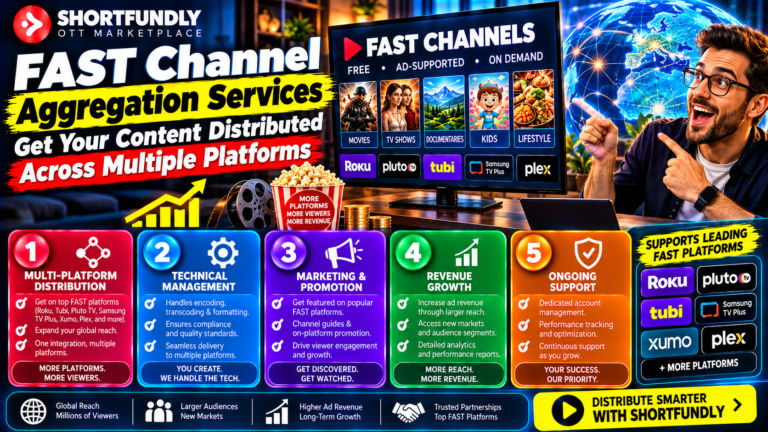
A FAST channel distribution platform is a service, technology provider, or distribution partner that helps content owners deliver programming into the free, advertising-supported streaming ecosystem. Depending on the business model, it may support content delivery, channel management, rights administration, technical preparation, or distribution to streaming services.
The term can describe different types of businesses. Some companies operate streaming channels directly, while others help content owners connect with platforms or manage distribution workflows.
For this reason, we should understand exactly what a provider offers before choosing its services.
For example, an independent filmmaker may have a completed documentary but lack experience preparing files for streaming delivery. A distribution partner may help the filmmaker understand technical requirements and explore suitable licensing opportunities.
A production company with hundreds of titles may need a different solution, such as catalog management, metadata organization, and rights tracking.
The best distribution solution depends on our content, rights, budget, target audience, and commercial goals.
How FAST Streaming Works
FAST stands for Free Ad-Supported Streaming TV. These services deliver television-style programming over the internet through smart televisions, streaming devices, applications, and supported web services.
Many FAST services provide scheduled channels that resemble traditional television. Viewers can select a channel and watch the programming currently being broadcast. Some services also combine these channels with on-demand movies and television episodes.
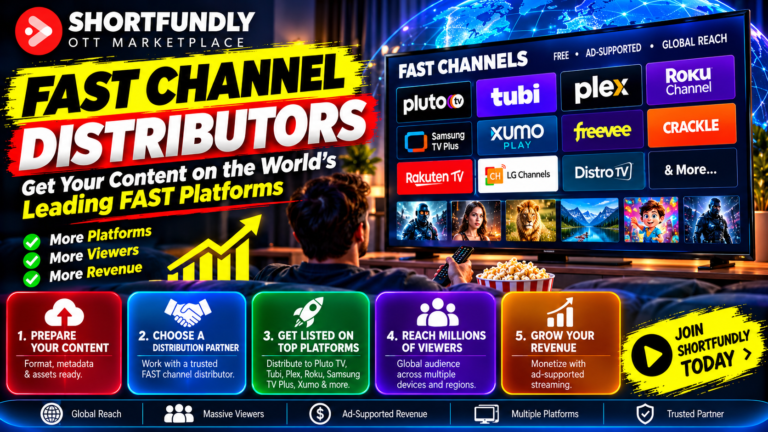
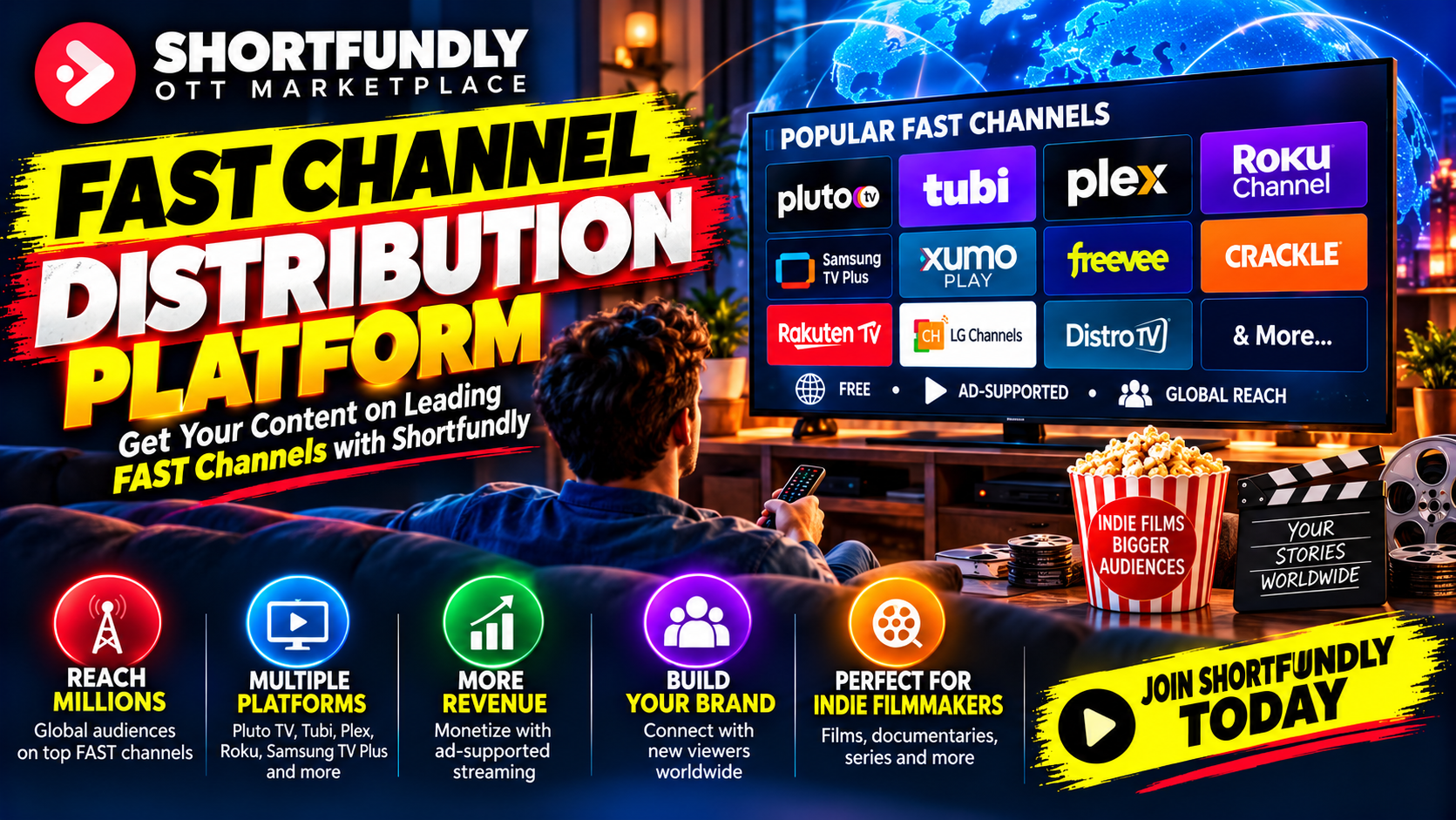
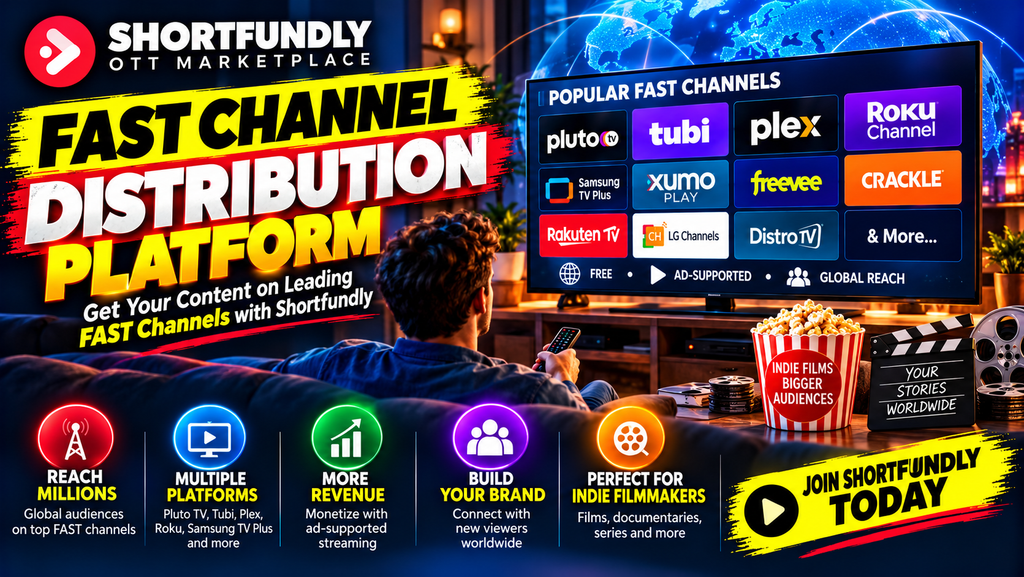
Examples of services in the FAST ecosystem include Pluto TV, Tubi, The Roku Channel, Samsung TV Plus, and Plex. Their availability and content acquisition policies vary by market.
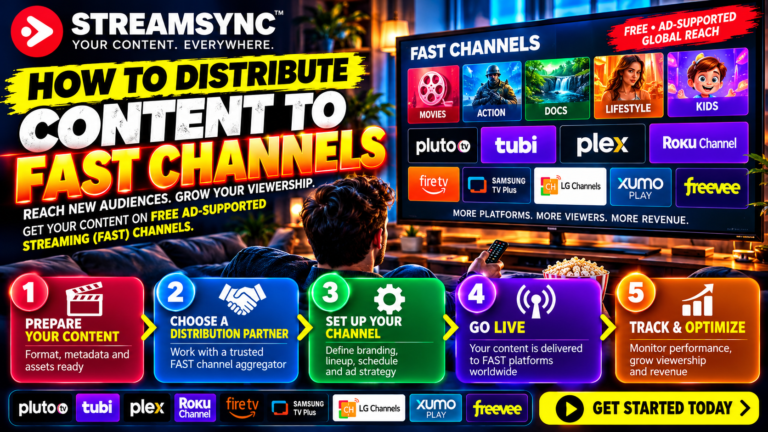
A typical distribution process may involve the following steps:
- A content owner prepares a film, series, or other eligible video program.
- A distributor or channel operator evaluates the content and its available rights.
- The parties agree on the relevant commercial and licensing terms.
- The content is prepared according to the recipient’s technical specifications.
- The distributor or platform completes the required delivery and review process.
- If accepted and scheduled, the content becomes available to viewers.
Not every distributor performs every step, and submission doesn’t guarantee acceptance or placement.
FAST vs. AVOD and SVOD
Understanding different streaming models helps us select suitable distribution opportunities.
| Model | Viewer experience | Typical revenue source |
|---|---|---|
| FAST | Free, scheduled television-style channels | Advertising |
| AVOD | Free, on-demand video | Advertising |
| SVOD | Subscription-based streaming | Subscription fees |
| TVOD | Individual rentals or purchases | Transaction payments |
FAST and AVOD are closely related, but they aren’t identical. FAST emphasizes a channel-based viewing experience, while AVOD generally refers to advertising-supported on-demand content.
Depending on the rights and platform, a film may be suitable for more than one model. We should evaluate each opportunity based on its audience, commercial terms, and contractual restrictions.
2. Benefits of Using a FAST Channel Distribution Platform
Reach New Streaming Audiences
One major attraction of FAST distribution is the opportunity to reach viewers who prefer free streaming services over paid subscriptions.
FAST services can make content accessible through connected televisions and other supported devices. This gives independent films, documentaries, and niche programming another potential route to audiences.
For example, a documentary about wildlife may appeal to viewers interested in nature and science. A regional-language drama may suit a channel serving audiences with a particular language preference.
However, availability doesn’t automatically translate into high viewership. Discovery depends on factors such as channel placement, audience interest, programming choices, geographic availability, and platform promotion.
We should therefore choose distribution opportunities that align with the audience most likely to appreciate our work.
Explore Content Monetization Opportunities
FAST channels generally earn revenue through advertising. Depending on the agreement, content owners may receive licensing fees, a share of advertising revenue, or another negotiated form of compensation.
Each arrangement works differently.
A licensing agreement may provide a defined payment for specified rights. A revenue-sharing arrangement may link compensation to revenue generated under the contract. Other deals may include different payment structures or minimum guarantees.
Before agreeing to any arrangement, we should ask:
- How is compensation calculated?
- Are there distribution, delivery, or administrative fees?
- What deductions may apply?
- How often are revenue statements issued?
- When are payments made?
- What performance data will be available?
- Can the agreement be terminated if expectations aren’t met?
We should also consider whether the commercial terms justify the time and expense involved in preparing the content.
FAST distribution can create monetization opportunities, but it doesn’t guarantee earnings. Actual results depend on the agreement, viewing activity, advertising performance, and other market factors.
Extend the Value of Existing Content
Content owners may have completed films, archived television programs, documentaries, or other productions that could be suitable for additional distribution.
A properly managed content library makes it easier to identify titles that may fit new opportunities.
Instead of evaluating each title from scratch, we can maintain a catalog containing runtimes, genres, rights status, language versions, artwork, and technical information.
This organization helps us respond more efficiently when a distributor requests information about available titles.
3. Types of Content Suitable for FAST Channels
Movies and Independent Films
Feature films can be suitable for FAST distribution when they match a channel’s programming needs and meet its requirements.
Genres may include action, comedy, drama, thriller, romance, science fiction, and classic cinema.
Independent filmmakers should prepare a high-quality master, accurate synopsis, promotional artwork, and documentation showing that the required distribution rights are available.
We should also consider whether the film is appropriate for a particular audience and whether its language, runtime, and subject matter match the channel’s programming strategy.
Documentaries and Television Series
Documentaries can appeal to viewers interested in subjects such as history, travel, nature, culture, technology, and education.
Television series offer another opportunity because episodic content can support repeat viewing and scheduled programming.
For a series, we should organize the material by season and episode. Each episode should have its own title, synopsis, runtime, and relevant technical information.
We should also confirm that the distribution rights cover all episodes included in the proposed package.
Regional and Niche Programming
Regional content can help serve audiences with specific language and cultural interests. Niche programming may focus on cooking, fitness, hobbies, music, lifestyle, or other specialized subjects.
When preparing regional content, we should confirm language availability, subtitle requirements, geographic rights, and the intended audience.
Niche content may be attractive when a channel has a clear programming focus. However, we shouldn’t assume that a specific category will be accepted without checking the recipient’s current needs.
4. How to Choose the Right FAST Channel Distribution Platform
Selecting a distribution partner requires more than comparing websites or promotional claims. We should evaluate its services, target markets, commercial terms, and ability to support our project.
Evaluate Platform Reach and Availability
Start by identifying where the platform or distributor operates and which audiences it serves.
If our objective is international exposure, we should investigate whether the proposed arrangement includes the territories that matter to us.
If we’re distributing regional-language content, we should consider whether the intended audience can access the service and whether the content is suitable for its programming.
We should also distinguish between a company that operates a streaming platform and a company that distributes content to third-party services. These roles can involve different processes and commercial relationships.
Review Technical and Content Requirements
Before submitting a project, request the current delivery specifications.
These may cover video resolution, codecs, frame rates, audio configuration, aspect ratio, captions, subtitles, artwork, and metadata.
We should confirm that our content meets the requirements or establish the cost of preparing compliant versions.
Technical preparation can take time, especially when a project includes multiple episodes, languages, or delivery formats.
Compare Rights, Fees, and Contract Terms
A distribution partner should provide clear information about the rights it requires and the services it offers.
Important contract terms include:
- Rights: Which distribution rights are being granted?
- Exclusivity: Can the content be licensed to other services?
- Territory: Which countries or regions are covered?
- Term: How long does the agreement remain active?
- Fees: Are there upfront or recurring charges?
- Revenue: How are payments calculated?
- Reporting: What statements or performance information are provided?
- Termination: How can the agreement end?
- Removal: What happens when the term expires?
We should carefully examine these provisions before signing. For significant agreements, qualified legal advice can help us understand the obligations and potential risks.
5. How to Distribute Content Through a FAST Channel Distribution Platform
Step 1: Prepare Your Content Library
We should begin by creating an organized catalog of every title available for distribution.
Record the title, genre, runtime, release year, language, master-file location, artwork, rights status, and territories available.
For a series, include season and episode details. For films with multiple versions, label each version clearly.
This catalog makes it easier to identify suitable titles and respond quickly to distribution inquiries.
Step 2: Prepare Video Masters and Metadata
We should check every video file against the recipient’s technical requirements.
Review the image, audio, runtime, aspect ratio, and synchronization. Prepare captions and subtitles when required.
Next, create a metadata sheet containing accurate information about the title, synopsis, genre, cast, crew, language, and rights.
Artwork and trailers should be professional and consistent with the project. All descriptions must accurately represent the content.
Step 3: Research and Contact Distribution Partners
Create a shortlist of potential partners based on their content categories, geographic reach, and submission policies.
Some platforms accept direct submissions, while others work through approved distributors or channel operators.
We should follow the official submission process and provide only the materials requested.
Our pitch should explain what the content is, who the intended audience is, and which rights are available.
Step 4: Review Offers and Agreements
If a partner expresses interest, review the proposed terms before committing.
Confirm the rights, territory, term, exclusivity, fees, revenue model, reporting process, and termination conditions.
We should also ask what the partner will actually do, what deliverables are required from us, and whether any platform placement is guaranteed by the contract.
Step 5: Complete Delivery and Monitor Results
Once an agreement is in place, follow the delivery instructions and respond to technical or documentation requests.
After launch, review any available performance and revenue reports.
Keep records of payments, deductions, licensing periods, and contractual obligations. These records will help us evaluate future opportunities and manage the content library effectively.
6. Explore ShortFundly Distribution
For filmmakers and content owners researching distribution options, ShortFundly Distribution is a useful starting point for exploring the company’s services.
We should review its current website information to understand whether its offerings fit our project and distribution objectives.
Before submitting content, confirm the available services, eligible content types, submission procedure, supported territories, and applicable commercial terms.
It is particularly important to ask whether the specific FAST distribution opportunity we want is available and what steps are required to pursue it.
We should also establish whether technical preparation, metadata management, rights administration, platform delivery, or revenue reporting is included in the service we are considering.
These details help us compare providers on a consistent basis.
Prepare Before Contacting a Distributor
To make the initial discussion more productive, we should have the following information ready:
- Project title and format.
- Genre and short synopsis.
- Runtime and release year.
- Target audience and preferred territories.
- Available master files and language versions.
- Distribution rights and any existing restrictions.
- Artwork, trailer, and metadata.
- Questions about fees, payments, and contract terms.
We shouldn’t assume that submitting a title guarantees acceptance or placement on a specific streaming service.
Instead, we should use the discussion to determine whether the provider can support our goals and whether the proposed agreement is suitable.
7. Seven Powerful Tips for Better FAST Distribution
Tip 1: Match Content to the Audience
Identify the viewers most likely to enjoy the project and research channels that serve those interests.
A targeted pitch is more useful than a generic claim that the content appeals to everyone.
Tip 2: Maintain Professional Technical Quality
Check video masters, audio, captions, subtitles, and artwork before delivery. Use the recipient’s current technical specifications rather than relying on assumptions.
Tip 3: Organize Rights and Documentation
Maintain clear records of ownership, licenses, releases, territories, and contractual restrictions. This makes it easier to answer rights-related questions during evaluation.
Tip 4: Create a Strong Distribution Pitch
Explain the project’s distinctive features, intended audience, format, and available rights. Include verified awards or audience figures where relevant, and avoid unsupported claims.
Tip 5: Understand Revenue Reporting
Know how compensation is calculated and when payments are due. Review available statements and keep records of applicable deductions.
Tip 6: Support Content Discovery
When permitted by the agreement, promote releases through trailers, social media, newsletters, interviews, and relevant communities. Use accurate information about where viewers can watch the content.
Tip 7: Measure Performance and Improve
Review available viewing data, geographic reach, and revenue. Compare results with your goals and use reliable information to guide future distribution decisions.
Common Mistakes to Avoid
Even good content can face unnecessary delays when preparation is incomplete.
| Mistake | Better approach |
|---|---|
| Choosing an unsuitable platform | Research audience fit and eligibility |
| Sending incorrect video files | Follow current delivery specifications |
| Ignoring rights restrictions | Confirm ownership and licensing before submission |
| Providing incomplete metadata | Maintain an organized content catalog |
| Overlooking contract details | Review fees, exclusivity, and termination rights |
| Expecting guaranteed revenue | Build realistic financial expectations |
| Assuming acceptance is automatic | Follow the recipient’s review process |
| Failing to track submissions | Maintain a distribution and rights tracker |
A structured process helps us manage opportunities without wasting time on unsuitable submissions.
Frequently Asked Questions About FAST Channel Distribution Platforms
1. What is a FAST channel distribution platform?
A FAST channel distribution platform or service helps content owners explore, prepare, manage, or deliver programming within the free ad-supported streaming ecosystem. The exact services vary between distributors, technology providers, and channel operators.
2. How do we distribute content to FAST channels?
We should identify suitable platforms, prepare technically compliant video files, confirm distribution rights, organize metadata, and contact eligible distributors or channel operators. Before proceeding, we should review the contract and confirm the available distribution opportunities.
3. Can independent filmmakers use FAST distribution platforms?
Yes, independent filmmakers may be able to distribute eligible films through FAST services. However, some services accept content only through selected distributors or channel operators. Eligibility depends on the platform and the project.
4. Do FAST distribution platforms charge fees?
Fees vary. Some arrangements may include technical preparation costs, delivery fees, administrative charges, or revenue sharing. We should request a clear breakdown of costs and deductions before signing an agreement.
5. How do content owners earn money through FAST distribution?
Depending on the contract, content owners may receive licensing fees, advertising revenue shares, or other negotiated payments. Actual earnings depend on the agreement and commercial performance, and aren’t guaranteed.
6. What content can be distributed through FAST channels?
Potentially suitable content includes feature films, documentaries, television series, classic entertainment, regional-language programming, and niche content. Acceptance depends on programming needs, rights availability, technical quality, and platform policies.
7. Can we distribute the same title through multiple platforms?
Potentially, yes. Our ability to distribute the same title to multiple services depends on the rights we control and any exclusivity restrictions in existing contracts. We should review those agreements before entering another distribution arrangement.
8. How can ShortFundly Distribution help us explore distribution options?
Visit ShortFundly Distribution to review its current offerings and determine whether they fit your project. Confirm available services, submission requirements, platform opportunities, fees, and contractual terms directly with the company.
Also read: https://blog.shortfundly.com/ott/pitch-content-fast-channel/
Conclusion
A suitable FAST channel distribution platform can provide a pathway for filmmakers, producers, and content owners to explore new streaming opportunities.
The process begins with selecting relevant distribution partners, preparing high-quality video assets, securing the required rights, and organizing accurate metadata. We can then evaluate commercial offers, complete the submission process, and monitor available performance and revenue information.
The seven tips in this guide provide a practical foundation for making informed decisions, reducing avoidable delivery problems, and managing distribution opportunities professionally.
If we’re researching potential partners, ShortFundly Distribution is a starting point for exploring services that may fit our content and goals.
With careful preparation, transparent agreements, and a clear understanding of our objectives, we can position our content for consideration within the evolving FAST streaming ecosystem.