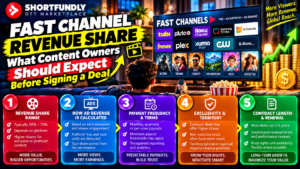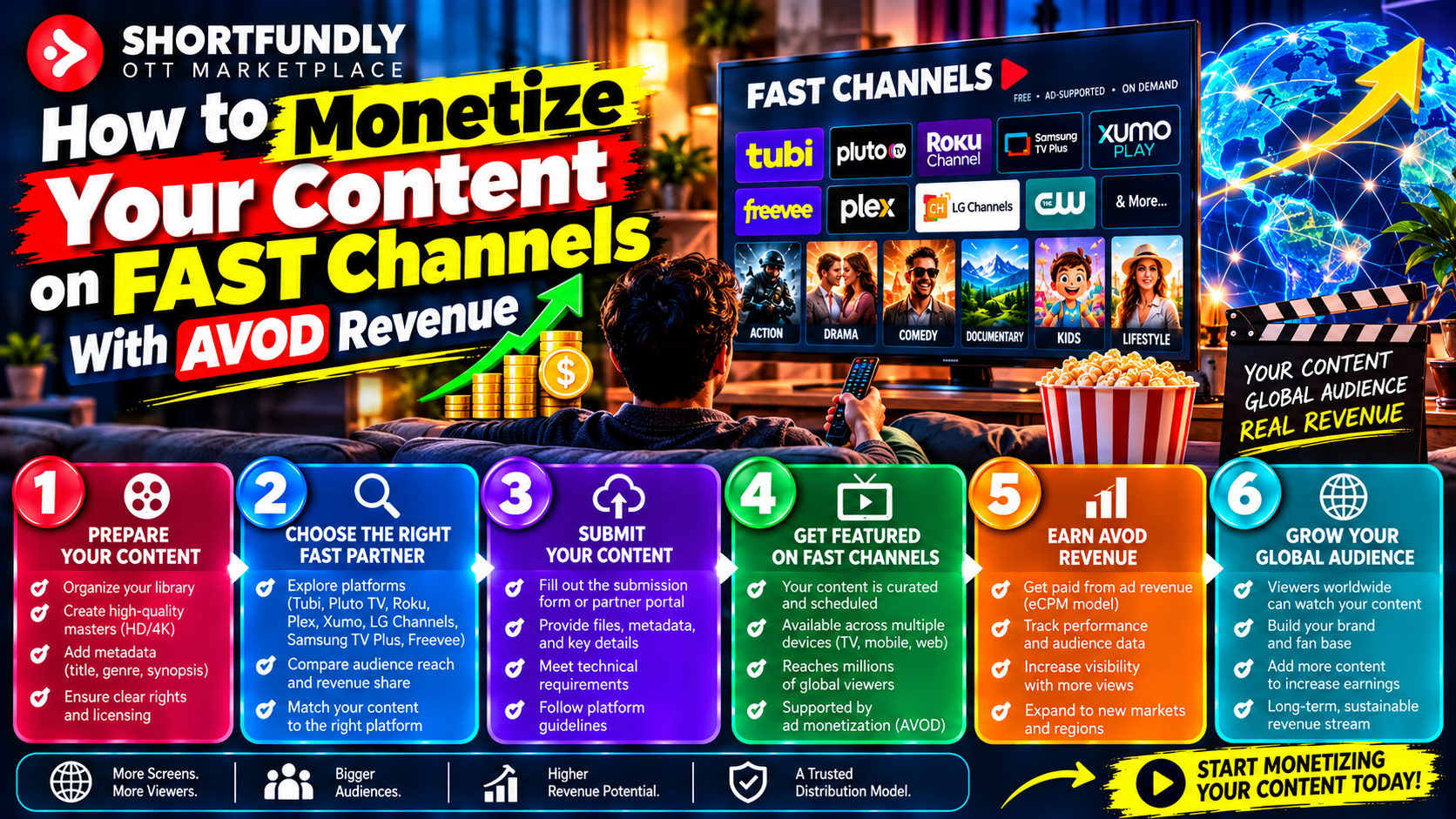
Table of Contents
The growth of Free Ad-Supported Streaming TV (FAST) has created new opportunities for filmmakers, independent producers, studios, and digital content owners to monetize video libraries. Instead of charging viewers a subscription fee or requiring them to purchase each title, FAST channels let audiences watch content for free while advertisers fund the viewing experience.
This model is closely connected to Advertising-Based Video on Demand (AVOD). Both use advertising to generate revenue, but they typically deliver content in different ways. AVOD often allows viewers to select individual movies or episodes from an on-demand library, while FAST channels offer scheduled, linear programming that resembles traditional television.
For content owners, understanding these models can help turn existing movies, documentaries, short films, and television series into potential revenue-generating assets. However, earning money requires more than uploading videos. You need the right distribution partners, clear licensing rights, suitable content, reliable technical delivery, and a strategy for attracting and retaining viewers.
This guide explains how to monetize content on FAST channels with AVOD revenue, evaluate distribution opportunities, prepare your library, understand advertising revenue, and build a sustainable streaming strategy.
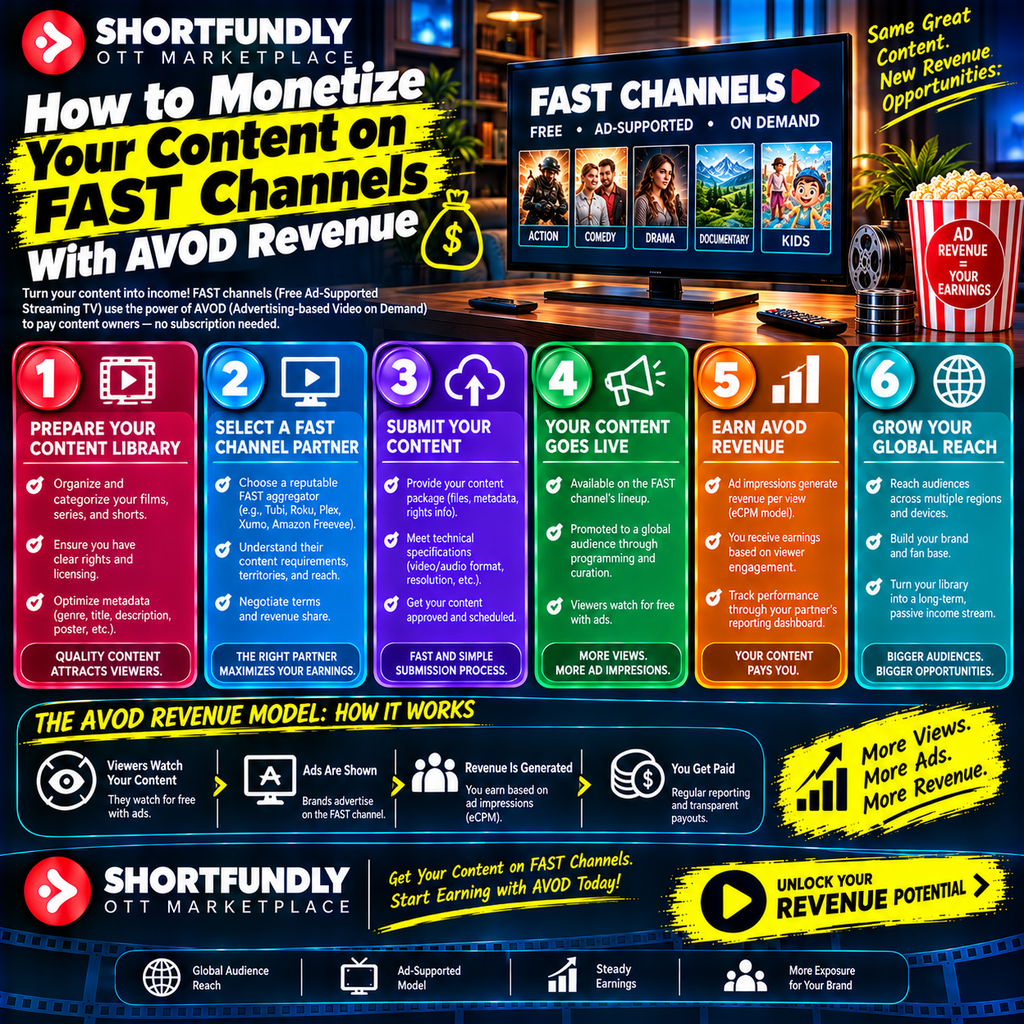
What Are FAST Channels and AVOD?
Before choosing a monetization strategy, it is important to understand how FAST and AVOD work.
What Is a FAST Channel?
A FAST channel is a free, ad-supported streaming television channel that delivers scheduled programming over the internet. Viewers can watch through compatible smart TVs, streaming devices, and connected-TV applications without paying a conventional subscription fee.
FAST channels often focus on a specific genre, audience, language, or entertainment category. Examples include:
- Action and thriller movies
- Classic cinema
- Independent films
- Documentaries and real-life stories
- Reality television and lifestyle programming
- Regional-language entertainment
- Animation and family programming
- Crime, mystery, and science fiction
- Music, concerts, and entertainment shows
Content owners may license individual titles to existing channels or work with a partner to package a larger catalogue. Creating and operating a complete FAST channel is another option, but it involves additional programming, technology, advertising, and operational responsibilities.
What Is AVOD Revenue?
AVOD, or Advertising-Based Video on Demand, allows viewers to watch content without paying directly for access. Instead, the platform generates income by showing advertisements before, during, or after a video.
Depending on the platform and content agreement, advertising can include pre-roll ads, mid-roll ads, post-roll ads, display placements, and other approved advertising formats.
Content owners may receive a share of advertising revenue, a licensing payment, a minimum guarantee, or another agreed commercial payment. The exact arrangement depends on the platform, territory, rights, audience, and contract.
FAST vs. AVOD: What Is the Difference?
| Feature | FAST | AVOD |
|---|---|---|
| Viewing experience | Scheduled, linear programming | Usually on-demand playback |
| Viewer payment | Free to the viewer | Free to the viewer |
| Revenue source | Advertising | Advertising |
| Content discovery | Channel browsing and scheduled programming | Search, recommendations, and catalogue browsing |
| Programming control | Often managed through a channel schedule | Often selected by the viewer |
| Content delivery | Linear streaming feed | Individual on-demand titles |
| Monetization options | Ad revenue, licensing, and other agreed models | Ad revenue, licensing, and other agreed models |
FAST and AVOD are related but not interchangeable. Some services offer both linear FAST channels and on-demand AVOD libraries. A content owner should confirm which distribution format a partner supports before signing a deal.
Why Monetize Your Content Through FAST and AVOD?
Traditional distribution is not the only route for earning from a film or video catalogue. Ad-supported streaming can create additional opportunities for content that fits a platform’s audience and commercial strategy.
1. Reach Viewers Without a Subscription Barrier
Free streaming reduces the direct cost of viewing for audiences. This can help platforms attract viewers who prefer not to purchase another subscription.
A title that struggles to find a paying audience on one service may appeal to viewers browsing a free channel, especially if the genre, language, and presentation match their interests.
2. Create New Opportunities for Existing Content
Older films, completed web series, documentaries, and independent productions may still have commercial value after their initial release.
With the appropriate rights and licensing terms, a content owner may be able to distribute these titles through additional ad-supported outlets. This can extend a title’s commercial life beyond its original release window.
3. Build Value From a Catalogue
A library containing multiple films or episodes can be more attractive to some distribution partners than a single standalone title.
A well-organized catalogue gives partners more options for programming, themed collections, seasonal schedules, and audience targeting. Series and related titles can also support repeat viewing when the content resonates with viewers.
4. Explore Multiple Revenue Opportunities
Depending on ownership rights and contract restrictions, a title may be suitable for more than one revenue model over its commercial life.
For example, a producer could explore transactional video-on-demand, subscription licensing, AVOD, or FAST distribution at different times or in different territories. These options must be planned carefully to avoid conflicts with existing exclusivity, holdback, or licensing commitments.
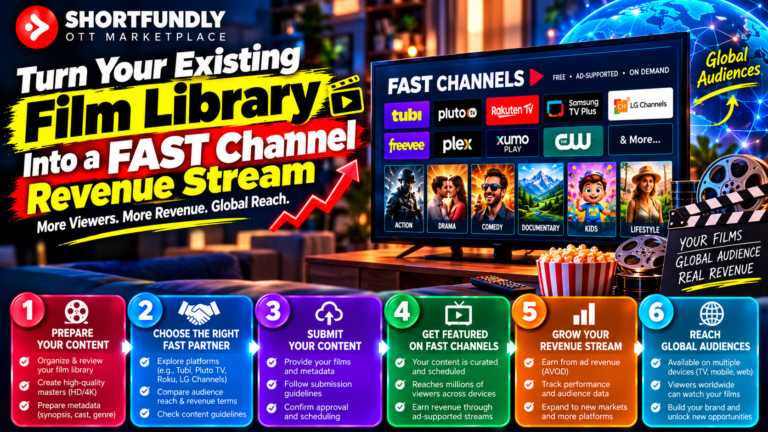
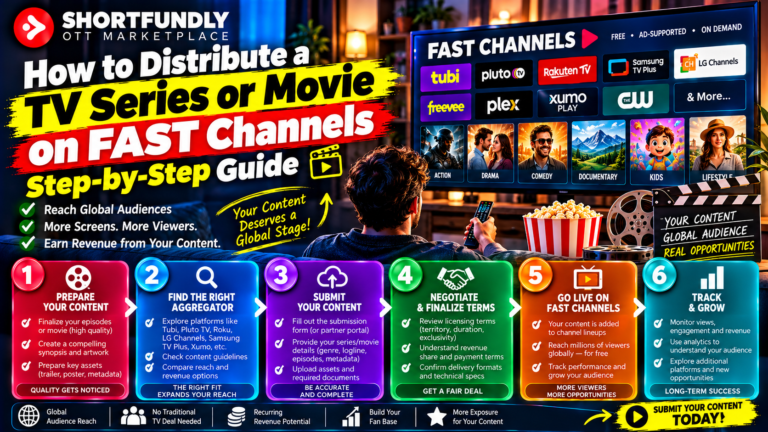
Step-by-Step Guide to Monetizing Content on FAST Channels With AVOD
Step 1: Audit Your Content Library
Begin by reviewing every title you control or are authorized to distribute.
Create a catalogue spreadsheet containing:
- Title and content type
- Genre and target audience
- Runtime and episode count
- Original language and available subtitles
- Production and release year
- Video and audio quality
- Ownership and licensing status
- Available territories and rights windows
- Existing distribution agreements
- Current promotional materials
This audit helps you understand what is ready for distribution and what needs further preparation.
For example, a collection of ten independent thriller films may be suitable for a genre-focused pitch. A documentary series may be more appropriate for a factual-entertainment channel. A varied library can still be valuable, but the pitch should explain the catalogue’s audience and programming potential.
Step 2: Confirm Your Distribution and Advertising Rights
Clear rights are essential for content monetization. Owning a finished video file does not automatically mean you control every right required for streaming and advertising-supported distribution.
Review your agreements for permission to license or distribute the content through:
- FAST channels
- AVOD platforms
- Connected-TV applications
- Digital streaming services
- Specific countries or territories
- Different languages and dubbed versions
- Promotional clips, trailers, and artwork
Check music licenses, performer agreements, archival footage, stock assets, and other third-party materials. Some rights may cover film festivals or limited online releases but not broader commercial streaming.
If a distributor requests exclusivity, establish which rights are exclusive, where the agreement applies, and how long it lasts. Ask about renewal, termination, reporting, and removal provisions before signing.
Step 3: Choose the Right Content for Each Channel
Not every title suits every FAST channel or AVOD platform.
Evaluate each potential partner based on its genre, audience, geographic reach, language preferences, programming needs, and technical requirements.
A horror film may be suitable for a horror-focused channel, while a travel documentary may fit a factual or lifestyle service. Family content requires particular attention to audience classification, ratings, and the platform’s policies.
A content-to-channel matching strategy is more effective than sending the same generic pitch to every distributor.
Step 4: Prepare High-Quality Video and Audio Masters
Streaming partners may have specific technical delivery requirements. Common requirements can include:
- Approved video resolution and frame rate
- Correct aspect ratio and picture quality
- Consistent audio levels and channel configuration
- Clean edits and appropriate content ratings
- Accurate subtitles or closed captions
- Required file formats and delivery specifications
Do not assume every service accepts the same technical format. Request the partner’s current delivery guidelines before preparing final masters.
Check the content from beginning to end. Technical issues, missing audio, incorrect subtitles, black frames, and damaged files can delay acceptance or affect the viewing experience.
Step 5: Create Strong Metadata and Artwork
Metadata helps distribution teams understand, categorize, and present your content. It can also support search and discovery when platforms display titles, genres, descriptions, and related information to viewers.
Prepare the following for each title:
- A clear, accurate title
- A concise synopsis
- A longer description where required
- Genre and relevant subgenres
- Language and subtitle details
- Runtime and release year
- Cast, director, and production credits
- Age rating and content advisories
- Keywords and relevant themes
- Posters, thumbnails, and approved stills
- Trailer or promotional clip, if requested
Avoid misleading descriptions or irrelevant keywords. Accurate metadata helps platforms place your title in the right context and gives audiences a clearer reason to watch.
Step 6: Find Suitable FAST and AVOD Distribution Partners
Content owners can explore several routes into ad-supported streaming.
Direct licensing: Approach a channel operator or streaming platform that acquires content directly. This route may offer a direct commercial relationship, but the platform may have strict selection criteria.
Content aggregators: Aggregators package and deliver content to multiple platforms. Their relationships, fees, territories, and service levels vary, so ask which outlets they actively serve and whether they accept your content category.
Sales agents and distributors: These companies may pitch content to buyers, negotiate licensing terms, or manage rights across selected markets.
Channel service providers: Some providers help businesses build and operate FAST channels. This is different from simply licensing a movie to an existing channel and may involve additional technology, programming, and operational costs.
OTT distribution services: Services such as Shortfundly Distribution offer an avenue for eligible content owners to explore OTT distribution. However, general OTT distribution does not automatically mean that a title will be placed on a FAST channel or earn AVOD advertising revenue. Confirm FAST-specific and AVOD-specific opportunities directly with the provider.
Step 7: Build a Professional Content Pitch
A strong pitch should quickly explain what you have, who it is for, and why a partner might consider it.
Include:
- A short introduction: Identify yourself or your production company.
- Catalogue overview: State the number and type of titles available.
- Audience fit: Explain the genres, languages, and likely audience.
- Rights information: Clarify the territories, platforms, and rights windows available.
- Technical readiness: Confirm whether masters, subtitles, metadata, and artwork are prepared.
- Viewing materials: Provide screeners or trailers through a secure, approved method.
- Commercial expectations: State whether you are seeking a license fee, revenue share, or another structure, while remaining open to discussion.
Use evidence you can substantiate. If you have prior viewing figures, festival selections, audience data, or performance reports, include relevant information without exaggerating results.
Step 8: Understand How AVOD Advertising Revenue Works
AVOD revenue is generated when eligible advertisements are delivered and monetized. However, views do not translate into a fixed amount of money.
Revenue may depend on several factors:
- Total viewing hours and completed plays
- Number of ads served per eligible viewing session
- Fill rate, or how often available ad opportunities receive ads
- Advertiser demand and effective advertising rates
- Viewer geography and audience demographics
- Device type and advertising technology
- Content suitability for advertisers
- Platform fees and the agreed revenue-sharing arrangement
A simplified illustration can help explain the calculation.
Suppose a title generates 100,000 monetized ad impressions, and the effective revenue rate is $10 per thousand impressions. The illustrative gross advertising revenue would be:
100,000 ÷ 1,000 × $10 = $1,000
This is only a hypothetical calculation, not a forecast or guaranteed rate. Actual revenue can be lower or higher. The content owner’s earnings may also be reduced by the distributor’s share, platform costs, adjustments, or other contractual deductions.
Ask partners whether their reports show gross advertising revenue, net receipts, monetized impressions, and the amount payable to the rights holder. Those figures are not necessarily the same.
Step 9: Review Licensing and Revenue-Sharing Terms
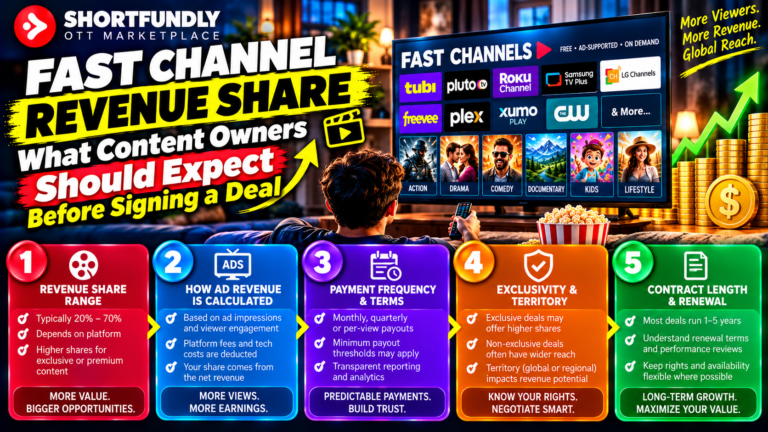
A distribution offer should be assessed by its complete commercial terms, not just the headline percentage.
Before agreeing, clarify:
- Whether the deal is a fixed license fee, revenue share, minimum guarantee, or combination
- How advertising revenue is calculated
- Which expenses can be deducted
- How revenue is allocated between the platform, distributor, and rights holder
- Payment frequency and minimum payout thresholds
- Reporting access and audit rights
- Territory, language, and platform scope
- Exclusivity and competing distribution restrictions
- Agreement length, renewal, and termination
- Content removal and post-termination obligations
A high revenue-share percentage may not result in the highest earnings if the platform has limited reach or little relevant advertising demand. Compare the full offer, including reporting quality, distribution reach, and contract flexibility.
Step 10: Track Performance and Improve Your Strategy
After your content goes live, use available reports to understand its performance.
Monitor metrics such as:
- Total views and viewing hours
- Average watch time
- Audience retention
- Monetized ad impressions
- Effective revenue per thousand impressions
- Revenue by territory and title
- Repeat viewing, where available
- Completion rates and audience drop-off points
Use this information to refine your catalogue and partner strategy. If a particular genre consistently attracts viewers, consider pitching more titles in that category. If one territory performs well, ask whether additional language versions or related titles could be suitable.
Be careful when comparing platforms. Definitions of views, ad impressions, watch time, and net revenue may differ. Compare like-for-like metrics and use the same reporting periods wherever possible.
How to Increase Your FAST and AVOD Monetization Potential
Distribution can make your content available, but long-term performance also depends on quality, relevance, and audience engagement.
Organize Your Catalogue Into Clear Collections
Group content by genre, language, theme, or audience. A structured catalogue can help buyers assess programming potential more quickly.
Examples include regional cinema collections, independent thrillers, travel documentaries, short-film collections, and family-friendly entertainment.
Localize Content for Relevant Markets
Subtitles, dubbed versions, and accurate localized metadata may help make a title accessible to more viewers. However, localization costs should be balanced against rights availability, audience demand, and partner interest.
Maintain a Consistent Supply of Content
For channel operators, a reliable content pipeline helps maintain programming schedules. For rights holders, a larger catalogue can provide more pitching opportunities, provided each title meets the partner’s standards.
Never sacrifice content quality just to increase volume.
Protect Your Content and Keep Records
Maintain organized copies of masters, artwork, contracts, cue sheets, and licensing documents. Use secure screeners when pitching and keep a record of where each title has been licensed.
A rights-tracking system reduces the risk of double licensing, missed renewals, and disputes over distribution windows.
Promote Your Work Where Appropriate
Use trailers, social media, filmmaker interviews, press coverage, and community engagement to support audience discovery where the platform and contract permit it. Confirm that promotional activities comply with platform rules and do not conflict with exclusive marketing commitments.
Promotion may improve awareness, but it cannot guarantee a particular number of streams or advertising earnings.
Common Mistakes to Avoid
Content owners should watch out for these common problems:
- Assuming every view generates advertising revenue: Only eligible, monetized ad activity may contribute to ad earnings.
- Confusing OTT distribution with FAST placement: A general streaming release does not guarantee placement on a linear FAST channel.
- Ignoring rights restrictions: Missing music, territory, or platform rights can prevent licensing.
- Sending incomplete materials: Missing masters, artwork, subtitles, or metadata can slow delivery.
- Accepting unclear revenue terms: Always understand deductions, reporting, and payment conditions.
- Focusing only on revenue-share percentages: Audience fit, distribution reach, and actual monetization matter too.
- Treating estimates as guarantees: Advertising rates and viewer demand can change over time.
- Signing broad exclusivity without a plan: Make sure the scope and duration align with your long-term distribution strategy.
How Shortfundly Distribution Fits Into Your Content Strategy
Shortfundly Distribution is an option content owners can consider when exploring OTT distribution for eligible films and other supported video formats. Its official distribution portal describes a submission process that includes content details, applicable requirements and fees, agreement steps, review, and distribution through currently available partners.
For independent filmmakers, producers, and creators, an OTT distribution service can provide another route to explore the commercial life of a finished project. Before submitting, prepare your rights documentation, video masters, metadata, subtitles, and promotional materials, and review the current terms that apply to your content.
It is important to understand the difference between OTT distribution and confirmed FAST or AVOD placement. Shortfundly’s general distribution offering should not be interpreted as a guarantee that a title will be accepted by a FAST channel or earn advertising revenue. Ask the team whether your content is eligible for any specific FAST or AVOD opportunity, which platforms or partners are currently available, and what payment model applies.
Review the applicable fee, agreement, rights scope, revenue model, payout conditions, and approval process before proceeding. Distribution availability and earnings depend on eligibility, licensing, partner availability, and the final agreement.
FAST and AVOD Monetization Checklist
Use this checklist before pitching your catalogue:
- Confirm ownership and distribution rights.
- Check FAST, AVOD, territory, language, and exclusivity rights.
- Organize your content library and title metadata.
- Prepare high-quality video and audio masters.
- Complete subtitles, captions, artwork, and promotional assets.
- Research partners that accept your type of content.
- Prepare a professional pitch and secure screeners.
- Compare license fees, revenue sharing, and deductions.
- Confirm reporting access, payment terms, and audit provisions.
- Track performance after release and refine your strategy.
Frequently Asked Questions
1. How do FAST channels make money?
FAST channels primarily generate revenue through advertising shown during their scheduled programming. Depending on the business arrangement, they may also have other commercial revenue sources. Advertising income depends on audience activity, monetized impressions, advertiser demand, and operational costs.
2. Can independent filmmakers earn money from FAST channels?
Yes, independent filmmakers may be able to earn through content licensing or revenue-sharing arrangements if a channel or distribution partner accepts their films. Acceptance, placement, and earnings are not guaranteed. Rights, content quality, audience fit, and contract terms all matter.
3. Is AVOD the same as FAST?
No. Both models provide free, ad-supported viewing, but AVOD usually offers on-demand playback, while FAST delivers scheduled, linear programming. Some streaming services offer both.
4. How much can a content owner earn from AVOD?
There is no universal rate. Earnings depend on monetized impressions, effective advertising rates, audience geography, ad demand, platform deductions, and the revenue-sharing agreement. Any revenue estimate should be treated as illustrative until actual performance data is available.
5. Do I need a large content library to approach a FAST channel?
Not always. Some partners consider individual titles, while others prefer a substantial catalogue or a consistent supply of programming. Review each partner’s submission criteria before pitching.
6. What content performs well on FAST channels?
It depends on the channel’s audience and programming strategy. Genre films, classic movies, documentaries, reality content, regional entertainment, and television series may be suitable for different channels. No genre guarantees success.
7. What is the difference between licensing and revenue sharing?
A license fee is an agreed payment for specified rights, subject to the contract. Revenue sharing allocates a portion of defined receipts to the rights holder or distributor. Some agreements combine the two. Always clarify the payment calculation and any deductions.
8. Can I distribute the same film through multiple platforms?
Potentially, yes, if your rights and existing agreements allow it. Check exclusivity, territory, language, and release-window restrictions before licensing the same title to multiple services.
9. Can Shortfundly Distribution guarantee FAST channel placement?
Do not assume that general OTT distribution guarantees FAST placement. Confirm whether a specific FAST or AVOD opportunity is available for your title, what review criteria apply, and what commercial terms would govern the release.
10. What should I check before signing a FAST or AVOD deal?
Review the licensed rights, territories, duration, exclusivity, revenue calculation, deductions, reporting, payment schedule, audit rights, termination conditions, and content removal process. Seek qualified legal advice when the contract is complex or grants broad rights.
Monetize Your Content on FAST Channels With AVOD Revenue
Discover how to monetize your movies, short films, documentaries, and web series through FAST channels and AVOD streaming platforms. Free Ad-Supported Streaming TV (FAST) and Advertising-Based Video on Demand (AVOD) offer content owners opportunities to reach viewers without requiring them to pay a subscription fee for every title.
Learn how advertising revenue works, how to prepare your content library for distribution, find suitable streaming partners, and evaluate licensing and revenue-sharing agreements. With the right distribution strategy, filmmakers, independent producers, and content creators can explore new ways to extend the commercial life of their video libraries.
If you are looking to explore OTT distribution opportunities for your eligible content, visit Shortfundly Distribution. Review the current submission requirements, applicable fees, and distribution terms to determine whether the service suits your project.
Note: General OTT distribution does not guarantee placement on a FAST channel or specific AVOD advertising earnings. Availability and monetization depend on content eligibility, distribution partners, rights, and the applicable agreement.
Also read: https://blog.shortfundly.com/ott/fast-channel-film-library/
Conclusion
Monetizing content on FAST channels with AVOD revenue can give filmmakers, studios, and video owners additional ways to reach audiences and generate value from their catalogues. Success starts with clear rights, professional technical delivery, accurate metadata, relevant distribution partners, and a realistic understanding of advertising economics.
Treat every distribution offer as a business decision. Compare the full commercial terms, confirm whether the opportunity is genuinely FAST or AVOD, and track actual performance instead of relying on promised earnings. Explore distribution options such as Shortfundly Distribution where relevant, while verifying platform availability and the agreement that applies to your content.
With a prepared catalogue and a thoughtful distribution strategy, you can make more informed decisions about how to position your content for ad-supported streaming opportunities.