Table of Contents
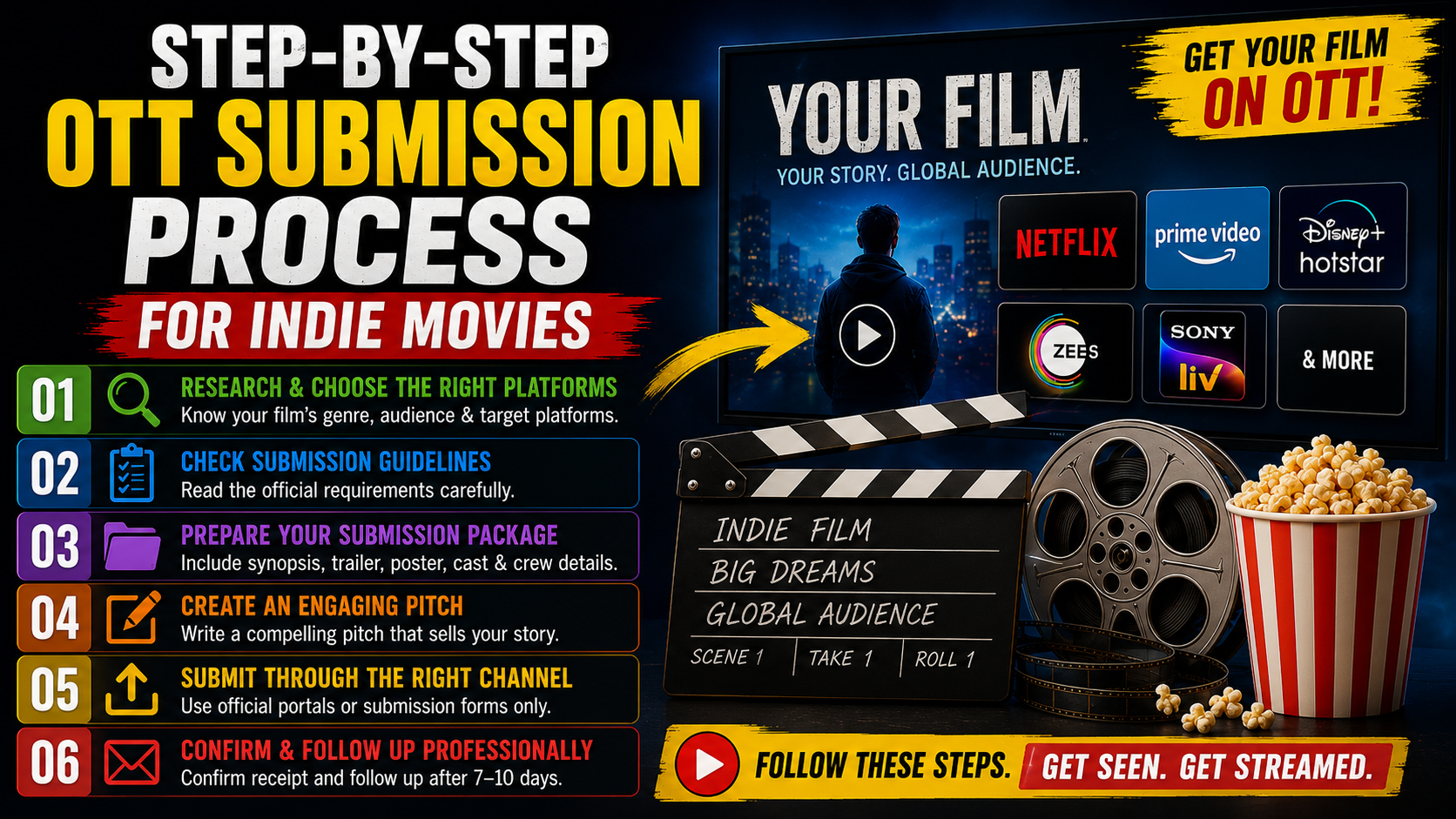
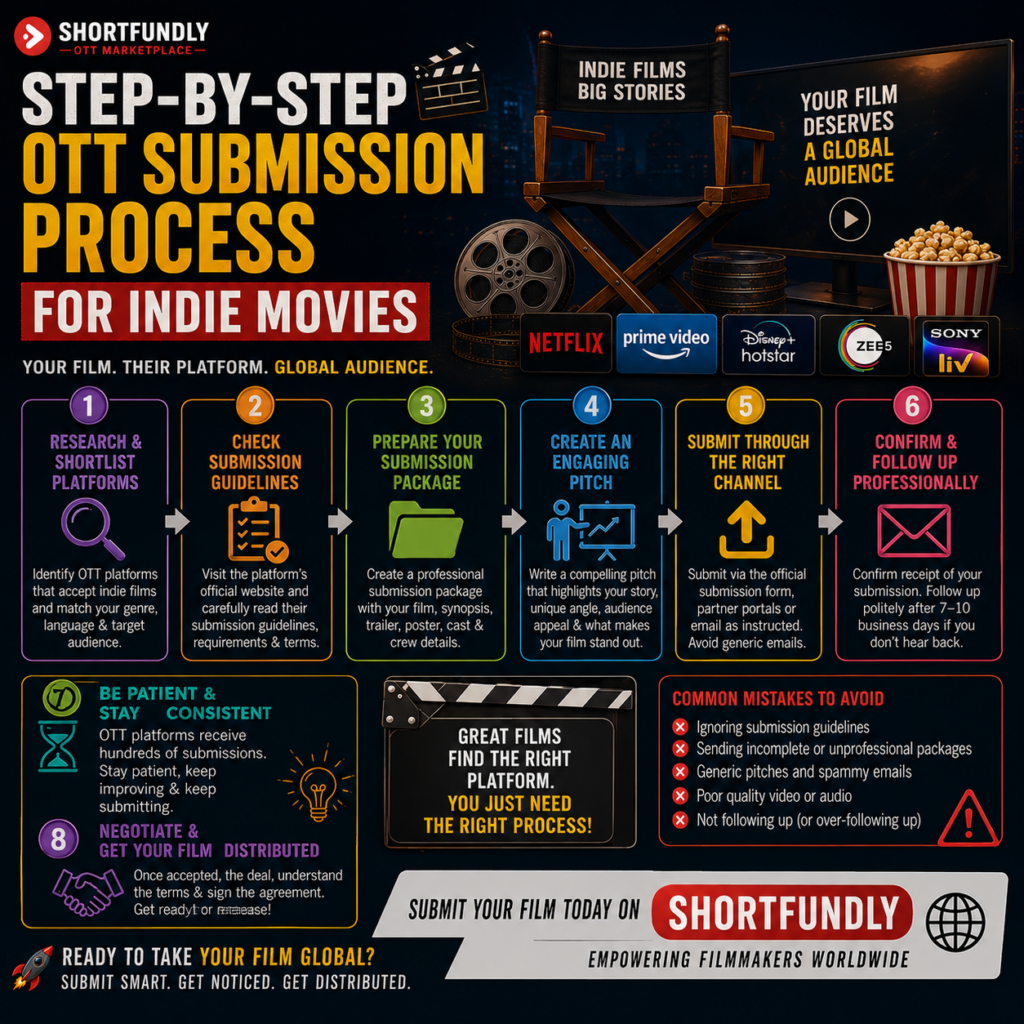
Step-by-Step OTT Submission Process for Indie Movies
The global OTT market is growing faster than any other distribution channel in film history. For indie filmmakers, learning the correct OTT submission process is the key to maximizing reach, visibility, and revenue. This guide walks you through every step — from finalizing your movie to submitting, negotiating, and successfully distributing it on major platforms.
Understanding the OTT Submission Landscape
OTT platforms have become the go-to marketplace for indie movies because they eliminate theatrical barriers, reduce cost, and allow independent creators to reach global audiences. But the competition is fierce — platforms receive thousands of films monthly.
To get accepted, filmmakers must follow a structured, professional submission system.
Why Indie Filmmakers Must Master the OTT Ecosystem
Indie movies succeed on OTT because:
- OTT platforms rely heavily on niche, fresh content
- Viewers are shifting from big-budget films to real, relatable stories
- Global reach increases chances of monetization
- Platforms run on algorithmic discovery — great for low-marketing-budget films
Mastering OTT submissions gives filmmakers long-term earning opportunities and increased brand presence.
Step 1: Finalizing Your Film for OTT Delivery
Before submitting, your film must meet OTT-quality technical standards.
Technical Specifications Required by OTT Platforms
Most OTTs require:
- Resolution: 1080p or 4K
- Format: MOV or MP4
- Codec: ProRes 422 / H.264 / H.265
- Frame Rate: Constant, not variable
- Color Space: Rec. 709
Audio, Video & Subtitle Compliance
- Audio Mix: 5.1 Surround + Stereo
- Subtitle Formats: SRT, SCC, TTML
- Dubbing Requirements: If your target platform needs it
Ensuring technical compliance boosts acceptance chances dramatically.
Step 2: Preparing Essential OTT Submission Assets
Your submission must include complete marketing assets.
Poster, Key Art, Trailer & Metadata
OTT platforms require:
- 1:1, 3:4, and 16:9 posters
- Trailer (30–90 seconds)
- Title, logline, synopsis
- Genres, IMDb link & cast list
- Language & country details
Legal Documents & Clearances
Mandatory documents:
- Copyright certificate
- Music license agreement
- Actor release forms
- Location permissions
- Distribution rights ownership
Without proper documentation, OTTs reject instantly.
Step 3: Choosing the Right OTT Distribution Path
Aggregators vs. Direct Submission
Direct submission works ONLY for platforms that accept open submissions.
Most major OTTs — Netflix, Amazon Prime, Disney+ — do NOT.
Aggregators solve this problem by providing:
- Delivery compliance
- Metadata preparation
- Direct platform partnerships
- Global distribution access
- Revenue reporting
Why Shortfundly Distribution Is a Strong Option
Shortfundly offers indie filmmakers a streamlined submission route.
Submit your film here:
👉 https://distribution.shortfundly.com/
They provide:
- Direct OTT partnerships
- Asset preparation
- Technical QC
- Faster approval chances
Step 4: How to Submit Your Indie Film Successfully
Platform-by-Platform Submission Methods
- Amazon Prime Video Direct → Limited territories
- YouTube Movies → Rent/Purchase model
- Shortfundly Distribution → Multi-OTT delivery
- Filmhub → Revenue-share aggregator
- Reelmonk, MX Player, Hotstar (via partners)
Avoiding Common Submission Mistakes
- Missing subtitles
- Low-quality poster
- Incorrect aspect ratio
- No copyright proof
- Unprofessional synopsis
- Duplicate content issues
Step 5: How to Negotiate OTT Deals Like a Pro
Revenue Models Explained
- AVOD: Ads generate revenue
- SVOD: Subscription-based payment
- TVOD: Pay-per-view model
- Hybrid: Combination of above
Knowing these models helps maximize profit while negotiating contracts.
Step 6: Marketing Your Film Post-Submission
Using Social Media & Micro-Influencers
Promote your OTT release using:
- Instagram reels
- TikTok edits
- YouTube shorts
- LinkedIn announcements
- Influencer tie-ups
The more visibility your film gains, the longer it stays recommended by algorithm-based platforms.
Step 7: Tracking Performance & Audience Metrics
Monitor:
- Watch time
- Viewer demographics
- Completion rate
- Search keywords
- Trending regions
Analyzing these metrics helps improve future OTT releases.
Also read: https://blog.shortfundly.com/ott/ott-distribution-trends-2026/
FAQs
1. What is the most important step in OTT submission?
Technical compliance and proper metadata matter the most.
2. Can first-time filmmakers get accepted on OTT platforms?
Yes, if you follow a professional submission process.
3. Do OTT platforms pay indie filmmakers well?
Payments vary, but AVOD and SVOD models offer consistent revenue.
4. Should I use an aggregator for OTT submission?
Yes — aggregators significantly increase acceptance chances.
5. Is Shortfundly Distribution trustworthy?
Yes, it’s a reliable distribution platform for indie creators.
6. How long does OTT approval take?
Anywhere between 2–8 weeks depending on the platform.
Conclusion
Submitting your indie film to OTT platforms isn’t complicated — it just requires structure, preparation, and the right partners. By following this step-by-step guide, you significantly increase your chances of getting accepted and monetizing your creative work globally.
To simplify the entire process, use Shortfundly Distribution:
👉 https://distribution.shortfundly.com/