Table of Contents
The independent filmmaking industry has never had more opportunities than it does today. Streaming platforms, digital distribution, and global audiences have created new revenue streams that were once available only to major studios. Yet despite these opportunities, many independent filmmakers struggle to monetize their work because of avoidable mistakes made during production, post-production, and distribution.
Creating a compelling film is only one part of the journey. Success also depends on strategic planning, professional packaging, distribution readiness, and understanding what OTT platforms expect from independent creators.
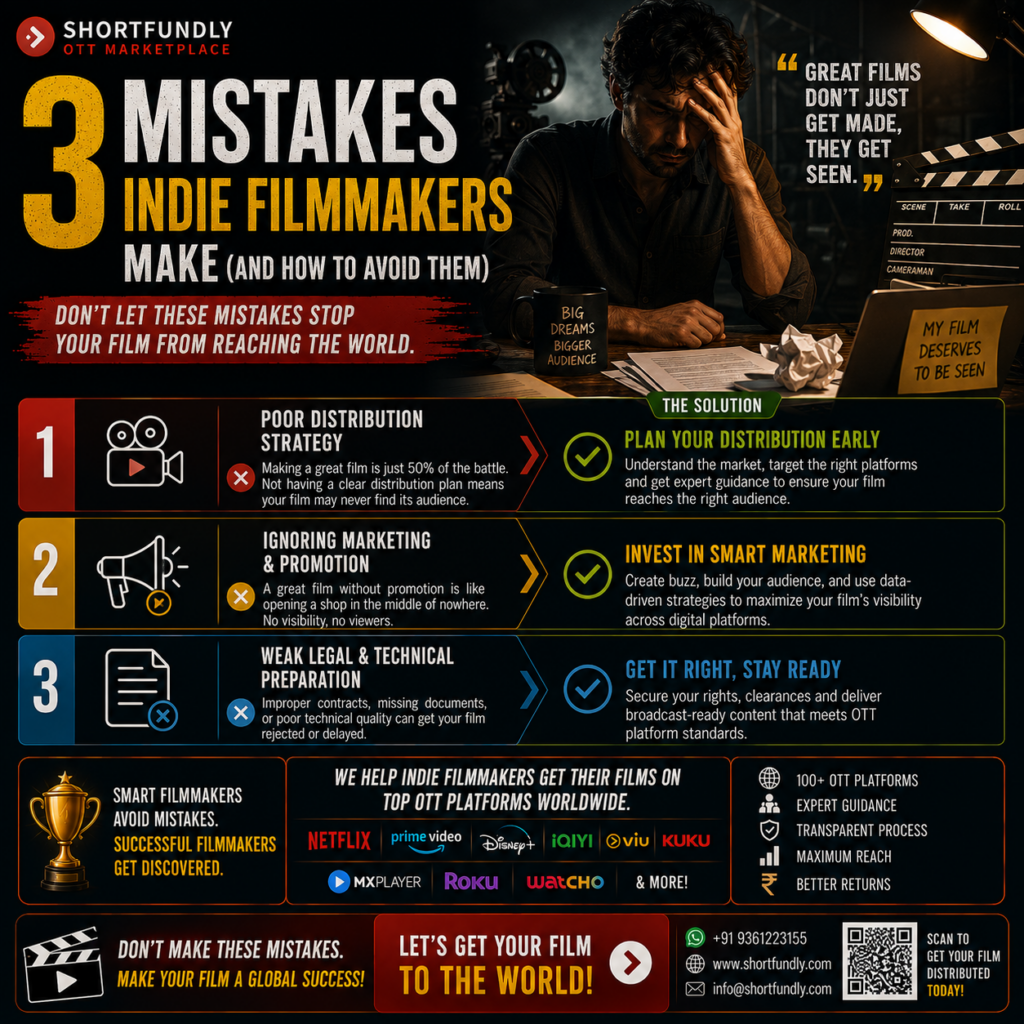
In this guide, we examine the three biggest mistakes indie filmmakers make, explain how these errors impact distribution opportunities, and outline practical strategies to improve your chances of securing licensing deals. We also explore how Shortfundly Distribution helps independent filmmakers prepare their projects for OTT platforms and international buyers.
Why Independent Filmmakers Need More Than a Great Film
Many first-time producers believe that a strong story alone guarantees success. While storytelling remains essential, today’s streaming landscape is highly competitive.
OTT platforms evaluate projects based on multiple criteria, including:
- Story quality
- Production standards
- Technical delivery
- Legal documentation
- Marketability
- Audience demand
- Distribution readiness
Ignoring any of these areas can significantly reduce licensing opportunities.
Mistake #1: Focusing Only on Production and Ignoring Distribution
One of the biggest mistakes independent filmmakers make is investing every available resource into production without planning how the finished film will reach audiences.
Many productions spend months developing scripts, hiring actors, scouting locations, and completing post-production. However, distribution is often treated as an afterthought.
Without a distribution strategy, even exceptional films may never secure meaningful commercial success.
Why Distribution Planning Matters
Distribution planning should begin before cameras start rolling.
A comprehensive strategy includes:
- Identifying target audiences
- Selecting appropriate OTT platforms
- Understanding buyer preferences
- Planning marketing campaigns
- Preparing delivery requirements
- Allocating budget for distribution
Planning early helps avoid expensive corrections later.
How to Avoid This Mistake
We recommend creating a distribution roadmap before production begins.
Key planning questions include:
- Which OTT platforms suit our content?
- Is the film aimed at regional or global audiences?
- Will we pursue exclusive licensing?
- Are subtitles or dubbing required?
- What marketing assets should we produce during filming?
These decisions influence both production and post-production.
Mistake #2: Delivering a Film That Isn’t OTT Ready
Many filmmakers assume exporting a high-resolution video file is sufficient.
Unfortunately, OTT platforms require much more.
A film may be artistically outstanding but still fail technical evaluation.
What OTT Buyers Expect
Professional streaming platforms require complete delivery packages.
Typical requirements include:
- High-quality master files
- Broadcast-safe audio
- Professional color grading
- Closed captions
- Subtitle files
- Trailer
- Poster artwork
- Key art
- Metadata
- Episode information (for series)
- Copyright documentation
Missing materials often delay or prevent acquisition.
Technical Quality Is Non-Negotiable
Streaming services maintain strict quality control.
Common rejection reasons include:
- Audio distortion
- Incorrect frame rates
- Poor color grading
- Compression artifacts
- Missing subtitle files
- Incorrect aspect ratios
Professional quality assurance before submission dramatically improves approval rates.
Metadata Is More Important Than Most Creators Realize
Metadata determines how content is categorized and discovered.
Effective metadata includes:
- Film title
- Genre
- Keywords
- Cast
- Director
- Synopsis
- Runtime
- Country
- Language
- Release year
Well-prepared metadata helps acquisition teams evaluate projects more efficiently.
Mistake #3: Trying to Handle Distribution Alone
Many independent filmmakers spend years creating a project but attempt to manage OTT distribution without professional guidance.
This often results in:
- Rejected submissions
- Missed licensing opportunities
- Delayed negotiations
- Technical delivery issues
- Legal complications
Distribution has become a specialized discipline requiring both technical and commercial expertise.
Why Professional Distribution Partners Add Value
Experienced distribution companies understand:
- Platform requirements
- Delivery specifications
- Licensing structures
- Market demand
- Buyer preferences
- International opportunities
Rather than sending generic submissions, professional distributors prepare content according to industry expectations.
How Shortfundly Distribution Helps Independent Filmmakers
Independent creators looking to reach OTT platforms can benefit from working with Shortfundly Distribution, a dedicated distribution service focused on helping filmmakers prepare and position their content for digital streaming opportunities.
Shortfundly Distribution assists with:
- OTT distribution strategy
- Content evaluation
- Distribution packaging
- Metadata preparation
- Technical compliance
- Subtitle coordination
- Licensing support
- International content submission
- Platform matchmaking
Instead of navigating the process alone, filmmakers receive guidance throughout the distribution journey, helping them present professionally packaged content to OTT buyers.
Learn more about their services here:
https://distribution.shortfundly.com
Additional Mistakes That Limit Distribution Success
Although these three mistakes are the most common, several other issues frequently reduce a project’s commercial potential.
Ignoring Audience Research
Every successful film has a clearly defined audience.
Before production begins, identify:
- Age demographics
- Viewing preferences
- Geographic markets
- Language requirements
- Preferred streaming platforms
Audience-focused projects are generally easier to market.
Poor Marketing Preparation
Many filmmakers only begin marketing after completing production.
Effective marketing starts much earlier.
Create:
- Behind-the-scenes content
- Production diaries
- Social media campaigns
- Character reveals
- Teaser trailers
Building anticipation before release increases visibility.
Weak Poster Design
Poster artwork often creates the first impression.
Professional posters should include:
- Strong visual hierarchy
- Readable typography
- Genre cues
- High-resolution imagery
- Consistent branding
Quality artwork increases click-through rates on streaming platforms.
Neglecting International Audiences
Streaming platforms serve viewers worldwide.
Adding subtitles in multiple languages expands licensing opportunities and makes content accessible to a much broader audience.
Localization is one of the highest-return investments independent filmmakers can make.
Preparing Your Film for OTT Success
Professional preparation involves several stages.
Production
- Strong screenplay
- Experienced crew
- Professional cinematography
- Clean production audio
Post-Production
- Color grading
- Sound mixing
- Master export
- Quality control
Distribution Package
Prepare:
- Master files
- Posters
- Trailer
- Metadata
- Stills
- Subtitles
- Legal documents
Marketing Assets
Develop:
- Press kit
- Social media content
- Director biography
- Cast profiles
- Promotional graphics
Legal Readiness Matters
Before licensing, filmmakers should organize:
- Copyright registration
- Music licenses
- Talent agreements
- Location releases
- Chain of title documentation
- Trademark clearances
Incomplete legal documentation is one of the leading causes of delayed distribution.
Choosing the Right OTT Distribution Strategy
Not every project requires the same approach.
Common options include:
Exclusive Licensing
Higher licensing fees with one platform.
Non-Exclusive Licensing
Multiple platforms maximize exposure.
Revenue Sharing
Long-term earning potential based on viewership.
Regional Licensing
Excellent for language-specific productions.
Selecting the right model depends on your goals, audience, and content type.
Future Trends for Independent Filmmakers
The OTT industry continues evolving rapidly.
Emerging trends include:
- Vertical storytelling
- AI-assisted recommendations
- Regional language growth
- Mobile-first entertainment
- Interactive content
- Global licensing opportunities
Filmmakers who adapt early will remain competitive.
Final Thoughts
Independent filmmaking has never offered greater opportunities, but success depends on much more than creativity. Avoiding the three most common mistakes—neglecting distribution planning, failing to prepare OTT-ready delivery materials, and attempting to manage licensing without professional support—can dramatically improve a project’s commercial potential.
By combining exceptional storytelling with professional preparation, strategic marketing, and expert distribution guidance, filmmakers position themselves for stronger licensing opportunities and wider global reach. Services such as Shortfundly Distribution simplify this journey by helping creators package their films professionally, meet OTT technical standards, and connect with streaming platforms actively seeking quality independent content.
Also read: https://blog.shortfundly.com/ott/distribution-vertical-drama/
Conclusion
Every successful independent film follows a clear path from production to audience. Understanding how OTT distribution works, preparing complete delivery packages, and partnering with experienced professionals can make the difference between an overlooked project and a globally streamed success. As the streaming industry continues to grow, filmmakers who invest in both creative excellence and strategic distribution will be best positioned to secure licensing deals, build sustainable careers, and reach audiences around the world.