Table of Contents
Introduction
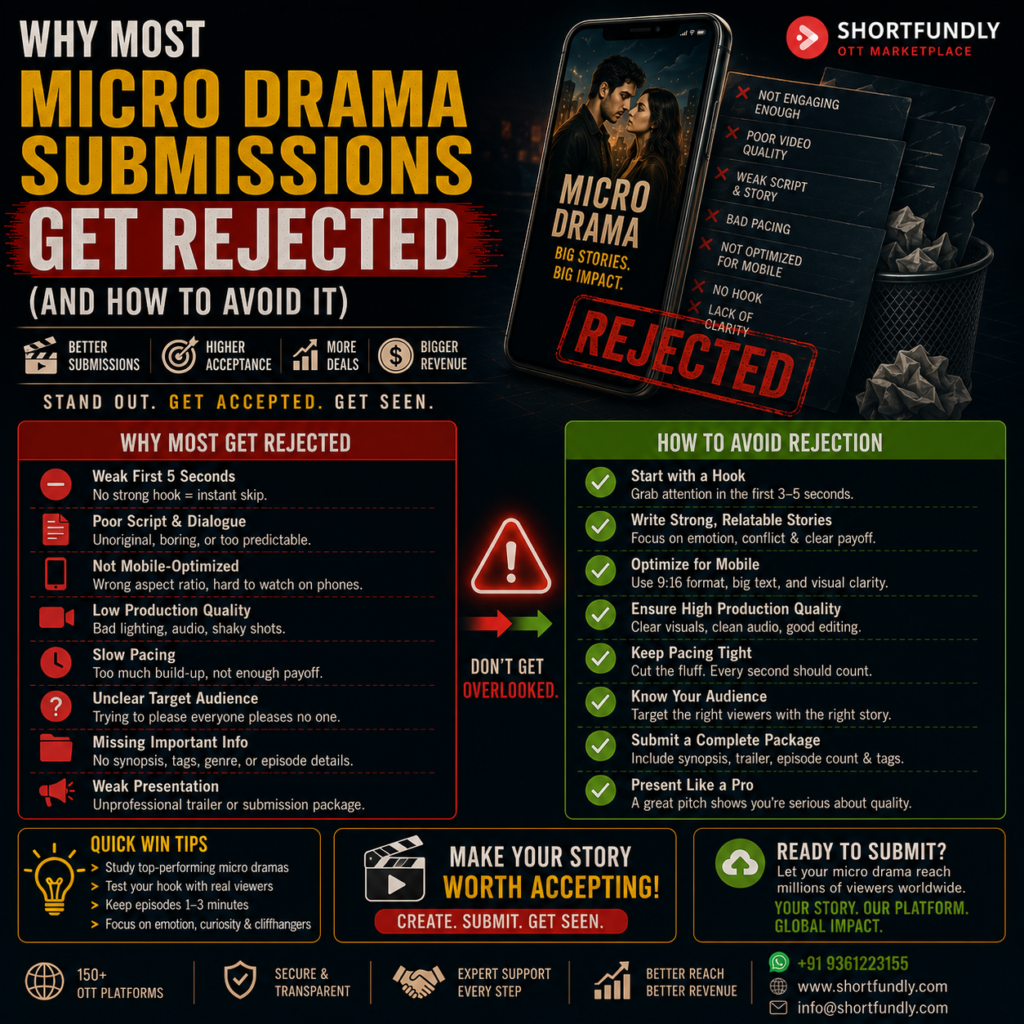
The global demand for micro dramas and vertical short-form series is growing faster than ever. OTT platforms, mobile streaming apps, and regional entertainment services are actively searching for engaging short-form content. However, despite this opportunity, thousands of creators receive rejection emails every month.
Why does this happen?
The truth is simple. Most creators focus entirely on producing a great story but overlook the business, technical, and distribution requirements that OTT platforms expect. As a result, even excellent productions fail to secure distribution deals.
Fortunately, these mistakes are avoidable. With the right preparation and an experienced distribution partner like ShortFundly Distribution (https://distribution.shortfundly.com/), creators can significantly improve their chances of getting accepted by OTT buyers across India and international markets.
In this comprehensive guide, we explain the biggest reasons micro drama submissions get rejected and provide practical solutions that help independent filmmakers achieve successful OTT distribution.
The Growing Demand for Micro Dramas
Micro dramas have transformed digital entertainment. Modern audiences consume stories during short breaks, commutes, and leisure time. Vertical storytelling, concise episodes, and mobile-first production have created entirely new viewing habits.
Streaming platforms increasingly invest in:
- Romantic micro dramas
- Suspense thrillers
- Family dramas
- Comedy series
- Youth entertainment
- Inspirational stories
- Regional-language productions
However, increased demand also means stronger competition. Platforms receive hundreds of submissions every week, making quality standards higher than ever.
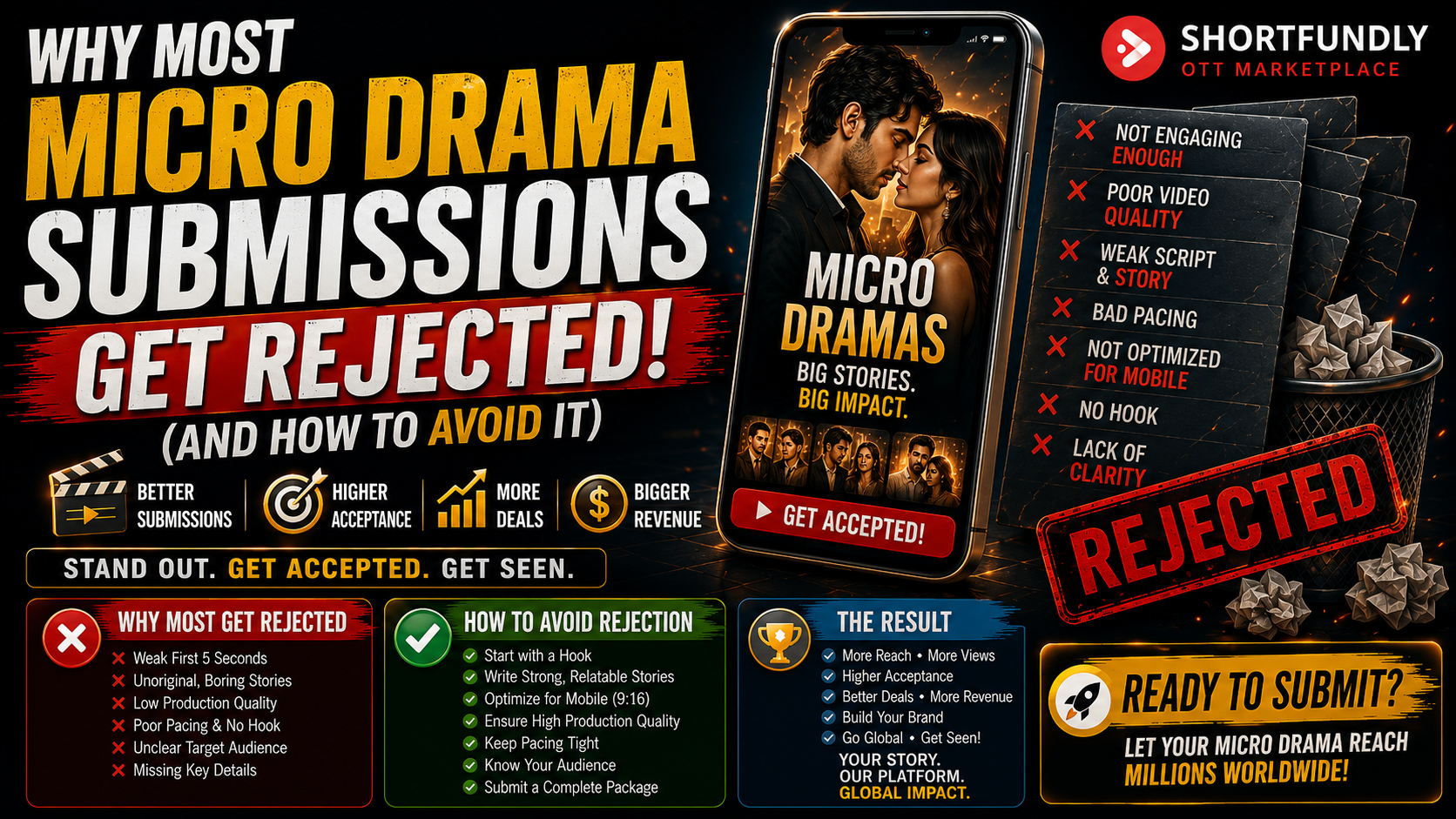
Why OTT Platforms Reject Most Micro Drama Submissions
Many creators assume their project was rejected because of budget limitations. In reality, budget is rarely the primary reason.
Most OTT platforms evaluate submissions using a detailed checklist that includes storytelling, technical quality, legal compliance, audience appeal, and commercial potential.
If your submission fails in several categories, rejection becomes almost inevitable.
Mistake #1: Weak Storytelling
No amount of expensive cinematography can compensate for poor storytelling.
OTT acquisition teams immediately look for:
- Strong opening scenes
- Emotional engagement
- Memorable characters
- Clear conflict
- Consistent pacing
- Satisfying endings
Many creators spend months perfecting visuals while neglecting the screenplay.
A compelling script remains the single biggest factor influencing acceptance.
Mistake #2: Poor Episode Structure
Micro dramas require different pacing than traditional television.
Common mistakes include:
- Slow introductions
- Long dialogue scenes
- Unnecessary exposition
- Weak cliffhangers
- Inconsistent episode lengths
Successful micro dramas usually feature:
- Immediate hooks
- Fast-moving narratives
- Frequent emotional twists
- Strong episode endings
Every episode should encourage viewers to watch the next one.
Mistake #3: Low Production Quality
OTT platforms expect professional standards regardless of production budget.
Common technical problems include:
- Poor lighting
- Shaky camera work
- Weak sound recording
- Incorrect framing
- Low-resolution exports
- Visible editing mistakes
Professional production increases viewer retention and demonstrates that the creators understand industry expectations.
Mistake #4: Poor Audio Quality
Many submissions fail because of audio—not video.
Problems include:
- Background noise
- Echo
- Distorted dialogue
- Uneven volume
- Poor music mixing
Professional audio instantly improves perceived production value.
Investing in proper sound design often delivers better results than buying an expensive camera.
Mistake #5: Missing Legal Documents
One of the most overlooked reasons for rejection is incomplete paperwork.
OTT platforms require documentation proving ownership of every element used in the production.
Essential documents include:
- Copyright ownership
- Music licenses
- Cast agreements
- Crew contracts
- Location permissions
- Trademark clearances
- Script ownership
Without complete legal documentation, platforms cannot acquire your content.
Mistake #6: Incorrect Technical Deliverables
Even outstanding micro dramas may be rejected because creators submit incorrect files.
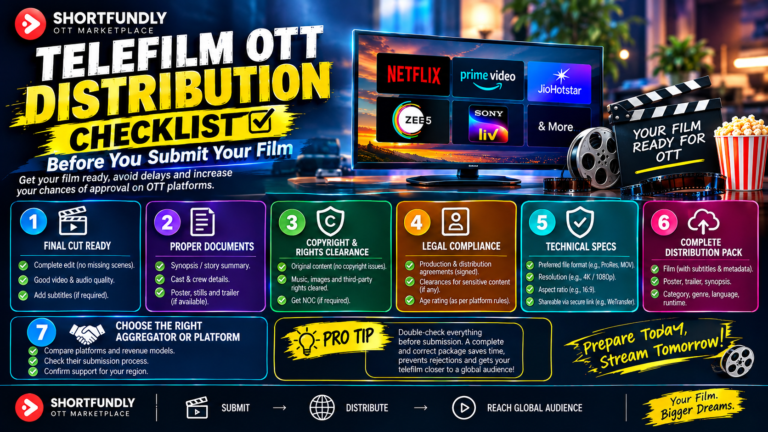
Typical deliverables include:
| Requirement | Expected Standard |
|---|---|
| Resolution | 4K or Full HD |
| Codec | ProRes or approved formats |
| Audio | Stereo and separate tracks |
| Captions | Multiple languages |
| Poster Artwork | High resolution |
| Metadata | Complete information |
| Synopsis | Professional format |
Professional distributors help creators prepare these materials before submission.
Mistake #7: Targeting the Wrong Platform
Every OTT platform serves different audiences.
For example:
- Youth platforms prefer fast-paced stories.
- Family platforms prefer emotional dramas.
- Regional OTT services prioritize local-language productions.
- International buyers seek globally relatable stories.
Submitting the same project everywhere rarely succeeds.
Successful creators research platform preferences before pitching.
Mistake #8: Weak Marketing Potential
OTT buyers don’t simply purchase content.
They invest in titles capable of attracting viewers.
Acquisition teams examine:
- Social media presence
- Trailer quality
- Poster design
- Promotional materials
- Audience engagement
- Festival recognition
Strong marketing assets increase buyer confidence.
Mistake #9: No Clear Target Audience
Many creators claim:
“Our series is for everyone.”
Unfortunately, that usually means it appeals strongly to no one.
Successful submissions identify:
- Age group
- Preferred language
- Viewing habits
- Geographic market
- Genre interests
Specific audience targeting helps platforms market the content effectively.
Mistake #10: Ignoring Distribution Experts
Independent creators often submit directly to OTT platforms without understanding acquisition requirements.
Professional distribution companies bridge this gap.
Experienced distributors understand:
- Buyer expectations
- Platform specifications
- Negotiation strategies
- Delivery requirements
- Revenue structures
Working with an established distributor dramatically improves submission quality.
Why ShortFundly Distribution Improves Acceptance Rates
Among emerging OTT distribution partners, ShortFundly Distribution has become a valuable resource for independent filmmakers and micro drama creators.
Their distribution services include:
- OTT platform submissions
- Content evaluation
- Metadata preparation
- Deliverables management
- Technical quality review
- Pitch preparation
- Rights management
- Distribution strategy
Creators can learn more at:
https://distribution.shortfundly.com
Instead of submitting incomplete packages, creators receive professional guidance before reaching OTT buyers.
How to Prepare a Winning Submission
Professional submissions typically include:
Complete Pitch Deck
Include:
- Logline
- Synopsis
- Genre
- Audience
- Episode breakdown
- Creator profile
- Production details
High-Quality Trailer
Keep trailers:
- Under two minutes
- Fast-paced
- Emotional
- Visually polished
Professional Poster
Your artwork should immediately communicate:
- Genre
- Tone
- Production quality
Accurate Metadata
Include:
- Runtime
- Language
- Subtitles
- Cast
- Crew
- Keywords
- Release year
Common Submission Checklist
Before approaching any OTT platform, verify that you have:
- Professional master files
- Subtitle files
- Closed captions
- Music licenses
- Copyright documents
- Promotional images
- Episode descriptions
- Synopsis
- Trailer
- Poster
- Metadata
- Legal agreements
Missing even one critical item can delay or prevent acquisition.
Benefits of Working with an OTT Aggregator
Professional aggregators simplify the distribution process by:
- Reviewing technical quality
- Preparing required documentation
- Connecting creators with buyers
- Negotiating licensing agreements
- Managing content delivery
- Monitoring revenue reports
This allows creators to focus on filmmaking while experts handle business operations.
Also read: https://blog.shortfundly.com/ott/micro-drama-ott-acceptance/
Final Thoughts
Micro drama production is expanding rapidly, but competition continues to increase. Success depends on much more than producing entertaining stories. OTT platforms evaluate technical quality, legal readiness, commercial potential, audience targeting, and presentation before making acquisition decisions.
Fortunately, most rejection reasons are completely avoidable.
By investing in stronger storytelling, preparing professional deliverables, organizing legal documentation, and working with experienced distribution partners like ShortFundly Distribution (https://distribution.shortfundly.com/), creators dramatically improve their chances of securing valuable OTT licensing opportunities.
Instead of treating distribution as an afterthought, successful filmmakers make it part of the production process from the very beginning. That strategic approach not only reduces rejection rates but also maximizes revenue, expands audience reach, and creates long-term opportunities in the rapidly growing world of digital entertainment.