Table of Contents
Introduction
The entertainment industry has experienced a massive transformation over the past decade. Streaming platforms have become one of the primary ways audiences consume movies, documentaries, web series, and short films. As a result, OTT distribution has become an essential part of modern content release strategies.
For producers preparing to launch a film or series, understanding OTT distribution is critical. Questions about licensing, platform approval, content requirements, rights management, and revenue opportunities often arise during the distribution journey.
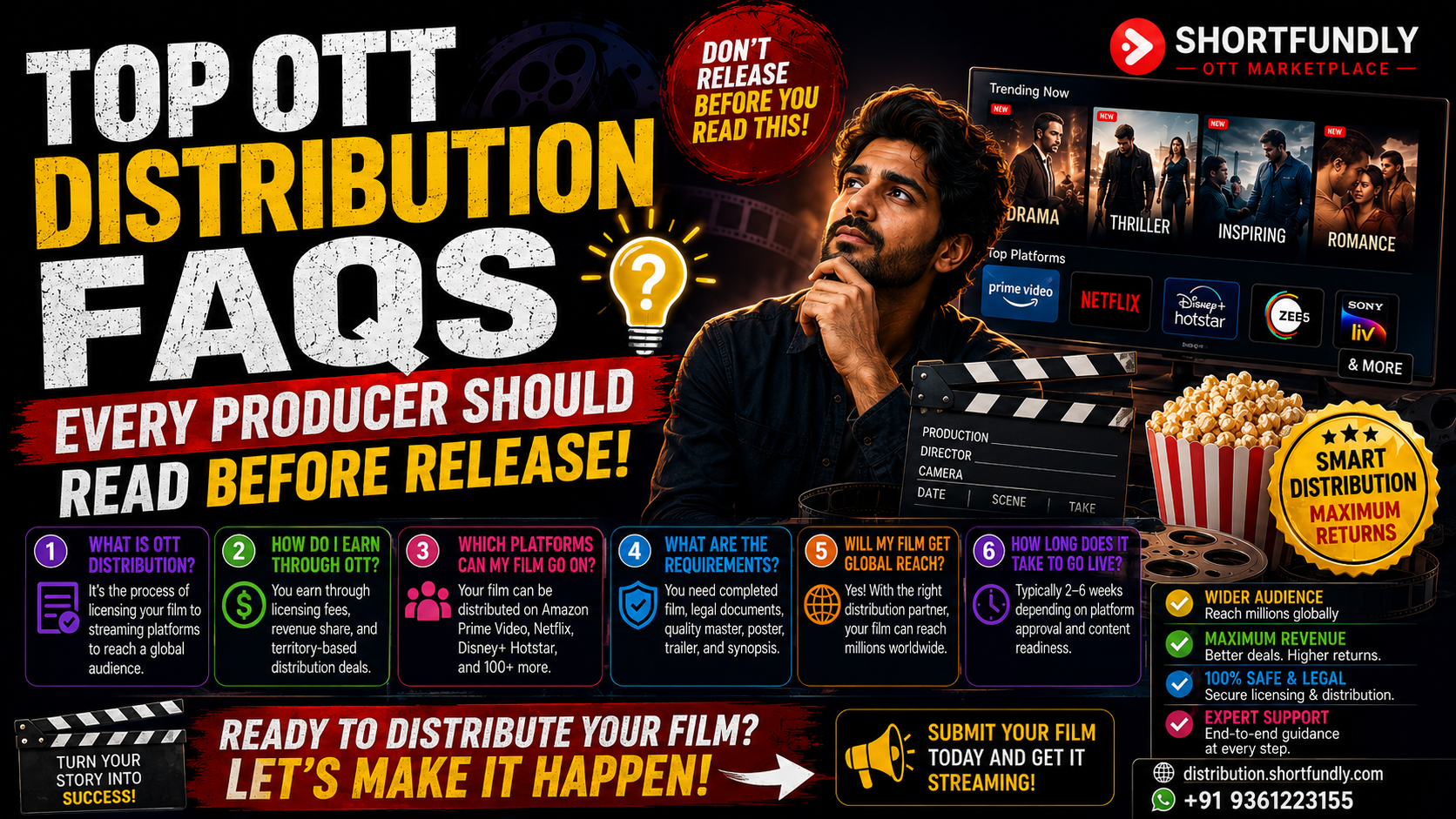
This comprehensive guide answers the Top OTT Distribution FAQs Every Producer Should Read Before Release, helping filmmakers and production companies navigate the streaming landscape with confidence.
Understanding OTT Distribution Before Release
Why OTT Distribution Matters Today
OTT (Over-the-Top) distribution allows content creators to deliver films and series directly to audiences through internet-based streaming platforms.
Benefits include:
- Global audience access
- Multiple monetization opportunities
- Reduced dependency on theatrical releases
- Long-term content visibility
- Scalable distribution models
Streaming platforms continue to invest heavily in original and licensed content, creating significant opportunities for producers.
How Streaming Has Changed Film Distribution
Traditional film distribution relied heavily on cinemas, television networks, and physical media.
Today, OTT platforms provide:
- Faster market access
- Global distribution capabilities
- Data-driven audience targeting
- Flexible release strategies
This shift has made OTT distribution an essential consideration for nearly every producer.
FAQ #1: What Is OTT Distribution?
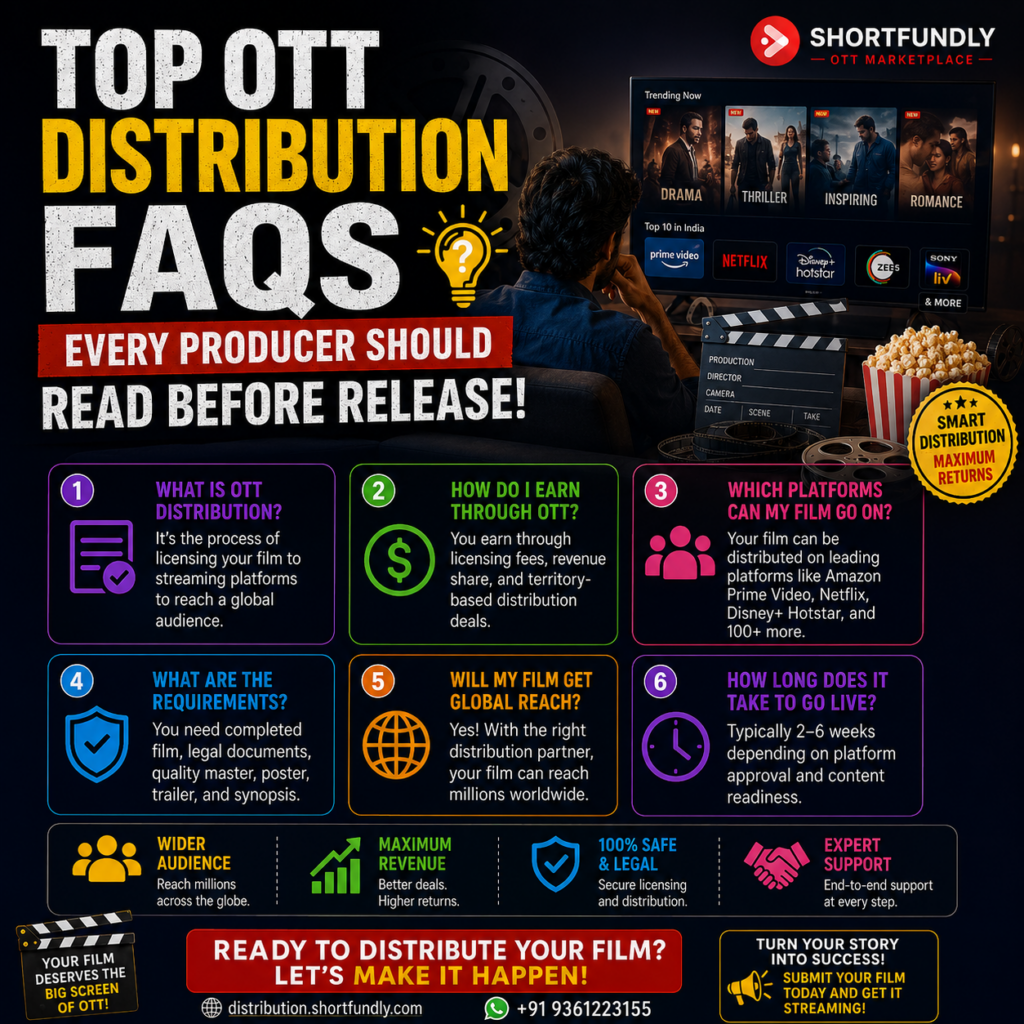
OTT distribution refers to delivering video content through internet-based streaming services rather than traditional broadcast television or cable networks.
Examples include:
- Subscription streaming services
- Ad-supported platforms
- Transactional video-on-demand services
- Regional OTT applications
OTT distribution enables content owners to reach audiences across multiple devices, including smartphones, smart TVs, tablets, and computers.
FAQ #2: How Do OTT Platforms Acquire Content?
OTT platforms acquire content through several methods.
These include:
Direct Acquisitions
Platforms may license content directly from producers.
Distribution Partners
Many OTT services work with approved aggregators and distributors who submit content on behalf of creators.
Content Marketplaces
Some acquisitions originate through industry markets, festivals, and content marketplaces.
Acquisition decisions typically consider:
- Content quality
- Audience demand
- Genre popularity
- Market trends
- Rights availability
FAQ #3: Can Independent Producers Get on OTT Platforms?
Yes.
Independent producers frequently secure OTT distribution opportunities.
Success depends on:
- Professional production quality
- Strong storytelling
- Proper technical standards
- Complete legal documentation
Many independent films, documentaries, and web series find success through strategic OTT partnerships.
FAQ #4: What Types of Content Are Accepted?
Most OTT platforms accept a wide range of content categories.
These include:
- Feature films
- Short films
- Documentaries
- Web series
- Animated content
- Educational programming
- Lifestyle shows
Acceptance depends on platform strategy and audience needs.
FAQ #5: What Technical Requirements Are Needed?
Technical compliance is one of the most important factors in OTT distribution.
Common requirements include:
| Requirement | Purpose |
|---|---|
| HD or 4K Master | Broadcast-quality playback |
| Professional Audio | Clear viewer experience |
| Closed Captions | Accessibility compliance |
| Subtitles | International reach |
| Artwork Assets | Platform marketing |
| Metadata | Content discoverability |
Failure to meet technical standards often results in rejection.
FAQ #6: How Long Does OTT Approval Take?
Approval timelines vary depending on:
- Platform review processes
- Content complexity
- Technical readiness
- Rights verification
Typical review periods range from several weeks to several months.
Proper preparation can significantly reduce delays.
FAQ #7: What Causes OTT Rejections?
Common rejection factors include:
Technical Problems
- Poor video quality
- Audio inconsistencies
- Incorrect formats
Legal Issues
- Unlicensed music
- Missing talent agreements
- Copyright concerns
Metadata Deficiencies
Incomplete metadata can negatively impact evaluation.
Limited Audience Appeal
Platforms assess market demand carefully before acquiring content.
FAQ #8: Do Producers Need a Distributor?
While direct submission may be possible in some cases, distributors provide significant advantages.
Benefits include:
- Industry relationships
- Technical guidance
- Submission support
- Licensing negotiations
- Rights management
Distribution partners can simplify the OTT acquisition process considerably.
FAQ #9: How Much Can Producers Earn from OTT Licensing?
Revenue varies based on:
- Content quality
- Genre demand
- Territory rights
- Exclusivity terms
- Audience potential
Some deals provide upfront licensing fees, while others use revenue-sharing structures.
High-performing content may generate multiple revenue streams across different territories.
FAQ #10: What Documents Are Required?
Producers should prepare comprehensive documentation.
Typical requirements include:
- Rights agreements
- Music licenses
- Talent releases
- Production contracts
- Chain of title documents
Organized documentation demonstrates professionalism and reduces acquisition risks.
FAQ #11: How Important Are Subtitles and Metadata?
Subtitles significantly improve accessibility and international reach.
Metadata helps platforms categorize and recommend content effectively.
Important metadata includes:
- Title
- Synopsis
- Genre
- Cast details
- Keywords
- Language information
Strong metadata improves discoverability and audience engagement.
FAQ #12: What Rights Must Be Cleared Before Submission?
Before OTT submission, producers should verify rights for:
- Music
- Visual assets
- Stock footage
- Interviews
- Logos
- Trademarks
Incomplete rights clearance can delay or prevent distribution opportunities.
FAQ #13: How Can Producers Increase Approval Chances?
Several strategies improve approval probability.
Focus on Technical Excellence
Ensure broadcast-quality deliverables.
Build Audience Awareness
Strong audience engagement signals market demand.
Create Professional Marketing Assets
Include:
- Posters
- Trailers
- Press kits
- Promotional images
Work With Experienced Distribution Partners
Professional support often improves submission quality and platform access.
FAQ #14: What Happens After OTT Approval?
Following approval, platforms typically conduct:
- Final quality checks
- Metadata verification
- Asset integration
- Release scheduling
Once live, content becomes available to platform audiences according to licensing agreements.
FAQ #15: How Can Producers Expand Global Reach?
Global expansion strategies include:
- Multi-language subtitles
- Regional licensing
- International marketing campaigns
- Festival participation
- Strategic distribution partnerships
A global approach maximizes audience reach and revenue potential.
Benefits of Using OTT Distribution Services
Professional OTT distribution services help producers navigate platform requirements more efficiently.
Advantages include:
- Faster submission workflows
- Technical compliance assistance
- Industry connections
- Licensing expertise
- Territory management
Independent producers often benefit from working with experienced distribution providers.
One platform supporting filmmakers and content creators is:
Shortfundly Distribution
Explore distribution opportunities here:
The platform supports films, documentaries, short films, and web series seeking OTT distribution opportunities.
Frequently Asked Questions
What is the easiest way to get a film on OTT platforms?
Working with an experienced OTT distributor often streamlines the submission and licensing process.
Are subtitles mandatory for OTT platforms?
Many platforms strongly recommend or require subtitles to improve accessibility and international reach.
Can short films be distributed through OTT platforms?
Yes. Many OTT services acquire short films, documentaries, and web series.
How much does OTT distribution cost?
Costs vary depending on the distributor, target platforms, and distribution scope.
Can regional-language films get OTT deals?
Absolutely. Regional content continues to experience growing demand globally.
Is festival recognition helpful for OTT acquisitions?
Yes. Awards and festival selections often improve acquisition attractiveness and licensing value.
Also read: https://blog.shortfundly.com/ott/tamil-movie-amazon-prime-guide/
Conclusion
OTT distribution has become one of the most important opportunities for producers seeking audience growth, content monetization, and global visibility. Understanding acquisition processes, technical requirements, licensing structures, rights management, and submission strategies can significantly improve distribution outcomes.
By preparing professional deliverables, clearing all necessary rights, building audience engagement, and leveraging experienced distribution support, producers can maximize their chances of securing valuable OTT opportunities.
As streaming platforms continue expanding worldwide, producers who understand the answers to these OTT distribution FAQs will be better equipped to navigate the digital content ecosystem successfully.
For producers exploring OTT opportunities, professional submission support through Shortfundly Distribution can help streamline the distribution journey and connect content with potential licensing partners.
Visit: Shortfundly Distribution