Table of Contents
What Is OTT Film Distribution in India?
OTT (Over-the-Top) film distribution refers to delivering movies directly to viewers through digital streaming platforms like Netflix, Amazon Prime Video, and Hotstar. Because India’s digital audience is exploding, OTT film distribution in India has become one of the biggest opportunities for new and independent filmmakers.
You’ll see the keyword OTT film distribution in India used naturally throughout this guide, especially here at the beginning to help you understand exactly what the term means.
OTT bypasses traditional cinema halls and TV networks. Instead, filmmakers can distribute their work to millions of screens across smartphones, laptops, tablets, and smart TVs. Since viewers today crave convenience, OTT has completely changed the way movies gain popularity and generate revenue.
OTT film distribution is becoming one of the fastest-growing opportunities for independent filmmakers, short film creators, and movie producers in India. With platforms like Netflix, Amazon Prime Video, Disney+ Hotstar, Sony LIV, ZEE5, and aha actively seeking fresh regional and independent content, understanding the right OTT distribution strategy is essential for maximizing reach and revenue. From content packaging and technical delivery to licensing and global distribution, filmmakers need professional guidance to improve OTT approval chances. If you are planning to release your movie on OTT platforms, explore Shortfundly Distribution for OTT distribution, film marketing, and worldwide digital release support.
Why OTT Platforms Are Reshaping India’s Film Industry
OTT platforms have reshaped Indian cinema in ways nobody imagined a decade ago. Traditional distribution made it tough for small creators to break into the industry, but OTT changed the rules.
Here’s why:
- Wider reach: Even a short film can reach global audiences.
- Lower release costs: No need for expensive theater distribution.
- Faster monetization: Many platforms pay upfront for content.
- Data-driven decisions: Platforms recommend films using algorithms, boosting visibility.
- Multilingual accessibility: Subtitles and dubbing open doors to new audiences.
Because viewers binge-watch content more than ever, filmmakers now get a chance to showcase their creativity without box-office pressure.
Also read: Need OTT Distribution for Your Movie? Here’s the Fastest Way to Start + Proven Strategy + 11
How the OTT Film Distribution Ecosystem Works
To understand OTT film distribution in India fully, you need to know how the ecosystem operates. The workflow generally includes:
- Filmmaker completes the movie
- Sales agents or aggregators pitch the film
- OTT platforms evaluate the content
- Contracts and licensing agreements are drafted
- Film is delivered in approved technical formats
- Platform releases and markets the film
The overall process is smoother than theatrical distribution, but it does require planning.
Key Stakeholders in OTT Distribution
- Filmmakers – Content creators
- OTT Platforms – Netflix, Prime Video, MX Player, etc.
- Aggregators – Third-party distributors who pitch films to platforms
- Marketing Agencies – Promote the film pre- and post-release
- Legal Consultants – Ensure compliance with guidelines such as those listed by the Ministry of Information & Broadcasting (Ministry of Information & Broadcasting (India))
Each stakeholder plays a key role in making sure your film reaches the right audience.
Benefits of OTT Film Distribution for Filmmakers
OTT film distribution in India offers filmmakers advantages that weren’t possible before:
1. Greater Control Over Content
Filmmakers maintain creative freedom without censorship hassles seen in theatrical releases.
2. Cost-Effective Distribution
Uploading a film to a platform costs far less than renting screens.
3. Global Exposure
A film released in India can instantly be watched in the UK, US, and UAE.
4. Stable Revenue Streams
Subscription platforms offer licensing fees, renewals, and bonuses.
5. Stronger Feedback Loop
Viewer ratings and reviews provide instant performance insights.
OTT platforms fall under three broad categories:
SVOD (Subscription Video on Demand)
Viewers pay monthly/annual fees (e.g., Netflix).
TVOD (Transactional Video on Demand)
Pay-per-movie model (e.g., Google Play Movies).
AVOD (Ad-Supported Video on Demand)
Free to watch, supported by ads (e.g., MX Player).
Hybrid Platforms
Disney+ Hotstar and Zee5 use mixed models.
Understanding these categories helps filmmakers choose the right monetization strategy.
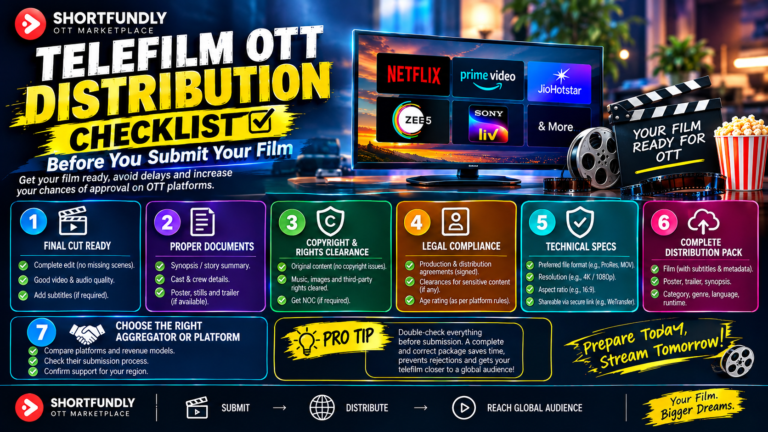
Steps to Distribute Your Film on an OTT Platform
Here’s a simple breakdown of how to begin:
1. Pre-Production Requirements
Before reaching out to platforms, ensure:
- Final script and screenplay rights
- Copyright ownership documents
- Release forms from actors
- Music licensing agreements
2. Post-Production Deliverables
Platforms require:
- 4K or HD master file
- Subtitles (English mandatory)
- Artwork and posters
- Trailer in required format
- Metadata (synopsis, cast list, genre, etc.)
3. Connecting With OTT Aggregators
Many platforms won’t accept direct submissions. Using aggregators smoothens negotiations and increases chances of selection.
4. Negotiating Contracts
Pay attention to:
- License period
- Territory rights
- Revenue model
- Renewal terms
5. Release Planning
Coordinate marketing, poster release, and influencer outreach to generate buzz.
Legal Requirements for OTT Film Distribution in India
Legal compliance is essential. Typical requirements include:
- Copyright registration
- Music rights and third-party permissions
- Certification or self-declaration of lawful content
- Adherence to the IT Rules, 2021
- Clean chain-of-title documents
For the latest legal frameworks, you can refer to the official site of the Ministry of Information & Broadcasting:
Ministry of Information & Broadcasting (India)
Revenue Models Used in OTT Film Distribution
OTT platforms use multiple payment methods:
1. Flat Licensing Fee
One-time payment for distribution rights.
2. Revenue Share
Percentage of total views or ad revenue.
3. Hybrid Model
Fixed fee + performance bonus.
4. Buyout Model
Platform purchases full rights permanently.
Choosing the Right OTT Platform for Your Film
When selecting the ideal platform, consider:
Audience Fit
Is your movie mainstream, regional, or niche?
Budget
Bigger platforms prefer high-budget productions.
Genre
Thrillers, comedy, and romance perform well on most OTT apps.
Exclusivity
Should your film be exclusive to one platform or multiple?
Marketing Support
Some OTT platforms actively promote indie films.
Common Challenges Filmmakers Face in OTT Distribution
Even with rising demand, filmmakers face challenges such as:
- High competition from established studios
- Strict content evaluation standards
- Limited slots for indie films
- Payment delays depending on contracts
- Difficulty getting direct access to large OTT platforms
Working with trusted aggregators significantly reduces these hurdles.
The Future of OTT Film Distribution in India
India’s OTT market is expected to grow steadily as internet access becomes cheaper. Regional content is booming, and platforms are investing heavily in original films. AI-driven personalization means every film—big or small—has a chance to find its audience.
This growing demand makes OTT film distribution in India one of the most promising paths for new filmmakers.
Frequently Asked Questions (FAQs)
1. Do OTT platforms accept short films?
Yes, almost every major OTT platform accepts short films if they meet quality standards.
2. Can new filmmakers distribute movies on OTT?
Absolutely. OTT has become the easiest route for newcomers to enter the film industry.
3. Is theatrical release necessary before OTT distribution?
No. Many films are released directly on digital platforms.
4. How much do OTT platforms pay filmmakers?
It varies. Licensing fees can range from ₹1 lakh to ₹50 lakh depending on quality, runtime, cast, and genre.
5. Do I need a censor certificate for OTT?
Generally, no. OTT content follows self-classification guidelines, not theatrical certification.
6. How do I contact OTT platforms directly?
Some offer direct submission portals. Others require aggregators or production partners.
Conclusion
OTT film distribution in India has opened massive opportunities for filmmakers to reach audiences without traditional industry barriers. With the right planning, legal compliance, and platform selection, your film can achieve success on digital screens across the country—and the world.